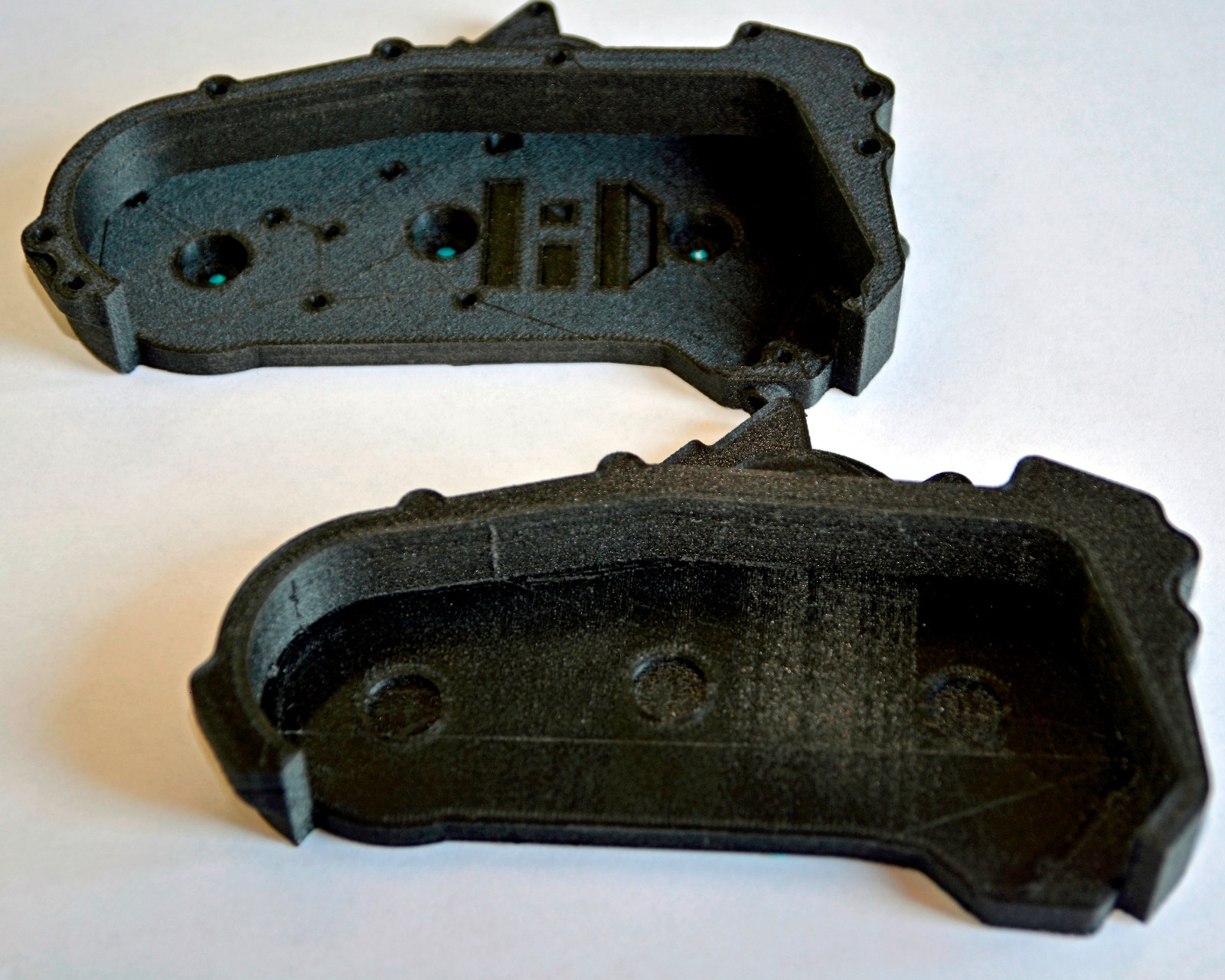
Aim3D is a German technology company that specializes in industrial 3D printing through its proprietary Composite Extrusion Modeling (CEM) process. By utilizing standard injection molding pellets instead of specialized filaments or powders, Aim3D enables cost-effective, multi-material additive manufacturing of metals, ceramics, and high-performance polymers within a single automated workflow.
Understanding the Aim3D CEM Technology
The cornerstone of Aim3D’s presence in the additive manufacturing (AM) sector is Composite Extrusion Modeling (CEM). As of 2026, this technology has established itself as a bridge between traditional injection molding and high-end 3D printing. Unlike Fused Filament Fabrication (FFF), which requires material to be processed into expensive spools of wire, or Selective Laser Melting (SLM), which relies on fine metal powders, CEM uses conventional plastic granules or metal/ceramic injection molding (MIM/CIM) feedstocks.
The CEM process works by taking these standard industrial pellets and feeding them into a specialized extruder. This extruder melts the material and deposits it layer-by-layer to create a "green part." For polymers, the part is often finished immediately after cooling. However, for metals and ceramics, the green part must undergo a two-stage post-processing cycle: debinding (to remove the polymer binder) and sintering (to fuse the particles into a solid, dense component).
The primary advantage of this approach is economic. Standard pellets are significantly cheaper—often by a factor of 10 or more—than the specialized materials required by other AM systems. Furthermore, using the same material for prototyping as is used in final mass production ensures that material properties remain consistent throughout the product development lifecycle.
The ExAM Series Portfolio in 2026
Aim3D’s hardware lineup is centered around the ExAM series, which stands for Extrusion Additive Manufacturing. These machines are designed for industrial environments, featuring robust thermal management and high-precision motion systems.
ExAM 255: The Multi-Material Workhorse
The ExAM 255 remains the flagship model for many small-to-medium enterprises (SMEs). It is a multi-material system capable of handling up to two different materials simultaneously. This allows for the printing of a structural material alongside a soluble or break-away support material, or the combination of two different functional materials in a single build.
Its build chamber is optimized for stability, utilizing a vacuum-clamped print bed to ensure that even large-footprint metal parts do not warp during the printing process. The ExAM 255 is frequently used for functional prototyping and small-batch production of complex geometries that would be impossible or prohibitively expensive to machine or mold.
ExAM 510: Scaling Up Production
For 2026 industrial requirements, the ExAM 510 offers a larger build volume and significantly higher throughput. It was developed to address the need for larger components and faster cycle times. The 510 model features an upgraded extrusion system that can process higher volumes of material per hour without sacrificing detail.
One of the standout features of the 510 is its advanced heating system. Maintaining a consistent temperature across a larger build volume is critical for preventing delamination in high-performance polymers like PEEK or PEI. The ExAM 510 utilizes a sophisticated thermal envelope that ensures the part remains at a stable temperature until the print is complete.
Material Versatility: From Polymers to Metal and Ceramics
The true capability of Aim3D lies in its "material agnostic" philosophy. Because the system uses a screw-based extrusion head similar to an injection molding machine, it can process almost any thermoplastic-based feedstock.
Metals and Alloys
Through the use of MIM feedstocks, Aim3D machines can print a wide range of metals. The most common include:
- Stainless Steel (316L and 17-4PH): Used extensively in medical, food processing, and aerospace applications due to corrosion resistance and strength.
- Tool Steels: Such as 1.2709 or M2, allowing for the creation of customized jigs, fixtures, and even injection mold inserts with conformal cooling channels.
- Copper and Titanium: Specialized feedstocks allow for thermal management components and lightweight aerospace parts.
Technical Ceramics
Ceramic 3D printing is traditionally difficult and expensive. Aim3D simplifies this by using CIM pellets.
- Alumina (Al2O3): Known for its electrical insulation and high-temperature resistance.
- Zirconia (ZrO2): Highly resistant to wear and chemical corrosion, often used in dental and chemical engineering sectors.
High-Performance Polymers
Beyond standard PLA or ABS, Aim3D systems are designed to handle engineering-grade plastics:
- PEEK and PEKK: High-temperature thermoplastics used for metal replacement in extreme environments.
- Reinforced Polymers: Pellets containing carbon fiber or glass fiber reinforcements can be printed to create exceptionally stiff, lightweight components.
Technical Specifications and Capability Comparison
When selecting between the various Aim3D configurations, manufacturers must consider build volume, precision, and material compatibility. The following table outlines the core specifications for the current ExAM generation.
| Feature | ExAM 255 | ExAM 510 |
|---|---|---|
| Build Volume (mm) | 255 x 255 x 255 | 510 x 510 x 400 |
| Number of Extruders | Up to 2 | Up to 3 |
| Layer Thickness | 100 µm – 800 µm | 150 µm – 1000 µm |
| Max Extrusion Temp | 400°C - 450°C | Up to 500°C |
| Print Bed Temp | Up to 200°C | Up to 250°C |
| Material Form Factor | Standard Granules (Pellets) | Standard Granules (Pellets) |
| Positioning Accuracy | +/- 0.05 mm | +/- 0.1 mm |
| Primary Use Case | Precision parts & Ceramics | Large scale & Series production |
The Voxelfill Technology: Solving Anisotropy
One of the historic weaknesses of extrusion-based 3D printing is anisotropy—the fact that parts are weaker along the Z-axis (between layers) than along the X and Y axes. Aim3D has addressed this through a capability known as Voxelfill.
In a standard print, the interior (infill) of a part consists of a lattice of lines with air gaps. With Voxelfill, the printer creates a defined "shell" or "container" for each layer or section, which is then filled with a liquid or semi-liquid material that bonds cross-layer boundaries. By 2026, this technology has matured to allow for the creation of parts with nearly isotropic mechanical properties, rivaling the strength of injection-molded components. This is particularly vital for structural metal parts that must withstand multi-directional stress.
Post-Processing Requirements for Metal and Ceramic Parts
It is a common misconception that a part is "finished" once it leaves the Aim3D build plate if it is made of metal or ceramic. To achieve the final density and material properties, a strict post-processing workflow is required.
- The Green Part: This is the immediate output of the printer. It consists of the metal/ceramic powder held together by a polymer binder. It is oversized to account for future shrinkage.
- Debinding: The green part is placed in a chemical bath or a thermal debinding furnace. This process removes most of the binder, leaving behind a "brown part," which is highly porous and fragile.
- Sintering: The brown part is heated in a high-temperature furnace (often under a protective atmosphere or vacuum). The temperature is raised just below the melting point of the metal or ceramic. The particles fuse together through atomic diffusion, and the part shrinks to its final, dense dimensions (typically around 95-99% of theoretical density).
Understanding the shrinkage factor is critical. Aim3D's software automatically scales the digital model to compensate for this predictable shrinkage, which usually ranges from 15% to 22% depending on the specific feedstock used.
Industrial Applications and Economic Advantages
The capabilities of Aim3D are most effectively utilized in sectors where high-value materials and complex geometries intersect.
Tooling and Mold Making
Traditional tool making is a subtractive process that can take weeks. Using an ExAM 510, manufacturers can print tool inserts with conformal cooling. These are internal channels that follow the shape of the mold cavity, allowing for much faster cooling during the injection molding process. This can reduce cycle times in mass production by 20% to 50%.
Small Series Production
For production runs of 50 to 500 parts, the cost of creating a hardened steel injection mold is often not justifiable. Aim3D allows for "bridge manufacturing," where parts are printed using the final production material. This avoids the high upfront capital expenditure of tooling while maintaining the required material performance.
Spare Parts Management
In 2026, many companies use Aim3D systems to maintain "digital warehouses." Instead of storing physical spare parts for legacy machines, they store the CAD files and the specific pellet feedstock. When a part is needed, it is printed on-demand, significantly reducing inventory costs and logistical overhead.
Troubleshooting and Operational Considerations
Operating an Aim3D system requires a deeper understanding of material science than a standard plastic 3D printer. Common challenges include:
- Moisture Control: Many industrial pellets (like Polyamides or PEEK) are hygroscopic. If the pellets are not dried properly before extrusion, steam can form in the nozzle, leading to "popping" and poor surface finish.
- Nozzle Wear: Ceramic and metal feedstocks are highly abrasive. Aim3D uses hardened steel or tungsten carbide nozzles to mitigate this, but regular inspection and replacement are necessary to maintain dimensional accuracy.
- Bed Adhesion: For metal parts, ensuring the first layer remains perfectly flat is difficult due to the weight of the material. The vacuum-clamped bed is the primary solution, but the choice of build plate material (e.g., specialized polymers or coated glass) must match the feedstock.
Frequently Asked Questions
Can Aim3D printers use any plastic pellets from the market?
Generally, yes, provided the pellets are within the size range (typically 2mm to 4mm) and the melting temperature is within the machine's capabilities. However, for metal and ceramic printing, you must use specialized "MIM" or "CIM" feedstocks that contain the necessary binder systems for subsequent debinding and sintering.
How does the strength of Aim3D metal parts compare to traditional machining?
Once sintered, Aim3D parts typically reach 95% to 99% of the density of wrought materials. Their mechanical properties are comparable to those of Metal Injection Molding (MIM) parts. While they may have slightly lower fatigue strength than forged parts, they meet the standards for most industrial and structural applications according to ISO and ASTM benchmarks.
Is the CEM process faster than laser-based metal printing?
In terms of the printing phase, CEM can be faster for bulky parts because the extrusion rate of pellets is generally higher than the scanning speed of a laser on a powder bed. However, when you factor in the time required for debinding and sintering, the total "lead time" may be similar. The primary advantage of CEM over laser systems is cost and material variety, not necessarily raw speed.
What is the minimum wall thickness achievable with Aim3D?
The minimum wall thickness is typically determined by the nozzle diameter. For the ExAM 255, a 0.4mm nozzle is standard, allowing for wall thicknesses of approximately 0.8mm to 1.0mm for polymers. For metals and ceramics, thicker walls (1.5mm+) are often recommended to ensure structural integrity during the sintering process where the part becomes temporarily fragile.
Does Aim3D require a specialized facility?
The printers themselves can operate in a standard industrial or laboratory environment. However, if you are printing metal or ceramic parts, the debinding and sintering equipment requires specific ventilation, gas supplies (like Argon or Hydrogen/Nitrogen mixes), and fire safety protocols.
Final Recommendations for Implementation
To successfully integrate Aim3D’s capabilities into a production environment, organizations should first audit their material usage. If you are already using injection molding and have a supply of pellets, the transition to CEM is highly efficient.
Start by identifying components that suffer from high machining waste or long tooling lead times. Focus on parts where the multi-material capability—such as combining a hard ceramic wear surface with a tough polymer body—can provide a functional advantage that traditional manufacturing cannot replicate. Finally, ensure that your engineering team is trained not just in CAD design, but in "Design for Sintering," which accounts for the unique shrinkage and support requirements of the CEM process.