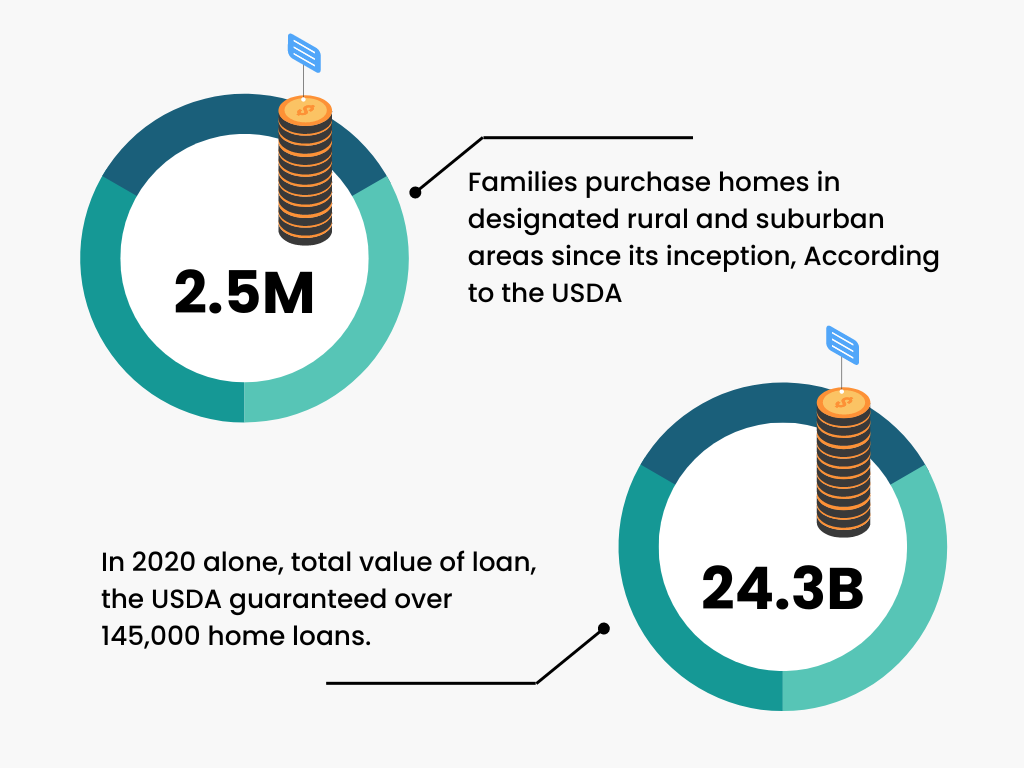
Are USDA home loans worth it in Indiana? Yes, USDA loans are often exceptionally worth it for eligible buyers because they require zero down payment, offer below-market interest rates, and feature lower mortgage insurance costs than traditional FHA or conventional loans, provided the property sits in a designated rural area and the buyer meets income limits.
Purchasing a home in Indiana involves balancing location, upfront capital, and long-term monthly expenses. For buyers looking outside the densely populated urban cores of Indianapolis, Fort Wayne, or Evansville, the United States Department of Agriculture (USDA) Single Family Housing Guaranteed Loan Program offers a compelling pathway to homeownership. Administered through the USDA Rural Development office, this program acts as a government guarantee to approved lenders, reducing their risk and allowing them to extend highly favorable financing terms to moderate- and low-income households.
Evaluating whether a USDA loan is the right financial instrument for your situation requires an analytical look at eligibility rules, fee structures, local Indiana geographic boundaries, and the fundamental trade-offs between zero-down financing and alternative mortgage products.
Understanding the USDA Loan Program in Indiana
The USDA rural development loan program is designed to stimulate economic growth and homeownership in rural and suburban communities. Despite the word "rural" in the program's title, the geographic eligibility maps in Indiana encompass vast territories that many buyers would consider suburban or even semi-rural. Small towns, agricultural communities, and the outer rings of major metropolitan statistical areas often qualify.
Rather than lending money directly, the USDA typically operates a "guaranteed" loan program through approved commercial banks, credit unions, and mortgage companies. Under this structure, the federal government insures up to 90% of the loan against default. This guarantee provides lenders with the confidence to offer zero down payment financing—a benefit traditionally restricted to VA loans for military members and veterans.
The Mechanics of the USDA Guarantee
When an eligible borrower applies for a USDA loan through an approved lender in Indiana, the application goes through two main approval gates:
- The Lender Approval: The financial institution evaluates your credit history, debt-to-income (DTI) ratio, employment stability, and cash reserves to ensure you can responsibly manage the monthly mortgage payment.
- The USDA Approval: Once the lender approves the file, it is submitted to the local USDA Rural Development office for final review and issuance of a loan guarantee commitment.
This dual-approval process can occasionally add a few days to the closing timeline compared to a standard conventional loan, but the financial advantages typically outweigh the minor administrative delay.
Geographic Eligibility in Indiana: Where Can You Buy?
The single most common misconception about USDA loans is that they are restricted to remote farmhouses or miles away from civilization. In Indiana, the map of eligible regions includes thousands of properties within a short driving distance of major employment hubs.
How the USDA Defines "Rural"
The USDA determines eligibility using population thresholds established by the U.S. Census Bureau. Generally, towns and cities with populations under 35,000 that possess a rural character are eligible. Following each decennial census, the USDA reviews these boundaries, meaning areas that once qualified may occasionally be reclassified as non-eligible as suburban sprawl expands.
- Eligible Areas in Indiana: Large portions of counties surrounding Indianapolis (such as parts of Morgan, Johnson, Shelby, Hancock, Hamilton, and Boone counties) feature pockets of USDA-eligible territory once you move past the primary municipal borders. Smaller cities like Marion, Kokomo, Muncie, Terre Haute, and Bloomington have immediate rural and semi-rural belts just outside city limits that qualify.
- Ineligible Areas: The dense urban centers of Indianapolis, Fort Wayne, South Bend, Evansville, and Gary are strictly excluded from the program.
Verifying a Specific Property Address
Because boundaries can change and often cut directly through specific neighborhoods or subdivisions, buyers should never guess whether a home qualifies. The official USDA Rural Development property eligibility tool allows users to type in any exact Indiana street address to instantly verify whether the specific parcel falls within an eligible zone.
Financial Eligibility: Income Limits and Credit Requirements
While USDA loans are designed to assist modest-income families, they do not function as a welfare program; applicants must demonstrate stable income and a willingness to repay the debt.
Income Caps (Moderate Income Limits)
Unlike FHA or conventional loans, which generally only have a minimum income requirement to prove affordability, USDA loans enforce a maximum income limit. To keep the program targeted toward low- and moderate-income households, your household’s total annual income cannot exceed 115% of the median household income for the specific Indiana county in which you intend to buy.
- Household Income Calculation: The USDA looks at the income of all adult members who will occupy the home, regardless of whether their name is on the mortgage note. This includes working spouses, adult children, and other dependents earning an income.
- County-Specific Variations: Income limits vary significantly across Indiana. For example, the income cap for a family of four in a rural southern Indiana county like Orange County will be noticeably lower than the limit for a family of four in a growing suburban ring county like Hendricks County.
Credit Score Standards
The USDA does not set a hard national minimum credit score requirement, but individual lenders enforcing "overlay" rules typically look for a score of 640 or higher to utilize automated underwriting systems (such as USDA’s Guaranteed Underwriting System, or GUS).
- Below 640: Borrowers with credit scores between 580 and 639 can still qualify, but their applications require manual underwriting, demanding more documentation, detailed letters of explanation for past credit blemishes, and strict compensating factors.
- Non-Traditional Credit: For buyers with no traditional credit history (such as credit cards or auto loans), lenders can establish creditworthiness using alternative data, including utility payment history, rental payment records, and insurance premiums.
The True Cost Breakdown: Fees and Interest Rates
While the prospect of zero down payment is attractive, home buyers must understand the fee structure associated with USDA loans. The program is designed to be self-sustaining through two primary government fees paid by the borrower:
- Upfront Guarantee Fee: Similar to the FHA upfront mortgage insurance premium, this fee is currently set at 1.00% of the total loan amount. Most buyers choose to finance this fee directly into their mortgage rather than paying it in cash at closing.
- Annual Guarantee Fee (Monthly Fee): This functions like monthly mortgage insurance (PMI), but it is generally much lower than FHA mortgage insurance. It is currently calculated at 0.35% of the average annual scheduled loan balance, divided into 12 monthly installments added to your house payment.
Interest Rate Advantage
One of the hidden financial benefits of USDA loans is that because the federal government backs 90% of the loan, lenders assume far less risk. As a result, participating lenders frequently offer interest rates that are slightly lower than standard conventional loan rates, matching or beating FHA pricing.
| Loan Type | Down Payment Requirement | Upfront Fee | Monthly Fee (Approximate) | Minimum Credit Score (Typical) |
|---|---|---|---|---|
| USDA Loan | 0% | 1.00% | 0.35% annually | 640 (Automated) |
| FHA Loan | 3.5% | 1.75% | 0.55% annually | 580 |
| Conventional Loan | 3% to 5% | None (unless < 20% down) | 0.50% to 1.5% (Varies) | 620 |
Pros and Cons of USDA Loans in Indiana
Weighing the financial trade-offs requires looking at how these loans perform in the real estate market, particularly against competitive local conditions in Indiana.
The Advantages
- Zero Down Payment: You can purchase a home without liquidating retirement accounts or spending years saving for a 20% conventional down payment.
- Lower Monthly Insurance: The annual fee of 0.35% is significantly cheaper than FHA monthly mortgage insurance, keeping monthly housing costs lower over the life of the loan.
- Flexible Credit Guidelines: Borrowers with imperfect credit histories or limited credit profiles can still secure competitive financing.
- Seller Concessions Allowed: Sellers can contribute up to 6% of the purchase price toward the buyer’s closing costs, reducing the cash required to walk away at the closing table.
The Disadvantages
- Geographic Restrictions: You must find a home in a specific, approved rural or suburban zone, limiting your housing choices if you prefer city life or specific school districts.
- Income Caps: If your career flourishes and your household income exceeds the local county limit, you are disqualified from the program.
- Stricter Property Standards: The home must meet strict safety, structural, and sanitary guidelines established by the USDA. Fixer-uppers requiring major structural repairs will fail the appraisal process.
- Processing Speed: Because files require dual review by both the private lender and the government agency, closings can sometimes take longer than standard conventional transactions.
USDA Property Standards: What Indiana Buyers Need to Know
When purchasing a home with a USDA loan in Indiana, the appraisal process serves a dual purpose: determining the market value of the home and ensuring the property meets minimum safety and habitability standards.
Properties must have safe electrical systems, functioning heating and plumbing, a structurally sound roof, and adequate crawlspace or basement clearance. Furthermore, properties featuring deferred maintenance, peeling paint (a major concern in older historic homes throughout rural Indiana), or active termite damage will not pass inspection without required repairs being completed before closing.
Sellers in competitive Indiana real estate markets sometimes hesitate to accept USDA offers because they fear repair delays or failing appraisal items. Buyers should work with a knowledgeable local real estate agent who can clearly communicate the strength of USDA financing to listing agents.
Frequently Asked Questions
Can I buy a manufactured or modular home with a USDA loan in Indiana?
Yes, but with strict conditions. The manufactured home must be brand new, purchased from an approved dealer, installed on a permanent foundation meeting HUD standards, and taxed as real estate rather than personal property. Existing or used manufactured homes generally do not qualify for the USDA guaranteed program.
Are there limits on the purchase price of a USDA home in Indiana?
There is no set maximum purchase price limit established by the USDA. Instead, your maximum purchase price is dictated strictly by your debt-to-income (DTI) ratio, your household income, and your ability to comfortably manage the monthly mortgage payment under the lender’s underwriting rules.
Can I use a USDA loan to buy an investment property or second home?
No. USDA loans are strictly restricted to primary residences. You or a member of your immediate household must physically occupy the property as your primary domicile for the life of the loan. Purchasing rental properties, "flipping" houses, or buying vacation homes is prohibited.
What happens if my income increases after I get a USDA loan?
Nothing. The income eligibility limits are strictly enforced at the time of initial loan application and approval. If you receive a promotion, a raise, or a new job that increases your household income after you have closed on the home, your loan terms, interest rate, and eligibility remain completely unaffected.
Can I refinance an existing USDA loan later?
Yes. The USDA offers a streamlined refinance program (known as the USDA Streamlined-Assist Refinance) for current USDA borrowers. This program allows homeowners to lower their interest rate without requiring a new home appraisal, a credit check, or extensive income verification, provided they have maintained a clean payment history.
Final Recommendation and Next Actions
Are USDA home loans worth it in Indiana? For buyers who want to purchase a home in Indiana’s vast rural and suburban corridors and who meet the income and credit guidelines, the program is arguably one of the most advantageous mortgage products available. The combination of zero down payment and low monthly mortgage insurance saves buyers thousands of dollars both upfront and over the multi-decade life of the loan.
Your Next Steps:
- Check Your Location: Visit the official USDA Rural Development property eligibility website and type in the specific addresses or zip codes where you want to live in Indiana.
- Review Your Income: Look at your household’s gross annual income and compare it against the specific USDA county income limits for your target area.
- Contact an Approved Lender: Reach out to a mortgage lender experienced in USDA loans to get pre-qualified. Ensure they understand the nuances of local Indiana guidelines to streamline your path from pre-approval to closing day.