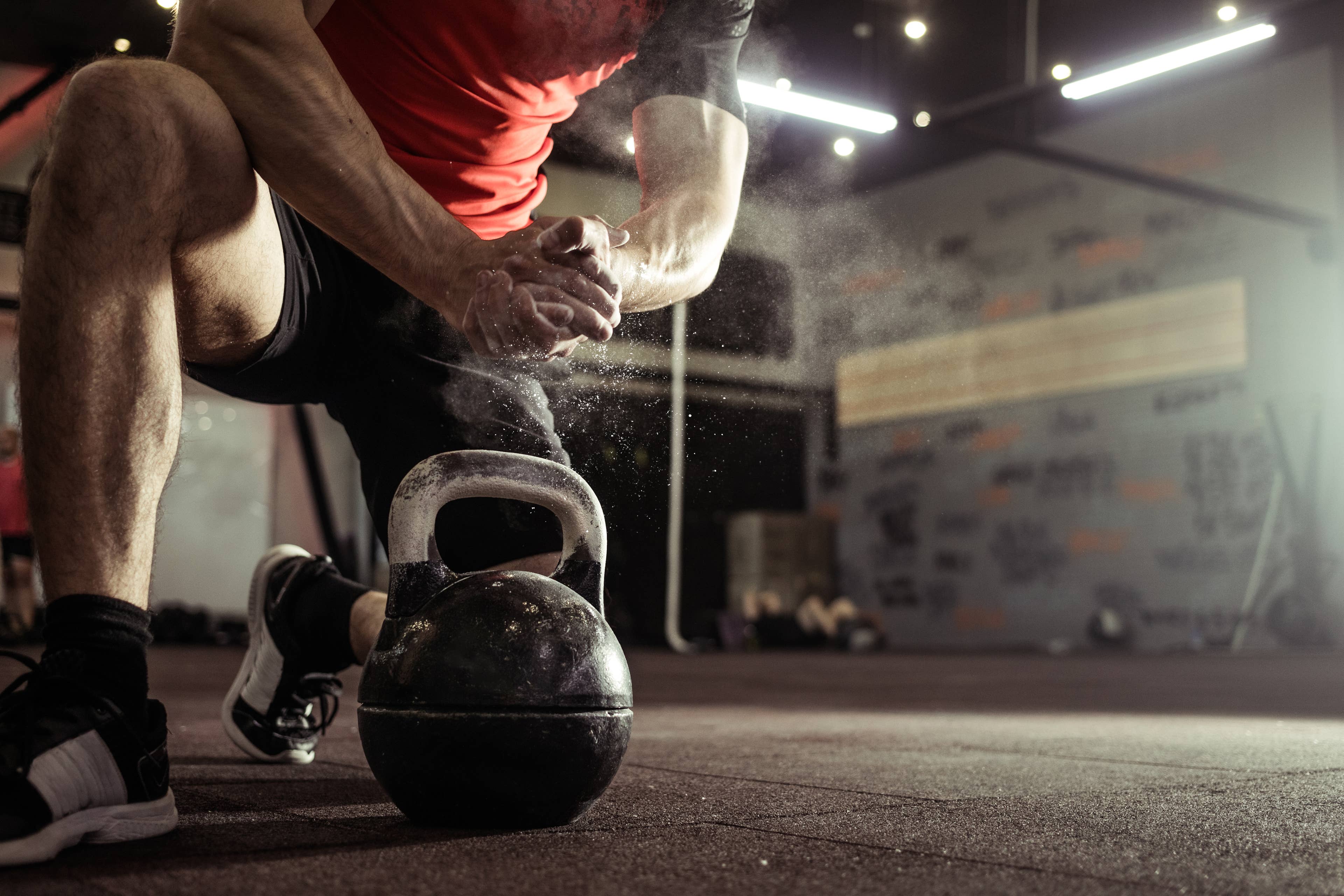
Kettlebell jump squats are highly effective for developing explosive lower-body power and improving cardiovascular capacity, provided the athlete possesses the requisite foundational strength and joint mobility. While they offer significant athletic benefits, they carry a higher risk of injury than static squats, making them a specialized tool rather than a foundational requirement for every training program.
Understanding the Mechanics of the Kettlebell Jump Squat
A kettlebell jump squat is a compound, plyometric movement that involves performing a squat while holding a kettlebell, followed by an explosive vertical jump upon extension. The addition of the external load (the kettlebell) differentiates this from a standard bodyweight jump squat, moving it into the realm of weighted plyometrics.
The primary objective of this exercise is the development of the "rate of force development" (RFD). In sports science, RFD refers to how quickly an athlete can generate force. Because the jump is an explosive action, the body must recruit motor units rapidly to overcome the inertia of both body weight and the added kettlebell weight. This differs from a traditional barbell back squat, which emphasizes absolute strength (how much weight can be moved) rather than the speed at which that force is applied.
The Performance Benefits: Why the Hype Exists
The popularity of this movement in 2026 is largely driven by its efficiency in bridging the gap between gym-based strength and field-based athletic performance.
Explosive Power Development
By adding load to a jump, you increase the resistance against which the muscles must contract. This creates a "post-activation potentiation" effect, where the nervous system is primed to recruit more muscle fibers. Over time, this leads to improved vertical jump height, faster sprint starts, and greater agility in multidirectional sports.
Cardiovascular Demand
Unlike heavy lifting sets where the rest periods are long, kettlebell jump squats are often performed for higher reps or in circuit-style training. The combination of dynamic movement and metabolic load spikes the heart rate significantly. This makes them a dual-purpose tool for athletes looking to improve work capacity while simultaneously building power.
Posterior Chain Engagement
The kettlebell, when held between the legs (a "goblet" or "swing" position), forces the athlete to maintain a neutral spine and engage the posterior chain—the hamstrings, glutes, and erector spinae. This helps correct the common tendency to dump the weight into the knees during standard squat jumps.
Assessing Risk: When the Hype Fails
Despite the benefits, the hype surrounding kettlebell jump squats often overlooks the physiological cost. This is an advanced movement that is not suitable for beginners or individuals with pre-existing joint issues.
The Impact Factor
When an athlete jumps with an external weight, the landing force is multiplied. Upon impact, the body must dissipate the energy of the body weight plus the kettlebell. If an athlete lacks the eccentric strength to control this descent, the force is transferred directly into the joints—specifically the ankles, knees, and lower lumbar spine.
Technical Failure
As fatigue sets in, form usually breaks down. In a jump squat, form breakdown is dangerous. If the back rounds or the knees collapse inward upon landing, the risk of acute ligament or tendon injury increases significantly. Because of this, the exercise is rarely appropriate for high-repetition schemes; it is fundamentally a power movement, not an endurance movement.
Comparing Training Tools for Lower-Body Power
To determine if this exercise belongs in your routine, it is helpful to compare it against other common modalities.
| Movement Type | Primary Benefit | Risk Profile | Accessibility |
|---|---|---|---|
| Kettlebell Jump Squat | Explosive Power | High | Moderate |
| Box Jump | Vertical Height | Low-Moderate | High |
| Barbell Back Squat | Absolute Strength | Low (if controlled) | High |
| Hex Bar Deadlift | Posterior Chain Strength | Low | High |
The Kettlebell Jump Squat sits in a niche category: it is more intense than a standard squat but requires more technical proficiency than a simple box jump. For most, a box jump is safer because the landing is often softer or requires less eccentric absorption. However, for those who have mastered the movement, the kettlebell jump squat provides a unique stimulus that fixed-height box jumps cannot replicate.
Prerequisites for Execution
Before incorporating these into your 2026 training regimen, you must verify your readiness. Do not attempt this movement if you cannot meet the following criteria:
- Fundamental Squat Proficiency: You should be able to perform 20 bodyweight squats with perfect form, maintaining a neutral spine and heels on the ground.
- Eccentric Control: You must demonstrate the ability to land softly from a jump without the weight. If your landing is "heavy" or noisy, your joints are not ready for the added load of a kettlebell.
- Kettlebell Familiarity: You must be comfortable with the kettlebell swing and goblet squat. You need to know how to "hike" and hold the bell securely so that it does not swing excessively during the jump.
How to Perform the Movement Safely
If you have met the prerequisites, follow these steps to integrate the movement properly:
- Stance: Stand with feet shoulder-width apart, kettlebell held securely against the chest (goblet style).
- The Descent: Initiate the squat by pushing the hips back and down. Keep the chest up.
- The Explosion: Drive through the mid-foot, extending the hips, knees, and ankles simultaneously to leave the ground.
- The Landing: This is the most critical phase. Land mid-foot to heel, immediately transitioning into a squat to absorb the force. Do not land with straight, locked-out knees.
- Volume Management: Limit sets to 3–5 repetitions. If you are doing more than 5 reps, you are likely training for endurance, not power, and the risk of injury rises as your form degrades.
Common Mistakes to Avoid
- The "Heavy" Landing: If you hear a loud thud, you are failing to use your muscles to decelerate the weight. This is a sign to drop the kettlebell and return to bodyweight jumps.
- Overloading: Many athletes assume that heavier is better. For explosive movements, the speed of the jump is the priority. If the kettlebell is so heavy that your jump height decreases by more than 10-15%, the weight is too heavy to be effective.
- Rounding the Upper Back: As you jump, the weight may pull your torso forward. You must actively engage your lats and core to keep the kettlebell tucked tight.
Frequently Asked Questions
Are kettlebell jump squats better than box jumps?
Not necessarily. Box jumps are safer because the landing height is controlled and requires less eccentric deceleration. Kettlebell jump squats are superior only if you are looking to specifically train the eccentric loading phase or need to add resistance that a box cannot provide.
How often should I include these in my program?
Because this is a high-intensity neurological stimulus, you should limit this to 1–2 times per week. Power movements require significant recovery for the central nervous system. Do not perform these on consecutive days.
Can I do this with a heavy kettlebell?
No. High-intensity power movements rely on velocity. Use a weight that allows you to jump at approximately 80–90% of your maximum unweighted jump height. For most individuals, this is a light to moderate weight (typically 8–16kg for beginners).
Does this movement replace the traditional back squat?
No. The kettlebell jump squat is an accessory movement for power development. It cannot replace the foundational strength building provided by heavy, low-rep barbell squatting.
Final Recommendation: Integrating the Movement
The kettlebell jump squat is "worth the hype" only if you treat it as a precision power tool rather than a generic fitness exercise. It is an excellent choice for intermediate and advanced athletes who want to improve their vertical force production, provided they prioritize technical accuracy over heavy loading.
If your primary goal is general health, fat loss, or foundational strength, keep these movements to a minimum or omit them in favor of safer alternatives like kettlebell swings or traditional squats. If you are a field athlete or a power-focused trainee, treat these as a high-priority movement to be performed at the start of your workout when your central nervous system is fresh, and your form is at its peak.