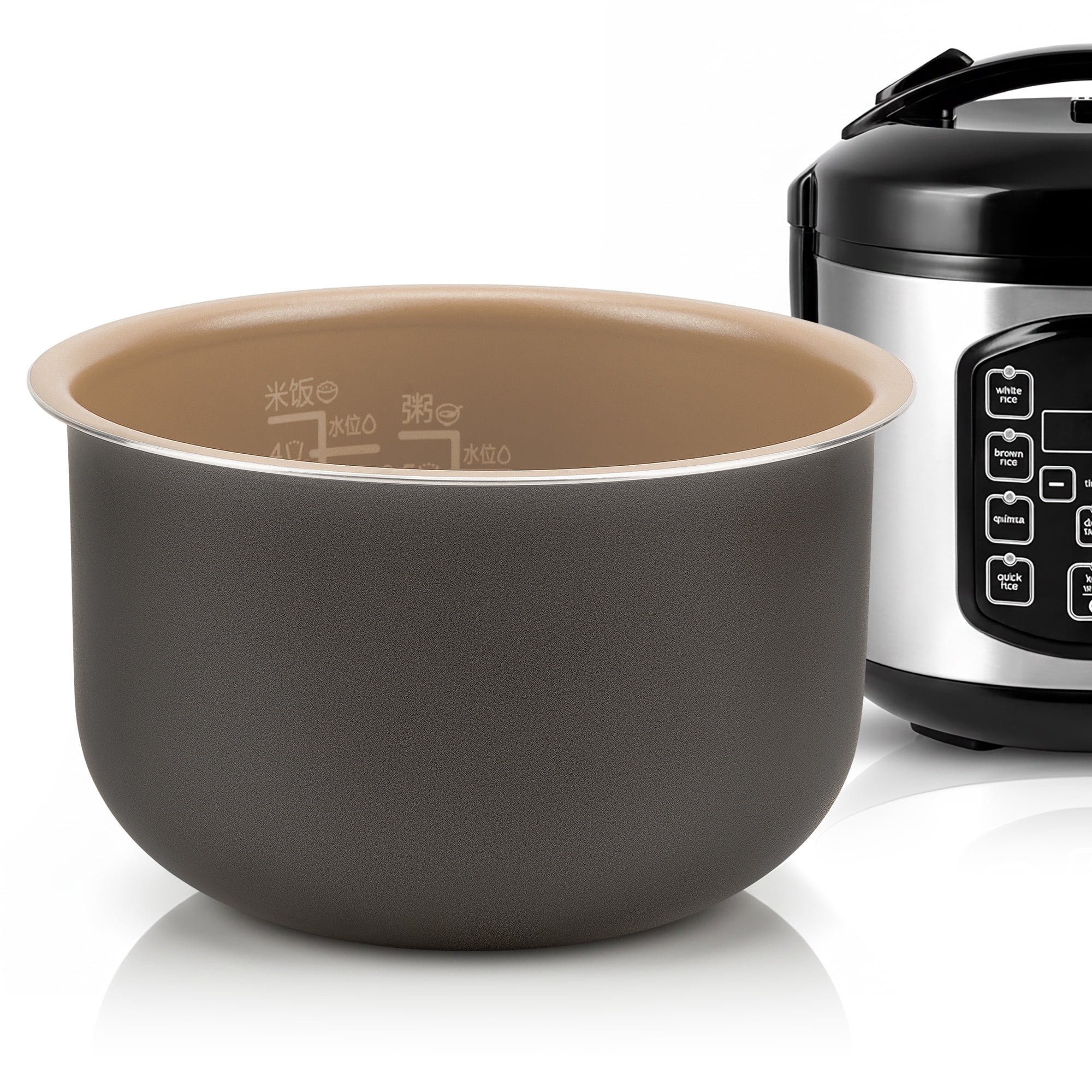
Replacing an Aroma rice cooker pot involves identifying your specific model number—usually found on a silver sticker on the base—and matching it with a compatible inner liner. Whether you choose a non-stick, ceramic, or stainless steel replacement, ensuring the correct capacity and diameter is essential for heat sensor accuracy, cooking performance, and electrical safety.
Finding a replacement inner pot for your Aroma rice cooker is a common task, often necessitated by wear and tear on non-stick coatings or the desire to upgrade to a different material. As of 2026, Aroma Housewares remains one of the most popular brands in the kitchen appliance market, and their commitment to modularity means that most units are designed with replaceable parts. However, because Aroma produces dozens of different models with varying capacities—ranging from small 4-cup units to large 20-cup commercial-style cookers—selecting the exact match is critical to avoid damaging the heating element.
Identifying Your Specific Aroma Model Number
The most significant mistake users make when seeking a replacement pot is ordering based on "cup size" alone. A "6-cup" pot for a basic Aroma model may have a different height or diameter than a "6-cup" pot for a digital induction model. To find your model number, look at the bottom or the back of the rice cooker base. You will typically find a silver or white sticker containing technical specifications.
Aroma model numbers usually begin with a three-letter prefix, such as ARC, MRC, or VRC, followed by a series of numbers and sometimes letters (e.g., ARC-914D, ARC-150SB).
- ARC Models: These are the standard "Aroma Rice Cooker" units.
- MRC Models: Often denote "Mini Rice Cookers," typically in the 2-cup to 4-cup range.
- Suffixes: Letters like "S" or "SB" often refer to the exterior finish (Stainless Steel or Stainless Black), but the internal pot dimensions remain the same across these variations.
If the sticker has worn off or is illegible, you can often identify the unit by looking at the control panel layout and matching it with the product gallery on the official Aroma Housewares website.
Understanding Inner Pot Materials: Non-Stick vs. Stainless Steel vs. Ceramic
By 2026, material science in kitchenware has evolved to provide several options for the inner liner. Each material interacts differently with the rice cooker's thermal sensor and heating plate.
Non-Stick (PTFE/PFOA-Free)
Most standard Aroma units come with an aluminum inner pot coated in a non-stick layer. While older models used traditional Teflon, modern replacements are strictly PFOA-free and often reinforced with diamond or titanium particles for better durability.
- Pros: Easy to clean; prevents rice from scorching; lightweight.
- Cons: Coating can scratch over time; not dishwasher safe (usually); requires plastic or silicone utensils.
Stainless Steel
Many users prefer to replace their original non-stick pot with a 304-grade (18/8) stainless steel version.
- Pros: Extremely durable; no chemical coatings; dishwasher safe; won't leach materials if scratched.
- Cons: Rice is more likely to stick to the bottom; heavier; can cause slight variations in "automatic shut-off" timing because steel conducts heat differently than aluminum.
Ceramic-Coated
Ceramic is marketed as a "natural" non-stick alternative. These pots use a sol-gel coating derived from silica.
- Pros: Excellent heat retention; aesthetic appeal; free of PTFE.
- Cons: More brittle than standard non-stick; can lose its non-stick properties faster if exposed to high thermal shock (e.g., putting a hot pot in cold water).
Measuring Your Current Pot: A Backup Method
If you cannot find a model number, you must measure your existing pot with precision. Even a 2mm difference in height can prevent the lid from sealing correctly, which leads to undercooked rice or steam burns.
- Outer Diameter: Measure across the top of the pot from one outer rim to the other.
- Inner Diameter: Measure the opening of the pot, excluding the lip or rim.
- Height: Place the pot on a flat surface and measure from the base to the top edge.
- Base Profile: Check if the bottom is completely flat or has a slight indentation. Aroma cookers use a weight-sensitive thermal switch in the center of the heating plate. If the pot does not sit flush against this sensor, the unit will not "click" from Cook to Warm at the right time.
| Model Series | Common Capacity (Cooked) | Standard Material | Replacement Availability |
|---|---|---|---|
| ARC-743G | 6-Cup | Aluminum Non-Stick | Very High |
| ARC-914D | 8-Cup | Aluminum Non-Stick | High |
| ARC-150SB | 20-Cup | Aluminum Non-Stick | High |
| Select Series | Various | Stainless Steel | Medium (Model Specific) |
| Professional Series | Various | Thick-Gauge Non-Stick | Low (Often Proprietary) |
Where to Purchase Authentic Aroma Replacement Parts
It is always recommended to purchase an official Aroma-branded replacement if available. Third-party pots may look identical but often use thinner metal, which can warp under high heat.
- Aroma Housewares Official Site: This is the most reliable source. They maintain a "Parts and Accessories" section organized by model number.
- Major Online Retailers: Platforms like Amazon or Walmart often stock "genuine" replacement kits. Ensure the seller is either Aroma Housewares or a verified authorized dealer to avoid counterfeit parts that may contain lead or inferior coatings.
- Secondary Markets: For discontinued models, eBay or specialty appliance part warehouses may be your only option. If buying used, inspect the coating thoroughly for "pitting" or deep scratches that expose the raw aluminum.
Cost Analysis: Replacement Pot vs. New Rice Cooker
In 2026, the price of a replacement inner pot typically ranges from $15.00 to $35.00, depending on size and material. When deciding whether to buy a new pot or an entirely new unit, consider the following:
- Condition of the Base: If the heating element is discolored, pitted, or if the cord is frayed, it is safer to replace the whole unit.
- Unit Features: If your current cooker is a basic on/off model, you might find that a new, more advanced digital unit costs only $10–$15 more than a replacement pot for your old one.
- Environmental Impact: Replacing just the pot is significantly more sustainable, as it keeps the electronic base out of landfills. If the base still functions perfectly, a new pot is the ecologically responsible choice.
Extending the Life of Your New Inner Liner
Once you have secured your replacement, proper maintenance will prevent you from needing another one for several years.
- The "No-Metal" Rule: Never use metal spoons, forks, or spatulas inside a non-stick or ceramic pot. Use the plastic paddle provided by Aroma or a silicone-edged stirrer.
- Hand Washing: Even if the pot is labeled "dishwasher safe," the harsh detergents and high-pressure spray of a dishwasher can degrade non-stick coatings and cause oxidation on the exterior aluminum base. Hand wash with a soft sponge and mild soap.
- Avoid the Soak: Do not soak the pot in water for extended periods (over 12 hours). This can sometimes cause the non-stick coating to bubble or lift at the edges.
- Thermal Shock: Allow the pot to cool down naturally before rinsing it with cold water. Rapid temperature changes cause the metal to expand and contract at different rates than the coating, leading to cracks.
Troubleshooting Common Fitment Issues
If your replacement pot arrives and the cooker is not functioning correctly, check for these common issues:
- The "Premature Click": If the cooker switches to "Warm" before the rice is done, the pot may be too light or not making full contact with the center sensor. Ensure no grains of dry rice are stuck on the heating plate.
- Steam Leaks: If steam is escaping from the sides of the lid rather than the vent, the pot rim may be slightly too narrow. This indicates a model mismatch.
- Burnt Bottoms: This often occurs with stainless steel replacements. Since steel retains heat differently, you may need to add roughly 2–3 tablespoons of extra water to create a sufficient steam buffer.
FAQ
Can I use a stainless steel pot in a cooker that came with a non-stick pot?
Yes, provided the dimensions are an exact match for your model. Aroma produces stainless steel liners specifically for many of their digital models. However, be aware that rice is naturally more adhesive to steel, so you may experience a "crust" at the bottom (known as tahdig or nurungji), which some users enjoy but others find difficult to clean.
Why is my replacement pot sticking even though it's new?
Sticking can occur if the starch is not rinsed off the rice before cooking. Always rinse your rice in a separate mesh strainer until the water runs clear before placing it in the inner pot. Additionally, using a small amount of oil or butter can help if you are cooking high-starch grains like sushi rice.
Are Aroma replacement pots universal across brands?
No. While many rice cookers (like those from Black+Decker, Hamilton Beach, or Oster) look similar, the internal height and the curvature of the bottom are rarely identical. Using a different brand's pot can result in the pot not sitting on the heating element, which is a fire hazard.
Is it safe to use a pot with a scratched coating?
If the non-stick coating is peeling or deeply scratched, it is best to replace it. While modern coatings are generally non-toxic, the flakes can end up in your food, and the exposed aluminum underneath can react with acidic ingredients, potentially altering the taste of your food.
How do I know if I need a "4-cup" or "8-cup" replacement?
Aroma usually labels their pots based on cooked capacity. A "6-cup" cooker typically takes 3 cups of dry rice and yields 6 cups of cooked rice. Always verify whether the listing refers to "dry/uncooked" or "cooked" capacity to ensure you get the right volume.
What should I do if my model is discontinued?
If Aroma no longer manufactures the pot for your specific model, measure the pot and search for "Universal 6-cup rice cooker liner." However, proceed with caution and monitor the first few cooking cycles closely to ensure the thermal sensor is functioning correctly with the third-party part.
Recommendation for Next Actions
To ensure a successful replacement, start by taking a clear photo of the model sticker on your rice cooker. Visit the Aroma Housewares official support page and use their search tool to find the exact part number. If you choose to buy from a third-party marketplace, cross-reference the dimensions provided in the listing with your own manual measurements of the old pot. Once the new pot arrives, perform a "test boil" with just water to ensure the unit heats and switches to "Warm" appropriately before cooking your first batch of rice.