The U.S. Army base renaming initiative, completed by early 2024, replaced nine Confederate-affiliated installation names with titles honoring diverse American heroes and values. Mandated by the 2021 NDAA, this transition involved extensive historical research, community engagement, and logistical updates to signage and records, ensuring military assets reflect the modern character of the force.
Legislative Origin and the Mandate for Change
The movement to rename U.S. Army installations gained significant momentum following national discussions on racial justice and historical representation in 2020. This culminated in the National Defense Authorization Act (NDAA) for Fiscal Year 2021, which included a specific provision requiring the Department of Defense (DoD) to identify and rename all assets that commemorated the Confederate States of America or any person who served voluntarily with the Confederacy.
The legislation was notable for its broad scope, covering not just the names of major bases, but also streets, buildings, monuments, and even smaller items like paintings and commemorative plaques. To execute this mandate, the Act established the Naming Commission, an eight-member body tasked with gathering community input, researching historical figures, and providing a comprehensive list of renaming recommendations to Congress and the Secretary of Defense.
Despite some initial political friction, the mandate was clear: the U.S. military could no longer maintain honors for those who had taken up arms against the United States to preserve the institution of slavery. By the time the commission concluded its work in late 2022, it had identified over 1,100 items requiring removal or renaming across the military branches, though the Army’s major installations remained the most visible and complex part of the project.
The Naming Commission: Process and Selection Criteria
The Naming Commission, chaired by retired Navy Admiral Michelle Howard, operated with a focus on "inspiring" and "unifying" names. The commission traveled to the communities surrounding the affected bases, held virtual and in-person town halls, and accepted thousands of suggestions from the public. This collaborative approach was designed to ensure that the new names would be embraced by the soldiers stationed there and the civilians living nearby.
The criteria for selection were rigorous. The commission sought figures who demonstrated extraordinary heroism, lived values consistent with the modern Army, and represented the full diversity of the American military experience. This included focusing on Medal of Honor recipients, pioneers in their respective fields (such as aviation or logistics), and those whose service had previously been overlooked by mainstream historical narratives.
By September 2022, the Commission released its final three-part report. The recommendations were formally approved by Secretary of Defense Lloyd Austin in October 2022, setting a three-year implementation window. However, the Army moved aggressively, completing all major base renaming ceremonies well before the January 1, 2024, deadline.
Profiles of the Nine Major Renamed Army Bases
The renaming of the "Big Nine" installations represented the most significant overhaul of Army branding in more than a century. Each new namesake was chosen to tell a specific story of American service and sacrifice.
Fort Liberty (formerly Fort Bragg, North Carolina)
Fort Liberty is unique among the nine installations because it is the only base not named after a specific person. Located in Fayetteville, North Carolina, and serving as the home of the Airborne and Special Operations Forces, the base was the subject of intense community debate. While many names were suggested, "Liberty" was ultimately chosen as a unifying concept that transcended any single individual. In the 2026 military landscape, Fort Liberty remains the Army’s most populous installation, with its new name reflecting the core value that the 82nd Airborne and U.S. Army Special Operations Command (USASOC) are sworn to defend.
Fort Moore (formerly Fort Benning, Georgia)
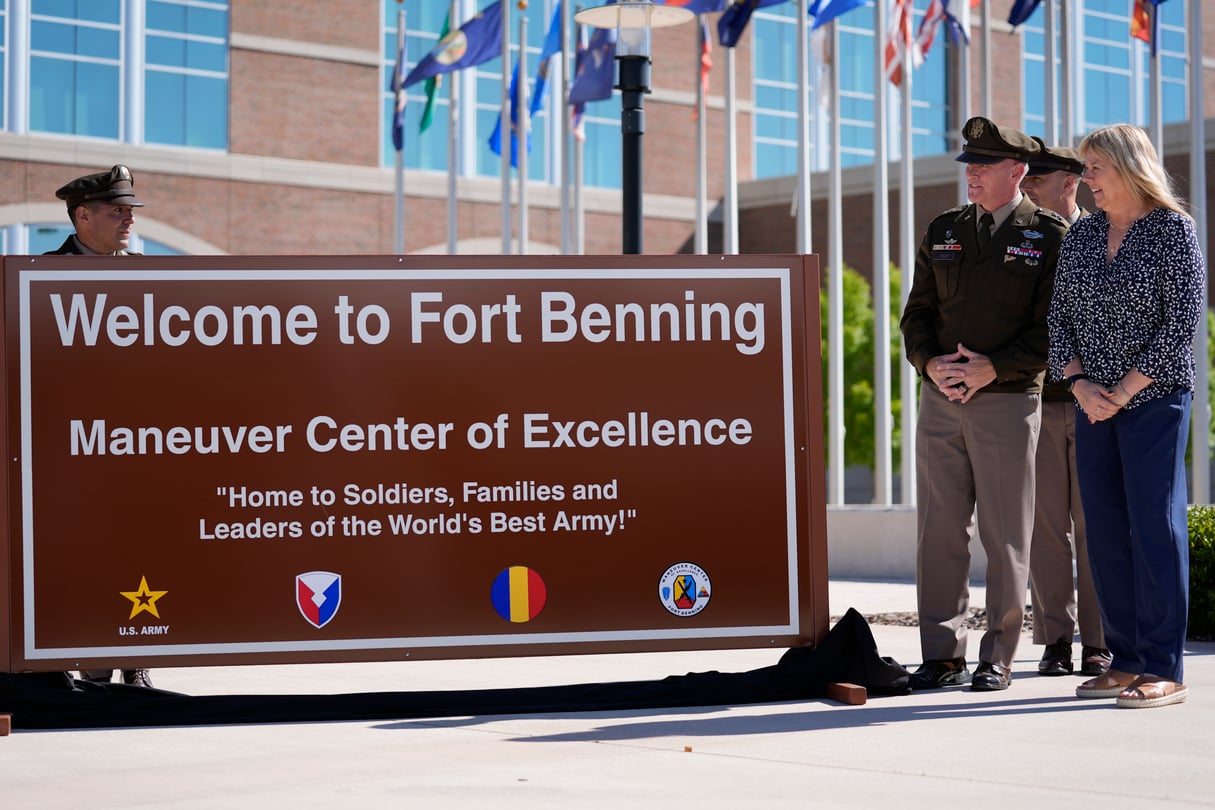
Renamed in honor of Lieutenant General Hal Moore and his wife, Julia Compton Moore, this installation serves as the "Maneuver Center of Excellence." Hal Moore is legendary for his leadership in the Battle of Ia Drang during the Vietnam War, famously chronicled in the book and film We Were Soldiers Once… and Young. Julia Moore is honored for her advocacy for military families; her efforts revolutionized how the Army notifies next-of-kin after a service member's death, replacing telegram-delivery by taxi drivers with the modern, compassionate casualty notification process.
Fort Cavazos (formerly Fort Hood, Texas)
This sprawling installation in Killeen, Texas, now honors General Richard Cavazos, the Army’s first Hispanic four-star general. A native Texan, Cavazos earned two Distinguished Service Crosses—one in Korea and one in Vietnam—for his extraordinary heroism in combat. His legacy at Fort Cavazos is one of mentorship and tactical brilliance, serving as an inspiration for the diverse corps of soldiers who train at the "Great Place."
Fort Gregg-Adams (formerly Fort Lee, Virginia)
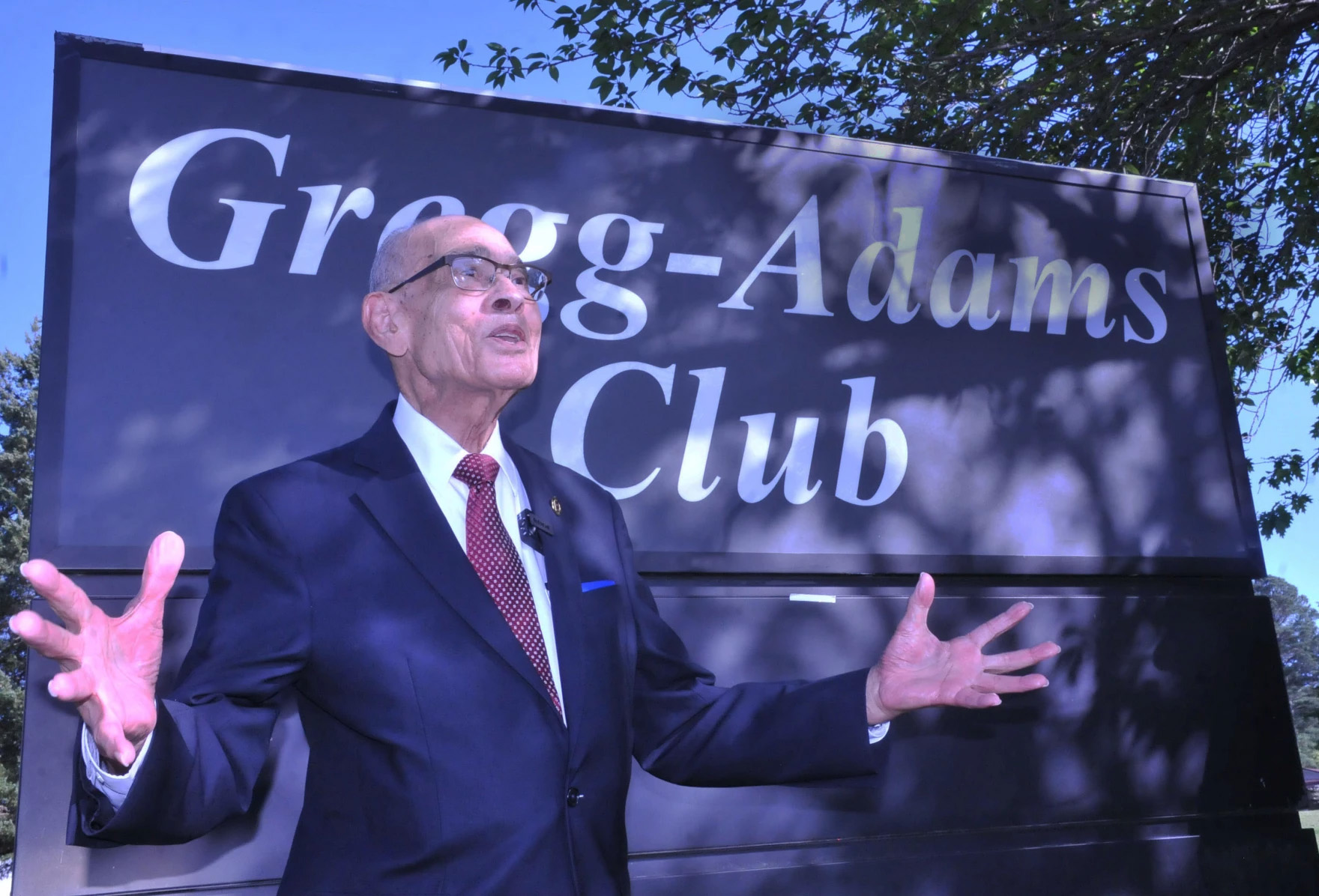
Honoring the Quartermaster Corps, this base is named after Lieutenant General Arthur Gregg and Lieutenant Colonel Charity Adams. LTG Gregg was a pioneer in logistics who rose from the rank of private to become one of the highest-ranking Black officers of his era. He was notably alive to witness the renaming ceremony in 2023 (passing away in 2024). LTC Charity Adams commanded the 6888th Central Postal Directory Battalion during World War II, the only all-Black, all-female unit sent overseas, which cleared a massive backlog of mail for millions of soldiers.
Fort Barfoot (formerly Fort Pickett, Virginia)
Renamed for Technical Sergeant Van T. Barfoot, a Medal of Honor recipient of Choctaw ancestry. During World War II in Italy, Barfoot single-handedly took out three German machine-gun nests and captured 17 enemy soldiers. His legacy honors the long history of Native American service in the U.S. Armed Forces.
Fort Walker (formerly Fort A.P. Hill, Virginia)
This installation honors Dr. Mary Edwards Walker, a Civil War surgeon and the only woman ever to receive the Medal of Honor. Walker was a dedicated abolitionist and a prisoner of war who crossed battle lines to treat civilians and soldiers alike. Her name on a major training center reflects the Army's recognition of medical service and the historical role of women in combat environments.
Fort Eisenhower (formerly Fort Gordon, Georgia)
Home to the Cyber Center of Excellence, the base now honors General of the Army and 34th U.S. President Dwight D. Eisenhower. While Eisenhower is a global figure, his connection to the Army’s strategic and technological advancement makes him a fitting namesake for the hub of the Army's cyber and signal operations.
Fort Novosel (formerly Fort Rucker, Alabama)
The home of Army Aviation was renamed for Chief Warrant Officer 4 Michael J. Novosel Sr., a Medal of Honor recipient. Novosel flew more than 2,500 rescue missions in Vietnam, saving over 5,500 lives. His designation as the namesake for the aviation hub underscores the "heroism of the rescue" that defines modern medevac operations.
Fort Johnson (formerly Fort Polk, Louisiana)
Renamed for Sergeant William Henry Johnson, a member of the "Harlem Hellfighters" during World War I. Johnson famously fought off a German raiding party using only a bolo knife after his rifle jammed, saving a fellow soldier and suffering 21 wounds. Though he died in poverty and obscurity, his posthumous Medal of Honor and the naming of this Joint Readiness Training Center (JRTC) cement his place in American military history.
Beyond the Big Nine: Streets, Assets, and Symbols
The scope of the renaming initiative extended far beyond the main gates of these nine installations. Under the guidance of the Naming Commission, the Army conducted a comprehensive inventory of all commemorative assets. This included:
- Street Names: Hundreds of streets within military cantonment areas that were named after Confederate generals like Robert E. Lee or Stonewall Jackson were renamed. In most cases, these were replaced with names of local heroes or significant battles.
- Vessels: The Navy also participated, notably renaming the USS Chancellorsville (a Confederate victory) to the USS Robert Smalls, honoring an enslaved man who commandeered a Confederate ship to gain freedom for himself and his family.
- Paintings and Statues: Portrayals of Confederate figures in official Army buildings, including the U.S. Military Academy at West Point, were removed or relocated to museums and historical archives.
- Unit Heraldry: While less common, certain unit patches or mottos that had direct Confederate origins were reviewed and modified to reflect a more inclusive lineage.
Logistical and Financial Implementation
Renaming a military installation is a massive logistical undertaking that involves more than just swapping out a sign at the front gate. The total cost of the initiative across the Department of Defense was estimated at approximately $62.5 million, with the majority of those funds allocated to the Army.
Key logistical hurdles included:
- Infrastructure: Updating thousands of road signs, water towers, building plaques, and directional markers both on and off-base.
- Digital Systems: Updating Global Positioning System (GPS) data, postal addresses, and internal military databases such as the Defense Enrollment Eligibility Reporting System (DEERS) and the Integrated Personnel and Pay System-Army (IPPS-A).
- Legal Documentation: Modifying land deeds, mutual aid agreements with local police and fire departments, and environmental permits.
- Uniforms and Flags: Replacing unit colors, organizational flags, and any uniform patches that featured the old installation names.
By the beginning of 2026, the transition has been largely integrated into the Army’s daily operations. While older personnel and some local residents may occasionally use the legacy names out of habit, the institutional "muscle memory" has shifted toward the new designations.
Summary of Major Army Installation Name Changes
The following table outlines the specific changes for the nine major installations identified by the Naming Commission.
| Former Name | New Name | Namesake / Meaning | Key Date of Change |
|---|---|---|---|
| Fort Bragg | Fort Liberty | Honors the value of Liberty and the Airborne spirit | June 2, 2023 |
| Fort Benning | Fort Moore | LTG Hal Moore and Julia Compton Moore | May 11, 2023 |
| Fort Hood | Fort Cavazos | GEN Richard Cavazos (1st Hispanic 4-Star) | May 9, 2023 |
| Fort Gordon | Fort Eisenhower | GEN/President Dwight D. Eisenhower | Oct. 27, 2023 |
| Fort Lee | Fort Gregg-Adams | LTG Arthur Gregg and LTC Charity Adams | April 27, 2023 |
| Fort Polk | Fort Johnson | SGT William Henry Johnson (Harlem Hellfighter) | June 13, 2023 |
| Fort Rucker | Fort Novosel | CW4 Michael Novosel Sr. (Aviation Hero) | April 10, 2023 |
| Fort A.P. Hill | Fort Walker | Dr. Mary Walker (Female MoH Recipient) | August 25, 2023 |
| Fort Pickett | Fort Barfoot | TSgt Van T. Barfoot (Native American MoH Recipient) | March 24, 2023 |
Cultural Impact and Modern Status in 2026
As of 2026, the renaming initiative is viewed by the Department of Defense as a successful step toward modernizing the Army's culture. The new namesakes provide a broader, more accurate reflection of the soldiers who make up the force today. Rather than honoring individuals who fought to dissolve the Union, the Army now honors those who fought to preserve it, expanded the rights of its citizens, or displayed unmatched valor on foreign battlefields.
The impact on local communities has also stabilized. While there were concerns about the loss of "brand identity" for towns like Fayetteville (Fort Liberty) or Columbus (Fort Moore), the economic and social ties between the bases and their "gate communities" remain strong. The new names have been incorporated into local businesses, school curricula, and tourism materials.
Moreover, the process has set a precedent for how the military handles sensitive historical legacy issues. By utilizing an independent commission and prioritizing community input, the DoD managed to navigate a potentially divisive issue with a high degree of transparency.
Frequently Asked Questions
Why were these specific bases chosen for renaming?
The nine bases were selected because they were the only major U.S. Army installations named after individuals who served in the Confederate States of America. Under the 2021 NDAA, any military asset that honored the Confederacy was required to be renamed or removed.
How much did the renaming process cost?
The total cost for the entire Department of Defense was approximately $62.5 million. These funds covered the physical replacement of signs, digital record updates, and the administrative costs of the Naming Commission. The Army, having the most assets to rename, accounted for the bulk of this expenditure.
Was anyone forced to change their personal military records?
No, individual soldiers' past records (such as discharge papers or commendations) issued under the old base names remain valid. However, all new orders, evaluations, and official correspondence issued since 2024 use the new installation names.
Is Fort Liberty the only base not named after a person?
Among the nine major installations renamed during this specific initiative, yes. While there are other Army installations not named after people (such as White Sands Missile Range), Fort Liberty was the only one of the "Big Nine" where a value was chosen instead of a specific historical figure.
Are there any Confederate names remaining on military bases?
As of the 2024 deadline, all assets identified by the Naming Commission as having a clear Confederate honorific were renamed or removed. While some historical markers in cemeteries or strictly educational museum contexts may remain, the "honoring" of Confederate figures via installation names has been eliminated.
Final Recommendation for Personnel and Civilians
For those navigating the current Army landscape in 2026, it is essential to use the current official names in all professional and legal capacities. Personnel should ensure their digital profiles, such as those on LinkedIn or within Army HR systems, accurately reflect the new designations to avoid confusion. For historical research or genealogical purposes, cross-referencing the "Legacy Name" with the "Current Name" is recommended to ensure continuity of service records. The transition is complete, and the new namesakes now represent the official heritage of the U.S. Army.