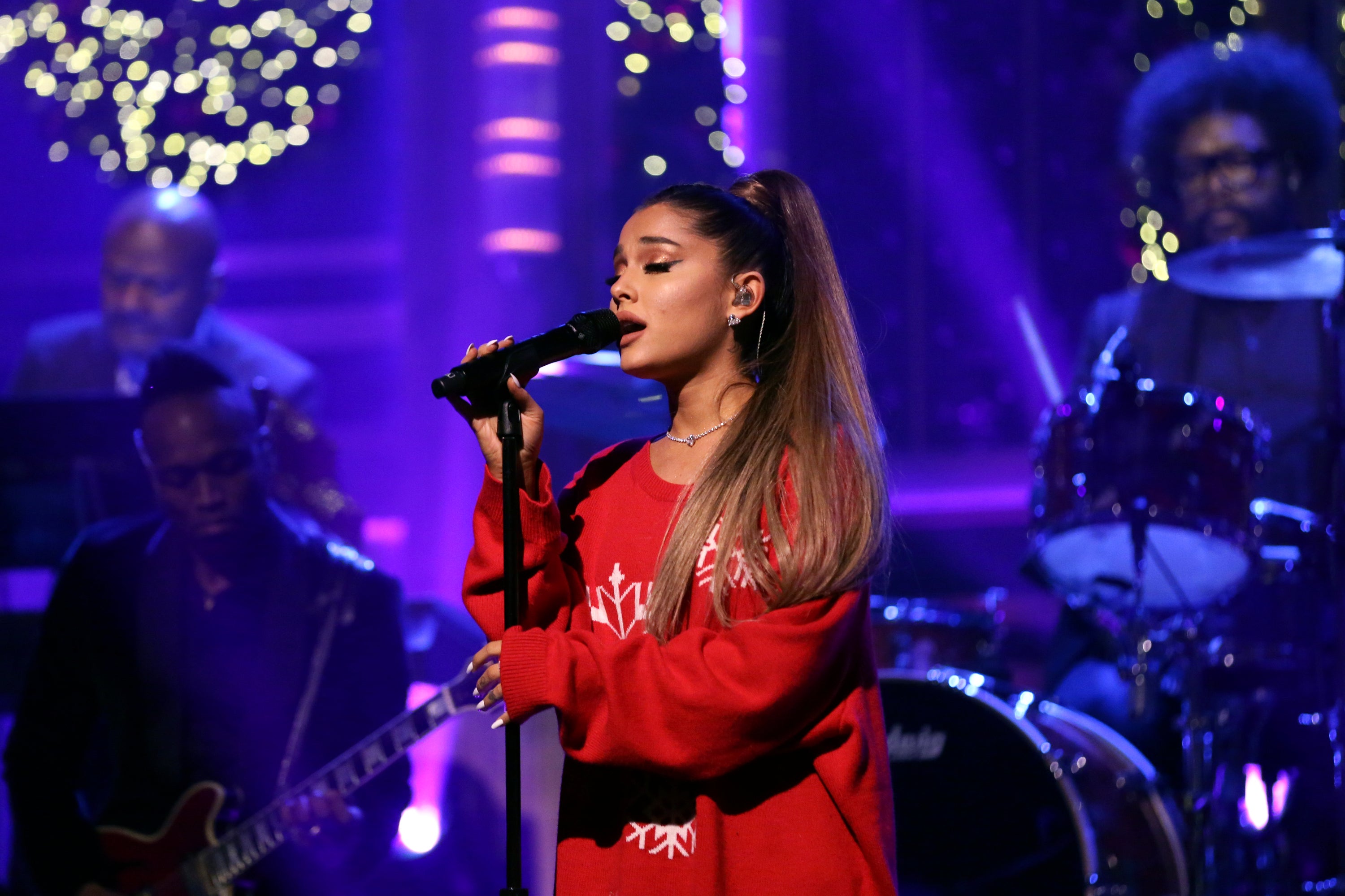
Ariana Grande’s recent voice changes are primarily attributed to "vocal placement" and the long-term impact of intensive preparation for her role as Glinda in the Wicked films. By shifting her speaking register to a higher, more resonant placement, she protects her vocal folds from strain and maintains the muscle memory required for operatic musical theater. This shift is a deliberate technique used by professional vocalists to ensure longevity and clarity during demanding performance cycles.
The Viral Catalyst: Understanding the Public Reaction
The conversation surrounding Ariana Grande’s "new" voice reached a fever pitch following her appearance on the Podcrushed podcast. During the interview, listeners noted a distinct shift in her speaking voice—moving from a lower, more casual "pop" register to a high, light, and airy tone within the same sentence. While social media often labels such changes as "performative" or "fake," the reality is rooted in the complex intersection of vocal pedagogy and professional habit.
In the world of 2026, where we have seen the full release of both Wicked installments, it is clearer than ever that Grande’s vocal identity underwent a fundamental restructuring. For an artist who has been in the public eye since her teens, her voice has never been static. From the "baby voice" of the early 2010s to the lower, more soul-influenced register of the Thank U, Next era, Grande has frequently adapted her speech to match her artistic environment. However, the "Glinda shift" was more than just a stylistic choice; it was a physical necessity for the role.
The Glinda Effect: Musical Theater vs. Pop Technique
The most significant driver behind the voice change is the sheer duration and intensity of the Wicked production. To play Glinda the Good Witch, Grande had to move away from her signature contemporary R&B vocal style, which often utilizes a "mix" with more chest-voice dominance and occasional vocal fry.
Laryngeal Positioning and Resonance
In musical theater, especially for a character like Glinda, the vocal requirement is often "legato" and "classical" in nature. This requires a neutral or slightly lifted larynx and a focus on head-voice resonance.
- Muscle Memory: After two years of daily training to maintain a high, bright, and forward placement for singing, the muscles in the throat and mouth adapt. The "resting state" of the vocal tract shifts to accommodate this frequent usage.
- Vowel Modification: Grande’s speaking voice now reflects the rounded, clearer vowels required for theatrical projection. This is why she may sound more "ennunciated" or "proper" compared to her previous years.
- Vocal Weight: By keeping her speaking voice light (thinning out the vocal folds during speech), she prevents the "heaviness" that can make transitioning into a high soprano singing range difficult.
Vocal Health: The Science of Voice Preservation
For a global superstar, the voice is a multi-million-dollar instrument. Grande has been vocal in the past about the toll that touring and constant recording can take on the vocal cords. Professional singers often work with vocal pathologists and coaches to develop a "speaking placement" that minimizes wear and tear.
Avoiding Vocal Fry
Vocal fry—the low, creaky sound at the end of sentences—is common in American English but can be taxing for high-soprano singers. It involves the vocal folds vibrating at a very low frequency, often with a lack of consistent air pressure. For someone like Grande, whose career depends on the flexibility of her upper register, avoiding vocal fry in daily speech is a form of vocal hygiene.
By speaking in a higher, more "resonant" part of the throat (often called the "mask" of the face), she ensures that the vocal folds are meeting cleanly and efficiently. This reduces the risk of nodules, polyps, or general vocal fatigue. What the public perceives as a "fake" high voice is actually a "safe" high voice.
The Psychological Component: Empathy and Mirroring
Beyond the technical, there is a documented psychological phenomenon known as mirroring. Ariana Grande has frequently mentioned her tendency to pick up the accents and inflections of those she spends time with.
During the years spent filming in the United Kingdom and working with a predominantly British cast and crew, as well as her co-star Cynthia Erivo, it is natural for her speech patterns to have shifted. This is not unique to Grande; many actors find that their natural speaking voice "morphs" during long-term projects as a byproduct of their immersion in a character’s dialect and the environment of the set.
Comparative Analysis: Pop Era vs. Theatrical Era
To better understand the shift, we can examine the technical differences between Grande's vocal habits during the Positions era (2020) and the Wicked/Eternal Sunshine era (2024–2026).
| Feature | Pop Era (Pre-2021) | Theatrical/Current Era (2024-2026) |
|---|---|---|
| Primary Placement | Mid-chest and pharyngeal | High-head and facial mask |
| Larynx Position | Variable, often neutral | Consistently neutral to high |
| Vocal Fry Usage | High (Common in casual speech) | Minimal (Deliberately avoided) |
| Articulation | Relaxed, colloquial | Precise, theater-trained |
| Speaking Pitch | Lower (A3 - C4 range) | Higher (E4 - G4 range) |
| Breath Support | Shallow in speech | Diaphragmatic even in speech |
Addressing the "Code-Switching" Controversy
One of the most debated aspects of Grande’s voice change is her ability to switch back and forth. In the viral Podcrushed clip, she famously drops into a lower register for a brief moment before returning to the high pitch.
In technical terms, this is intentional register shifting. Professional vocalists are highly aware of their vocal tract's configuration. Grande likely dropped into her "old" register because it was more comfortable for a specific humorous aside, but immediately corrected back to her "healthy" placement to maintain her vocal stamina for the day. This "code-switching" is a sign of high vocal control, not a lack of authenticity. It is the same skill that allows a singer to transition from a low, breathy verse to a powerful, high-belted chorus.
Impact of Aging and Physical Maturity
It is also essential to acknowledge that the human voice changes naturally with age. Ariana Grande is now in her early 30s. The vocal folds thicken slightly over time, and the "girlish" quality of a singer in their early 20s often evolves into a richer, more resonant tone.
While Grande has maintained a very high range, the "weight" of her voice has changed. By choosing a higher speaking register, she may also be compensating for the natural deepening of the voice, allowing her to keep the "Ariana Grande brand" of high-pitched clarity that her fans expect, while still protecting her maturing instrument.
Frequently Asked Questions
Why did Ariana Grande's voice change so suddenly?
The change was not actually sudden but became more apparent during the Wicked press tours. It resulted from two years of intensive vocal training for the role of Glinda, which required her to adopt a classical soprano placement. This "theatrical" way of speaking became a habit through muscle memory.
Is her new voice permanent?
Vocal habits can be unlearned, but as long as Grande is performing high-soprano material or protecting her voice for longevity, she is likely to maintain this "forward" placement. However, as she moves further away from the Wicked era and into different musical styles, her casual speaking voice may settle into a middle ground.
What is "vocal placement" exactly?
Vocal placement refers to where a person "feels" the vibration of their voice while speaking or singing. "Forward placement" or "speaking in the mask" means the vibrations are felt in the sinus cavities and behind the teeth. This results in a brighter, higher-pitched sound that is safer for the vocal cords than "throat-heavy" speech.
Did Ariana Grande have surgery on her vocal cords?
There is no verified evidence of vocal cord surgery to change her pitch. Her voice change is consistent with behavioral vocal training and the physical adaptations associated with professional musical theater. Most changes in pitch and tone can be achieved through speech-language pathology techniques and vocal coaching.
Why does her voice change mid-sentence sometimes?
This is usually a result of "vocal fatigue" or a momentary lapse in "placement." When a singer is tired, they may default to their most relaxed (and often lower) register. Alternatively, she may switch registers intentionally for emphasis, humor, or to mimic a certain style of speech before returning to her professional "protected" placement.
Practical Recommendations for Vocal Health
If you are a singer or someone who speaks professionally and is interested in the techniques Ariana Grande uses to preserve her voice, consider the following:
- Hydration: The vocal folds must be lubricated to vibrate efficiently. Systemic hydration (drinking water) is key, but steaming can also provide direct moisture.
- Semi-Occluded Vocal Tract Exercises (SOVT): Exercises like straw phonation (blowing through a straw into water while humming) can help reset vocal placement and reduce tension.
- Monitor Your "Casual" Speech: Many vocal injuries occur during loud talking or "fry-heavy" speech in social settings rather than during actual singing. Adopting a more resonant speaking voice, as Grande has, can be a protective measure.
- Professional Guidance: Always work with a certified Speech-Language Pathologist (SLP) or a reputable vocal coach before attempting to significantly alter your speaking pitch, as doing so incorrectly can lead to muscle tension dysphonia.
In the 2026 landscape of pop music, Ariana Grande remains a prime example of how an artist can evolve their "instrument" to meet the demands of their career. Whether it is the influence of a character, the need for vocal longevity, or simple maturity, her voice change is a testament to the technical discipline required to stay at the top of the industry.