Aryna Sabalenka, often searched for by the common misspelling "Ariana Sabalenka," began her journey to tennis stardom in Minsk, Belarus. Her early years were defined by a non-traditional junior path, a rapid physical development into one of the tour’s most powerful hitters, and a profound emotional resilience shaped by the early loss of her father and mentor.
While many tennis prodigies dominate the junior Grand Slam circuit by age 15, Aryna Sabalenka’s ascent was a more gradual, internal evolution. Her youth was characterized by raw, unbridled power that required years of technical and emotional refinement to transform into the world-class consistency that eventually secured her place at the top of the WTA rankings. Understanding the "young" Sabalenka requires looking past the trophies to the rigorous training in Minsk and the pivotal coaching changes that harnessed her aggressive baseline style.
The Early Spark: Discovering Tennis in Minsk
Aryna Sabalenka was born on May 5, 1998, in Minsk, Belarus. Unlike many players who are pushed into the sport by tennis-obsessed parents, Sabalenka’s introduction to the game was almost accidental. Her father, Sergey Sabalenka, a former hockey player, was driving her one day when they passed some tennis courts. He decided to take her there to try it out, and the young Sabalenka immediately gravitated toward the sport’s competitive nature.
From a very young age, Sabalenka displayed a physical presence that set her apart. She was taller and stronger than many of her peers, a trait that would eventually become the foundation of her "Tiger" persona. Her early training took place at the National Tennis Academy in Minsk, where the focus was on developing the heavy-hitting style common in Eastern European tennis schools. However, her early coaches noted that her greatest challenge was not generating power, but controlling it.
The Role of Sergey Sabalenka
Sergey Sabalenka was the most influential figure in Aryna’s youth. As a former athlete, he instilled a professional mindset and a "never-say-die" attitude in her from childhood. He wasn't just a supportive parent; he was the primary architect of her competitive spirit. It was Sergey who encouraged her to embrace her aggressive instincts on the court, even when the high-risk nature of her game led to frequent unforced errors during her developmental years.
The Junior Path: A Non-Traditional Trajectory
One of the most striking aspects of Sabalenka’s youth is her relatively quiet junior career. In an era where players like Coco Gauff or Iga Świątek were household names in the junior ranks, Sabalenka did not follow the standard blueprint of competing in the top-tier ITF Junior Circuit Grand Slams.
Instead of traveling the world for junior points, Sabalenka stayed closer to home, focusing on improving her technical fundamentals and competing in smaller regional tournaments. This decision was partly due to financial considerations and partly a strategic choice to focus on the transition to the professional ITF Women’s Circuit as early as possible. By forgoing the spotlight of junior Wimbledon or the junior French Open, she avoided some of the early burnout that affects young players, but she also entered the professional ranks with less experience in high-pressure, televised matches.
Key Junior Statistics and Transition
By the time she was 16, Sabalenka was already shifting her focus toward the pro circuit. Her lack of a high junior ranking meant she had to take the "hard road," playing through qualifiers in low-tier tournaments in places like Istanbul, Antalya, and her home city of Minsk. This "young" period was crucial for building the physical stamina required for the WTA tour.
| Year | Age | Milestone/Status | Primary Focus |
|---|---|---|---|
| 2012 | 14 | Professional debut in ITF low-tier events | Developing serve speed and baseline depth |
| 2015 | 17 | First three ITF singles titles | Mastering the high-risk aggressive style |
| 2016 | 18 | Top 150 WTA debut | Transitioning from ITF to WTA qualifying |
| 2017 | 19 | First WTA Final & Fed Cup Breakthrough | Establishing mental toughness in team environments |
| 2018 | 20 | First WTA Titles & Top 20 Ranking | Refining shot selection and tactical variety |
The 2017 Breakthrough: The World Takes Notice
The year 2017 served as the official "coming out party" for the young Belarusian. It was the year she transitioned from a promising prospect to a genuine threat on the global stage. The most significant catalyst for this was the Fed Cup (now the Billie Jean King Cup).
Representing Belarus, Sabalenka played a pivotal role in leading her country to the final against the United States. Although Belarus narrowly lost, Sabalenka’s performance—particularly her victory over Sloane Stephens—showcased her ability to compete with Grand Slam champions. This period of her youth was marked by a sudden surge in confidence. She realized that her power could overwhelm the best players in the world, provided she could manage her nerves.
Technical Evolution: Harnessing the Power
During her late teens, Sabalenka’s game was often described as "high-octane." She possessed a serve that could exceed 120 mph and a forehand that generated massive topspin and pace. However, as a young player, she struggled significantly with double faults—sometimes hitting more than 15 in a single match.
Her technical development during this phase involved a grueling process of simplifying her service motion. Under the guidance of early coaches like Khalilova and later the more high-profile Dmitry Tursunov, she began the long journey of stabilizing her ball toss and improving her footwork to handle the deep, heavy balls common in the modern women's game.
The Tursunov Era: A Psychological Turning Point
No discussion of Sabalenka’s youth and early career is complete without mentioning her partnership with former ATP player Dmitry Tursunov, which began in 2018. This was a volatile but highly productive relationship that helped the then 20-year-old Sabalenka break into the world’s elite.
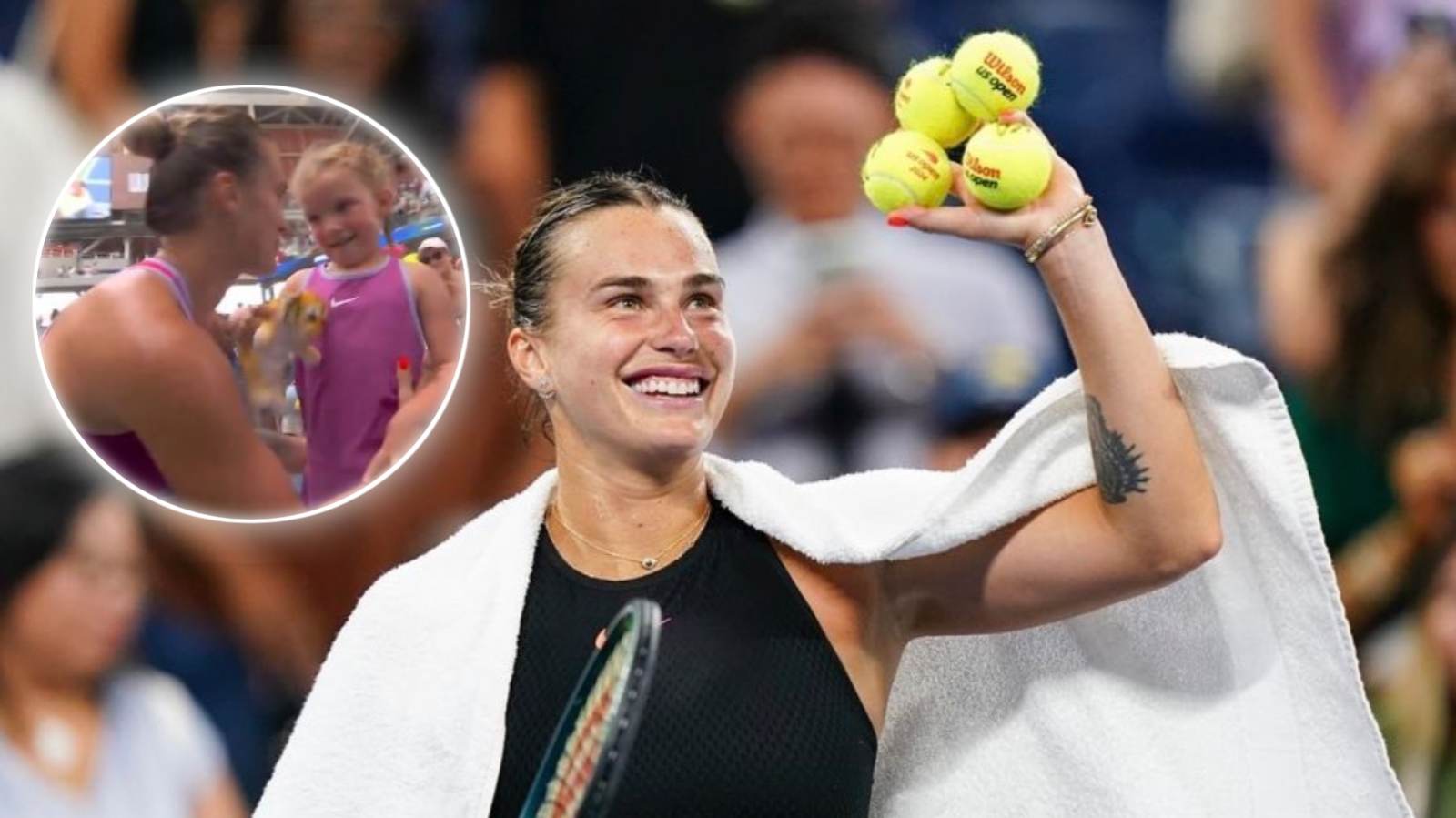
Tursunov understood the "wild" nature of Sabalenka’s game. He pushed her to move beyond just hitting the ball hard and toward playing with more "controlled aggression." This period was characterized by public coaching timeouts that often went viral, showing the raw emotion and high stakes of their collaboration. It was during these years that Sabalenka earned her "Tiger" nickname, symbolized by the large tiger tattoo on her left arm, which she got to remind herself to remain fierce and relentless on the court.
Personal Resilience: Navigating the Loss of Her Father
In November 2019, tragedy struck the Sabalenka family when Sergey Sabalenka passed away suddenly at the age of 43. At just 21 years old, Aryna lost her primary mentor and the man who had set her on her career path.
This event was a defining moment in her young life. For a period, her results fluctuated as she dealt with the immense weight of grief. However, she famously stated that her father wanted her to be world number one, and she used that goal as a source of motivation rather than a burden. The "young" Sabalenka of the early 2020s was a player who had matured overnight, carrying the legacy of her father into every match she played. This emotional depth is often cited by analysts as the reason for her improved "clutch" performance in later Grand Slam finals.
Developing the Champion’s Mindset
As she moved out of her "young" developmental years and into her mid-20s, Sabalenka had to overcome a significant mental hurdle: the "Slam plateau." Between 2019 and 2022, she was consistently ranked in the Top 10 but struggled to reach the final weekends of Grand Slams, often falling in the semifinals due to a return of her double-fault issues and nerves.
The work she did during her youth on biomechanics and sports psychology finally culminated in her 2023 and 2024 successes. She sought out biomechanics specialists to fix her serve and worked with psychologists to manage her on-court intensity. The results were transformative. By the time 2026 rolled around, Sabalenka was no longer viewed as a "volatile" power hitter but as a disciplined, dominant force who had successfully merged her youthful power with veteran wisdom.
Frequently Asked Questions
What is the correct spelling of Sabalenka’s first name?
The correct spelling is Aryna Sabalenka. "Ariana" is a common phonetic misspelling. Her name in Belarusian is Арына Сяргееўна Сабаленка.
When did Aryna Sabalenka start playing tennis?
She began playing at the age of six in her hometown of Minsk, Belarus. Her father, Sergey, introduced her to the sport after they happened to drive by some local courts.
Why didn't Sabalenka have a high junior ranking?
Sabalenka chose to focus on the professional ITF circuit early rather than competing extensively on the junior tour. She prioritized physical development and professional experience over junior titles, which is a less common but effective path for power players.
What is the significance of the tiger tattoo?
The tiger tattoo on her left forearm represents her "Tiger" mentality: being aggressive, fearless, and relentless. She has stated that it helps her stay focused during difficult moments in a match.
Who was her most influential coach during her youth?
While she had several coaches in Minsk, her partnership with Dmitry Tursunov (starting in 2018) is widely credited with helping her transition from a raw talent to a Top 10 WTA player.
How tall is Aryna Sabalenka?
She stands at approximately 1.82 meters (6 feet 0 inches), which gives her a significant leverage advantage for her serve and groundstrokes.
Practical Recommendation for Fans and Students of the Game
For those looking to understand the technical evolution of a world-class athlete, studying the "young" Aryna Sabalenka provides a masterclass in perseverance over polish. If you are a young player or a fan, observe her matches from the 2017 Fed Cup and compare them to her 2024 US Open or 2026 performances.
The primary takeaway is the importance of harnessing natural strengths. Sabalenka never tried to change her identity as a power player; instead, she invested years in the "unsexy" work of biomechanical serve adjustments and psychological conditioning to make that power sustainable. For further technical analysis of her modern game, the WTA Official Player Profile provides up-to-date statistics on her service and return metrics.