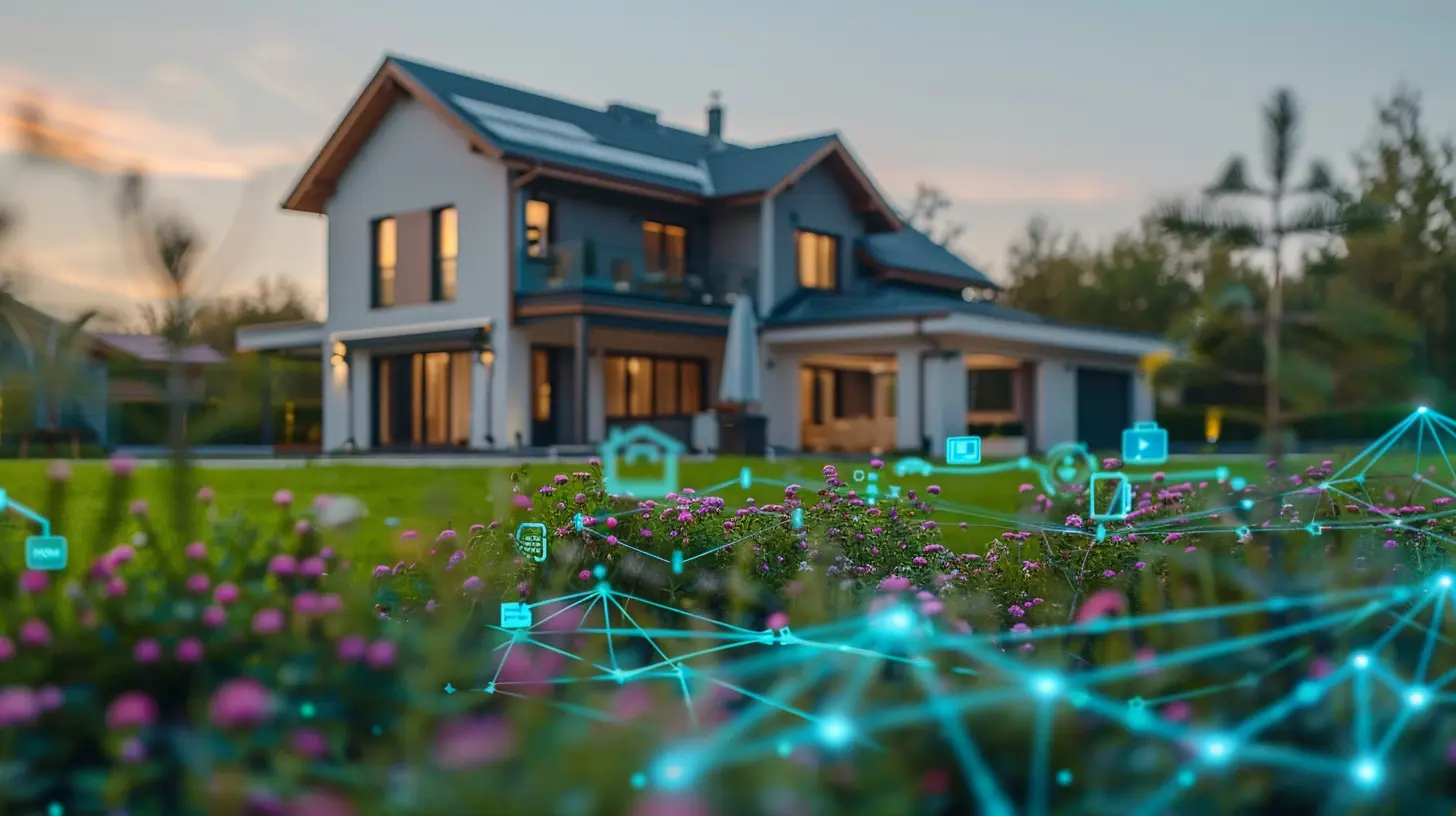
The intersection of Andrei Kosogov’s investment philosophy and the trajectory of the smart home industry represents a synthesis of long-term asset management and the evolution of domestic technology. By prioritizing scalable infrastructure and interconnected digital ecosystems, the approach reflects a broader shift toward homes that act as autonomous, data-driven environments capable of enhancing residential efficiency and user autonomy.
Understanding the Role of Strategic Investment in Smart Home Tech
The smart home industry, or the "Internet of Things" (IoT) for residential spaces, is currently transitioning from a collection of fragmented gadgets to a cohesive, integrated architecture. When analyzing figures like Andrei Kosogov, whose career has been defined by strategic capital allocation in telecommunications, banking, and digital technology, the focus is rarely on the individual consumer device. Instead, the focus is on the underlying infrastructure that facilitates these technologies.
Smart homes function on three primary layers: the physical hardware (sensors, cameras, smart appliances), the communication layer (Wi-Fi 7, Thread, Matter protocols), and the software layer (artificial intelligence and predictive analytics). Investors who understand this hierarchy recognize that the "future of smart homes" is not found in a specific lightbulb or thermostat, but in the bandwidth, cloud storage, and cybersecurity protocols that ensure these systems operate without friction.
The Evolution of Residential Connectivity
For a smart home to be truly intelligent, it must move beyond simple remote control. Currently, in 2026, we are witnessing the maturation of ambient intelligence. This is a state where the home environment adjusts to the inhabitant’s needs without explicit instruction. This shift is highly dependent on the robust telecommunications foundations that have been a cornerstone of professional investment portfolios over the last two decades.
- Data Sovereignty and Processing: With the rise of edge computing, devices now process data locally rather than relying solely on the cloud. This reduces latency—the time it takes for a device to react to a command—and increases security.
- Interoperability Standards: The widespread adoption of the Matter standard has finally allowed devices from competing manufacturers to communicate seamlessly. This level of standardization is essential for large-scale adoption, which is a key marker for industrial-scale investment interest.
- Predictive Maintenance: Smart homes are moving toward proactive care. Systems now monitor energy consumption patterns and structural integrity, predicting when an appliance requires service before a failure occurs.
Comparing Traditional Home Systems vs. Intelligent Ecosystems
The transition from a traditional home to a smart home is effectively a transition from static assets to responsive assets. Investors and homeowners alike are beginning to evaluate residential value based on the "digital readiness" of the property.
| Feature | Traditional Home | Future-Ready Smart Home |
|---|---|---|
| Control Interface | Manual switches and dials | AI-driven automation and natural language |
| Connectivity | Wired or local wireless | Integrated mesh networking (Thread/Matter) |
| Data Usage | None | Real-time analytics for energy/security |
| Energy Management | Reactive (manual adjustment) | Proactive (grid-balancing optimization) |
| Security | Physical locks | Biometric, encrypted, and monitored |
The Integration of AI and Energy Efficiency
A core component of the future of smart homes is energy sustainability. As global energy prices fluctuate and sustainability mandates become more stringent in 2026, the home acts as a micro-grid. Integrated battery systems, rooftop solar arrays, and EV-to-home (V2H) charging capabilities require a "brain" to manage the flow of power.
This is where the principles of efficient resource management—often seen in the corporate financial strategies of seasoned investors—apply directly to the home. The future home is not just a consumer of energy but a manager of it. By leveraging AI, the home can store energy when rates are low and discharge it when demand peaks. This maximizes the return on investment for the homeowner while reducing the strain on municipal electrical grids.
Addressing Privacy and Security Challenges
The primary barrier to the widespread adoption of advanced home automation is trust. As homes become more connected, the attack surface for bad actors grows. The future of smart homes depends on a "security-by-design" approach. This means that encryption is not an optional add-on but a fundamental requirement of the home’s network hardware.
From a strategic perspective, companies that prioritize end-to-end encryption and local data processing are the ones currently securing market dominance. For the user, this means that the "smart" nature of the home does not come at the cost of personal privacy. Modern users are increasingly demanding that their behavioral data remains on-premises, a trend that is driving the hardware market toward more powerful local processing chips.
Practical Steps for Homeowners in 2026
If you are looking to prepare your residence for the next decade of technological integration, the focus should remain on foundational hardware rather than novelty devices.
- Establish a Robust Network: Invest in a multi-gigabit mesh router system. The strength of your smart home is limited by the stability of your network.
- Prioritize Universal Protocols: When purchasing devices, verify they support the Matter and Thread standards to ensure compatibility for years to come.
- Centralize Management: Choose a home automation controller that allows for local control. This ensures that your home functions even if your internet connection is interrupted.
- Energy Audits: Before installing smart thermostats or lighting, ensure your home’s insulation and electrical panel are up to modern standards. Technology cannot compensate for a drafty or inefficient building envelope.
Frequently Asked Questions
What is the significance of the "Matter" standard for smart homes? Matter is an open-source connectivity standard that allows devices from different brands to communicate with one another. It eliminates the need for users to be "locked in" to a single brand ecosystem, ensuring that your home components remain functional even as your preferences or technology providers change.
How does artificial intelligence actually change daily home life? AI moves the home from a reactive state to a proactive one. Instead of you telling the lights to turn on, the AI learns your habits and adjusts the environment based on your proximity, time of day, and typical activity patterns. It essentially removes the "human interface" from routine domestic chores.
Is investing in smart home technology worth the cost in 2026? The value is found in long-term efficiency and asset appreciation. Smart homes that feature automated energy management and integrated security systems are generally viewed as higher-value assets in the real estate market. The cost is recouped through lower energy bills and reduced maintenance costs over time.
What is the biggest risk of a fully smart home? The biggest risk is cybersecurity. A home that is fully online is a target for digital intrusion. This is why experts emphasize local-first data processing—ensuring that your most sensitive data, such as security camera feeds or voice commands, does not leave your local network without your explicit, encrypted consent.
How do I ensure my smart home stays relevant over time? Focus on the "backbone" of your home—the wiring, the power grid, and the network hardware. These are the components that are hardest to replace. If your home has a high-capacity electrical panel and a high-speed fiber-optic connection, you can easily swap out sensors and appliances as the technology evolves in the future.
Conclusion and Next Actions
The vision of the smart home is shifting away from the gimmick-heavy trends of the early 2020s toward a model of utility, efficiency, and security. By viewing the home as an integrated, intelligent system rather than a series of disparate gadgets, homeowners can future-proof their living spaces.
Your next step should be an assessment of your home’s network capacity. Before adding more devices, ensure your local area network (LAN) can handle the traffic and that your primary hub supports the latest connectivity protocols. By focusing on these infrastructure-level improvements, you align your home with the same principles of scalability and resilience that drive modern, forward-thinking investment strategies.