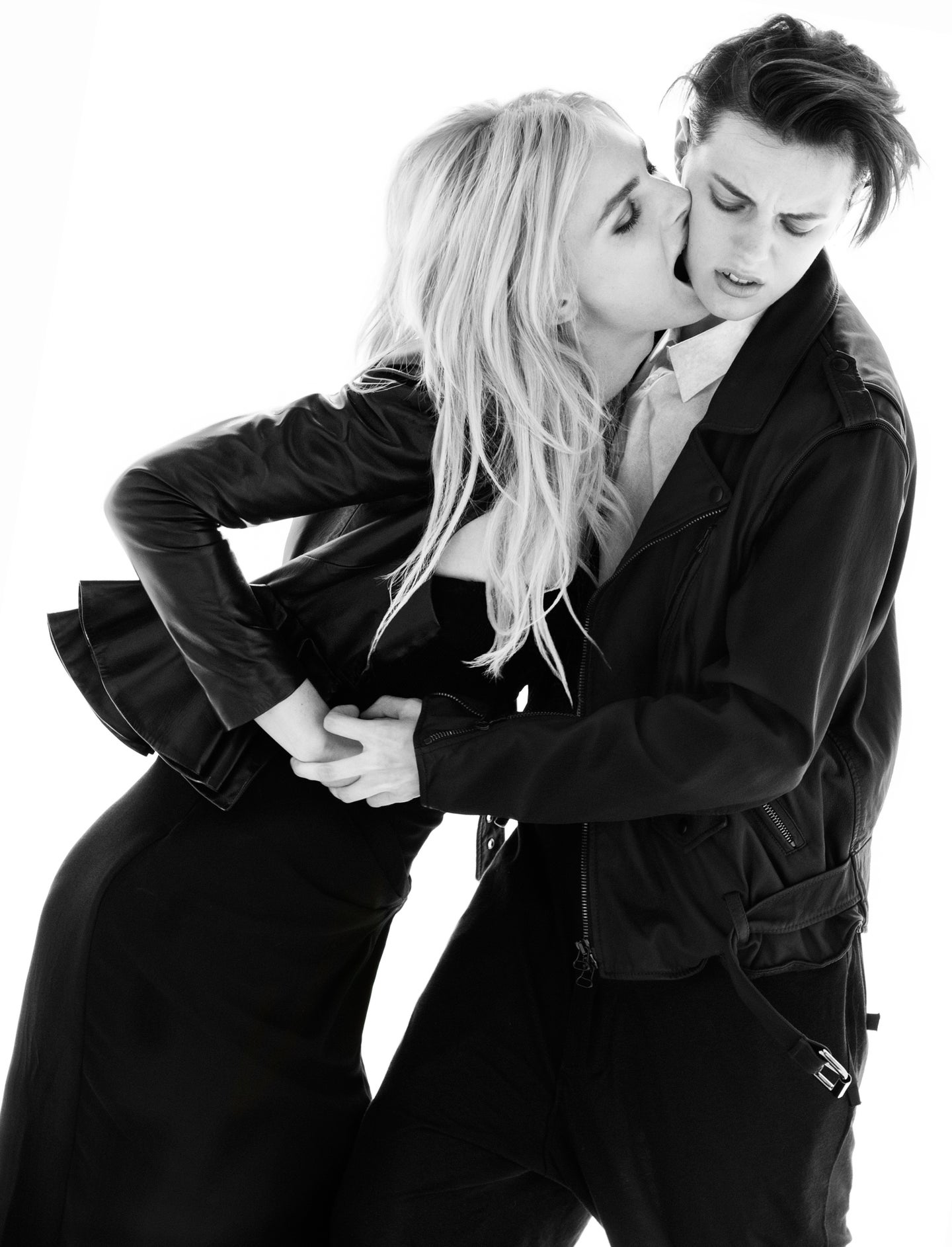
Andreja Pejić (formerly Andrej Pejić) is a pioneering fashion model who fundamentally redefined gender boundaries within the global fashion industry. Known initially for her striking androgyny and later for her successful transition as a trans woman, her career is characterized by high-fashion editorial success, landmark runway appearances for Jean Paul Gaultier and Marc Jacobs, and a transformative influence on how luxury brands perceive gender fluidity.
The Rise of Andreja Pejić: A Paradigm Shift in Fashion
The emergence of Andreja Pejić in the late 2000s and early 2010s marked a significant departure from traditional modeling archetypes. Discovered while working at a McDonald’s in Melbourne, Australia, Pejić possessed a look that the industry initially struggled to categorize but eventually embraced as revolutionary. In 2026, looking back at her career, her trajectory remains a case study in how a single individual can challenge the binary structures of the multi-billion-dollar luxury market.
Pejić’s early career was defined by her ability to model both menswear and womenswear with equal efficacy. This "gender-bending" capability was not merely a gimmick; it was supported by a technical proficiency in movement and an aesthetic that appealed to the avant-garde sensibilities of European designers. Her presence allowed creative directors to experiment with silhouettes that were previously confined to rigid gender roles, effectively paving the way for the gender-neutral collections that became standard in the mid-2020s.
Defining Physical Characteristics of the "Androgyny" Era
To understand the impact of Pejić, one must analyze the specific physical characteristics that made her a favorite of photographers like Steven Meisel and Mario Testino. During the peak of her "androgynous" phase (roughly 2010–2013), her aesthetic was often described as "otherworldly" or "alien."
Facial Structure and Aesthetic Appeal
Pejić’s face was characterized by a high degree of symmetry and sharp, angular features. Her high cheekbones and defined jawline provided a structural canvas that could be transformed through makeup to appear either traditionally masculine or hyper-feminine.
Her signature platinum blonde hair became a trademark, often styled in long, sleek lengths that emphasized her ethereal look. Her eyes, frequently described as expressive and deep-set, allowed her to convey a wide range of emotions in still photography, a trait highly valued in high-fashion editorial work where "storytelling" is as important as the clothing.
Stature and Runway Presence
Standing at approximately 6 feet 2 inches (188 cm), Pejić possessed the height required for top-tier international runways. Her frame was exceptionally lean, adhering to the "size zero" standards that dominated the 2010s high-fashion scene. This lean physique allowed her to fit into the sample sizes of both men’s tailoring and women’s couture, a rare feat that made her a versatile asset for houses that showed dual collections.
Her walk was noted for its precision. Unlike the aggressive "power walk" of some 90s supermodels, Pejić’s runway presence was often more fluid and graceful, allowing the garments to take center stage. This adaptability meant she could close a Jean Paul Gaultier bridal show in a gown as easily as she could walk a Marc Jacobs menswear show in a sharp suit.
The Historical Context: Modeling Both Menswear and Womenswear
The most distinctive characteristic of Pejić’s early career was her dual-gender portfolio. In 2011, she achieved a milestone that remains legendary in fashion history: walking in both the men's and women's shows for Jean Paul Gaultier in the same season.
The Jean Paul Gaultier Connection
Gaultier, often referred to as the "Enfant Terrible" of French fashion, found in Pejić the ultimate muse for his boundary-pushing designs. By casting her as the "bride" in his Spring/Summer 2011 Haute Couture show, Gaultier didn't just showcase a dress; he made a political and social statement. This appearance solidified Pejić’s status as more than a model—she became a cultural icon.
During this period, Pejić was ranked in the top 20 on Models.com for female models while simultaneously appearing on "Top Men" lists. This "double ranking" was unprecedented and forced industry analysts to reconsider how they categorized talent. The technical challenge for Pejić during this time was maintaining a look that could satisfy the requirements of two distinct markets, requiring a deep understanding of posing and physical expression.
Evolution and Transition: From Andrej to Andreja
In 2014, Pejić publicly came out as a trans woman and underwent gender-affirming surgery. This transition was a pivotal moment not just for her personal life, but for her professional characteristics as well. She transitioned from being marketed as an "androgynous male model" to being a "female model."
Managing Career Shifts During Transition
The transition required a strategic shift in her agency representation and portfolio. While the fashion industry prides itself on being progressive, the commercial side often relies on established categories for retail and advertising. Pejić had to re-establish herself in the highly competitive world of female modeling, where she was no longer a "unique outlier" but a peer to established female supermodels.
Her post-transition career saw her landing major beauty contracts—notably with Make Up For Ever—making her one of the first openly transgender models to front a major global cosmetics campaign. This shift emphasized her feminine characteristics and proved that her appeal was not limited to the novelty of androgyny, but was rooted in her intrinsic beauty and professional skill.
Comparison of Career Eras
The following table outlines the key differences in Pejić’s modeling characteristics and professional focus across her two primary career phases.
| Feature | Androgynous Era (2010–2013) | Post-Transition Era (2014–Present/2026) |
|---|---|---|
| Market Category | Dual-gender (Menswear & Womenswear) | Womenswear & Beauty |
| Primary Aesthetic | Ethereal, ambiguous, avant-garde | Sophisticated, feminine, high-fashion |
| Key Runway Roles | Closing "Bride" (Gaultier), Menswear (Jacobs) | Standard Female Runway, Couture |
| Beauty Focus | Editorial/Experimental makeup | Global cosmetics campaigns, Skincare |
| Agency Branding | "The Androgynous Wonder" | High-fashion female model & Activist |
| Public Identity | Andrej Pejić | Andreja Pejić |
Impact on the Global Fashion Industry
By 2026, the "Pejić Effect" is clearly visible in the industry’s structure. Her success dismantled the notion that a model's utility was strictly tied to their assigned sex at birth. This shift led to several technical changes in how modeling agencies operate:
- Development of Non-Binary Divisions: Many top agencies now have "X" or non-binary divisions, a direct result of the trail Pejić blazed.
- Increased Diversity in Beauty Standards: Her success in beauty campaigns proved that the consumer market was ready for diverse gender expressions, leading to more inclusive advertising in the mid-2020s.
- Casting Requirements: Casting directors now frequently look for "Pejić-esque" versatility—models who can transcend traditional gender roles to embody the "mood" of a brand rather than a specific gender.
Pejić’s career also highlighted the importance of authenticity in branding. Her decision to transition at the height of her fame was a risk, but it ultimately strengthened her brand by aligning her public persona with her true self. In 2026, brands prioritize this kind of authentic storytelling, often citing Pejić as the original blueprint for the modern "activist-model."
Requirements and Challenges for Androgynous Models
While Pejić made the process look seamless, the technical requirements for maintaining such a career are rigorous. Models following in her footsteps must manage several factors:
- Physical Maintenance: Maintaining a specific physique that can bridge the gap between menswear (often requiring slightly broader shoulders or height) and womenswear (requiring lean proportions).
- Portfolio Versatility: A successful androgynous model must have two distinct portfolios or a highly curated one that demonstrates their range across different gender expressions.
- Agency Navigation: Finding agencies that understand how to market a model who doesn't fit a standard mold is crucial. Pejić worked with powerhouse agencies like DNA Model Management and Storm Management, who had the infrastructure to support her unique path.
- Public Relations: Because these models often become symbols of social movements, they must navigate the complexities of public identity and activism while maintaining a professional modeling career.
Pejić’s ability to navigate these challenges—from being a refugee to becoming a global fashion icon—is as much a part of her "characteristics" as her physical beauty. Her resilience and intelligence allowed her to maintain a decade-plus career in an industry known for its short attention span.
Frequently Asked Questions (FAQs)
What made Andreja Pejić's look so unique in the early 2010s?
Her look was unique because it achieved a "perfect" middle ground between traditional masculine and feminine beauty standards. Her high cheekbones, platinum hair, and tall, slender frame allowed her to be cast in both menswear and womenswear shows, often being mistaken for a female model while she was still identifying as male. This versatility was unprecedented at the scale of high fashion.
How did Andreja Pejić change the modeling industry?
She was instrumental in breaking down the gender binary on the runway. Before Pejić, it was rare for a model to be top-ranked in both male and female categories. Her success forced the industry to create space for transgender and non-binary models, leading to more inclusive casting and the eventual normalization of gender-fluid fashion collections.
Which designers were most influential in Pejić's career?
Jean Paul Gaultier was perhaps her most significant supporter, frequently casting her in his Haute Couture shows and using her as a muse. Marc Jacobs also played a crucial role by featuring her in major campaigns and runway shows. Other designers who embraced her look include Jeremy Scott and Michalsky.
Is Andreja Pejić still modeling in 2026?
Yes, in 2026, Andreja Pejić remains an influential figure in the industry. While she has shifted some of her focus toward acting and advocacy, she continues to appear in high-profile editorials and serves as a "legacy" model for major fashion houses. Her presence is often requested for shows that celebrate the history of gender-fluidity in fashion.
What are the main physical characteristics of Andreja Pejić?
The primary characteristics include her 6'2" height, platinum blonde hair, angular facial structure, and ethereal aesthetic. Her ability to adapt her facial expressions and posture to suit various "gendered" styles was her most valuable professional characteristic during the first half of her career.
Practical Guidance for Aspiring Models
For those looking to Pejić’s career as a roadmap, the most important takeaway is the cultivation of versatility and technical skill. Modeling is not just about looks; it is about the ability to interpret a designer's vision. Pejić succeeded because she understood the technical nuances of the "male" vs "female" walk and could switch between them instantly.
Aspiring models who possess androgynous or non-traditional characteristics should focus on building a diverse portfolio that shows range. It is also essential to partner with agencies that view "uniqueness" as a long-term brand asset rather than a passing trend. As the industry continues to evolve in 2026, the demand for models who can bring a sense of history and authentic identity—traits Pejić has in abundance—continues to grow.