American Family Insurance provides a broad spectrum of auto insurance products designed to balance standard state-mandated coverage with customizable protection options. Evaluating your policy requires an understanding of how their premium structure, policy add-ons, and multi-line discount programs interact to create a comprehensive safety net for vehicle owners across their operating states.
Understanding the Scope of American Family Auto Insurance
American Family Insurance, often referred to as AmFam, operates as a mutual insurance company, which fundamentally shapes its business model and approach to policyholders. Unlike publicly traded insurance conglomerates that may prioritize quarterly shareholder returns, a mutual company is owned by its policyholders. This structure often influences the stability of coverage options and the nature of customer service interactions.
When assessing auto insurance, it is critical to distinguish between mandatory state requirements and elective coverage. American Family provides the foundational components—liability, collision, and comprehensive—while distinguishing itself through a suite of supplemental endorsements. In 2026, the company continues to focus on a regional distribution model, primarily serving the Midwest and Western United States. If you reside in one of the states where they underwrite, your costs will be dictated by a combination of personal risk factors, vehicle specifications, and the specific regulatory environment of that jurisdiction.
Standard Coverage Components
Every auto policy starts with core protections. While specific limits and deductibles are adjustable, these categories form the bedrock of the American Family experience.
- Liability Coverage: This is designed to cover bodily injury and property damage you cause to others in an accident. It includes both bodily injury liability and property damage liability. These are mandatory in almost every state, though the minimum limits required vary significantly by geography.
- Collision Coverage: Regardless of fault, this covers the cost of repairing or replacing your vehicle after an impact with another object or vehicle.
- Comprehensive Coverage: This addresses non-collision-related damage, such as theft, vandalism, fire, weather-related events, or collisions with animals.
- Uninsured and Underinsured Motorist Coverage: This acts as a vital safeguard if you are involved in an accident with a driver who lacks insurance or carries insufficient limits to cover your damages.
Premium Factors and Cost Drivers
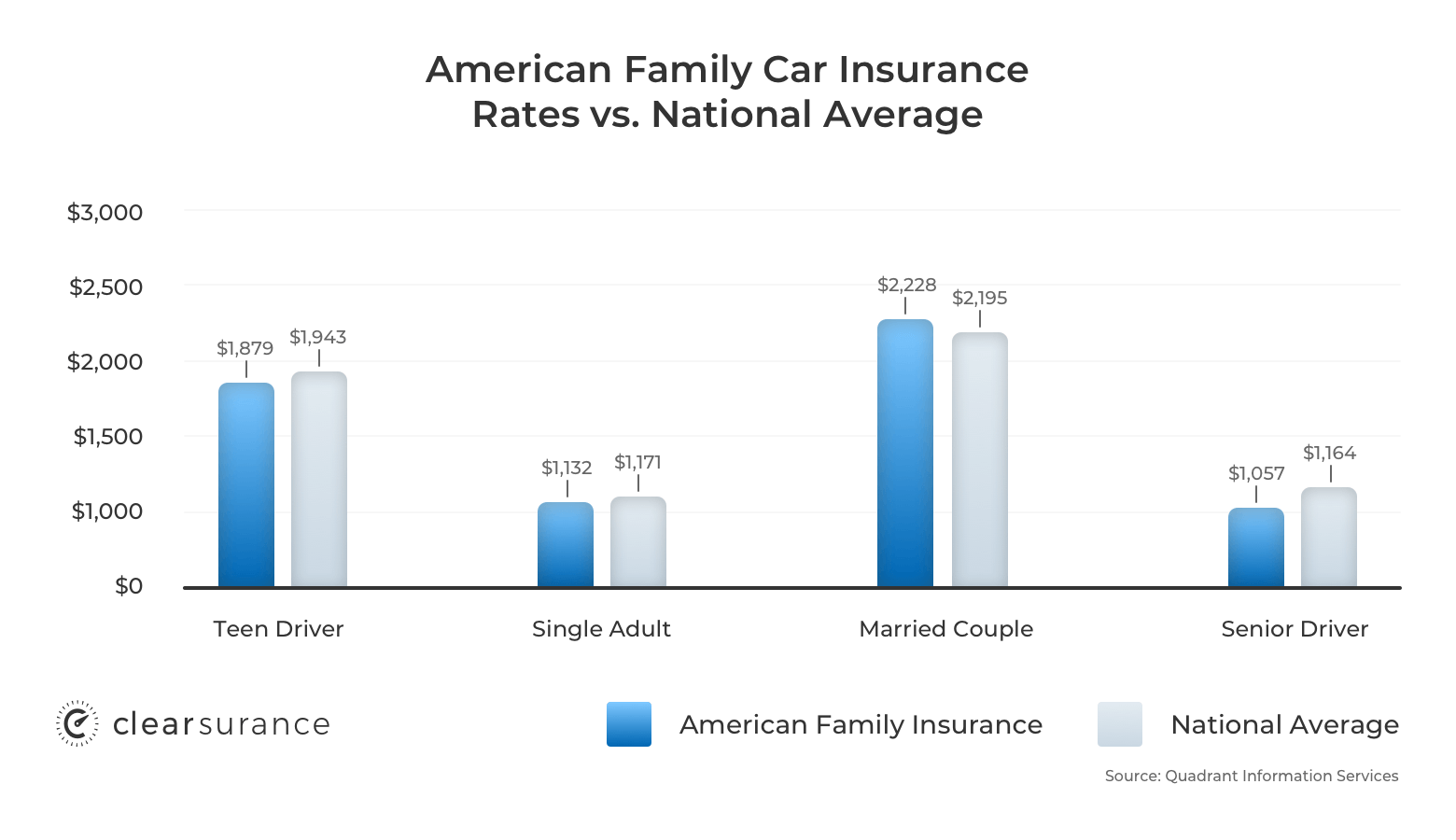
Determining the exact cost of an American Family policy is impossible without an individualized quote, as premiums are calculated using proprietary actuarial models. In 2026, several factors remain consistent in influencing how American Family prices its policies.
The Role of Personal and Vehicle Data
Your driving history remains the primary predictor of future claims. A clean record with no at-fault accidents or traffic violations generally qualifies a driver for lower base rates. However, American Family also looks at "insurance score," a metric influenced by credit history in states where this practice is legally permitted.
Vehicle characteristics also play a significant role. The cost to repair specific vehicle makes and models, the frequency of theft for your vehicle type, and the safety features equipped—such as automated emergency braking or advanced collision warning systems—directly impact your comprehensive and collision premiums.
Geographic and Demographic Impacts
The regulatory environment of your state dictates the minimum coverage requirements, which serves as the "floor" for your premiums. Furthermore, urban versus rural driving environments change the risk profile. A vehicle garaged in a densely populated city with high traffic congestion and higher rates of vandalism will naturally incur higher premiums than a vehicle kept in a quiet suburban or rural area.
Customizable Coverage Enhancements
American Family offers several endorsements that allow policyholders to tailor their protection beyond the industry standards.
| Feature | Description | Benefit |
|---|---|---|
| Gap Coverage | Pays the difference between your car’s value and your loan balance if the car is totaled. | Protects against negative equity in newer vehicles. |
| Rental Reimbursement | Covers the cost of a rental car while your vehicle is in the shop after a covered loss. | Maintains mobility during extended repair windows. |
| Roadside Assistance | Provides 24/7 help for towing, flat tires, lockouts, and fuel delivery. | Adds peace of mind for mechanical failures. |
| Accident Forgiveness | Prevents your premiums from increasing after your first at-fault accident. | Offers a "buffer" for long-term safe drivers. |
Strategic Approaches to Reducing Costs
Managing your insurance costs with American Family involves a combination of proactive policy management and taking advantage of available discounts.
Leveraging Bundling Opportunities
The most significant impact on your premium often comes from multi-line discounts. American Family emphasizes the "bundled" approach, where insuring both your home (or renters/condo insurance) and your auto with them yields a substantial multi-policy discount. This strategy effectively lowers the acquisition cost for the company, and they pass those savings on to the consumer.
Safe Driving Programs
In 2026, telematics—the use of data to monitor driving habits—is a standard offering. The "KnowYourDrive" program is American Family’s version of this technology. By installing a device or using a mobile app, your driving behavior (speed, acceleration, braking, and time of day) is recorded. High-performing drivers who avoid sudden maneuvers and excessive speeds can realize significant premium reductions at renewal.
Policy Adjustments
You can manage costs by reviewing your deductibles. Choosing a higher deductible—the amount you pay out-of-pocket before insurance kicks in—for comprehensive and collision coverage can lead to lower monthly premiums. However, this carries the risk of higher immediate costs in the event of an incident. Ensure your emergency fund can comfortably cover the chosen deductible amount before making this adjustment.
Comparing Coverage Value
When comparing American Family to other major carriers, look beyond the quoted premium. Consider the claim-handling reputation, the accessibility of local agents, and the specific terms of endorsements. A lower premium that is tied to a policy with narrow coverage definitions or high administrative fees may not provide the same value as a slightly more expensive policy that offers broader protection and easier claim processing.
When requesting quotes, ensure you are comparing identical coverage limits and deductibles across all providers. Ask for a "declaration page" from your current insurer and provide this document to agents or use it to verify the details in online quote portals. This prevents "apples-to-oranges" comparisons where one policy might look cheaper only because it offers significantly lower liability limits.
Common Challenges and Troubleshooting
Even with a reliable provider, misunderstandings regarding coverage can occur. If you find yourself in a situation where a claim is disputed or coverage is unclear, follow these steps:
- Review the Policy Declarations: Your declaration page is the definitive document for what is and is not covered. It lists your limits and specific endorsements.
- Contact Your Agent: American Family relies heavily on a network of independent or captive agents. Your local agent is the first line of support for troubleshooting issues regarding billing, coverage questions, or claim status.
- Document Everything: In the event of an accident, document the scene, get witness information, and keep detailed records of all communications with your insurance company. This creates an objective trail of evidence.
- Understand the Appeals Process: If a claim is denied, the company is required to provide a reason in writing. If you believe the decision is incorrect, request an internal review or file a complaint with your state’s Department of Insurance.
Frequently Asked Questions
Does American Family Insurance cover rideshare driving?
No, a standard personal auto policy typically excludes coverage for livery or commercial activity, including driving for platforms like Uber or Lyft. However, American Family offers a specific rideshare endorsement that closes this gap, providing coverage during the period between logging into the app and picking up a passenger.
Is my credit score used to determine my rate?
In states where it is legal, yes. American Family uses credit-based insurance scores as one factor among many. If you live in a state where this is restricted by law, they cannot use credit history to influence your premium.
How does Accident Forgiveness work?
Accident Forgiveness is an add-on feature. Once you have held the policy for a specified period without an at-fault accident, your first claim will not result in a premium surcharge. It is important to confirm the specific eligibility requirements for your state, as they vary.
Can I change my coverage mid-term?
Yes, you can adjust your coverage limits, deductibles, or add/remove endorsements at any point during your policy term. Changes to coverage that increase your liability or lower your deductible will result in a prorated increase in your premium, while reducing coverage will result in a refund or credit.
What should I do if my vehicle is totaled?
If your repair estimate approaches or exceeds the "total loss threshold" defined by your state and the insurer, the company will offer a settlement based on the Actual Cash Value (ACV) of your vehicle. This is not necessarily the purchase price, but the market value at the time of the loss. If you have "new car replacement" coverage or gap insurance, these will supplement the ACV to cover loan balances or help you purchase a new vehicle.
Final Recommendation
To maximize the value of your American Family auto insurance, conduct an annual policy review with your agent. Ensure that your liability limits reflect your current net worth, as insufficient liability coverage can leave personal assets exposed in the event of a significant lawsuit. Furthermore, confirm that all applicable discounts—such as bundling, good student discounts, or safe driver rewards—are actively applied to your account. By aligning your coverage with your current financial reality and driving patterns, you ensure that you are paying only for the protection you actually need.