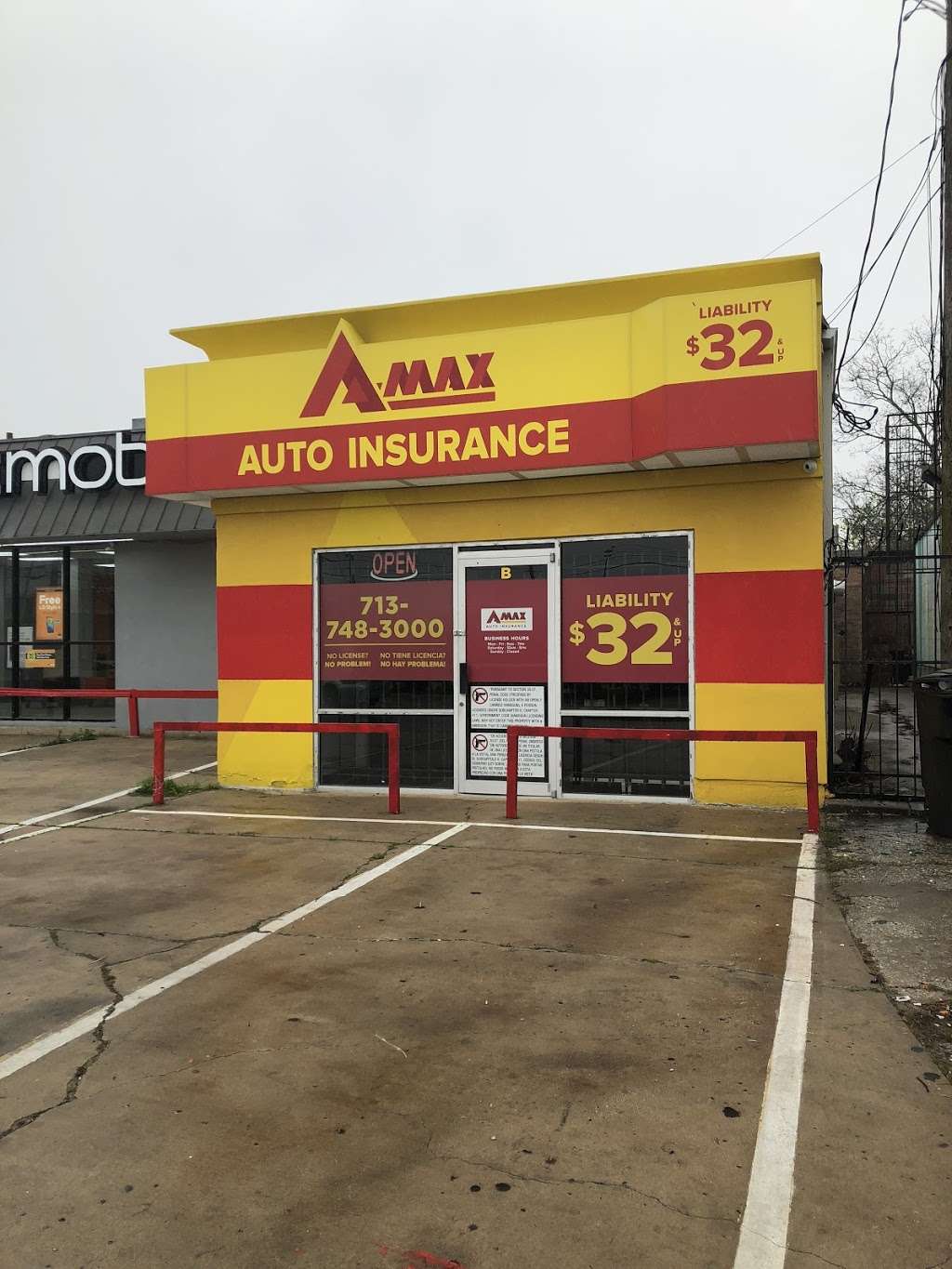
A-MAX Commercial Auto Insurance is a specialized business vehicle coverage provided by A-MAX Auto Insurance, a leading multi-carrier agency. It protects businesses against financial losses resulting from accidents, injuries, or property damage involving company-owned vehicles. It typically includes liability, collision, and comprehensive options tailored for small-to-medium enterprises and high-risk drivers.
Understanding the A-MAX Commercial Insurance Model
As we navigate the business landscape of 2026, the necessity for robust vehicle protection has never been more critical. A-MAX Auto Insurance distinguishes itself by operating as an independent agency rather than a single-provider carrier. This means when a business owner seeks "A-MAX commercial auto insurance," they are actually accessing a broad network of insurance providers through a single point of contact.
A-MAX specializes in finding affordable rates for businesses that might be classified as high-risk or those that simply need a budget-conscious solution. Their model involves shopping among dozens of carriers—including national names like Progressive and Bristol West, as well as specialized regional insurers—to find the policy that fits the specific risk profile of the business. This approach is particularly beneficial for small-to-mid-sized enterprises (SMEs) that require flexibility and competitive pricing.
In 2026, the commercial insurance market continues to face pressure from rising repair costs and increased litigation. By utilizing an agency model, A-MAX allows business owners to compare different "tiers" of coverage, ensuring they aren't paying for excess features they don't need while maintaining compliance with state laws and contractual requirements.
Core Coverage Components
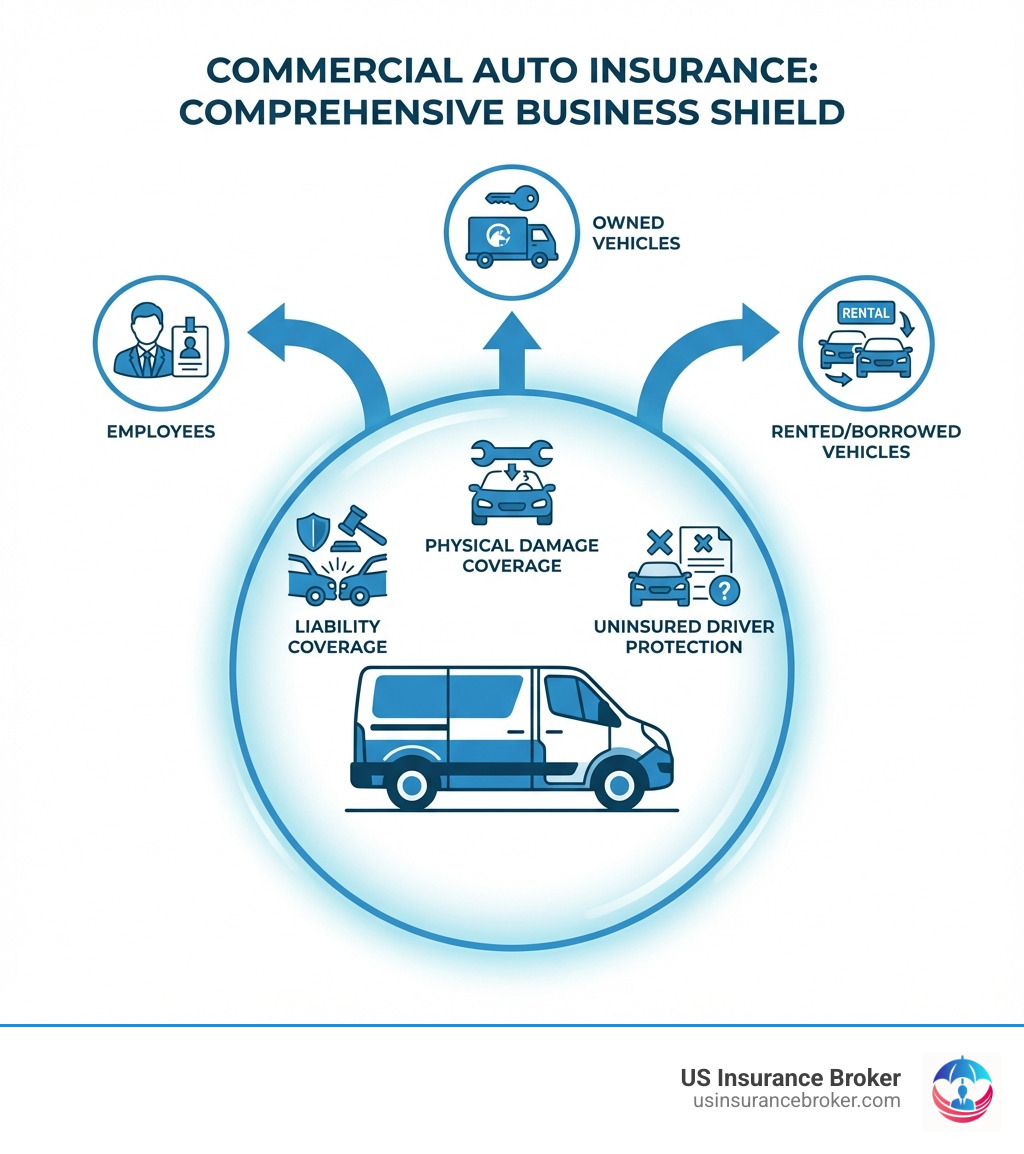
A comprehensive commercial auto policy via A-MAX is not a single product but a combination of several distinct types of protection. Understanding these components is essential for determining the level of risk your business can afford to carry.
Liability Insurance (Bodily Injury and Property Damage)
Liability is the foundation of any commercial policy. If an employee is found at fault in an accident while driving for business purposes, liability coverage pays for the medical bills of the other party and the repairs to their property. In 2026, minimum liability limits are often insufficient for businesses due to the high cost of medical care and modern vehicle technology. A-MAX agents typically recommend limits that exceed state minimums to protect business assets from potential lawsuits.
Physical Damage Coverage
This category is split into two parts:
- Collision Coverage: This pays for damages to your own business vehicle if it hits another object or flips over, regardless of who is at fault.
- Comprehensive Coverage: This covers non-collision events, such as theft, vandalism, fire, or damage from weather events like hail. Given the increasing frequency of extreme weather patterns in 2026, comprehensive coverage has become a non-negotiable for most mobile businesses.
Uninsured and Underinsured Motorist Coverage (UM/UIM)
Despite legal requirements, a significant percentage of drivers on the road remain uninsured or carry only the bare minimum. UM/UIM coverage protects your business if one of your drivers is hit by a person who does not have enough insurance to cover the damages. This ensures that your business doesn't have to foot the bill for someone else's negligence.
Medical Payments or Personal Injury Protection (PIP)
These coverages pay for the medical expenses of your driver and any passengers in your vehicle at the time of an accident. PIP is more expansive, often covering lost wages and funeral expenses, and is a requirement in "no-fault" insurance states.
Specialized Commercial Endorsements
Beyond the basics, A-MAX offers access to endorsements—additional coverages that can be "tacked on" to a policy to address specific industry risks.
- Hired and Non-Owned Auto (HNOA): This is vital for businesses where employees use their personal vehicles for company errands (like a delivery driver using their own car). HNOA provides liability protection for the company if an accident occurs during work hours.
- Motor Truck Cargo Insurance: For businesses involved in transporting goods, this covers the items being hauled in the event of damage or theft.
- On-Hook Coverage: Specific to towing businesses, this protects the vehicle being towed while it is in the care of your business.
- Rental Reimbursement with Downtime: If a commercial vehicle is in the shop for repairs after an accident, this helps pay for a rental or covers the loss of income while the vehicle is out of commission.
Who Needs A-MAX Commercial Auto Insurance?
A common misconception is that a personal auto policy is sufficient for business use. However, most personal policies explicitly exclude coverage for "business use," which can lead to a claim being denied.
Service-Based Businesses
Plumbers, electricians, and HVAC technicians who use vans or trucks to transport tools and equipment to job sites require commercial coverage. The weight of the equipment and the frequent travel to different locations increase the risk profile beyond what a personal policy allows.
Delivery and Courier Services
Whether it is food delivery, flower delivery, or last-mile logistics, any vehicle used to transport goods for a fee must be insured commercially. With the continued expansion of the gig economy in 2026, A-MAX provides specific solutions for independent contractors who need to bridge the gap between personal and commercial risks.
Passenger Transportation
Businesses that transport people—such as non-emergency medical transport (NEMT), private shuttle services, or daycare vans—need specialized commercial policies that include higher passenger liability limits.
Sales and Consulting
Even if you are only driving a sedan to meet clients, if the vehicle is owned by a corporation or LLC, it must be on a commercial policy. Furthermore, if you are carrying expensive prototypes or marketing materials, the cargo protections available in commercial insurance are essential.
Comparing Commercial vs. Personal Auto Insurance
| Feature | Personal Auto Insurance | Commercial Auto Insurance |
|---|---|---|
| Primary Use | Commuting, errands, pleasure. | Business deliveries, service calls, hauling. |
| Eligibility | Individuals and families. | Sole proprietors, LLCs, Corporations. |
| Liability Limits | Generally lower ($30k - $300k). | Much higher (often $1M+ aggregate). |
| Vehicle Types | Cars, SUVs, light pickups. | Heavy trucks, vans, specialized equipment. |
| Cost Basis | Personal credit, driving history. | Business type, driver fleet, cargo risk. |
| Equipment Coverage | Very limited or excluded. | Can include tools, ladder racks, and cargo. |
How Costs Are Calculated in 2026
The premium for an A-MAX commercial auto policy is determined by several fluctuating factors. Because A-MAX shops across multiple carriers, they can often mitigate price hikes by finding providers that weigh certain risks differently.
- Radius of Operation: A vehicle that only travels within a 50-mile radius is generally cheaper to insure than one that travels long distances across state lines, as highway driving at high speeds increases accident severity.
- Driver Records: Every driver on the policy will have their Motor Vehicle Record (MVR) checked. In 2026, insurers are placing higher emphasis on "distracted driving" violations. A-MAX is known for working with businesses that have "less-than-perfect" drivers, though this will result in higher premiums.
- Vehicle Type and Weight: Heavier vehicles cause more damage in an accident, leading to higher liability premiums. Specialized vehicles with hydraulic lifts or refrigerated units are also more expensive to insure due to higher replacement costs.
- Deductible Selection: Choosing a higher deductible (the amount you pay out of pocket before insurance kicks in) can significantly lower the monthly premium. This is a common strategy for businesses with high cash reserves.
- Claims History: A business with a history of frequent, small claims is often viewed as higher risk than a business with one large, isolated incident.
The Role of Texas State Requirements
While A-MAX operates in multiple regions, its footprint is largest in Texas. As of 2026, Texas law requires all vehicles to carry a minimum of 30/60/25 liability coverage. However, the Texas Department of Insurance strongly advises businesses to carry higher limits. If a company vehicle is involved in a multi-car pileup or causes significant property damage to a storefront, the state minimum of $25,000 for property damage will be exhausted almost instantly, leaving the business owner personally liable for the remaining costs.
For businesses involved in interstate commerce, they must also comply with Federal Motor Carrier Safety Administration (FMCSA) regulations, which often require liability limits starting at $750,000 or higher depending on the weight and type of cargo being hauled.
Step-by-Step: Getting a Quote and Setting Up Coverage
Navigating the application process with A-MAX is straightforward, but having the right documentation ready can expedite the process.
Phase 1: Information Gathering
You will need to provide:
- Business Entity Info: Your legal business name and Employer Identification Number (EIN).
- Vehicle Identification Numbers (VINs): For every vehicle you intend to insure.
- Driver Information: Full names, dates of birth, and driver’s license numbers for all employees who will operate the vehicles.
- Loss Runs: A report from your previous insurer showing your claims history for the last three to five years.
Phase 2: The Comparison Stage
An A-MAX agent will take this data and run it through their proprietary rating systems. This allows them to compare quotes from several carriers simultaneously. During this phase, you should ask about "telematics" discounts. Many 2026 carriers offer lower rates if you install GPS tracking or driving-behavior monitors in your fleet.
Phase 3: Binding the Policy
Once you select a quote, you will sign the application documents and pay the first installment. A-MAX will then issue a "Certificate of Insurance" (COI). This document is vital because many clients or general contractors will not let you start work on a site until you provide proof of commercial coverage.
Common Mistakes to Avoid
- Underinsuring for the Sake of Cost: It is tempting to choose the cheapest policy available. However, in a litigious environment, an "underinsured" business is an easy target. Always balance the premium cost against the potential total loss of your business assets.
- Failing to Update the Driver List: If an employee who is not listed on your policy has an accident, the insurance carrier may have grounds to deny the claim. Ensure you notify your A-MAX agent every time you hire a new driver.
- Assuming Cargo is Covered by Liability: Liability covers damage to others. If your own goods are damaged in a flip-over, only specific cargo or inland marine insurance will cover that loss.
- Misrepresenting the Radius of Use: If you tell your insurer you only drive locally but have an accident three states away, your claim could be denied for "material misrepresentation."
Frequently Asked Questions
Does A-MAX cover high-risk drivers for commercial accounts?
Yes, A-MAX is specifically known for its ability to place high-risk drivers. This includes drivers with prior accidents, speeding tickets, or even those who require an SR-22 filing. While the premiums will be higher than for a clean record, A-MAX provides access to carriers that specialize in non-standard risk, ensuring your business stays operational even if your staff has a checkered driving history.
What is the difference between "Any Auto" and "Scheduled Auto" coverage?
"Scheduled Auto" coverage only protects the specific vehicles listed (scheduled) on your policy. "Any Auto" is a broader form of liability coverage that protects the business if an accident occurs involving any vehicle, including newly acquired ones or hired vehicles. "Any Auto" is typically more expensive but offers the highest level of protection for growing fleets.
Can I get commercial insurance if I am a sole proprietor?
Absolutely. Many A-MAX clients are "man-with-a-van" style operations or independent contractors. You do not need to be a large corporation to qualify for commercial auto insurance. In fact, sole proprietors are often at the greatest risk because their personal assets are not shielded from business liabilities, making a robust commercial policy even more important.
How does telematics affect my A-MAX commercial policy in 2026?
In 2026, most carriers partnered with A-MAX offer significant discounts for businesses that utilize telematics. These devices track hard braking, rapid acceleration, and speeding. If your fleet demonstrates safe driving habits, you can see premium reductions of 10% to 25% at renewal. Conversely, it provides business owners with data to coach drivers and reduce the likelihood of accidents.
Is roadside assistance included in A-MAX commercial policies?
Roadside assistance is usually an optional add-on rather than a standard feature. For commercial vehicles, this often includes heavy-duty towing, battery jump-starts, and fuel delivery. Given that a broken-down vehicle represents lost revenue, adding this endorsement is generally recommended for service-based businesses.
Practical Recommendation
If you are a business owner in 2026, your first step should be to conduct a "risk audit" of your current vehicle usage. If you or your employees are using vehicles for any task beyond a standard commute—even for small errands—contact an A-MAX agent to request a comparison quote.
When you call, specifically ask for a "comprehensive review of non-owned auto exposure" to ensure you are protected when employees use their own cars. Transitioning to a commercial policy not only provides higher liability limits but also ensures that your claims will actually be paid when you need them most, securing the long-term viability of your business.