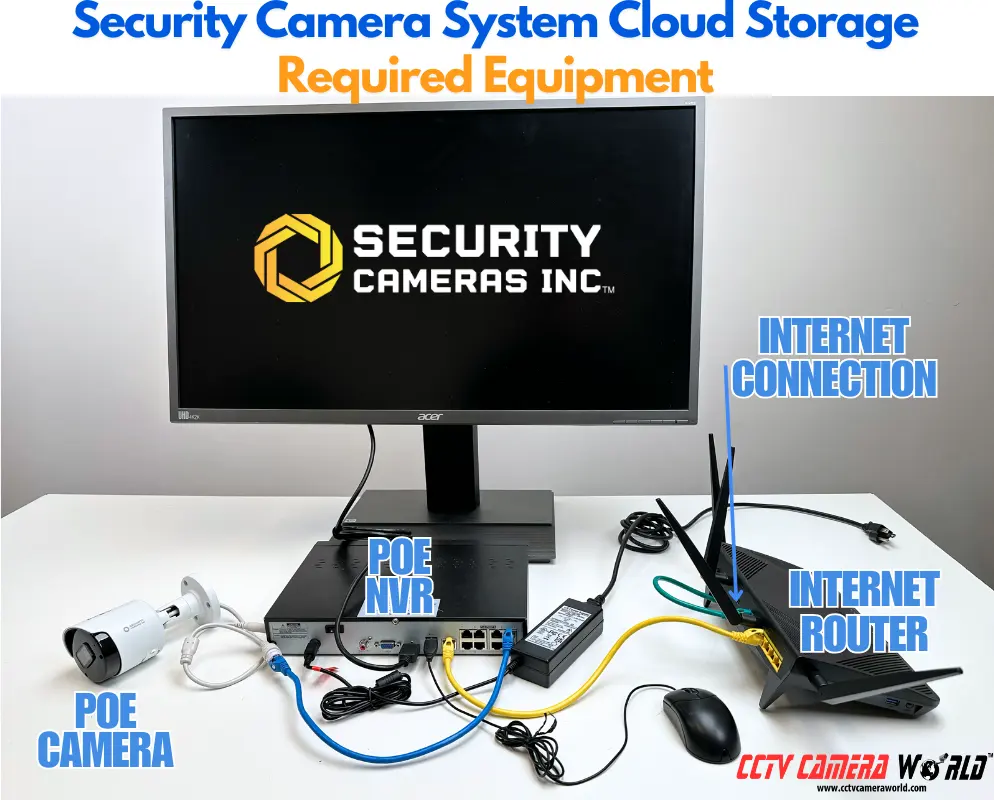
Altec Lansing security cameras use the Altec Smart Home app to provide cloud storage services, allowing users to save, review, and share recorded footage. Most models offer a tiered subscription model, typically starting around $4.99 per month for 7-day video history, while basic motion alerts and live streaming remain available for free.
Cloud storage has become the backbone of modern residential security, transforming a simple camera into a comprehensive monitoring system. For Altec Lansing users, the shift toward cloud-based ecosystems provides a critical safety net: even if an intruder steals or destroys the physical camera, the evidence remains securely stored on remote servers. As of 2026, Altec Lansing continues to support its camera lineup through a dedicated cloud infrastructure that balances affordability with essential security features.
Understanding the Altec Lansing Cloud Ecosystem
Altec Lansing, a brand historically synonymous with high-fidelity audio, entered the smart home security market by licensing its name for a range of interior and exterior cameras. These devices are primarily managed through the Altec Smart Home application. The cloud storage component is not just a secondary feature; it is the primary method for long-term data retention for users who do not wish to manage physical MicroSD cards.
The cloud service operates on a rolling window principle. Depending on your subscription level, the system automatically deletes the oldest footage to make room for new recordings. This ensures that your storage never "fills up" in the traditional sense, but it also means users must proactively save or download clips they wish to keep permanently.
Encryption and Data Privacy
In 2026, digital privacy is a paramount concern for homeowners. Altec Lansing cloud storage utilizes AES-128 or AES-256 bit encryption for data at rest and TLS/SSL protocols for data in transit. This means that as the video travels from your camera through your router to the cloud servers, it is shielded from "man-in-the-middle" attacks. Only authorized users logged into the verified Altec Smart Home account can decrypt and view the files.
Cloud Storage Subscription Plans and Pricing
While Altec Lansing cameras often include a slot for local storage, the cloud service is a subscription-based add-on. These plans are designed to accommodate different needs, from single-camera apartment setups to multi-camera household monitoring.
| Feature | Free/Basic Tier | Standard Cloud Plan | Premium Cloud Plan |
|---|---|---|---|
| Storage Duration | Live Stream Only | 7 Days Rolling | 30 Days Rolling |
| Motion Alerts | Yes (Push Notifications) | Yes (With Video Clips) | Yes (With Video Clips) |
| Max Devices | 1-2 Cameras | Up to 5 Cameras | Unlimited (per account) |
| Direct Downloads | No (Snapshots only) | Unlimited | Unlimited |
| Monthly Cost | $0.00 | ~$4.99 | ~$9.99 |
| Annual Discount | N/A | ~15% Off | ~20% Off |
Note: Pricing and features are based on standard 2026 service estimates and may vary by region or specific hardware model.
The Limitations of the Free Tier
The free tier is primarily intended for real-time monitoring. While you will receive notifications when the camera detects movement, you generally cannot go back and review what happened five minutes ago unless you were watching the live feed. For true security and insurance purposes, a paid cloud plan or a high-capacity MicroSD card is considered mandatory.
How to Set Up Altec Lansing Cloud Storage
Activating cloud storage requires a stable internet connection and the latest version of the Altec Smart Home app. The process is designed to be user-friendly, but there are several technical prerequisites to ensure the footage uploads correctly.
1. Account Configuration and Camera Pairing
Before you can subscribe to a plan, your camera must be successfully paired with your Wi-Fi network. Most Altec Lansing cameras operate on the 2.4GHz frequency band. In 2026, many mesh Wi-Fi systems use "Smart Steering" that combines 2.4GHz and 5GHz bands under one name; if your camera fails to connect, you may need to temporarily disable the 5GHz band or create a dedicated 2.4GHz guest network.
2. Selecting a Subscription
Once the camera is online:
- Open the Altec Smart Home App.
- Navigate to the Cloud Settings or Store section.
- Select the camera you wish to enroll.
- Choose between the 7-day or 30-day plan.
- Complete the transaction using a verified payment method (Credit Card, PayPal, or App Store/Google Play billing).
3. Adjusting Recording Triggers
To maximize the efficiency of your cloud storage, you must configure your Motion Detection Sensitivity. If the sensitivity is too high, the camera will record every swaying tree branch, potentially cluttering your timeline and consuming significant upload bandwidth. Adjust the "Detection Zone" settings within the app to focus specifically on doorways, windows, or walkways.
Technical Requirements for Reliable Cloud Uploads
Cloud storage is only as reliable as your home’s upload speed. Unlike downloading a movie, security cameras require consistent upstream bandwidth to send high-definition video data to the cloud.
- Upload Speed: For a 1080p Altec Lansing camera, a dedicated upload speed of at least 2 Mbps per camera is recommended. If you have four cameras recording simultaneously, your home network needs a consistent upload capacity of 8-10 Mbps.
- Latency (Ping): High latency can cause "choppy" video or gaps in the recording. A ping of under 50ms to the local server is ideal for real-time cloud synchronization.
- Stability: If your Wi-Fi router reboots frequently or has "dead zones," the camera may lose its handshake with the cloud server, resulting in missed events.
Cloud vs. Local SD Card Storage: Which is Better?
Altec Lansing cameras are versatile because they often offer both local and cloud options. However, they serve different purposes.
The Case for Cloud Storage
The primary advantage of the cloud is redundancy. In a burglary scenario, a savvy intruder may notice the camera and take it with them to destroy the evidence. With cloud storage, the footage of the intruder entering the premises is uploaded instantly and remains accessible even if the camera is physically gone. Furthermore, cloud storage allows you to access footage from anywhere in the world without needing to be on your home network.
The Case for Local (MicroSD) Storage
Local storage is a "buy it once" solution. By inserting a Class 10 MicroSD card (usually up to 64GB or 128GB depending on the model), you can record continuously without a monthly fee. However, once the card is full, it overwrites the oldest footage. In 2026, many users adopt a hybrid approach: they use an SD card for 24/7 continuous recording and a cloud subscription for high-priority motion events.
Troubleshooting Common Cloud Storage Issues
Even with a robust setup, users may occasionally encounter issues with their Altec Lansing cloud service. Most problems stem from connectivity or account synchronization.
Missing Footage or Gaps in Timeline
If you notice gaps in your recording history, the first culprit is usually Wi-Fi interference. Appliances like microwaves, baby monitors, and older cordless phones can disrupt the 2.4GHz signal. Ensure the camera has at least two bars of signal strength in the app. If the signal is weak, consider a Wi-Fi extender placed halfway between the router and the camera.
App Failing to Load Video Clips
If the app shows a thumbnail of a motion event but refuses to play the video, this often indicates a cache issue. Try the following:
- Log out and log back into the Altec Smart Home app.
- Clear the app cache in your smartphone's settings.
- Ensure your subscription hasn't expired or the payment method hasn't been declined.
Slow Playback and Buffering
When viewing cloud clips remotely, your phone’s cellular data speed matters. If you are on a congested 4G/5G network, the high-bitrate video from the cloud may buffer. Try lowering the "Playback Quality" in the app settings to "Standard Definition" (SD) for faster loading if "High Definition" (HD) is struggling.
Managing Your Data: Privacy and Sharing
As a user, you have full control over the data stored in the Altec Lansing cloud. You can delete specific clips or wipe the entire history at any time through the app's privacy settings.
Sharing Footage with Law Enforcement
If an incident occurs, Altec Lansing makes it easy to export clips. Do not simply record your phone screen with another phone; instead, use the "Export" or "Download" button within the Altec Smart Home app. This saves the raw MP4 file to your phone's gallery, preserving the timestamp and metadata which are crucial for police reports and insurance claims.
Multi-User Access
The Altec Lansing ecosystem allows for "Family Sharing." You can grant access to your cloud storage to other family members or roommates. However, be cautious: anyone with "Admin" or "Shared" access can often view, download, or delete footage. It is recommended that each user creates their own account rather than sharing a single password.
The Future of Altec Lansing Security in 2026
As we move through 2026, the integration of AI-driven analytics into cloud storage is becoming standard. While older Altec Lansing models rely on basic motion detection, newer firmware updates and cloud-side processing are beginning to offer "Person Detection" and "Vehicle Identification." These features reduce "false positive" notifications (like a cat running across the lawn) and ensure that the cloud storage space is used only for meaningful events.
The longevity of your Altec Lansing camera depends on the brand's continued support of its cloud infrastructure. While Altec remains a stable name in the market, users should always ensure their camera firmware is up to date to maintain compatibility with evolving cloud security standards.
FAQ
Does Altec Lansing require a subscription for the camera to work?
No, a subscription is not strictly required for the camera to function. You can still view live video and receive real-time motion alerts without a plan. However, to save and review past video footage without using a physical MicroSD card, a cloud storage subscription is necessary.
How do I cancel my Altec Lansing cloud storage subscription?
You can cancel your subscription directly through the Altec Smart Home app or through the platform where you purchased it (such as the Apple App Store or Google Play Store). Navigate to "Account Settings," then "Subscriptions," and select "Cancel." Note that you will usually retain access to the service until the end of the current billing cycle.
Can I use third-party cloud services (like Google Drive or Dropbox) with Altec cameras?
Generally, no. Altec Lansing security cameras are designed to work exclusively with their proprietary Altec Smart Home cloud servers for security and ease of use. There is no native support for direct uploading to third-party consumer cloud storage services like Dropbox or Google Drive.
What happens to my footage if my Wi-Fi goes down?
If your Wi-Fi is disconnected, the camera cannot upload footage to the cloud. If you have a MicroSD card installed, the camera may continue to record locally during the outage. Once the Wi-Fi is restored, the camera will resume cloud uploading for new events, but it typically cannot "back-fill" the cloud with footage recorded to the SD card during the offline period.
Is the Altec Lansing cloud storage secure from hackers?
While no cloud system is 100% impenetrable, Altec Lansing uses industry-standard encryption protocols. To maximize your security, always use a strong, unique password for your Altec Smart Home account and enable Two-Factor Authentication (2FA) if it is available in your region’s version of the app.
Recommendation for Users
For the best experience with Altec Lansing security camera cloud storage, we recommend the Standard 7-Day Plan combined with a 32GB MicroSD card. This hybrid setup provides the immediate "evidence protection" of the cloud for the most recent week of events, while the SD card acts as a local backup for continuous recording. Always ensure your camera is positioned within a strong Wi-Fi zone to prevent upload failures, and review your detection zones monthly to ensure your cloud storage is only capturing the most relevant security events.