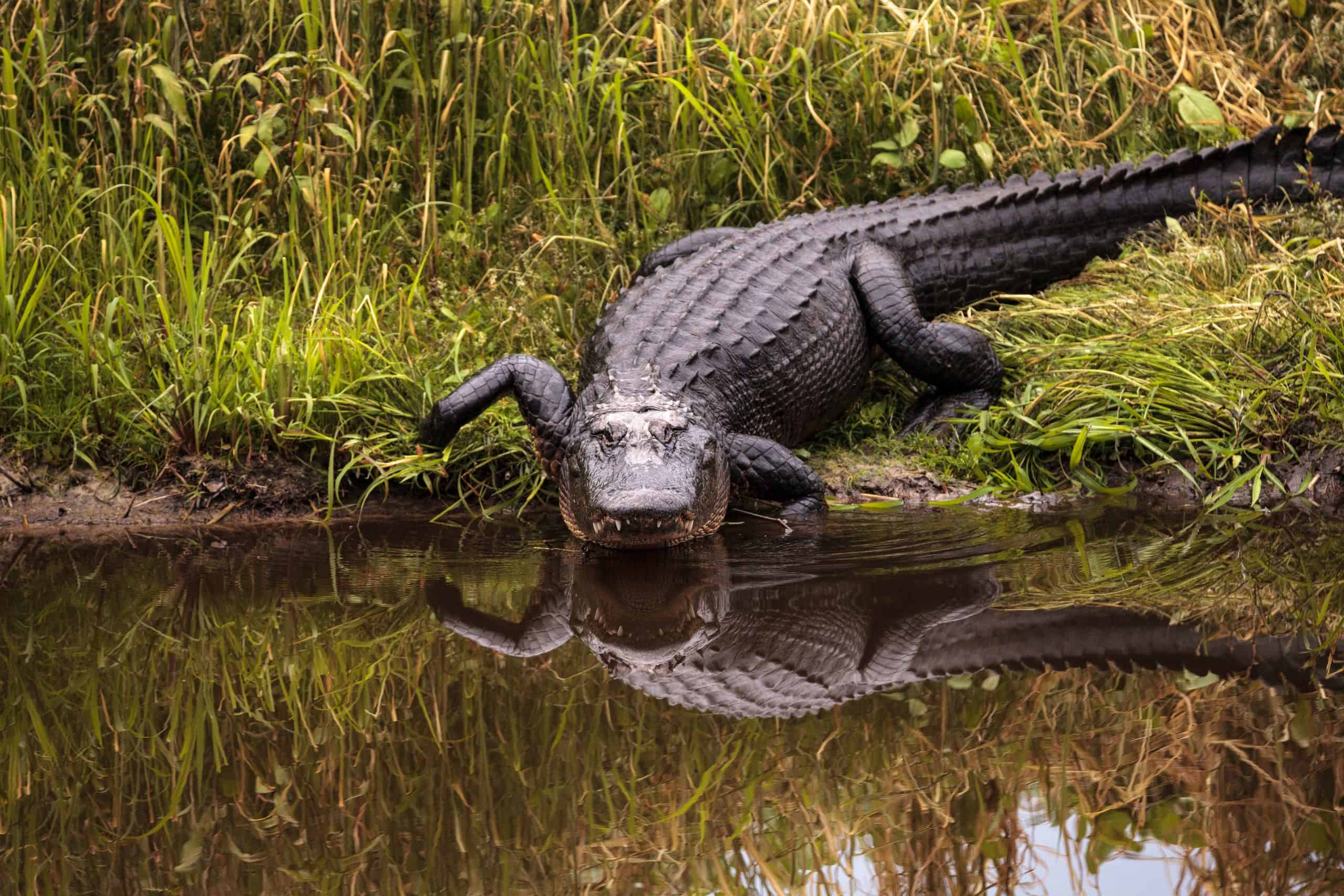
In Florida, alligator sightings are a routine part of life, as an estimated 1.3 million alligators inhabit all 67 counties. Whether you are a resident or a visitor in 2026, encountering these apex predators in lakes, rivers, canals, and even residential retention ponds is statistically probable, requiring a fundamental understanding of safety protocols and reporting procedures.
Florida’s unique geography, characterized by vast wetlands and a subtropical climate, makes it the primary stronghold for the American alligator (Alligator mississippiensis). As urban development continues to expand into historically wild areas, the frequency of human-alligator interactions has remained high. For anyone living in or visiting the Sunshine State, understanding how to navigate these encounters is not just a matter of curiosity, but a critical safety requirement.
Why Alligator Sightings are Common in Florida
The prevalence of alligator sightings in Florida is driven by a combination of a robust conservation history and the state's hydrological makeup. Following their removal from the endangered species list in 1987, the alligator population flourished. Today, they are found in virtually every body of fresh water and occasionally in brackish water.
Habitat and Geography
Florida's landscape is a mosaic of marshes, swamps, and rivers. Even in highly developed metropolitan areas like Orlando, Tampa, and Miami, the state’s strict water management laws require the construction of retention ponds to manage runoff. These man-made bodies of water serve as corridors for alligators, allowing them to move between larger lakes and rivers. This means a sighting can occur in a suburban backyard just as easily as in the Everglades.
The Role of Urbanization
As of 2026, Florida's population growth has led to increased encroachment on natural habitats. When new residential communities are built, alligators do not simply disappear; they often remain in the area, utilizing the new ponds and drainage systems provided by the development. This proximity necessitates a shift in human behavior—a concept often referred to as "coexistence" by the Florida Fish and Wildlife Conservation Commission (FWC).
Understanding Alligator Behavior and Seasonal Cycles
Alligator activity is not constant throughout the year. Their behavior is heavily influenced by the ambient temperature and their internal biological clock. Understanding these cycles can help individuals predict when sightings are most likely and when the animals might be more defensive.
The Mating and Nesting Season
The most active period for alligators occurs during the spring and summer.
- Courtship (April): As temperatures rise, alligators begin to move more frequently in search of mates.
- Mating (May - June): This is the peak of activity. During this time, male alligators are more territorial and may travel long distances overland to find females or establish dominance.
- Nesting (June - July): Females build nests out of vegetation and mud. They are extremely protective of these nests. A sighting near a mound of debris along a shoreline should be treated with extreme caution, as a protective mother is nearby.
- Hatching (August - September): High-pitched "yipping" sounds from the water indicate hatchlings. While small and seemingly harmless, these juveniles are closely guarded by the mother for up to two years.
Brumation: The Winter Slowdown
During the cooler months, typically from November through March, alligators enter a state of brumation. This is the reptilian equivalent of hibernation. Their metabolism slows down significantly, and they require less food. While they may still be seen basking on banks to soak up the sun's warmth, they are generally less active and less likely to move between bodies of water.
Identifying Hotspots for Sightings
While alligators can be found anywhere there is water, certain locations in Florida are renowned for high-density populations.
- Everglades National Park: The most iconic location for sightings, where the sheer volume of sawgrass marsh supports hundreds of thousands of individuals.
- Lake Okeechobee: As the largest freshwater lake in the state, it serves as a massive breeding ground.
- The St. Johns River: This north-flowing river provides thousands of miles of shoreline and marshy tributaries perfect for alligator habitats.
- Paynes Prairie Preserve State Park: Located near Gainesville, this area is famous for its "La Chua Trail," where dozens of large alligators are often seen lining the banks.
- Residential Retention Ponds: Perhaps the most common place for "incidental" sightings, these ponds are often part of golf courses or gated communities.
Essential Safety Protocols for Residents and Visitors
The FWC emphasizes that alligators have a natural fear of humans, but that fear can dissipate if the animals are fed or if humans act recklessly. Adhering to the following safety guidelines is paramount for preventing negative encounters.
Maintain a Safe Distance
The "Rule of Thumb" is a common guideline: if you can cover the entire alligator with your thumb held at arm's length, you are likely at a safe distance. Experts recommend staying at least 60 feet (18 meters) away from any alligator. Alligators are capable of explosive bursts of speed on land over short distances, and they are much faster in the water.
Swimming Precautions
Only swim in designated swimming areas during daylight hours. Alligators are most active between dusk and dawn. Their night vision is exceptional, and they use the low light to hunt. Avoid areas with heavy vegetation or murky water, as these provide natural cover for a stalking predator.
Managing Pets and Children
Small animals and children are most at risk because their size matches the natural prey profile of an alligator.
- Keep pets on a leash: Never allow dogs to swim in Florida's fresh or brackish waters.
- Stay away from the water's edge: When walking near a shoreline, maintain a distance of at least 10 feet from the water. Alligators hunt by lunging from the water’s edge.
- Supervise children: Ensure children do not play near the banks of ponds or canals, especially in areas where sightings have been reported.
The Statewide Nuisance Alligator Program (SNAP)
Florida manages its alligator population through a sophisticated system designed to address animals that pose a threat to people, pets, or property. This is handled by the Statewide Nuisance Alligator Program (SNAP).
When to Call the Nuisance Hotline
A sighting does not automatically qualify an alligator as a "nuisance." The FWC typically considers an alligator a nuisance if it is:
- At least 4 feet in length.
- Believed to pose a threat to people, pets, or property.
Smaller alligators (under 4 feet) are generally not considered a threat unless they are in a location where they cannot escape (like a swimming pool). These smaller individuals typically feed on fish, frogs, and small mammals and are not a danger to humans.
The Removal Process
When a resident calls the Nuisance Alligator Hotline (866-FWC-GATOR), the FWC evaluates the complaint. If the criteria are met, they issue a permit to a contracted nuisance alligator trapper. It is important to understand that in Florida, nuisance alligators are not relocated. Because alligators are highly territorial, a relocated alligator will often attempt to return to its capture site, crossing roads and residential areas in the process, or it will fight with the existing alligators in the new location. Consequently, removed nuisance alligators are typically harvested for their meat and hide or, in rare cases, sent to alligator farms or zoos.
Alligators vs. Crocodiles: Understanding the Difference
Florida is the only place in the world where both alligators and crocodiles coexist in the wild. While alligator sightings are common statewide, American Crocodile sightings are generally limited to the southernmost tip of the Florida peninsula and the Keys.
| Feature | American Alligator | American Crocodile |
|---|---|---|
| Snout Shape | Broad, U-shaped "shovel" snout | Narrow, V-shaped, pointed snout |
| Teeth | Only upper teeth visible when mouth is closed | Both upper and lower teeth (4th tooth) visible |
| Color | Dark grey/black with lighter undersides | Pale grayish-green or olive |
| Habitat | Primarily freshwater (lakes, swamps) | Primarily brackish or saltwater (mangroves, bays) |
| Temperament | Generally timid unless provoked or fed | Shy and reclusive; rarely interacts with humans |
| Population | ~1.3 Million (Abundant) | ~2,000 (Threatened) |
Legal Consequences of Feeding Alligators
Under Florida Statute 379.412, it is illegal to intentionally feed or entice alligators. This law is in place for a vital reason: feeding causes alligators to lose their natural wariness of humans. When an alligator associates humans with food, it becomes a "conditioned" predator.
Conditioned alligators are the ones most likely to approach people on docks, boat ramps, or shorelines. Once an alligator has been fed, it often has to be removed and destroyed because it poses a permanent threat to public safety. Fines for feeding alligators can be significant, and repeat offenders may face jail time.
Home and Property Management
For those living near water, certain landscaping choices can reduce the likelihood of a "surprise" sighting in the yard.
- Fencing: A fence that is at least 4 feet high can deter most alligators. However, alligators are capable climbers, so a fence should not be considered 100% impenetrable.
- Vegetation Clearing: Keep the shoreline of your property clear of tall grass and thick brush. Alligators prefer to bask in areas where they feel concealed. A clear, open bank is less attractive to them.
- Avoid Food Attractants: Do not discard fish scraps in the water after cleaning a catch. This is a form of indirect feeding and will draw alligators to your dock or seawall.
Common Myths and Misconceptions
Despite their prevalence, alligators are often misunderstood. Addressing these myths is key to a rational approach to sightings.
- Myth: You should run in a zigzag pattern to escape an alligator.
- Fact: This is false and potentially dangerous. The fastest way to escape is to run in a straight line away from the water. Alligators have a limited field of vision directly in front of them, but they are not clumsy; a straight-line sprint is the most effective exit.
- Myth: Alligators can run 30 miles per hour on land.
- Fact: While they are fast, they top out at about 15-20 mph, and they cannot maintain this speed for long. They are sprinters, not distance runners.
- Myth: If an alligator hisses, it is about to bite.
- Fact: Hissing is a warning. The alligator is telling you that you are too close and it wants you to back away. It is a defensive posture, not necessarily an offensive one.
Frequently Asked Questions
What should I do if I find an alligator in my swimming pool?
Do not attempt to remove the animal yourself. Even a small alligator can cause injury with its tail or mouth. Keep all pets and children away from the pool area and call the FWC Nuisance Alligator Hotline at 866-392-4286. A licensed trapper will be dispatched to safely remove the animal.
Can alligators live in saltwater?
Alligators lack the salt-secreting glands that crocodiles have, so they cannot stay in saltwater indefinitely. However, they can tolerate it for several hours or even days. It is not uncommon to see alligators in the surf at Florida beaches or in salt marshes while they are traveling between freshwater sources or hunting.
Are alligator attacks common in Florida?
Serious injuries caused by alligators are rare. Florida averages about 7 to 10 unprovoked bites per year that require professional medical treatment. Considering there are 22 million people and 1.3 million alligators in the state, the statistical likelihood of an attack is extremely low, especially for those who follow basic safety guidelines.
What do I do if an alligator bites me?
If you are bitten, the best response is to fight back. Hit the animal's sensitive snout, or poke it in the eyes. This may cause the alligator to release its grip long enough for you to escape. Seek medical attention immediately, as alligator bites have a high risk of infection due to the bacteria present in their mouths.
Do alligators really climb trees?
Yes, alligators can and do climb. They have been documented climbing chain-link fences and leaning trees to reach better basking spots or to escape an enclosure. While they aren't "arboreal" like monkeys, they are more agile than their heavy bodies suggest.
Recommendations for Coexistence
Living in Florida in 2026 means sharing the environment with a species that has remained virtually unchanged for millions of years. The key to safety is respect, not fear. By acknowledging that any body of water in Florida could contain an alligator, you can make informed decisions about where to walk, swim, and let your pets play.
If you see an alligator, enjoy the sighting from a distance. These animals are a vital part of Florida's ecosystem, helping to control populations of other species and creating "alligator holes" that provide water for other wildlife during the dry season. For further information on alligator safety or to report a nuisance animal, visit the Florida Fish and Wildlife Conservation Commission website.