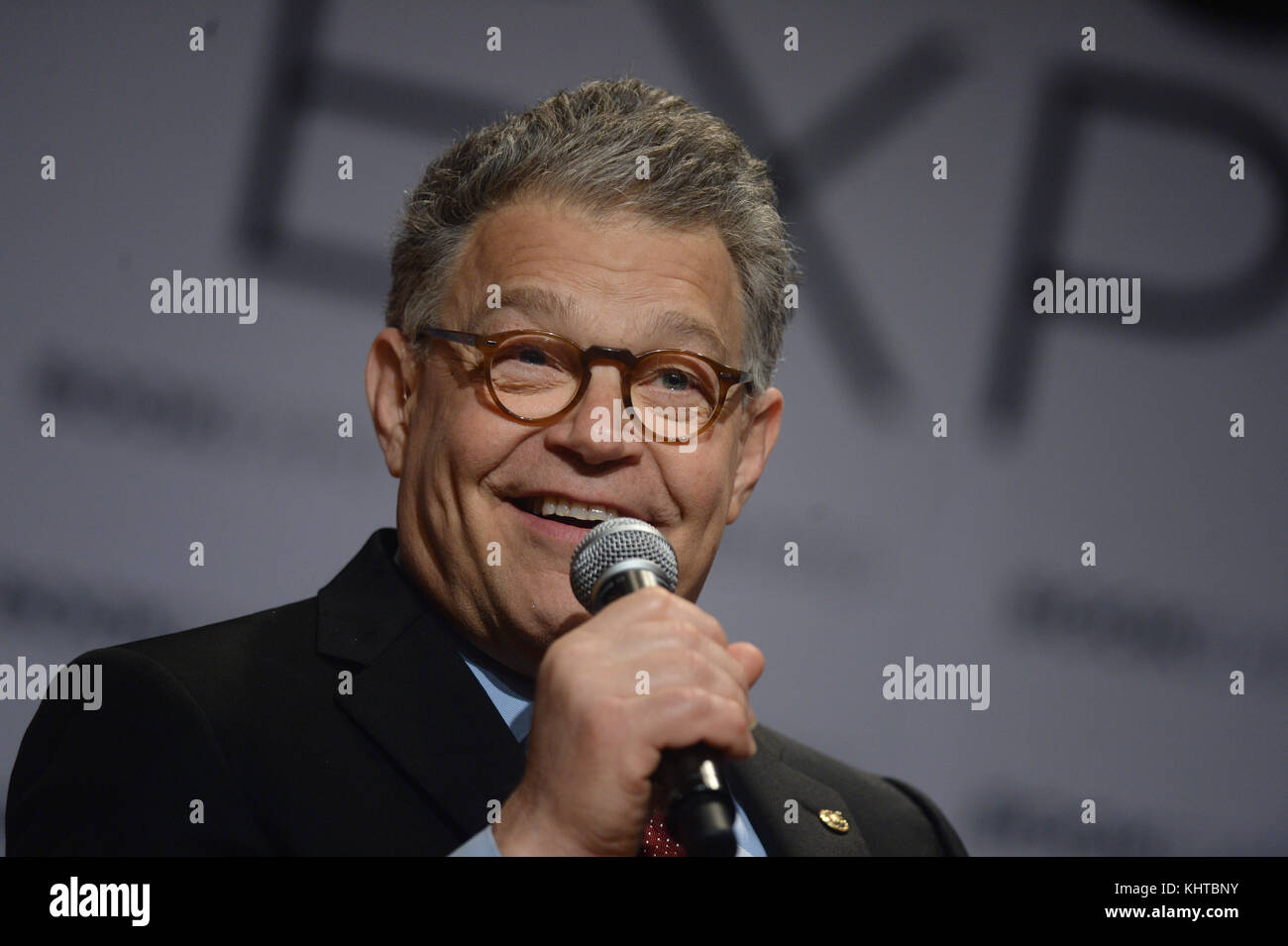
Al Franken transitioned from a prominent career as a comedian, writer, and satirist into a distinct second act as a United States Senator representing Minnesota. His tenure in national politics, spanning from his election in 2009 to his resignation in 2018, combined a sharp media background with a technocratic legislative approach, before concluding amid a wave of ethics controversies and shifting political standards.
Introduction to Al Franken's Political Transition
The trajectory of Al Franken stands as one of the most notable crossovers from the American entertainment industry into federal elected office. Best known for his multi-decade tenure on the sketch comedy television program Saturday Night Live (SNL) and his work as a progressive political commentator and author, Franken entered the electoral arena during an era of significant political polarization. Running for the United States Senate in Minnesota during the 2008 cycle, he engaged in one of the closest and most fiercely contested races in modern American history.
Resolving any ambiguity surrounding his identity, this examination focuses specifically on Alan Stuart Franken in his capacity as a federal politician, legislator, and public official. It details his entry into government, the legislative priorities he pursued while in office, the mechanics of his razor-thin election victory, and the circumstances surrounding his departure from the Senate. Understanding Franken's political career requires looking past his comedic origins to examine his committee work, policy focus areas, and the lasting precedent set by his resignation in late 2017 and early 2018.
The 2008 Minnesota Senate Election and Recount
To understand Al Franken's time as a politician, one must examine the grueling 2008 election cycle that brought him to Washington, D.C. Franken secured the Democratic-Farmer-Labor Party (DFL) nomination to challenge incumbent Republican Senator Norm Coleman. The campaign was characterized by heavy partisan spending, intensive media scrutiny of Franken's past satirical writings, and sharp debates over economic policy and the ongoing wars in Iraq and Afghanistan.
The Initial Vote and Margin
As election night concluded in November 2008, the race was too close to call. Initial tallies placed Senator Norm Coleman in a narrow lead, triggering an automatic statewide recount under Minnesota election law. The ensuing legal and administrative battle lasted for months, gripping national attention as lawyers, election officials, and volunteers examined disputed ballots.
The Recount Process and Legal Battles
The Minnesota State Canvassing Board oversaw a meticulous, precinct-by-precinct recount. Key elements of this phase included:
- Absentee Ballots: Reviewing rejected absentee ballots to ensure eligible votes were counted accurately.
- Disputed Ballots: Adjudicating voter intent on ballots where markings were ambiguous or non-standard.
- Judicial Challenges: Moving through the Minnesota Supreme Court, which ultimately ruled unanimously in favor of counting properly cast absentee ballots that had been initially mishandled.
By June 2009, the Minnesota Supreme Court ruled that Franken had won the election by a margin of 312 votes out of nearly three million cast. Norm Coleman conceded, and Franken was sworn into the 111th United States Congress, providing Senate Democrats with a crucial 60-seat majority for a brief period during the debate over healthcare reform.
Legislative Focus and Committee Assignments
Once seated in the Senate, Franken cultivated a reputation for intensive preparation, policy mastery, and a relatively understated demeanor compared to his high-profile television persona. He sought to distance himself from his comedic background during official proceedings, focusing instead on dense regulatory issues, consumer protection, and the concerns of his Minnesota constituents.
Key Committee Assignments
Franken was appointed to several influential Senate committees, which shaped his legislative portfolio:
- Committee on the Judiciary: Focused on judicial nominations, privacy laws, antitrust measures, and intellectual property.
- Committee on Health, Education, Labor, and Pensions (HELP): Addressed labor standards, public health initiatives, education funding, and workplace safety.
- Committee on Indian Affairs: Worked on tribal sovereignty, healthcare access for Native communities, and federal funding programs.
- Energy and Natural Resources Committee: Addressed renewable energy initiatives, public lands management, and rural utilities.
Legislative Priorities and Achievements
During his nearly nine years in the Senate, Franken focused heavily on specific policy niches rather than broad rhetorical initiatives. Notable areas of legislative focus included:
| Policy Area | Specific Legislative Effort / Focus | Objective |
|---|---|---|
| Mental Health Parity | Mental Health Parity and Addiction Equity Act enforcement | Ensuring insurers cover mental health care comparably to physical health care. |
| Consumer Privacy | Data protection and geolocation privacy bills | Protecting consumer data collected by mobile devices and online platforms. |
| Education & Bullying | Student Non-Discrimination Act | Providing federal protections for students targeted based on sexual orientation or gender identity. |
| Worker Rights | Mandatory arbitration clauses | Opposing forced arbitration that prevents workers and consumers from taking grievances to court. |
The 2014 Re-Election and Second Term
In 2014, Franken ran for a second term against Republican businessman Mike McFadden. Unlike the protracted legal battle of 2008, this campaign resulted in a more decisive victory. Franken secured approximately 53% of the vote, benefiting from a well-organized state party apparatus, strong fundraising, and a campaign focused on middle-class economic security, infrastructure investment, and support for rural Minnesota agriculture.
During his second term, Franken continued his work on the Judiciary and HELP committees. He emerged as a prominent progressive voice during high-profile confirmation hearings, questioning nominees on consumer rights, net neutrality, and corporate consolidation. His legislative output during this period focused heavily on defense procurement reform, support for veterans returning from overseas deployments, and expanding access to broadband internet in rural communities.
Resignation from the Senate
Al Franken's political career came to an abrupt end in late 2017. In November of that year, amidst a broader national reckoning over sexual misconduct and workplace harassment across politics, media, and entertainment, Los Angeles news anchor Leeann Tweeden accused Franken of forcibly kissing her and photographing her inappropriately during a 2006 USO tour, prior to his election to the Senate.
The Allegations and Ethics Inquiries
Following the initial accusation, multiple additional women came forward with allegations of inappropriate behavior, such as unwanted touching during photo-ops at state fairs and campaign events. Franken issued public apologies regarding several of the incidents, stating that he remembered the interactions differently but expressing deep regret for causing distress.
As the political pressure mounted, the bipartisan consensus in Washington shifted rapidly. Despite initial calls for a Senate Ethics Committee investigation—which Franken maintained would clear up the context of the claims—members of his own party demanded his resignation.
The Resignation Announcement
On December 7, 2017, Franken announced on the floor of the United States Senate that he would be stepping down from office. In his speech, he noted the irony of resigning while allegations against other prominent political figures, including President Donald Trump and candidate Roy Moore, were being handled differently by their respective supporters.
Franken officially resigned on January 2, 2018. Minnesota Governor Mark Dayton appointed Lieutenant Governor Tina Smith to fill the vacancy until a special election could be held later that year, which Smith won to complete the remainder of the term.
Post-Political Activities and Public Legacy
Following his departure from the United States Senate, Al Franken remained active in public life, media, and political commentary, albeit outside of elected office.
Media Ventures
Franken returned to the media landscape, launching a weekly podcast where he interviews politicians, journalists, policy experts, and comedians. He has also occasionally returned to stand-up comedy and made guest appearances on various television and radio networks to offer commentary on current events, elections, and legislative battles in Washington.
Assessment of Political Legacy
Historians and political analysts view Al Franken's political career through a dual lens:
- As a Legislator: He is generally credited by colleagues from both sides of the aisle as a dedicated, industrious policymaker who mastered complex subject matter, worked effectively across committee lines, and delivered tangible results for his Minnesota constituents, particularly in healthcare and consumer protection.
- As a Casualty of Shifting Standards: His exit is frequently cited as a turning point in how political bodies handle allegations of personal misconduct, establishing a precedent where bipartisan calls for resignation superseded the traditional investigative process of the Senate Ethics Committee.
Frequently Asked Questions
When did Al Franken serve in the United States Senate?
Al Franken served as a U.S. Senator representing Minnesota from July 7, 2009, until his formal resignation took effect on January 2, 2018. He won two elections, serving out his first full term and a portion of his second term.
Why did Al Franken resign from the Senate?
Franken resigned following multiple allegations of sexual misconduct and inappropriate behavior involving constituents and colleagues, stemming from incidents both prior to and during his time in office. Amid mounting calls for his departure from both Democratic and Republican senators, he announced his resignation in December 2017.
Who replaced Al Franken in the Senate?
Minnesota Governor Mark Dayton appointed then-Lieutenant Governor Tina Smith to fill the vacant Senate seat. Smith was subsequently elected to the seat in a special election in November 2018 and won a full term in 2020.
What were Al Franken's primary legislative focus areas?
While in office, Franken focused primarily on judiciary matters, consumer privacy, net neutrality, healthcare access, worker rights, and labor protections. He was particularly active on the Senate Judiciary Committee and the Committee on Health, Education, Labor, and Pensions.
How close was the 2008 Minnesota Senate election?
The 2008 election between Al Franken and incumbent Senator Norm Coleman was historically close. After an initial tally showed Coleman ahead by a narrow margin, a mandatory statewide recount and subsequent legal challenges in the Minnesota Supreme Court ultimately resulted in a verified margin of 312 votes for Franken out of nearly three million cast.
Conclusion and Next Actions
Al Franken's tenure as a politician represents a unique intersection of entertainment, media celebrity, and federal governance. While his legislative record reflects serious policy engagement and committee work, his career ultimately concluded due to personal conduct controversies that transformed the political landscape of the late 2010s. For researchers and political science students examining this era, reviewing official Senate voting records, the transcripts of the 2008 recount litigation, and the bipartisan statements surrounding his 2017 resignation provides a complete picture of his impact on modern American politics.