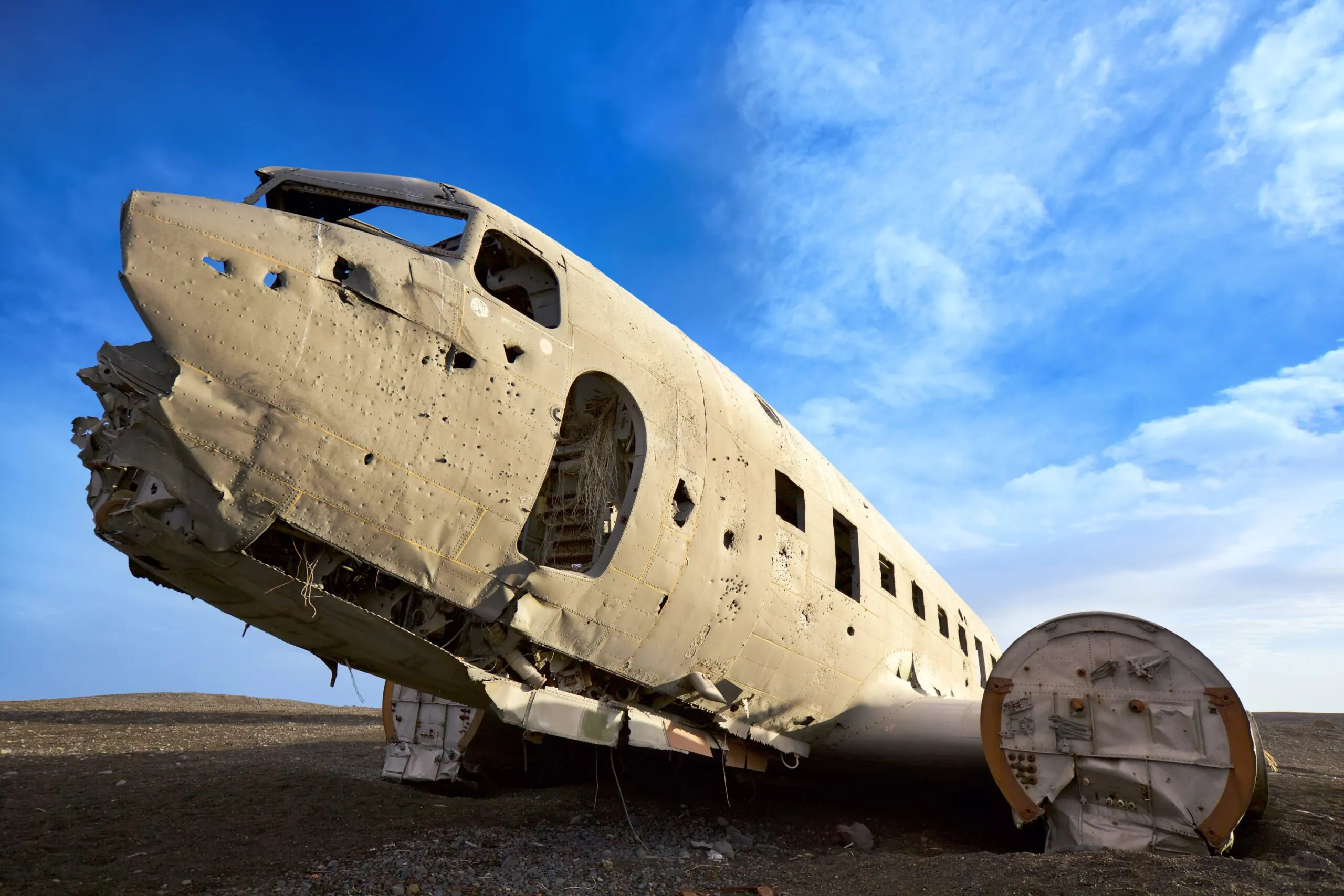
An airplane injury attorney is a specialized legal professional who represents individuals injured in aviation-related incidents, ranging from major commercial crashes to in-flight turbulence and boarding accidents. These attorneys navigate a complex intersection of federal regulations, international treaties like the Montreal Convention, and state tort laws to secure compensation for medical bills, lost wages, and wrongful death.
Aviation litigation is fundamentally different from standard personal injury law. While a typical car accident case is governed by state negligence rules, an aviation claim may involve federal preemption, international diplomacy, and highly technical engineering data. Whether you were injured on a domestic puddle-jumper or an international long-haul flight, understanding the role of specialized legal counsel is the first step toward recovery.
The Specialized Nature of Aviation Law
The primary reason to seek an airplane injury attorney rather than a general practitioner is the sheer complexity of the regulatory environment. In the United States, the Federal Aviation Administration (FAA) and the National Transportation Safety Board (NTSB) oversee almost every aspect of flight. When an injury occurs, the legal framework depends heavily on the "nature" of the flight and the "status" of the carrier.
Common Carriers and the Duty of Care
Airlines are classified as "common carriers." Under the law, common carriers are held to the highest standard of care for their passengers. This means they must exercise the utmost diligence to ensure passenger safety. If an attorney can prove that the airline failed to meet this heightened standard—even by a small margin—the carrier may be held liable for resulting injuries. This differs from the "reasonable care" standard applied to individual drivers in auto accidents.
Federal Preemption
One of the most significant hurdles in aviation cases is federal preemption. Under the Federal Aviation Act, federal law often overrides state laws regarding aviation safety. This means that if an airline complied with all FAA safety regulations, a plaintiff might be barred from arguing that the airline was negligent under state law. A seasoned airplane injury attorney knows how to navigate these "preemption defenses" by identifying specific regulatory violations or finding areas where federal law does not occupy the entire field of safety.
Types of Aviation Injury Claims
Aviation injuries are not limited to catastrophic crashes. In fact, the majority of claims handled by airplane injury attorneys involve incidents that occur during the normal course of operation.
In-Flight Turbulence and Overhead Bins
Turbulence is the leading cause of non-fatal injuries to passengers and flight attendants. While "clear air" turbulence is sometimes unavoidable, airlines have a duty to monitor weather patterns and warn passengers to fasten their seatbelts. If a pilot fails to illuminate the seatbelt sign despite reports of rough air from other aircraft, the airline may be liable. Similarly, injuries caused by items falling from overhead bins often involve questions of whether the flight crew properly secured the cabin before takeoff or landing.
Ground and Boarding Injuries
The legal responsibility of an airline begins the moment a passenger begins the boarding process. Injuries can occur on jet bridges, during tarmac transfers, or due to defective equipment like moving walkways and escalators within the terminal (if managed by the airline). Airplane injury attorneys also handle "ramp accidents," which involve ground crew negligence or collisions between service vehicles and the aircraft.
Mechanical Failures and Design Defects
When a mechanical component fails, the liability may extend beyond the airline to the aircraft manufacturer (such as Boeing or Airbus) or the manufacturer of a specific component (such as an engine or hydraulic pump). These cases fall under product liability. Proving a design or manufacturing defect requires an attorney with the financial resources to hire metallurgical experts, aeronautical engineers, and maintenance specialists to reconstruct the failure.
International Flights and the Montreal Convention
If your flight involved an international destination—even if the injury occurred while the plane was over domestic soil—your case is likely governed by the Montreal Convention of 1999. This international treaty was designed to provide a uniform set of rules for international carriage.
Strict Liability and SDRs
The Montreal Convention is unique because it establishes a "strict liability" framework. For injuries up to a certain amount, the airline cannot contest its liability. As of 2026, these limits are measured in Special Drawing Rights (SDRs), a mix of international currencies defined by the International Monetary Fund.
If a passenger is injured or killed, the airline is strictly liable for damages up to approximately 128,821 SDRs (though this figure is adjusted periodically for inflation). For damages exceeding this "first tier" limit, the airline is still liable unless it can prove that the injury was not due to its negligence or was caused solely by the negligence of a third party.
The Definition of an "Accident"
Under the Montreal Convention, a passenger can only recover damages if the injury was caused by an "accident." The Supreme Court and international courts have defined an accident as an "unexpected or unusual event or happening that is external to the passenger." This means that if a passenger has a heart attack due to natural causes during a flight, it is not an "accident." However, if the flight crew fails to provide adequate medical assistance or refuses to divert the plane, that failure may be considered an "accident" under the treaty.
The Role of the NTSB and Evidence Gathering
When a significant aviation incident occurs, the NTSB launches an investigation. While the NTSB’s final "Probable Cause" report is generally inadmissible in civil court to prove liability, the "Factual Report" generated by the agency is a goldmine for airplane injury attorneys.
Accessing the "Black Box"
Attorneys work to secure data from the Flight Data Recorder (FDR) and the Cockpit Voice Recorder (CVR). This data provides a second-by-second account of the aircraft's performance and the crew's actions. In 2026, many modern aircraft also transmit real-time telemetry to ground stations, providing even more granular evidence that an attorney can use to build a case before the wreckage is even recovered.
Maintenance Logs and Pilot Records
An attorney will subpoena the aircraft’s "logbooks," which document every repair, inspection, and part replacement. They will also scrutinize the pilot’s training records, medical certifications, and "duty time" to determine if pilot fatigue or inadequate training played a role in the incident.
Comparing Aviation Claims: Domestic vs. International
The legal path varies significantly based on the itinerary. The following table highlights the primary differences between domestic and international aviation claims.
| Feature | Domestic U.S. Flight | International Flight (Montreal Convention) |
|---|---|---|
| Governing Law | State Tort Law & Federal Regulations | International Treaty (Montreal Convention) |
| Liability Standard | Negligence (Highest Duty of Care) | Strict Liability (Tier 1) / Presumed Negligence (Tier 2) |
| Statute of Limitations | Varies by State (usually 2-3 years) | Strictly 2 years (no tolling) |
| Damage Caps | Generally none (subject to state law) | No caps on compensatory damages for negligence |
| Venue (Where to Sue) | Where crash occurred or airline HQ | Specific options (e.g., passenger's domicile) |
Damages and Compensation in Aviation Cases
Victims of airplane injuries are entitled to various forms of compensation. Because aviation injuries are often severe—ranging from traumatic brain injuries (TBI) to spinal cord damage—the financial stakes are high.
- Medical Expenses: This includes immediate emergency care, surgeries, and long-term rehabilitation or life-care planning.
- Lost Income and Earning Capacity: If the injury prevents the victim from returning to their career, an attorney will hire vocational experts to calculate the total lifetime loss of earnings.
- Pain and Suffering: These "non-economic" damages compensate for the physical pain and emotional trauma associated with the event.
- Wrongful Death: In the event of a fatality, surviving family members can seek compensation for the loss of financial support, funeral expenses, and the loss of companionship (consortium).
How to Choose an Airplane Injury Attorney
Not all personal injury firms have the infrastructure to handle an aviation case. When vetting an attorney, consider the following criteria:
- Aviation Background: Does the lead attorney have a pilot's license or a background in aerospace engineering? This technical knowledge is invaluable during depositions of airline mechanics and pilots.
- Financial Resources: Aviation cases are expensive to litigate. The firm must be able to front hundreds of thousands of dollars for expert witnesses and forensic analysis.
- Jurisdictional Expertise: Can they practice in federal court? Most aviation cases are "removed" to federal court, requiring an attorney who is comfortable with the Federal Rules of Civil Procedure.
- Trial Experience: While many cases settle, the threat of a trial is the only way to ensure the airline’s insurance company offers a fair settlement. Ask about their record of aviation-specific verdicts.
Frequently Asked Questions
What is the statute of limitations for an airplane injury?
For international flights governed by the Montreal Convention, the statute of limitations is strictly two years from the date of arrival (or the date the plane should have arrived). Unlike state laws, this two-year period usually cannot be "tolled" or paused, even for minors. Domestic cases vary by state, but the two-year window is a common standard.
Can I sue if I was injured by a fellow passenger?
Yes, potentially. If the flight crew was aware of a passenger's erratic or dangerous behavior and failed to intervene, the airline may be liable for "failing to protect" its passengers. This often arises in cases involving "air rage" or intoxicated passengers who were over-served alcohol by the airline.
What if the injury happened on a private charter or small plane?
Private aviation (General Aviation) is governed by different rules than commercial airlines. Small plane owners are not "common carriers," so the standard of care is generally "ordinary negligence." Liability often rests on the pilot or the maintenance facility that last serviced the aircraft.
Do I have to sue in the country where the airline is based?
Not necessarily. Under the Montreal Convention, you can often sue in the country where you live (your "permanent residence"), provided the airline operates flights to that country. For domestic crashes, you can typically sue in the state where the crash occurred or where the airline's principal place of business is located.
Can I recover damages for psychological trauma without physical injury?
This is a complex area. Under the Montreal Convention, most courts have ruled that "purely psychic" injuries (like PTSD) are not compensable unless they are accompanied by a physical injury. However, domestic law in some states may allow for emotional distress claims even without a physical impact, though federal preemption often complicates these claims.
How much does an airplane injury attorney cost?
Most aviation attorneys work on a contingency fee basis. This means they only get paid if they win your case. Typically, the fee is a percentage of the final settlement or verdict (often 33% to 40%). The law firm also covers the upfront costs of the investigation and expert witnesses, which are reimbursed from the settlement.
Summary and Next Steps
Dealing with the aftermath of an aviation incident is overwhelming. The transition from being a passenger to a litigant involves navigating a dense forest of federal and international law. If you or a loved one has been injured, the first step is to preserve all documentation, including your boarding pass, medical records, and any communication from the airline.
Do not sign any waivers or accept "goodwill" vouchers from an airline before consulting with a specialized airplane injury attorney. These initial offers are often designed to limit the airline's liability before the full extent of your injuries—and your legal rights—are known. By securing experienced counsel, you ensure that the technical and legal complexities of the aviation industry are met with equally sophisticated representation.