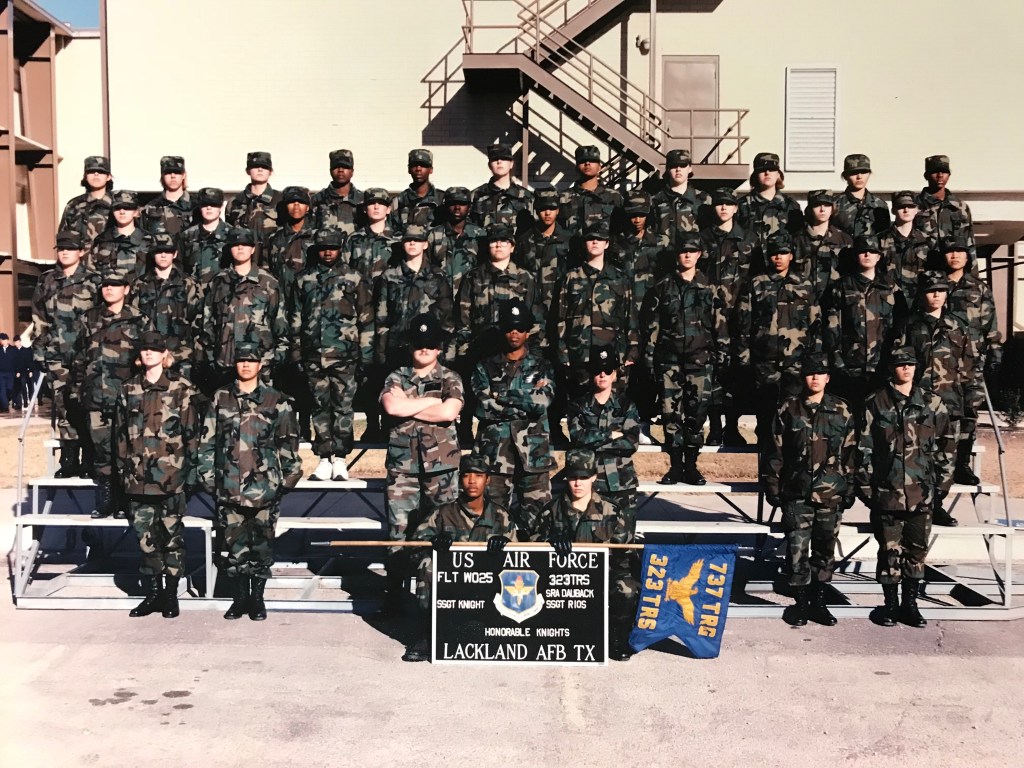
Texas serves as the primary hub for United States Air Force training, hosting every enlisted recruit for Basic Military Training (BMT) at JBSA-Lackland and providing advanced technical and pilot instruction across the state. From intelligence schooling at Goodfellow to undergraduate pilot training at Laughlin, Texas bases provide the essential education required for modern airpower.
The Epicenter of the Air Force: Joint Base San Antonio-Lackland
Every enlisted Airman, regardless of their eventual job specialty, begins their career in San Antonio, Texas. Joint Base San Antonio (JBSA)-Lackland is often referred to as the "Gateway to the Air Force." In 2026, the mission remains focused on transforming civilians into motivated, disciplined warriors with the foundation to serve.
Basic Military Training (BMT) Structure
The current BMT curriculum spans approximately 7.5 weeks. The training is designed to be mentally and physically grueling, focusing on military discipline, Air Force core values, and basic combat skills.
- Zero Week: This is the arrival and processing phase. Recruits receive their initial gear, haircuts, and medical screenings. The focus is on administrative transition and learning the basics of "dorm life."
- The Early Weeks (1–3): These weeks focus on drill, ceremony, and the history of the Air Force. Recruits begin intensive physical training (PT) and classroom instruction on the military justice system and customs/courtesies.
- The Mid-Phase (4–5): Training shifts toward field skills. Recruits learn basic marksmanship with the M4 carbine and undergo "PACER FORGE" (Primary Agile Combat Employment Reform, Force Generation Exercise). PACER FORGE is a 36-hour deployment simulation that tests recruits on their ability to operate in a high-stress, contested environment.
- The Final Phase (6–7.5): The final weeks culminate in the Airman’s Coin Ceremony and graduation. Passing the final PT test and the end-of-course exam is mandatory to earn the title of Airman.
The 37th Training Wing
The 37th Training Wing at Lackland is the largest training wing in the Air Force. Beyond BMT, it also manages the Inter-American Air Forces Academy and the Defense Language Institute English Language Center. This makes Lackland not just a recruitment center, but an international hub for aerospace education and linguistic training for foreign partners.
Technical Training Hubs: Sheppard and Goodfellow AFBs
Once graduation from BMT is complete, Airmen move to "Tech School" to learn their specific Air Force Specialty Code (AFSC). Texas houses two of the most critical technical training bases in the Department of Defense.
Sheppard Air Force Base (Wichita Falls)
Sheppard AFB is home to the 82nd Training Wing, which provides the most diverse technical training in the Air Force. If a career involves hands-on mechanical or electrical work, it likely starts here.
- Aircraft Maintenance: This is the largest segment of Sheppard’s mission. Airmen learn to maintain everything from heavy bombers to fifth-generation fighters like the F-35.
- Civil Engineering: Training for "Red Horse" and Prime BEEF (Base Expeditionary Airman Engineers) squadrons occurs here, covering electrical systems, plumbing, and structural repair.
- Telecommunications: Technicians learning to manage the Air Force’s vast data networks receive specialized schooling in advanced electronics and fiber optics.
Sheppard also hosts the 80th Flying Training Wing, which conducts the Euro-NATO Joint Jet Pilot Training (ENJJPT) program. This is a unique international partnership where student pilots from NATO countries train alongside U.S. pilots, creating a standardized approach to combat flight.
Goodfellow Air Force Base (San Angelo)
Goodfellow AFB operates under the 17th Training Wing and is specialized in "silent" and "emergency" roles. It is unique because it provides training for all branches of the military, not just the Air Force.
- Intelligence, Surveillance, and Reconnaissance (ISR): Goodfellow is the primary school for intelligence analysts, cryptologists, and linguists. The training involves high-level security clearances and rigorous academic standards.
- Fire Protection: The Louis F. Garland Fire Academy at Goodfellow is the world's premier military fire training facility. It trains firefighters for the Air Force, Army, Navy, Marine Corps, and various civilian agencies. The facility includes sophisticated simulators that replicate aircraft fires, structural blazes, and hazardous material spills.
The Path to Wings: Pilot Training in Texas
Texas is arguably the most important state for the production of Air Force pilots. The vast, clear airspace and favorable weather conditions make it ideal for year-round flight operations.
Laughlin Air Force Base (Del Rio)
Laughlin AFB is home to the 47th Flying Training Wing. It is one of the busiest airfields in the Air Force, focusing on Undergraduate Pilot Training (UPT). Student pilots here typically fly the T-6A Texan II for primary training before transitioning to the T-38 Talon (for fighter/bomber tracks) or the T-1A Jayhawk (for tanker/transport tracks).
The 2026 curriculum emphasizes UPT 2.5, an accelerated, technology-heavy training model that uses virtual reality (VR) simulators and artificial intelligence to supplement actual flight hours, allowing students to progress based on competency rather than a fixed number of sorties.
Joint Base San Antonio-Randolph (Universal City)
Randolph AFB is known as the "Taj Mahal" of the Air Force due to its iconic architecture, but its mission is strictly functional. It serves as the headquarters for Air Education and Training Command (AETC).
- Pilot Instructor Training (PIT): This is where the Air Force’s best pilots go to learn how to teach. Randolph ensures that flight instructors across all bases use a standardized curriculum.
- Combat Systems Officer (CSO) Training: Not all "flyers" are pilots. CSOs are trained at Randolph to manage electronic warfare, navigation, and weapon systems on various aircraft.
Operational Training and Specializations
While BMT and Tech School are foundational, Texas also hosts bases that focus on specific airframe operational training.
Dyess Air Force Base (Abilene)
Dyess AFB is the premier training site for the C-130J Super Hercules. The 317th Airlift Wing operates here, but the training mission specifically focuses on tactical airlift. Pilots and loadmasters come to Dyess to learn how to deliver cargo and personnel into austere, hostile environments using the Air Force's most versatile transport aircraft.
JBSA-Fort Sam Houston (San Antonio)
While primarily an Army post, Fort Sam Houston hosts the Medical Education and Training Campus (METC). This is a tri-service facility where Air Force medics (4N0X1) receive their initial medical training. Because the Air Force integrates heavily with Joint operations, this Texas-based training is vital for ensuring Airmen can provide life-saving care in multi-branch combat hospitals.
Comparison of Air Force Training Bases in Texas
The following table summarizes the primary training missions for the major Air Force installations across the state.
| Base Name | Primary Training Wing | Focus Area | Key Programs / Aircraft |
|---|---|---|---|
| JBSA-Lackland | 37th Training Wing | Foundational Training | Basic Military Training (BMT), Security Forces |
| Sheppard AFB | 82nd & 80th TW | Technical & Pilot | Aircraft Maintenance, ENJJPT, Civil Engineering |
| Goodfellow AFB | 17th Training Wing | Specialized Tech | Intelligence (ISR), Fire Protection Academy |
| Laughlin AFB | 47th Flying Training Wing | Pilot Production | Undergraduate Pilot Training (UPT 2.5), T-6, T-38 |
| JBSA-Randolph | 12th Flying Training Wing | Instructor & CSO | Pilot Instructor Training, Combat Systems Officers |
| Dyess AFB | 317th Airlift Wing | Tactical Airlift | C-130J Operational Transition |
Requirements and Eligibility for Training in 2026
To enter any of these training pipelines, candidates must meet specific Air Force standards. As of 2026, the following general requirements apply:
- Citizenship: You must be a U.S. citizen or a legal permanent resident (Green Card holder) for enlisted roles. Officer and most intelligence roles require U.S. citizenship.
- Age: For enlisted service, candidates must be between 17 and 42 years old.
- Education: A high school diploma or GED is the minimum for enlisted service; a bachelor's degree is required for officer training and pilot slots.
- Testing: Enlisted candidates must take the ASVAB (Armed Services Vocational Aptitude Battery). Your scores in specific categories (General, Electronic, Mechanical, Administrative) determine which Texas-based Tech School you qualify for.
- Physical Fitness: Training in Texas is physically demanding, especially considering the heat. Candidates must meet height/weight standards and pass an initial fitness assessment involving push-ups, sit-ups, and a 1.5-mile run.
Life During Training: The Texas Environment
One factor that cannot be overlooked when discussing Air Force training in Texas is the climate. San Antonio, Del Rio, and San Angelo experience extreme heat during the summer months.
The Air Force utilizes a "Flag" system (Green, Yellow, Red, Black) to regulate outdoor activity based on the wet-bulb globe temperature (WBGT). During "Black Flag" conditions, outdoor physical training is restricted to prevent heatstroke. This environment is intentionally used to acclimatize Airmen to the desert conditions they may face during deployments to the Middle East or other arid regions.
Living conditions vary by phase. In BMT, recruits live in large open bays (Integrated Training Dormitories). At Technical Schools like Sheppard or Goodfellow, Airmen typically move into "Tech School Dorms," which offer more privacy—usually shared rooms with a common bathroom—and allow for off-duty privileges such as off-base passes and the use of personal electronics as they progress through "Phases."
Frequently Asked Questions
How long is Air Force Basic Training at Lackland in 2026?
As of 2026, Air Force BMT is approximately 7.5 weeks long. This duration is subject to minor adjustments based on the inclusion of specific readiness exercises like PACER FORGE, but the standard timeline remains under 8 weeks to expedite the flow of new Airmen to technical training.
Can family members visit during training in Texas?
Family members are generally not permitted to visit during the first several weeks of BMT or the initial "Phase I" of Technical Training. However, graduation ceremonies at JBSA-Lackland are major public events where families are encouraged to attend. For Tech Schools at Goodfellow or Sheppard, visitation is typically allowed on weekends once the Airman has earned "Phase II" or "Phase III" status.
Which Texas base is the best for pilot training?
There is no single "best" base, as they serve different purposes. Laughlin AFB is the primary "factory" for new pilots. Randolph AFB is the elite location for those becoming instructors or specialized systems officers. Sheppard AFB is the choice for those looking for an international environment through the ENJJPT program.
What happens if I fail a technical training course at Sheppard or Goodfellow?
The Air Force uses a process called "re-classification." If an Airman fails to meet the academic or practical standards of their assigned school, they may be offered a different job specialty based on the needs of the Air Force and their ASVAB scores. If the failure is due to disciplinary reasons, the individual may face administrative discharge.
Is the training at Goodfellow AFB only for Air Force personnel?
No. Goodfellow AFB is a "Joint" training environment. While managed by the Air Force, it hosts the fire academy and intelligence training for the Army, Navy, and Marine Corps. This collaborative environment helps different branches learn to work together before they reach the battlefield.
Practical Recommendation for Prospective Recruits
If you are preparing for Air Force training in Texas, your most important task is physical and mental preparation for the heat. Do not wait until you arrive at Lackland to begin a running program. Begin hydrating aggressively and exercising in warm conditions (safely) months before your ship date.
Furthermore, study the Air Force Rank Structure and the Airman’s Creed before you arrive. Reducing the academic load during the first two weeks of BMT will allow you to focus on the physical and tactical requirements of the course. For more information on specific AFSCs and the requirements for each Texas base, visit the official U.S. Air Force Recruitment portal.