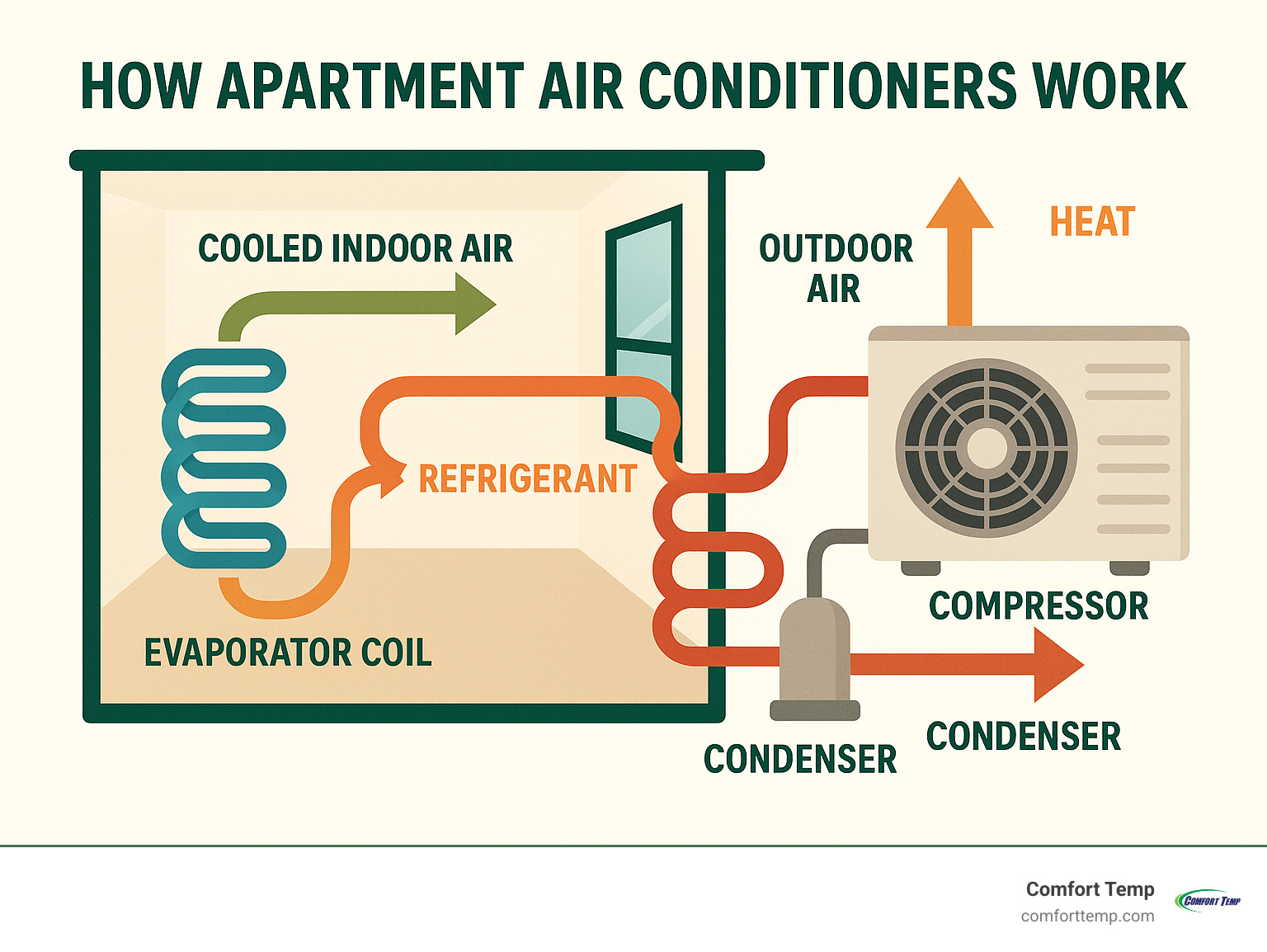
Air conditioning in Jacksonville is a fundamental necessity driven by North Florida’s humid subtropical climate, where systems must manage both extreme heat and high moisture levels. To maintain comfort and efficiency in 2026, homeowners typically utilize high-efficiency heat pumps or split-system air conditioners that meet modern SEER2 standards while incorporating specialized features to combat salt-air corrosion and biological growth common in the region.
The Jacksonville Climate and Its Impact on HVAC Requirements
To understand air conditioning in Jacksonville, one must first understand the specific environmental stressors of Northeast Florida. Unlike the arid heat of the Southwest, Jacksonville experiences a humid subtropical climate (Köppen Cfa). This means that for at least eight months of the year, an HVAC system is not just lowering the temperature; it is performing the critical task of dehumidification.
The "River City" is characterized by high latent heat. Latent heat is the energy required to change the state of moisture in the air (humidity) rather than just changing the temperature (sensible heat). In Jacksonville, the humidity often hovers between 70% and 90% during the summer months. An air conditioner that is improperly sized or poorly maintained will fail to remove this moisture, leading to a "clammy" indoor environment and, eventually, structural issues like mold or wood rot.
Furthermore, Jacksonville’s geography introduces the "Salt Air Factor." For residents in communities like Jacksonville Beach, Atlantic Beach, or Neptune Beach, and even those along the St. Johns River, salt spray is a significant variable. Salt is highly corrosive to the aluminum fins and copper tubing found in outdoor condenser units. In these areas, air conditioning systems typically have a shorter lifespan—often 7 to 10 years compared to the 12 to 15 years expected in inland neighborhoods like Westside or Mandarin—unless they are equipped with specialized coastal coatings.
Modern System Types Prevalent in 2026
By 2026, the technology behind cooling Jacksonville homes has shifted toward high-efficiency, variable-speed systems. The transition away from older refrigerants like R-410A to more environmentally friendly alternatives such as R-454B or R-32 is now standard for new installations.
Air Source Heat Pumps
Heat pumps are the most common system type in Jacksonville. Because the region rarely experiences prolonged freezing temperatures, the heating cycle of a heat pump is exceptionally efficient. Instead of generating heat through combustion or electric resistance, it simply reverses the refrigeration cycle to move heat from the outside air into the home. In 2026, many Jacksonville homeowners opt for dual-fuel or "hybrid" systems, though a standard high-efficiency heat pump is usually sufficient for the local climate.
Central Split Systems
A split system consists of an outdoor unit (the condenser) and an indoor unit (the evaporator coil, usually paired with a furnace or air handler). This remains the standard for the majority of single-family homes in neighborhoods like Springfield or Avondale. These systems are prized for their ability to utilize existing ductwork, although the age and integrity of that ductwork are frequent points of failure in older Jacksonville architecture.
Ductless Mini-Splits
As Jacksonville sees an increase in accessory dwelling units (ADUs) and the renovation of historic homes, ductless mini-splits have gained massive popularity. These systems allow for "zoning," where individual rooms are cooled only when in use. This is particularly effective for large, older homes where traditional ductwork cannot be easily installed without compromising historical aesthetics.
Understanding Efficiency Ratings: SEER2 in 2026
In 2026, the industry standard for measuring efficiency is SEER2 (Seasonal Energy Efficiency Ratio 2). This metric, which became the legal baseline in the Southeast United States a few years prior, provides a more accurate representation of how a system performs under actual external pressure conditions.
For Jacksonville homeowners, the minimum SEER2 rating for new heat pump or central air installations is 14.3 (equivalent to the old 15 SEER). However, due to the high number of cooling hours in Florida—often exceeding 2,500 hours per year—many residents find that investing in 18 to 22 SEER2 systems provides a significant return on investment (ROI) through lower JEA (Jacksonville Electric Authority) bills.
Higher SEER2 ratings are often achieved through variable-speed compressors. Unlike traditional single-stage compressors that are either "on" or "off," variable-speed units can operate at as low as 25% capacity. This allows the system to run for longer cycles at lower speeds, which is the most effective way to extract humidity from the air without over-cooling the home.
The Importance of Manual J Load Calculations
A common mistake in the Jacksonville market is "oversizing" the air conditioner. Homeowners often assume that a larger unit will cool the house faster. However, in a humid climate, an oversized unit will reach the thermostat's set temperature too quickly and shut off. This is known as short-cycling.
Because the unit shuts off before the evaporator coil has had enough time to pull moisture from the air, the home remains humid despite being cool. This creates a breeding ground for dust mites and mold. In 2026, reputable Jacksonville HVAC contractors use Manual J Load Calculations, a protocol developed by the Air Conditioning Contractors of America (ACCA). This calculation accounts for:
- Total square footage and ceiling height.
- The orientation of the home (e.g., west-facing windows receiving afternoon sun).
- Insulation R-values in the attic and walls.
- The number and type of windows (impact-resistant or low-E glass).
- The number of occupants.
Maintenance Requirements for the Northeast Florida Region
Maintenance in Jacksonville is not optional; it is a preservation strategy. The combination of heat, moisture, and organic debris (like pine needles and oak tassels) can quickly degrade a system.
Condensate Drain Line Management
The most frequent cause of AC failure in Jacksonville is a clogged condensate drain line. As the system removes gallons of water from the air daily, algae and "sludge" can grow in the PVC drain pipes. If the line clogs, the water backs up, potentially flooding the home or triggering a safety switch that shuts the system down. In 2026, most local systems are equipped with automated float switches and "EZ-traps" that allow homeowners to easily clear the lines with vinegar or specialized tablets.
Coil Cleaning and Corrosion Protection
For those living near the coast, the outdoor condenser coils must be rinsed regularly with fresh water to remove salt deposits. Professionals in Jacksonville often apply specialized "Gold Fin" or epoxy coatings to the coils during installation to provide a barrier against the corrosive salt air.
Indoor Air Quality (IAQ) and Filtration
Jacksonville's high pollen counts (especially in spring) and humidity levels make IAQ a major component of air conditioning. In 2026, many homeowners have moved beyond basic 1-inch pleated filters to Whole-Home Air Purifiers or UV light systems installed within the air handler. These UV lights are particularly effective at preventing biological growth on the evaporator coil, which is a common site for mold in Florida.
Comparison of Common HVAC Systems in Jacksonville
The following table compares the typical system configurations found in the Jacksonville market as of 2026.
| System Type | Best For | Typical SEER2 | Average Lifespan (Inland) | Key Advantage in Jacksonville |
|---|---|---|---|---|
| Standard Heat Pump | Most single-family homes | 14.3 – 16 | 12-15 Years | Excellent heating efficiency for mild winters. |
| Variable-Speed Split | High-humidity areas / Large homes | 18 – 25 | 12-15 Years | Superior dehumidification and lower JEA bills. |
| Coastal-Grade Unit | Beaches / Intracoastal | 14.3 – 18 | 7-10 Years | Corrosion-resistant coatings protect against salt. |
| Ductless Mini-Split | Historic homes / Additions | 16 – 30+ | 12-15 Years | No ductwork needed; precise room-by-room control. |
Permitting and Regulations in Jacksonville
Installing an air conditioning system in Jacksonville requires compliance with the City of Jacksonville (COJ) Building Inspection Division. As of 2026, a permit is mandatory for any HVAC change-out. This ensures that:
- The system is installed according to the Florida Building Code (which includes strict wind-load requirements for outdoor units to prevent them from becoming projectiles during a hurricane).
- An electrical inspection confirms the wiring can handle the load.
- The unit meets the minimum energy efficiency standards mandated by federal and state law.
Furthermore, Florida law requires a "Duct Leakage Test" for any system where the air handler is located in an unconditioned space (like a garage or attic). This prevents energy waste and ensures that cooled air is not being pumped into the environment.
Cost Considerations and Incentives
In 2026, the cost of a full HVAC replacement in Jacksonville typically ranges from $6,500 to $14,000, depending on the size of the home and the efficiency of the unit. While the upfront cost is significant, several factors can mitigate the expense:
- Federal Tax Credits: Under the extended provisions of the Inflation Reduction Act (IRA), homeowners may be eligible for tax credits (e.g., Section 25C) for installing high-efficiency heat pumps.
- JEA Rebates: The Jacksonville Electric Authority often provides localized rebates for upgrading to energy-efficient systems that reduce the peak load on the city’s power grid.
- Manufacturer Financing: Due to the essential nature of AC in Florida, most major manufacturers offer low-interest financing to make the transition to SEER2-compliant systems more accessible.
Troubleshooting Common Jacksonville AC Issues
Before calling a technician, Jacksonville residents should be aware of a few localized troubleshooting steps:
- The "Ice Up": If you see ice on the outdoor copper lines, it is usually caused by restricted airflow (a very dirty filter) or a refrigerant leak. Turn the system off and let it defrost before the technician arrives.
- The "Dead Thermostat": If your thermostat screen is blank, check the drain pan. If the float switch has tripped due to a clog, it will cut power to the thermostat to prevent a flood.
- Low Airflow: In older Jacksonville homes with ductwork in the attic, squirrels or raccoons can sometimes damage the flex-duct. If one room is significantly warmer than others, the ductwork may have been breached.
Frequently Asked Questions
How long does an air conditioner typically last in Jacksonville?
Inland, a well-maintained system can last 12 to 15 years. However, if you live within five miles of the ocean or the Intracoastal Waterway, the lifespan drops to 7 to 10 years due to salt-induced corrosion of the condenser coils. Regular maintenance and protective coatings are the only ways to extend this timeframe.
Why is my JEA bill so high even with a new AC?
High bills can stem from several factors beyond the AC unit itself. In Jacksonville, poor attic insulation (common in older homes) or leaky ductwork can force even a high-efficiency unit to run constantly. Additionally, if the system was not properly "charged" with the correct amount of refrigerant at installation, its efficiency will be significantly lower than its SEER2 rating suggests.
Should I repair or replace my R-410A system in 2026?
By 2026, the phase-down of R-410A refrigerant has made it significantly more expensive to repair leaks in older systems. If your unit is more than 10 years old and requires a major repair (like a compressor or evaporator coil replacement), the long-term cost-benefit usually favors replacing the system with a modern unit using R-454B or R-32 refrigerant.
What is the best thermostat setting for Jacksonville summers?
For a balance of comfort and efficiency, the U.S. Department of Energy recommends 78°F. However, in Jacksonville's humidity, many find 75°F–76°F more comfortable. To save money, use a "smart" thermostat to raise the temperature when you are away, but do not turn the system off entirely, as the humidity will quickly build up and become difficult to remove later.
Can I install an air conditioner myself in Jacksonville?
No. In addition to the specialized tools required (vacuum pumps, manifold gauges, and recovery tanks), Florida law requires an EPA Section 608 certification to handle refrigerants. Furthermore, the City of Jacksonville requires a licensed contractor to pull the necessary building permits for the installation to be legal and for manufacturer warranties to remain valid.
Final Recommendation for Jacksonville Residents
For those living in the Jacksonville area, the most critical step in managing indoor climate is selecting a contractor who prioritizes Manual J load calculations and humidity control over simple cooling capacity. If your current system is nearing the 10-year mark, begin researching SEER2-compliant heat pumps and check for available JEA or federal incentives. Investing in a variable-speed system with coastal protection remains the most effective way to ensure long-term comfort and manageable energy costs in the Northeast Florida environment.