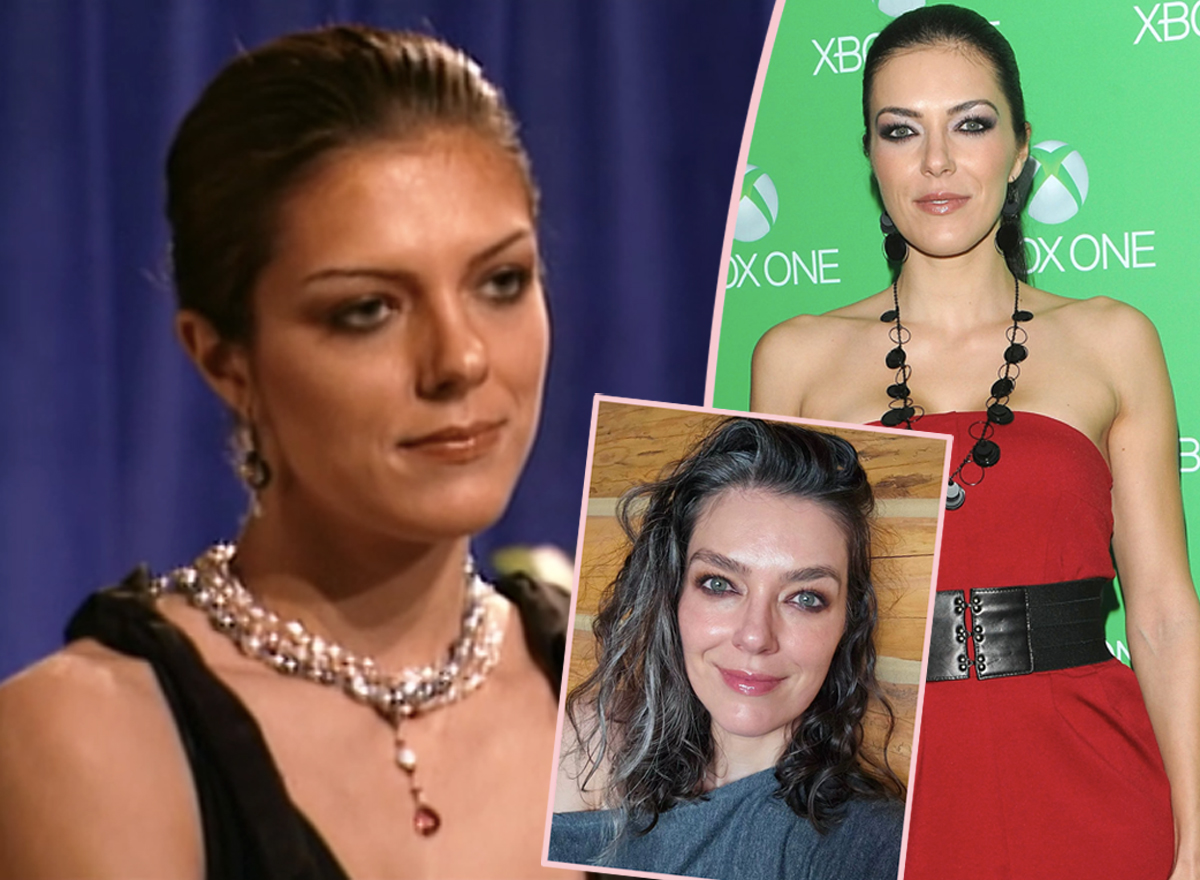
Adrianne Curry, the inaugural winner of America’s Next Top Model (ANTM), provided the foundational blueprint for the "relatable underdog" archetype in reality television. Her impact was twofold: she validated the show’s competitive format through her raw transformation, while her subsequent professional struggles and public fallout with Tyra Banks exposed the industry's harsh realities and the show’s early prize-fulfillment failures.
The Genesis of a Reality TV Archetype
When America’s Next Top Model premiered in May 2003, the landscape of reality television was still in its experimental phase. Shows like The Real World and Survivor had established the genre, but a competition specifically focused on the high-fashion industry was a novel concept. Adrianne Curry, a rebellious, gravelly-voiced girl from Joliet, Illinois, did not fit the traditional mold of a burgeoning supermodel. Her impact on Season 1 began with her persona: she was the "diamond in the rough."
Adrianne’s presence challenged the high-fashion gatekeepers of the time. Unlike her competitors—such as the polished, high-fashion favorite Elyse Sewell or the more commercially "pageant" Shannon Stewart—Adrianne represented the counter-culture. Her journey from a waitress with a difficult upbringing to a national television winner provided the emotional hook that the UPN network needed to secure a second season. By winning, she proved that the show wasn't just looking for the "prettiest" girl, but for a narrative of transformation. This "Cinderella" arc became the standard storytelling device for the next 23 cycles of the show.
Redefining "Model Behavior" on Camera
In 2003, the concept of "model behavior" was strictly guarded by agencies like Elite and Ford. Adrianne Curry’s impact on Season 1 was largely defined by her refusal to adhere to these unspoken rules. She was candid about her financial struggles, her family life, and her skepticism of the industry. This transparency was revolutionary for the time.
One of the most significant moments in Season 1 was Adrianne’s performance during the nude jewelry shoot. While other contestants expressed varying degrees of discomfort, Adrianne approached the task with a pragmatic, professional attitude that impressed the judges, particularly Janice Dickinson. This set a precedent for the show’s future: a "top model" must be willing to sacrifice personal comfort for the sake of the "art" or the "client." This expectation of total compliance became a recurring theme throughout the series, often criticized in later years as exploitative, but in Season 1, Adrianne was the one who made it look like the mark of a true professional.
The Reality of the Prizes: A Cautionary Tale
Perhaps the most enduring impact Adrianne Curry had on the America’s Next Top Model franchise was not what happened during the filming, but what happened after the cameras stopped rolling. As of 2026, looking back at the history of reality TV prizes, Adrianne’s experience remains a primary case study in "contractual disillusionment."
The Season 1 prizes included a contract with Wilhelmina Models, a photo spread in Marie Claire, and a contract with Revlon cosmetics. However, Adrianne has spent years being vocal about the fact that the Revlon contract—the most lucrative and prestigious of the three—never truly materialized in the way it was presented on screen. She claimed that she was never booked for a single job by Revlon and that the show’s production failed to advocate for her.
This fallout had a massive impact on how future seasons of ANTM were structured. It forced the production team to solidify their partnerships with sponsors like CoverGirl (which replaced Revlon in Cycle 3) to ensure that winners received the career-launching support they were promised. Adrianne’s public struggle served as a warning to future contestants: winning the show did not guarantee a career; it only guaranteed a platform.
| Feature of Impact | Description of Adrianne's Influence | Long-term Effect on the Franchise |
|---|---|---|
| Contestant Archetype | The "Ghetto-Fab" / Underdog from a modest background. | Future winners like Eva Marcille and Danielle Evans followed this "diamond in the rough" trajectory. |
| Authenticity | Direct, unfiltered communication and lack of "pageant" polish. | Shifted the show away from looking for "perfect" girls toward "interesting" personalities. |
| Prize Legitimacy | Publicly called out the failure of the Revlon and Wilhelmina deals. | Led to tighter legal contracts and more integrated sponsorship deals (e.g., CoverGirl, Pantene). |
| The "Tyra Relationship" | Transitioned from mentor/mentee to a total breakdown of communication. | Created the "erasure" phenomenon where winners who criticized the show were removed from its history. |
The "Erasure" and the History of ANTM
As the show grew into a global phenomenon, Adrianne Curry’s relationship with Tyra Banks and the production company, 10 by 10 Entertainment, soured significantly. Adrianne felt abandoned by the "mentor" figure Tyra portrayed on screen. In response to her vocal criticisms, the show effectively "erased" her from the franchise’s history for many years.
During retrospective episodes or "hall of fame" segments in later cycles, Adrianne was often omitted or glossed over. This erasure highlighted a specific power dynamic within the show: the requirement of loyalty to the Tyra Banks brand. Adrianne’s impact here was in exposing the performative nature of the "Mama Tyra" persona. Her refusal to stay quiet about her post-show experience paved the way for other contestants—such as Tiffany Richardson (Cycle 4) or Lisa D'Amato (Cycle 5/17)—to eventually speak out about their own negative experiences with the production.
By 2026, the "Top Model" discourse has shifted toward a more critical analysis of how the show handled its winners. Adrianne was the first to peel back the curtain, making her arguably the most influential winner in terms of industry transparency, even if she wasn't the most commercially successful model to come from the show.
Adrianne Curry as a Reality TV Pioneer
Beyond the modeling world, Adrianne Curry’s impact on Season 1 helped bridge the gap between "competition contestant" and "reality TV celebrity." After her win, she didn't just fade away or move to Paris to walk the runways; she leaned into the burgeoning world of celebrity reality TV.
Her appearance on The Surreal Life, where she met her future husband Christopher Knight, and their subsequent spin-off My Fair Brady, essentially created a new career path. She proved that one could use a win on a competition show to launch a career as a professional personality. This path—later followed by countless stars from The Bachelor, RuPaul’s Drag Race, and Love Island—found its roots in Adrianne’s post-ANTM trajectory. She was the first to prove that the "Top Model" title was a better launchpad for a television career than a high-fashion one.
The Evolution of the Modeling Industry via Season 1
Season 1 was filmed in a pre-social media era. Adrianne’s impact was felt in the way she handled "overnight" fame without the buffer of Instagram or TikTok. She was one of the first people to experience the "winner’s curse" of being too famous as a reality star to be taken seriously as a high-fashion model.
Top agencies at the time were notoriously snobbish about reality TV. Adrianne’s struggle to be booked for high-end editorials after the show revealed the deep divide between the "fashion world" and the "entertainment world." This tension defined the show for its first decade. It wasn't until the later cycles, and the eventual rise of "social media models," that the industry finally accepted the crossover that Adrianne had attempted to navigate years prior.
Historical Context: 2003 vs. 2026
In 2003, Adrianne was seen as a "wild child" for her tattoos and her attitude. In the context of 2026, her "edgy" persona appears almost quaint compared to the influencers of today. However, her willingness to discuss the "behind-the-scenes" of reality TV production was decades ahead of its time. Today’s "de-influencing" and "tell-all" culture owes a debt to Curry’s early, often lonely, crusade to hold production companies accountable for their promises.
Frequently Asked Questions
Did Adrianne Curry actually get the Revlon contract?
While Adrianne was the official winner and the contract was a promised prize, she has stated in numerous interviews over the last two decades that she was never actually utilized for Revlon's marketing campaigns. She claimed the contract work never materialized, which she blamed on the show's lack of follow-through and her representation at the time. This specific failure is often cited as the reason the show eventually switched to CoverGirl, a brand that fully integrated the winner into their national advertising.
Why was Adrianne Curry "erased" from later seasons of ANTM?
The "erasure" occurred because of Adrianne's vocal criticism of Tyra Banks and the show's producers. In the world of America's Next Top Model, loyalty to the brand was paramount. Because Adrianne publicly aired grievances regarding her prizes and the treatment of contestants, she was largely excluded from retrospective montages and "all-star" mentions for a significant portion of the show's original run.
Is Adrianne Curry still modeling in 2026?
By 2026, Adrianne Curry has transitioned away from the fashion industry. After a successful stint in reality TV and a period as a prominent cosplayer and "geek culture" influencer, she moved to a more rural lifestyle, focusing on her personal brand and social media presence. She remains a notable figure in pop culture history, primarily as a commentator on the reality TV industry and her experiences during the early 2000s.
How did Season 1 differ from later seasons of ANTM?
Season 1 was significantly smaller in scale, with fewer contestants and a more "documentary-style" feel. The production values were lower, and the judges (which included Janice Dickinson, Kimora Lee Simmons, and Beau Quillian) were still finding the tone of the show. Adrianne's impact was monumental because she had to navigate a format that was being built around her in real-time.
What happened to the other Season 1 finalists?
Shannon Stewart, the runner-up, had a successful career in commercial modeling and later returned for the "All-Stars" cycle (Cycle 17). Elyse Sewell, who finished third, became a very successful working model in Asia and wrote a popular blog about her experiences, which further pulled back the curtain on the modeling industry's realities.
Final Recommendation for Fans and Researchers
For those studying the evolution of reality television or the history of America’s Next Top Model, Adrianne Curry’s Season 1 journey is essential viewing. To understand her true impact, one must look beyond the episodes themselves and research her post-show interviews and long-form social media posts. Her story serves as a critical lens through which to view the ethics of reality TV production and the "Winner's Curse." As a next step, viewers should compare the Cycle 1 finale with the Cycle 3 finale to see how the production corrected the "prize problem" that Adrianne first brought to light.