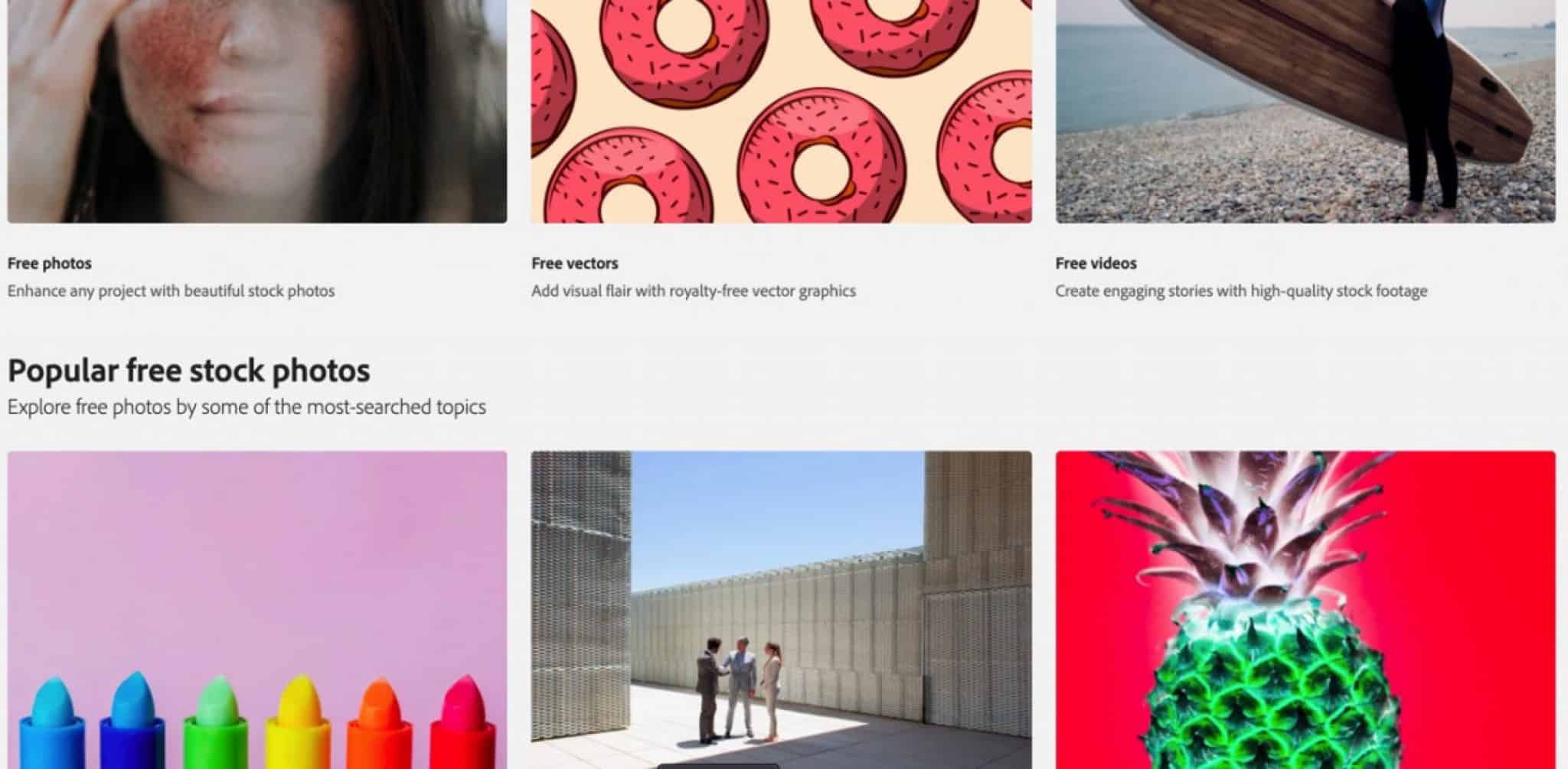
Adobe Stock provides millions of high-quality images for free through two primary channels: a dedicated "Free" collection and promotional trial offers. While these assets are free to download, they remain subject to specific licensing agreements, typically the Standard License, which governs commercial and personal usage rights and distribution limits.
The digital landscape in 2026 continues to rely heavily on high-fidelity visual content. As creators and businesses seek professional-grade assets without the premium price tag, understanding the nuances of Adobe Stock's free offerings is essential. While Adobe is primarily a subscription-based marketplace, the platform has expanded its "Free" section significantly over the last several years to compete with open-source repositories while maintaining a higher standard of legal protection and technical quality.
Understanding the Adobe Stock Free Collection
The most direct way that Adobe Stock images are free for certain downloads is through the official Free Collection. This is not a limited-time trial but a permanent segment of the Adobe Stock library. As of 2026, this collection has grown to include over a million curated assets, including photos, vector graphics, illustrations, and even video clips.
Why Adobe Offers Free Assets
Adobe curates this collection by partnering with contributors who agree to make specific assets available for free. For contributors, this serves as a marketing tool to drive traffic to their paid portfolios. For Adobe, it keeps users within the Creative Cloud ecosystem. Unlike "public domain" sites, every image in the Adobe Stock Free Collection has undergone a rigorous vetting process. This includes technical checks for noise, focus, and composition, as well as legal checks for intellectual property, trademark violations, and required model or property releases.
Quality Standards for Free Assets
It is a common misconception that free assets are the "rejects" of the paid library. In reality, Adobe maintains strict quality standards for the Free Collection. Images must meet specific resolution requirements (typically 4MP or higher) and be free of artifacts. This makes them suitable for professional print and digital applications, ranging from social media marketing to high-resolution web design.
Navigating the Adobe Stock Free Trial
Another method through which Adobe Stock images are free for certain downloads is the 30-day introductory trial. This is designed for new users to test the integration of the service within their workflow.
Trial Mechanics and Credit Allocation
Typically, the trial offers 10 to 40 "Standard" assets for free during the first month. These are not restricted to the "Free Collection"; you can use these trial credits to download any image labeled as "Standard" in the main library.
- Eligibility: The trial is usually restricted to users who have not previously utilized an Adobe Stock trial on their Adobe ID.
- The Credit System: Each download during the trial consumes one credit. If you download a "Premium" or "Pro Video" asset, it may require more credits or may not be covered by the trial at all.
- Cancellation Terms: To avoid being charged for a monthly or annual subscription, users must cancel before the 30-day window expires. However, even if the subscription is canceled, the licenses for the images downloaded during the trial remain valid in perpetuity.
The Value of Perpetual Licensing
One of the strongest advantages of using the Adobe Stock trial over other free image sites is the perpetual license. Once you download a free image (either from the Free Collection or via trial credits), you own the right to use that image forever, even if you never pay for a subscription. This provides a level of legal security that "Creative Commons Zero" (CC0) sites often cannot guarantee.
Licensing Deep Dive: What "Free" Actually Means
"Free" in the context of Adobe Stock refers to the acquisition cost, not an absence of rules. Every free download is governed by the Adobe Stock Standard License. Understanding these constraints is vital for any professional project in 2026.
Rights Granted under the Standard License
The Standard License allows you to use the image in a variety of ways:
- Digital Marketing: Websites, social media posts, email marketing, and mobile apps.
- Print Media: Magazines, newspapers, and book covers (within circulation limits).
- Advertising: Online banners and physical signage.
- Corporate Presentations: Internal slide decks and annual reports.
Restrictions and Limitations
Despite being free, there are three major "red lines" that users must not cross:
- The 500,000 Copy Rule: You cannot use a standard-licensed image in print or digital distributions that exceed 500,000 total copies. For global campaigns or high-traffic product packaging, an Extended License is required, which is rarely free.
- Resale and "Print on Demand": You cannot use free images on products for sale where the image is the primary value (e.g., selling a T-shirt or coffee mug that just features the image).
- Standalone Distribution: You cannot redistribute the image file itself as a wallpaper, a template, or a stock photo.
Comparison of Adobe Stock Licenses (2026)
| Feature | Free/Standard License | Enhanced License | Extended License |
|---|---|---|---|
| Cost for Free Assets | $0 | Usually Requires Payment | Usually Requires Payment |
| Print Run Limit | Up to 500,000 copies | Unlimited | Unlimited |
| Web Impressions | Unlimited | Unlimited | Unlimited |
| Merchandise for Resale | Not Allowed | Not Allowed | Allowed |
| Indemnification | Up to $10,000 | Up to $10,000 | Unlimited |
| Use in Templates | Not Allowed | Allowed | Allowed |
Technical Requirements and File Types
When you access Adobe Stock images that are free for certain downloads, you are not limited to a single file format. Adobe offers a diverse range of technical assets to suit different creative needs.
High-Resolution Photography
Most free photos are provided as high-quality JPEGs. In 2026, many of these are optimized with metadata that includes Content Credentials, providing transparency about whether the image was captured by a camera or generated/edited with AI tools like Adobe Firefly.
Vector Graphics and Illustrations
Adobe Stock is particularly famous for its vector library. Free downloads often include .AI or .EPS files, which are infinitely scalable. This is a massive advantage for graphic designers working on logos or large-format prints, as these files do not lose quality when resized.
Transparent PNGs and Cutouts
A significant portion of the Free Collection includes "cutout" images—objects or people with transparent backgrounds. This saves designers hours of manual masking work and is a high-value "free" offering that distinguishes Adobe from more basic stock sites.
Integration with Adobe Creative Cloud
One of the primary reasons Adobe Stock images are free for certain downloads is to demonstrate the seamless integration with Creative Cloud (CC) apps. This integration creates a unique "Search-to-Canvas" workflow that is highly efficient.
The Libraries Panel
Within Photoshop, Illustrator, or InDesign, you can open the "Libraries" panel and search for "Free" Adobe Stock assets directly. You can drag a watermarked preview into your document to test the layout. Once you decide to use it, you can "license" the free asset with one click. The watermark disappears, and the high-resolution version replaces the preview automatically, preserving all your filters and transformations.
Adobe Express Integration
For non-designers, Adobe Express provides a simplified interface to access the free Adobe Stock library. In 2026, Adobe Express users can access millions of free images and design elements directly within the browser-based editor, making it a powerful tool for small business owners and social media managers who need quick, legal visuals.
Ethical and Legal Considerations in 2026
As we move through 2026, the legal landscape surrounding stock imagery has become more complex, particularly regarding Artificial Intelligence and Privacy.
AI-Generated Content (Adobe Firefly)
Many assets in the Adobe Stock Free Collection are now generated using Adobe Firefly. Adobe differentiates itself by training its AI only on licensed content and public domain works. When you download a free AI-generated image from Adobe, you receive the same legal indemnification as a traditional photograph. This is a critical safety net for corporate users who are wary of the copyright "gray areas" associated with other AI platforms.
Model and Property Releases
Every free image on Adobe Stock that features a recognizable person or private property is backed by a signed release. This means the person in the photo has legally consented to their likeness being used for commercial purposes. Using "free" images from unverified sources on the internet can lead to "Right of Publicity" lawsuits; Adobe Stock's vetting process essentially eliminates this risk.
Common Pitfalls and Troubleshooting
While obtaining free downloads is straightforward, users often encounter specific hurdles.
- Expired Trial Billing: The most common issue is users forgetting to cancel their trial. Set a reminder for day 28 of your 30-day trial to evaluate whether you want to continue with a paid plan.
- Asset Mix-ups: Be careful when searching. The "Free" filter must be specifically toggled on. If you download a "Premium" image without realizing it, you will be prompted to pay or use a credit.
- Regional Availability: Licensing laws vary by country. While most of the Adobe Stock Free Collection is global, some specific assets may be restricted in certain jurisdictions due to local trademark laws.
- Login Requirements: You must have a valid Adobe ID to download free assets. You do not need a paid Creative Cloud subscription, but you do need an account so that Adobe can associate the license with your identity for legal purposes.
Frequently Asked Questions
Can I use Adobe Stock free images for my business logo?
No. Under the Standard License (which applies to free downloads), you cannot use an image as part of a trademark or logo. Since a logo is a proprietary mark that you intend to own exclusively, and stock images are licensed to many people, using a stock image would violate the terms and prevent you from trademarking your brand.
Do I need to give credit (attribution) to the photographer?
For commercial use, attribution is generally not required for Adobe Stock images, though it is always appreciated by the contributors. However, if you are using the image for editorial purposes (like a news article or a blog post about a specific event), you should include a credit line in the format: "Author Name/stock.adobe.com."
What happens to my free images if I cancel my Adobe account?
The licenses you acquired for free images are linked to your Adobe ID, not your subscription status. If you cancel your subscription, you still retain the right to use the images you already licensed. However, it is a good practice to download and save the License History (available in your account settings) as proof of your legal right to use the assets.
Are there any "Free" videos on Adobe Stock?
Yes, Adobe Stock has a dedicated "Free Video" section. These are typically HD or 4K clips that follow the same Standard License rules. They are excellent for background loops on websites or as b-roll in YouTube content, provided the distribution stays under the 500,000-view threshold for certain specific uses (though web views are generally unlimited).
Practical Recommendation for 2026 Creators
To make the most of the fact that Adobe Stock images are free for certain downloads, start by creating a dedicated "Free Assets" Library within your Adobe account. Periodically browse the Free Collection and "purchase" ($0) assets that fit your brand aesthetic, even if you don't need them immediately. This builds a curated, legally-safe repository of high-quality visuals that you can pull from at a moment's notice. Always verify the license type before finalizing a high-circulation project to ensure the 500,000-copy limit of the Standard License isn't a bottleneck for your growth.
For further information on specific license terms, you may consult the Adobe Stock License Information page or the Adobe Help Center for detailed usage guidelines.