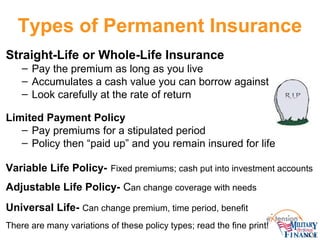
Adjusting whole life insurance premiums involves utilizing policy dividends to reduce out-of-pocket costs, exercising non-forfeiture options like "Reduced Paid-Up" status, or modifying elective riders. While base premiums are contractually fixed, policyholders can manage their actual cash outlay through dividend elections, changing payment frequency, or leveraging accumulated cash value.
Whole life insurance is often marketed for its stability, specifically its "level premium" feature where the cost is guaranteed never to increase. However, as financial circumstances evolve in 2026, policyholders frequently find themselves needing more flexibility. Whether you are facing a temporary cash flow shortage or seeking to maximize the growth of your policy's cash value, understanding the mechanics of premium adjustments is essential for maintaining your coverage without jeopardizing your long-term financial goals.
The Structural Reality of Whole Life Premiums
Unlike Universal Life insurance, which is designed with "flexible premiums," a standard Whole Life policy is a rigid contract. When you sign the policy, you agree to pay a specific amount for a specific duration—often until age 100 or 121. This fixed nature is what allows the insurance company to guarantee the death benefit and a minimum rate of cash value growth.
However, "fixed" does not mean "unchangeable" in practice. In the insurance industry, adjusting premiums usually refers to changing the net amount paid by the policyholder rather than changing the contractually required premium itself. To adjust what you actually pay, you must work within the internal mechanisms of the policy or exercise specific contractual clauses.
Fixed Base Premiums vs. Flexible Riders
A whole life policy's total bill is often composed of a base premium and several "riders" or add-ons. The base premium is the core cost required to keep the guaranteed death benefit in force. Riders, such as a Waiver of Premium, Accidental Death Benefit, or a Paid-Up Additions (PUA) rider, represent elective costs.
In 2026, many modern whole life contracts allow for the adjustment of these riders. For instance, if you have been overfunding a policy through a PUA rider to build cash value quickly, you can typically reduce or stop these elective payments at any time. This effectively "adjusts" your total premium downward without violating the core contract.
Utilizing Dividends to Offset Out-of-Pocket Costs
For those holding "participating" whole life policies—typically issued by mutual insurance companies—dividends are the primary tool for premium adjustment. Dividends are essentially a return of a portion of the premium if the insurer’s financial performance (mortality, expenses, and investment income) is better than anticipated.
While dividends are never guaranteed, they offer several "dividend options" that allow you to change how much you pay out of pocket each year:
- Premium Reduction: You can instruct the insurer to apply any declared dividends directly toward your annual premium. If the dividend is large enough, it may cover the entire premium, resulting in a "zero-pay" year for you.
- Paid-Up Additions (PUA): Instead of reducing your premium, dividends purchase small amounts of additional, fully paid-up whole life insurance. This increases both your death benefit and your cash value. Over many years, these PUAs generate their own dividends, creating a compounding effect.
- Accumulate at Interest: Dividends are held in a side account that earns interest. You can later withdraw these funds to pay premiums during lean years.
- Cash Payment: The company sends you a check for the dividend amount. You then use this cash to pay part of your premium.
By switching your dividend option to "Premium Reduction," you effectively adjust your premium obligation downward based on the company's performance. In 2026, as interest rates and insurer portfolios fluctuate, monitoring your annual dividend statement is crucial to seeing how much of your premium can be offset.
The "Reduced Paid-Up" (RPU) Option
If you find that you can no longer afford the premiums at all, or if you simply no longer need the full death benefit and want to stop paying, you can exercise the Reduced Paid-Up (RPU) non-forfeiture option.
This is a permanent adjustment. When you trigger RPU, the insurance company uses the existing cash value in your policy to purchase a single-premium policy. The result is:
- Premiums Stop Entirely: You will never owe another cent to the insurance company for this policy.
- Death Benefit is Lowered: The face amount of your insurance is reduced to a level that the existing cash value can support for the rest of your life.
- Policy Stays in Force: The policy remains "whole life," meaning it will still pay a death benefit and the remaining cash value will continue to grow, albeit from a smaller base.
Exercising RPU is a significant move. It is often used by retirees who have sufficient assets elsewhere and wish to eliminate the ongoing expense of a life insurance premium while still leaving a legacy.
Automatic Premium Loans (APL)
If you miss a premium payment and your policy has sufficient cash value, most whole life contracts include an Automatic Premium Loan (APL) provision. This is a "temporary" adjustment tool that prevents the policy from lapsing.
When the grace period for a premium ends, the insurer automatically takes a loan against your policy's cash value to pay the premium. While this keeps the policy active, it is not a free solution. You will be charged interest on that loan. If left unchecked, the loan balance plus interest can eventually deplete the cash value, causing the policy to collapse.
Using APL can be an effective way to "skip" a premium during a financial emergency, but it should be viewed as a short-term adjustment rather than a long-term strategy.
Changing Payment Frequency and Modal Loading
An often overlooked way to adjust premiums is by changing the "mode" of payment. Most insurance companies offer annual, semi-annual, quarterly, or monthly payments.
While paying monthly might feel like a more manageable "adjustment" to your budget, it usually comes with a hidden cost known as modal loading. Insurance companies prefer to have the full annual premium upfront so they can invest it immediately. To compensate for the administrative costs and lost investment time of monthly payments, they charge a fee—often 2% to 8% higher than the annual cost.
| Payment Frequency | Typical Impact on Total Annual Cost | Best Use Case |
|---|---|---|
| Annual | Lowest Cost (Base Rate) | For those with high cash reserves; saves the most money. |
| Semi-Annual | 1% - 3% Surcharge | A balance between cash flow and cost. |
| Quarterly | 3% - 5% Surcharge | Useful for matching quarterly business income. |
| Monthly (EFT) | 5% - 8% Surcharge | Easiest for personal budgeting, but most expensive. |
If your goal is to reduce the total cost of your insurance, adjusting from monthly to annual payments is one of the most effective strategies available.
Technical Limitations: The MEC Rules
When adjusting premiums upward—for example, by adding a large Paid-Up Additions rider—you must be aware of the Modified Endowment Contract (MEC) rules under Internal Revenue Code Section 7702.
If you put too much money into a life insurance policy too quickly, the IRS reclassifies it as a MEC. Once a policy becomes a MEC:
- Withdrawals and loans are taxed as ordinary income (on a "gains first" basis).
- A 10% penalty applies to withdrawals made before age 59½.
- The death benefit remains tax-free, but the "living benefits" lose their tax-advantaged status.
Whenever you request an adjustment to increase your premium payments, your insurance company is legally required to perform a "7-Pay Test" to ensure the policy does not become a MEC. In 2026, with the updated mortality tables and interest rate benchmarks used by insurers, these limits are strictly monitored.
Adjusting Premiums by Removing Riders
If your policy feels too expensive, review your policy illustrations to identify which riders are adding to the cost. Many policyholders carry riders they no longer need. Common examples include:
- Waiver of Premium: This rider pays your premium if you become totally disabled. If you have reached retirement age or have robust disability insurance elsewhere, you might choose to drop this to save on the monthly cost.
- Child Term Rider: If your children are now adults, this rider is likely unnecessary.
- Accidental Death Benefit: Often called "double indemnity," this pays extra if you die in an accident. Many financial planners consider this unnecessary if your base coverage is sufficient.
Removing these elective components can result in a meaningful reduction in your required premium without changing the core guarantees of the base whole life contract.
Comparing Premium Adjustment Methods
The following table summarizes the various ways you can "adjust" what you pay for a whole life policy and the consequences of each.
| Method | Impact on Cash Value | Impact on Death Benefit | Reversibility |
|---|---|---|---|
| Use Dividends to Pay | Slower growth (compared to PUA) | No change to base amount | Reversible annually |
| Reduced Paid-Up (RPU) | Permanent reduction in base | Permanent reduction | Irreversible |
| Automatic Premium Loan | Decreases (due to debt/interest) | Decreases by loan amount | Reversible by paying back loan |
| Dropping Riders | Minor impact | Decreases total benefit | Usually irreversible |
| Changing Frequency | No direct impact | No change | Reversible anytime |
| Partial Surrender | Decreases cash value | Decreases death benefit | Irreversible |
Common Mistakes When Adjusting Premiums
The most common mistake policyholders make is failing to request a "Supplemental Illustration" before making a change. A supplemental illustration is a projection of how your policy will perform based on the proposed adjustment.
For example, if you switch to "Reduced Paid-Up" status, you need to see exactly how much your death benefit will drop. If you use dividends to pay premiums, you need to see how that affects the "cash value at age 65" compared to your original plan. Without these projections, you are making major financial decisions in the dark.
Another mistake is relying on the Automatic Premium Loan (APL) as a long-term strategy. In 2026, policy loan interest rates are typically higher than the dividend interest rates. This "negative spread" means that a policy using APL will eventually cannibalize itself. If you cannot afford the premium for more than a few months, it is usually better to exercise RPU or use dividends rather than letting a loan accumulate.
FAQs About Adjusting Whole Life Premiums
Can I increase my premium to build more cash value?
Yes, typically through a Paid-Up Additions (PUA) rider. This allows you to "overfund" the policy up to the limits set by the IRS (MEC limits). Some policies allow you to start or stop these payments at will, while others require a medical questionnaire if you want to add the rider years after the policy was issued.
Will adjusting my premium affect my taxes?
Reducing your out-of-pocket premium by using dividends is generally tax-free because the IRS views dividends as a return of premium. However, if you "surrender" portions of the policy or if the policy becomes a MEC due to overfunding, you may owe taxes on the gains. Always consult a tax professional before making structural changes to high-value policies.
What happens if I stop paying premiums without taking action?
If your policy has cash value and an Automatic Premium Loan provision, the company will take a loan to pay the premium. If there is no cash value or no APL provision, the policy will enter a "grace period" (usually 31 days) and then lapse. Once lapsed, you lose the coverage, though you may be able to "reinstate" it later by paying back premiums and proving insurability.
Can I change from a 20-pay life to a whole life pay-to-age-100?
Generally, no. A "Limited Pay" policy (like a 20-pay) has a different actuarial structure and higher base premiums than a standard whole life policy. While you can't usually switch the base contract, you can use the RPU option after 20 years to stop payments, which effectively achieves a similar result if the policy is sufficiently funded.
How do I know if my dividends can cover my premium?
You must check your Annual Policy Statement. Look for the "Current Dividend Declared" and compare it to your "Annual Premium." In the early years of a policy (Years 1–10), dividends are rarely enough to cover the full premium. In later years (Year 15+), the dividend often exceeds the premium cost.
Practical Recommendations
If you are considering adjusting your whole life premiums in 2026, follow these steps:
- Request an "In-Force Illustration": Ask your agent for a projection of your policy's current trajectory versus a projection involving the adjustment you want to make (e.g., switching to RPU or using dividends to pay).
- Verify the Dividend Option: If your goal is to lower out-of-pocket costs, ensure your dividend election is set to "Reduce Premium." This is the simplest adjustment that doesn't involve taking on debt or permanently reducing your death benefit.
- Evaluate Riders: Check for "dead weight" riders like Accidental Death or Child riders that no longer serve a purpose. Removing these is an easy win for your monthly budget.
- Avoid the "Loan Trap": Do not use Automatic Premium Loans for more than 6 months. If your financial hardship is permanent, the Reduced Paid-Up option is a much safer way to protect your remaining equity.
- Check for Modal Loading: If you are paying monthly, calculate the annual total. If you can afford to switch to annual payments, you will likely "earn" an instant 5% to 8% return on that money by avoiding the insurance company's installment fees.