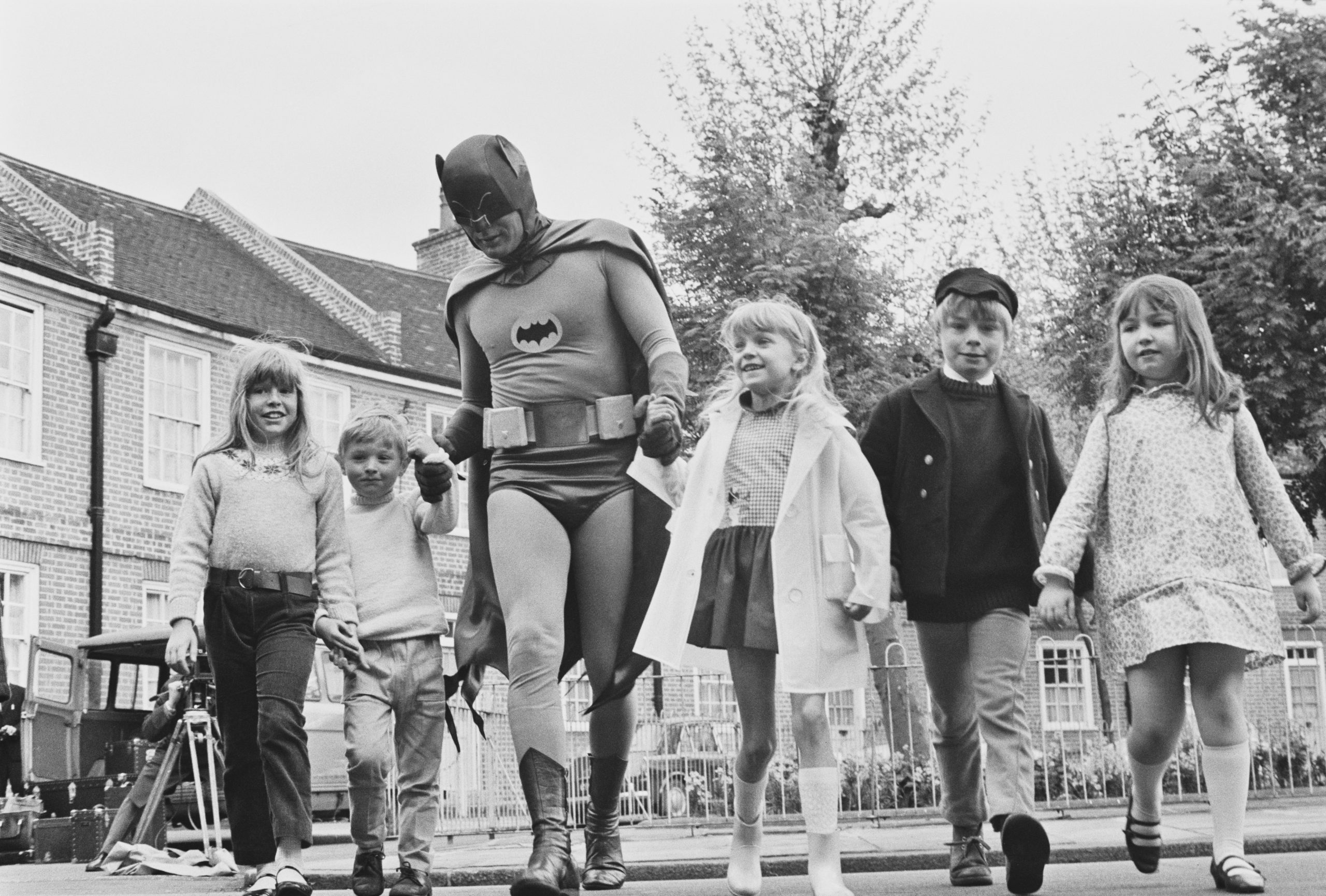
At the time of his passing in June 2017, American actor Adam West had built an estimated net worth of approximately $30 million. Before achieving international stardom as Bruce Wayne in the 1960s Batman television series, West spent years building a steady career through Hawaiian television broadcasting, film roles, and guest appearances on classic network Westerns.
Who Was Adam West? Early Life and Roots in Washington State
Adam West was born William West Anderson on September 19, 1928, in Walla Walla, Washington. Raised primarily on an apple farm outside town, his early childhood was shaped by the rhythms of rural agriculture and traditional Pacific Northwest life. His father, Otto West Anderson, was a farmer, while his mother, Audrey V. Speer, was an opera singer and concert pianist who eventually left the family home to pursue musical ambitions in Hollywood.
Following his parents' divorce during his teenage years, Anderson moved with his mother to Seattle, where he attended Lakeside School. He went on to earn a Bachelor of Arts degree in literature with a minor in psychology from Whitman College in Walla Walla. During his time at Whitman, he showcased his distinct vocal talents as a member of the debate team and worked as a radio broadcaster, laying the structural foundation for what would later become one of the most recognizable voices in American broadcasting and voice acting.
After completing his undergraduate studies, Anderson was drafted into the United States Army. He served two years as an announcer for the Armed Forces Network television service, gaining valuable on-camera and production experience. Upon his military discharge, he relocated to Hawaii, where his professional entertainment career began to take shape.
Launching a Hollywood Career: The Hawaii Era and Early Roles (1950s)
Before adopting the stage name Adam West, William West Anderson established a strong local presence in Honolulu, Hawaii. In the mid-1950s, he co-hosted a popular live television program called The Elroy Hoof Show, a local variety and children's show featuring live comedy, interviews, and animal segments.
While working in Hawaii, Anderson picked up commercial modeling jobs, radio spots, and minor theatrical roles. The experience proved vital in honing his deadpan comic timing, relaxed screen persona, and commanding vocal cadence. Realizing that long-term career growth required moving to the entertainment capital of the world, he relocated to Los Angeles in 1959.
Upon signing a contract with Warner Bros., studio executives suggested changing his name to something sharper and more memorable for marquee billing. He chose Adam West, pairing his mother’s maiden family lineage with a concise first name.
West immediately stepped into the studio television system, which was dominated by network Westerns and crime dramas. Between 1958 and 1965, he logged guest-starring roles on numerous iconic television programs, including:
- Sugarfoot (1958–1959)
- Colt .45 (1959)
- Lawman (1959)
- Maverick (1959)
- Cheyenne (1960)
- The Rifleman (1961)
- Bonanza (1961)
- Perry Mason (1961–1962)
His film debut came in 1959 with a supporting role alongside Paul Newman in the legal drama The Young Philadelphians. Playing the aristocratic William Lawrence III, West demonstrated he could hold his own against top-tier Hollywood leading men, establishing his credentials as a versatile contract player.
The Pre-Batman Breakthroughs: The Detectives and Sci-Fi Cult Classics
West’s first major recurring television role arrived when he was cast as Sergeant Steve Nelson in the hit crime drama The Detectives (also known as Robert Taylor's Detectives). West joined the series during its second season in 1961 and remained a main cast member through 1962, appearing in over 50 episodes. Working alongside Hollywood veteran Robert Taylor provided West with consistent national exposure and stable network paychecks.
Following The Detectives, West expanded his range into feature films and alternative genres:
Robinson Crusoe on Mars (1964)
In this science-fiction adventure directed by Byron Haskin, West portrayed Major Dan Slader, an astronaut stranded on the Martian surface. Though a modest box-office success upon release, the film went on to earn a persistent cult following for its practical effects and atmospheric cinematography.
The Outlaws Is Coming (1965)
West showcased his knack for comedic timing when he starred alongside The Three Stooges (Moe Howard, Larry Fine, and Joe Besser) in their final feature film. West played Kenneth Cabot, a naive magazine editor sent West to protect buffalo populations.
- Early Hawaii Television & Radio
- Warner Bros. Contract (1959)
- Western Guest Spots & The Detectives
- Captain Q Nestlé Quik Commercial
- Cast as Batman / Bruce Wayne (1965)
The Nestlé Quik Commercial Connection
In late 1965, West starred in a series of television advertisements for Nestlé Quik (now Nesquik), playing a suave, James Bond-style secret agent named Captain Q. Producer William Dozier happened to watch one of these commercials while searching for an actor to play the title role in a high-profile, campy television adaptation of DC Comics' Batman. Impressed by West’s ability to deliver absurd dialogue with absolute sincerity, Dozier invited West to audition for ABC, leading directly to the role that defined his career.
The Batman Phenomenon (1966–1968) and Financial Realities
When Batman debuted on ABC on January 12, 1966, it became an immediate pop-culture sensation. Airing twice a week in prime-time, the show was famous for its bright pop-art colors, dramatic cliffhangers, iconic "Bat-Mania" merchandise, and West’s straight-faced performance as the Caped Crusader.
| Era | Primary Focus | Key Financial Drivers |
|---|---|---|
| 1950s: Hawaii & Early LA | Radio, Local TV, Western Guest Roles | Modest weekly studio rates, local ad modeling fees |
| 1961–1965: Rising Lead | The Detectives, Feature Films | Contract TV actor salary, national commercial spots |
| 1966–1968: Batman Era | Batman TV Series & 1966 Feature Film | ~$2,000/ep base pay, licensing appearances, movie salary |
| 1970s–1980s: Post-Batman | Voice Work, Guest Spots, B-Movies | Fan conventions, personal appearances, regional theater |
| 1999–2017: Resurgence | Family Guy, Conventions, Animated Roles | Lucrative voice residuals, licensing, real estate gains |
During the height of Batman, West was paid roughly $2,000 per episode—a respectable salary for 1960s network television, equivalent to around $18,000 to $20,000 per episode in modern purchasing power. He also starred in the 1966 theatrical feature film Batman, which grossed over $1.7 million at the box office.
However, the financial structure of 1960s television differed significantly from modern contract models. Studio contracts during that era rarely granted actors long-term syndication royalties or back-end profit participation. When ABC canceled Batman after three seasons and 120 episodes in 1968, West received minimal residual income from syndication reruns, despite the show remaining on air worldwide for decades.
Post-Batman Typecasting and the Turnaround Strategy
Following the cancellation of Batman, West faced severe industry typecasting. Producers struggled to envision him as anything other than Bruce Wayne, making dramatic leading roles difficult to land throughout the 1970s and 1980s.
To maintain his income and support his family, West adopted a pragmatic business strategy:
- Personal Appearance Circuit: West made paid appearances at auto shows, county fairs, car dealerships, and comic conventions, often appearing in his costume to meet fans.
- Voice Acting: Recognizing the power of his voice, West began taking voice-over roles in animated programs. He voiced Batman in The New Adventures of Batman (1977) and Super Friends (1984–1985).
- Guest Appearances and Self-Parody: He embraced guest roles that spoofed his hero image on shows like Laverne & Shirley, Fantasy Island, The Love Boat, and Bewitched.
A major turning point occurred in 1992, when West guest-starred in Batman: The Animated Series as Simon Trent / The Gray Ghost—a retired actor who had played a TV superhero and inspired a young Bruce Wayne. The critically acclaimed episode reflected West's real-life struggles and restored his standing within the animation community.
The Second Resurgence: Family Guy and Late-Career Wealth
In 1999, creator Seth MacFarlane cast West in the animated comedy Family Guy as Mayor Adam West, an eccentric, paranoid, and hilarious fictionalized version of himself. The role proved to be a massive success, introducing West to a new generation of viewers.
- 1968: Batman Cancellation
- 1970s-80s: Typecasting (Personal Appearances, Regional Gigging)
- 1990s: Voice Acting Shift (The Gray Ghost, Animated Guest Spots)
- 2000-2017: Family Guy Era & Mainstream (Mayor Adam West, Comic-Con Headliner)
- Peak Estate Valuation: ~$30 Million
West remained a recurring main cast member on Family Guy from 2000 until his death in 2017, appearing in over 100 episodes. The show’s global popularity, combined with prime-time network payouts, voice syndication, and merchandising, generated a major financial second act for the actor.
During this late-career window, West became a premier guest at global fan conventions, commanding top-tier appearance fees. He also voiced characters in major video games, television commercials, and animated films, including The Fairly OddParents, Meet the Robinsons (2007), and Batman: Return of the Caped Crusaders (2016).
Adam West Net Worth Breakdown and Estate Assets
When Adam West passed away on June 9, 2017, following a brief battle with leukemia, his total estate value was estimated at $30 million.
His overall financial portfolio comprised several primary revenue streams and physical assets:
- Real Estate: West owned properties in Ketchum, Idaho, as well as real estate holdings in Southern California. His primary home in Idaho provided a quiet retreat outside Hollywood, where real estate values appreciated over his decades of ownership.
- Voice-Over Residuals: Ongoing syndication earnings from long-running voice roles, primarily Family Guy, provided steady income.
- Licensing & Merchandise: In his later years, West renegotiated likeness rights, revenue-sharing agreements, and royalties for retro Batman merchandise, action figures, and apparel.
- Autograph & Convention Revenue: Comic convention appearances generated significant income late in life, as fans flocked to get autographed memorabilia and photo ops.
West was survived by his wife of more than 40 years, Marcelle Tagand Lear, four children, two stepchildren, and numerous grandchildren, to whom his estate passed.
Key Lessons from Adam West’s Career and Financial Life
Adam West's long career offers valuable insights into navigating Hollywood's financial ups and downs:
- Embrace Reinvention Over Resentment: Instead of growing bitter over being typecasted as Batman, West leaned into comedic self-parody, opening doors to lucrative voice acting roles late in life.
- Diversify Income Streams: When traditional film and television roles dried up, West sustained his career through personal appearances, commercials, and voice work.
- Capitalize on Nostalgia: By maintaining a close connection with his fan base at conventions and public events, West built a long-lasting personal brand that paid dividends for decades.
Frequently Asked Questions
What was Adam West's net worth at the time of his death?
Adam West had an estimated net worth of approximately $30 million when he passed away on June 9, 2017, at age 88.
What was Adam West's real name?
Adam West was born William West Anderson. He adopted the stage name "Adam West" in 1959 after signing a contract with Warner Bros. Studios.
How much was Adam West paid per episode for Batman in the 1960s?
West was paid approximately $2,000 per episode during the 1966–1968 run of Batman. While substantial for the era, studio contracts at the time provided very limited back-end syndication royalties.
What was Adam West's breakthrough role before Batman?
Before playing Batman, West gained national recognition as Sergeant Steve Nelson on the crime drama The Detectives (1961–1962), and featured in the sci-fi cult film Robinson Crusoe on Mars (1964).
How did Seth MacFarlane help Adam West's late career?
Seth MacFarlane cast West as Mayor Adam West in the animated comedy Family Guy starting in 2000. The role refreshed his public image, introduced him to younger audiences, and provided steady earnings for nearly two decades.
Practical Takeaway: Honoring Adam West’s Legacy
For fans and media history enthusiasts looking to explore Adam West's work beyond his famous role as the Caped Crusader, start by viewing his early TV roles on The Detectives, his performance in Robinson Crusoe on Mars (1964), and his voice performance as the Gray Ghost in Batman: The Animated Series (Season 1, Episode 18). These projects demonstrate the voice talent, comedic timing, and versatility that sustained a successful six-decade career in American entertainment.