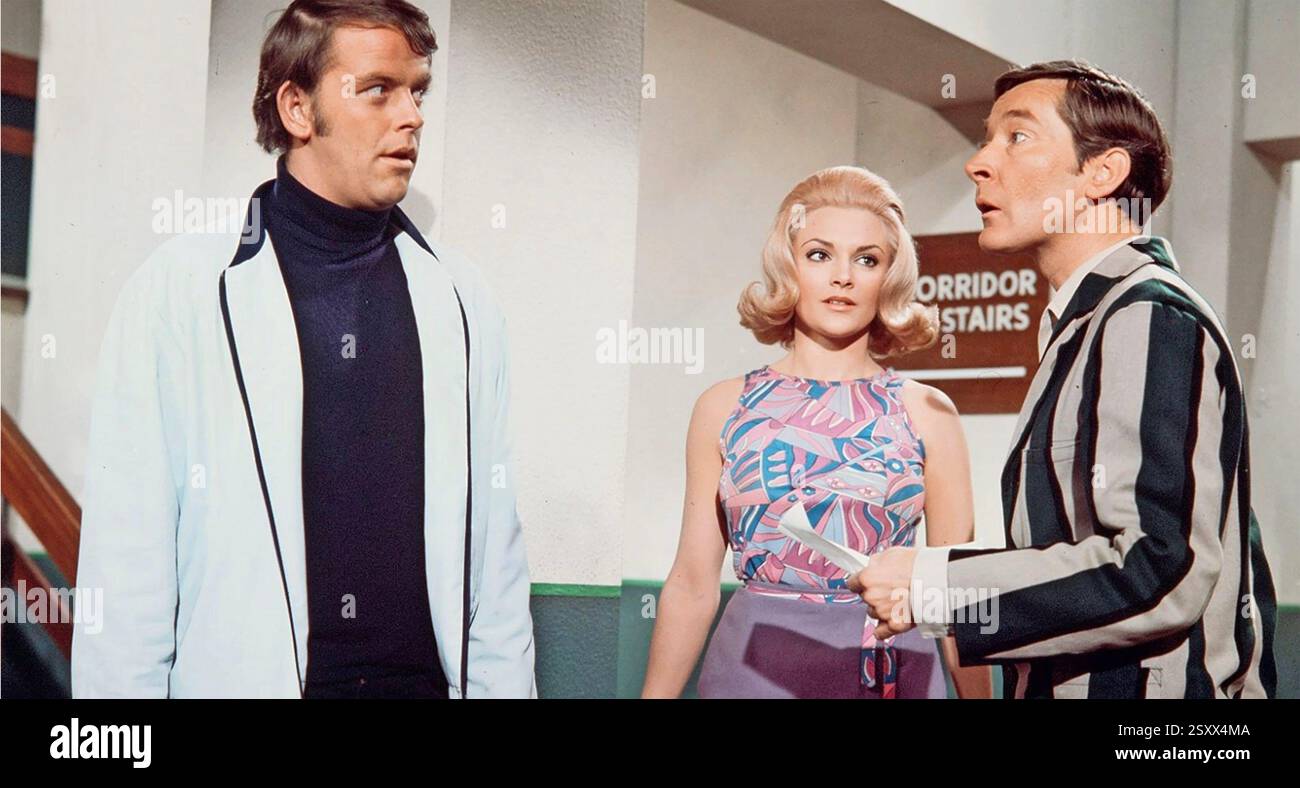
The Carry On film franchise stands as a monumental pillar of British cinematic comedy, comprising 31 original feature films released between 1958 and 1992. The series relied on a stable repertory company of comic actors who returned film after film, playing variations of familiar archetypes while lampooning British institutions, historical events, and popular genres.
Introduction to the Carry On Repertory Company
The genius of the Carry On series lay in its ensemble cast. Rather than building a franchise around a single leading star, producer Peter Rogers and director Gerald Thomas cultivated a repertory company of versatile character actors, slapstick performers, and stage comedians. This core group developed an immediate rapport with audiences, allowing the films to trade on established personas. When viewers bought a ticket for a new Carry On installment, they knew they would see Kenneth Williams arching an eyebrow, Sid James unleashing a raspy laugh, or Charles Hawtrey playing an exasperated innocent.
This stable casting strategy created a unique cinematic shorthand. The actors did not need extensive exposition to establish their character traits; their presence alone signaled whether they would play the lecher, the pompous authority figure, or the hapless romantic. Over more than three decades, these performers became household names, defining a golden era of British cinematic farce that blended seaside postcard humor with music hall traditions.
The Pillars of the Franchise: Core Cast Members
A select group of performers anchored the majority of the Carry On films, appearing in dozens of entries and shaping the stylistic identity of the series.
Kenneth Williams
Kenneth Williams appeared in 26 Carry On films, making him one of the most prolific and recognizable faces in the franchise. Educated and articulate, Williams specialized in playing snobbish, highly strung intellectuals, pompous bureaucrats, and indignant authority figures. His signature physical mannerisms—particularly his flared nostrils, pinched facial expressions, and trademark nasal delivery—became legendary. Whether playing Julius Caesar in Carry On Cleo (1964) or Dr. Tinkle in Carry On Doctor (1967), Williams brought a theatrical campness and impeccable linguistic timing to every scene.
Sid James
Appearing in 19 films, South African-born actor Sid James served as the roguish, gravel-voiced heart of many mid-period Carry On movies. James typically portrayed the archetypal Cockney wheeler-dealer, cheeky chappie, or overworked everyman who spent his time dodging authority, pursuing women, or running dubious business ventures. His booming, infectious laugh and world-weary delivery provided a grounded, earthy counterpoint to the more theatrical flourishes of co-stars like Kenneth Williams. His work in films like Carry On Camping (1969) and Carry On Matron (1972) cemented his status as a master of British light comedy.
Charles Hawtrey
Charles Hawtrey lent his unique brand of eccentric vulnerability to 23 Carry On films. With his thick glasses, rounded physique, and high-pitched, indignant voice, Hawtrey specialized in playing put-upon milquetoasts, cheeky schoolboys, and effeminate cowards. His characters often found themselves bewildered by the chaotic events unfolding around them, reacting with a mixture of righteous outrage and helpless resignation. Iconic roles such as Private Widdle in Carry On Sergeant (1958) and Meenah in Carry On Up the Khyber (1968) showcased his peerless ability to extract comedy from sheer exasperation.
Joan Sims
Appearing in 24 films, Joan Sims was the most versatile actress in the Carry On repertory. Capable of playing anything from a dowdy, repressed spinster to an imperious upper-class matron or an enthusiastic romantic partner, Sims brought warmth, intelligence, and robust comedic timing to her roles. She frequently played the long-suffering wife to Sid James or the formidable opponent to Kenneth Williams. Her performance as Chloe Gibson in Carry On Camping, particularly the famous scene involving a collapsing tent top that exposed her midriff, remains one of the most iconic moments in the series.
Hattie Jacques
Hattie Jacques brought an imposing physical presence and refined comedic timing to 14 Carry On films. Standing tall and commanding the screen with her aristocratic accent and stern expression, Jacques typically played formidable authority figures, including battle-axes, matrons, and school headmistresses. Her scenes with Kenneth Williams—often playing a henpecked husband and an overbearing wife, as seen in Carry On Cabby (1963)—highlighted her ability to dominate a scene with a single look of icy disapproval.
Supporting Stalwarts and Transition Cast Members
Beyond the central core, several actors contributed significantly to the texture and longevity of the franchise across multiple decades.
| Actor Name | Number of Films | Primary Archetype / Persona |
|---|---|---|
| Kenneth Connor | 17 | Nervous wreck, harassed husband |
| Bernard Bresslaw | 14 | Gentle giant, dim-witted brute |
| Peter Butterworth | 16 | Bumbling sidekick, eccentric |
| Jim Dale | 11 | Athletic romantic lead, hero |
| Barbara Windsor | 9 | Buoyant, giggling blonde bombshell |
Kenneth Connor
Kenneth Connor appeared in 17 films, establishing himself as the screen's ultimate nervous wreck. Specializing in characters prone to panic attacks, eye twitches, and high-pitched whimpering, Connor was a master of physical slapstick and verbal anxiety. His collaboration with Kenneth Williams and Joan Sims in films like Carry On Constable (1960) and Carry On Nurse (1959) relied heavily on his ability to project absolute terror in mundane situations.
Bernard Bresslaw
Towering at over six feet six inches, Bernard Bresslaw appeared in 14 Carry On films, frequently cast as the gentle giant, foreign potentate, or lovable simpleton. Despite his intimidating physical stature, Bresslaw radiated a sweet vulnerability. His deadpan delivery and hesitant speech patterns added a distinct charm to films like Carry On Cowboy (1965) and Carry On Columbus (1992).
Peter Butterworth
Peter Butterworth contributed to 16 films, often playing eccentric inventors, henchmen, or bumbling authority figures. Short in stature and blessed with an expressive, rubbery face, Butterworth was a reliable utility player who could elevate any supporting role. His work in Carry On Screaming! (1966) as the inept detective Septimus Constable demonstrated his talent for deadpan absurdity.
Jim Dale
Jim Dale brought youthful energy, physical agility, and genuine romantic appeal to 11 films during the 1960s. Unlike many of the older repertory members who relied on caricature, Dale often played the dashing, acrobatic hero—such as Ormond S. Trenchard in Carry On Again Doctor (1969) or Lancelot Spratt's foil. His musical background and energetic screen presence made him a standout before he departed for theatrical work with the National Theatre.
Barbara Windsor
Barbara Windsor became synonymous with the 1960s and 1970s phases of the franchise, appearing in 9 films. Known for her diminutive stature, cheeky giggle, and pneumatic figure, Windsor specialized in playing high-spirited, working-class blondes who frequently found their clothes falling off or eluded the clumsy advances of Sid James and Kenneth Connor. Her role in Carry On Camping cemented her status as a defining pin-up of British comedy.
Evolution of the Ensemble Across Eras
The Carry On series underwent notable stylistic shifts across its 34-year run, and the cast evolved accordingly.
The Early Ensemble (1958–1963)
The earliest films in the franchise, starting with Carry On Sergeant in 1958, leaned closer to traditional British ensemble farce than the later camp extravaganzas. Actors like Bob Monkhouse, Shirley Eaton, and Leslie Phillips featured prominently, establishing a template where professional competence clashed with institutional chaos. During this period, the sexual humor was far more restrained, relying on double entendres rather than outright sauciness.
The Golden Age (1964–1972)
This era represents the creative peak of the franchise, featuring its most iconic historical parodies and workplace satires, such as Carry On Cleo, Carry On Cowboy, and Carry On Up the Khyber. The repertory company solidified during these years, with James, Williams, Hawtrey, Sims, and Jacques forming an airtight comedic machine. The direction by Gerald Thomas and scripts by Talbot Rothwell maximized the distinct vocal patterns and physical contrasts between the cast members.
The Later Years and Revival Attempts (1973–1992)
By the mid-1970s, changing social mores, shifting cinematic tastes, and the departure of key cast members—such as Sid James's sudden death in 1976—led to a decline in quality and box-office returns. Films like Carry On England (1976) leaned heavily into explicit, vulgar humor that alienated longtime fans.
An ill-fated attempt to revive the franchise occurred with Carry On Columbus in 1992. While it featured franchise veterans like Bernard Bresslaw and Peter Richardson alongside newcomers like Rik Mayall and Julian Clary, the film failed critically and commercially, marking the definitive end of the series.
Frequently Asked Questions
Which actor appeared in the most Carry On films?
Kenneth Williams holds the record for the most appearances, starring in 26 of the 31 original films. Joan Sims is a close second with 24 appearances, followed by Charles Hawtrey with 23.
Were the Carry On actors actually friends in real life?
While the cast maintained a brilliant professional chemistry on screen, their real-life relationships were complex and often strained. Kenneth Williams, in particular, kept detailed diaries revealing professional rivalries, personal insecurities, and tensions among cast members, though deep mutual respect persisted through decades of collaboration.
Who was the highest-paid actor in the franchise?
Despite the ensemble nature of the films, actors were paid relatively modest flat fees rather than profit percentages—a point of frequent grievance in later years. Sid James and Kenneth Williams typically commanded the highest salaries among the regulars during the height of the franchise's popularity in the late 1960s.
Did any Hollywood stars appear in Carry On films?
The franchise rarely featured major American or international stars, preferring British repertory talent and television actors. However, American actress Joan Hickson appeared in several entries in character roles, and film icon Frankie Howerd starred in Carry On Doctor and Carry On Jungle Boy (though the latter was abandoned).
Conclusion and Legacy
The actors in the Carry On franchise created a unique body of work that continues to influence British comedy. By committing fully to broad farce, linguistic wordplay, and affectionate satire, these performers transformed standard cinematic tropes into cultural touchstones. Their ability to find humor in human vanity, professional incompetence, and everyday absurdity ensures that the legacy of the Carry On repertory company endures across generations.