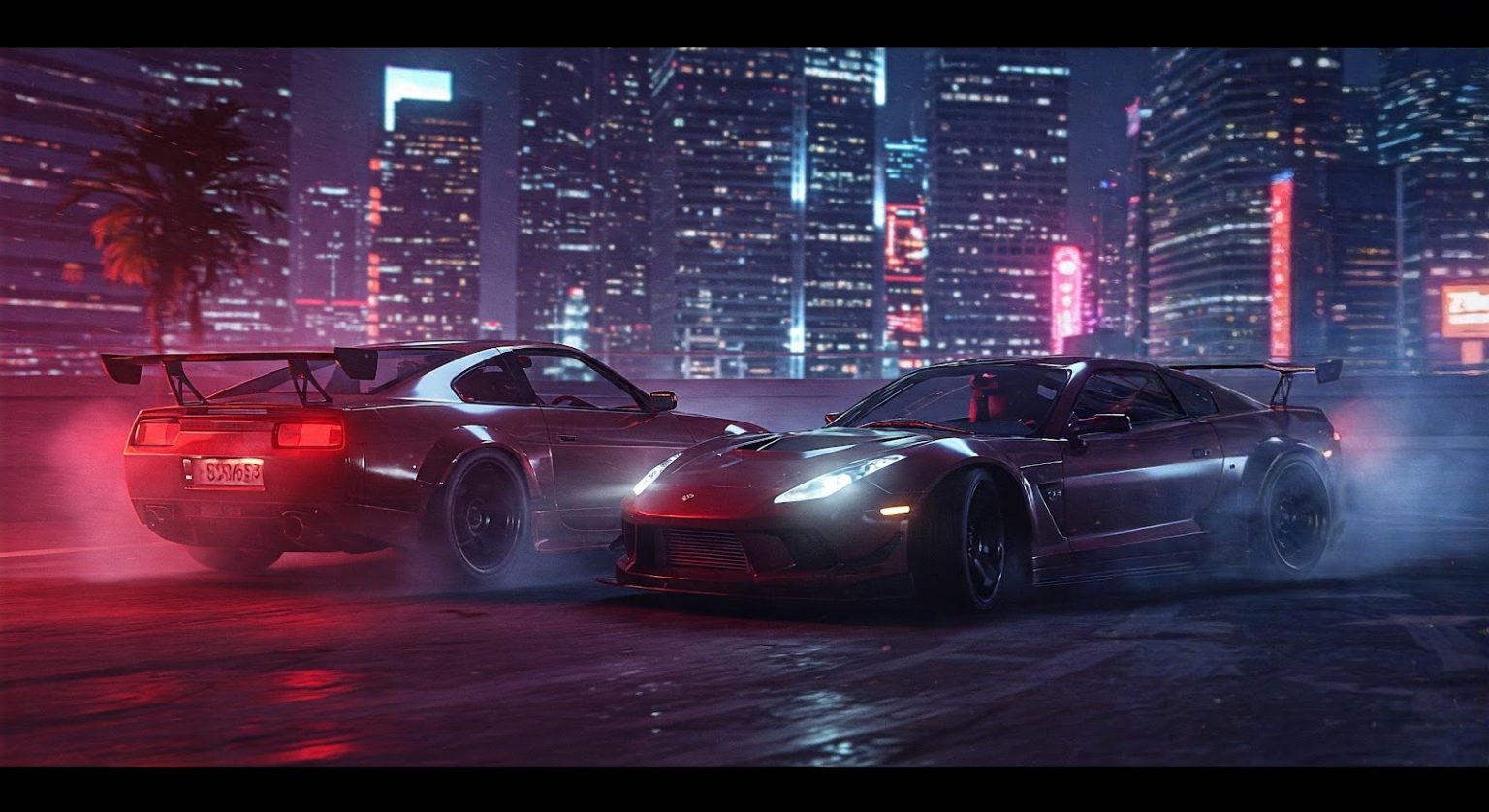
Action movies with cars represent a high-octane sub-genre where vehicles transcend their roles as mere transportation to become central characters and primary drivers of the plot. From the gritty, practical realism of the 1960s to the high-tech, physics-defying spectacles seen in 2026, these films rely on precision stunt driving, innovative camera work, and mechanical artistry to captivate audiences.
The Evolution of the Automotive Action Genre
The marriage between cinema and the automobile is nearly as old as the medium itself, but the "car movie" as a distinct action sub-genre solidified in the late 1960s. Before this era, cars were often background elements or used in brief, clunky chase sequences. The shift toward technical excellence began when filmmakers realized that the kinetic energy of a speeding vehicle could be used to heighten narrative stakes.
In 1968, Bullitt changed the landscape forever. The ten-minute chase through the streets of San Francisco between a Ford Mustang GT and a Dodge Charger set the gold standard for practical stunt work. There was no CGI; there were only brave drivers, reinforced suspensions, and cameras mounted precariously to the fenders. This era prioritized the "visceral" experience—the sound of downshifting, the smell of burning rubber, and the sight of hubcaps flying off as cars bounced over hilly intersections.
By the 1970s and 80s, the genre branched out. Films like Vanishing Point and The Blues Brothers explored different ends of the spectrum—one focusing on existentialist speed and the other on record-breaking vehicle destruction. As we look at the landscape in 2026, the genre has come full circle, moving through a period of heavy digital effects back toward a reverence for practical stunts, albeit augmented by modern safety and camera technology.
Technical Mastery: How Car Chases are Filmed
To appreciate action movies with cars, one must understand the technical sophistication required to capture high-speed sequences. Achieving the "sense of speed" is a complex task that involves specialized equipment and elite personnel.
The Role of Precision Drivers
The actors seen behind the wheel are rarely the ones performing the high-risk maneuvers. Precision drivers—often former rally racers or professional drifters—are the unsung heroes. These professionals utilize techniques like the J-turn (reversing at high speed and spinning 180 degrees to drive forward) and drifting (controlled oversteer) to navigate tight urban environments.
Specialized Camera Rigs
In 2026, cinematography in car movies relies heavily on the Ultimate Arm (formerly known as the Russian Arm). This is a roof-mounted, gyro-stabilized camera crane that allows a camera to swing 360 degrees around a moving vehicle at speeds exceeding 100 mph. Additionally, "skate" rigs or "pod" cars allow an actor to sit in the driver's seat and perform their lines while a professional driver actually steers the vehicle from a cockpit mounted on the roof or the chassis.
Sound Design
A critical but often overlooked aspect is the auditory experience. Foley artists and sound designers record specific engine notes, wastegate chirps from turbochargers, and the distinct "scuff" of different tire compounds on various surfaces. A muscle car must sound heavy and guttural, while a modern supercar needs a high-pitched, mechanical scream to satisfy the audience's expectations of power.
Essential Pillars of Automotive Action
Certain films have defined the genre by pushing the boundaries of what is possible on four wheels. These "pillars" are essential viewing for anyone looking to understand the depth of car-centric cinema.
1. Mad Max: Fury Road (2015)
Director George Miller’s masterpiece is often cited as the greatest "car movie" of the 21st century. The film is essentially one continuous chase sequence across a post-apocalyptic wasteland. Its significance lies in its commitment to practical effects. Over 150 custom-built vehicles were created for the film, many of which were destroyed during filming. The "Polecat" stunts, where performers swung on long poles between moving vehicles, remain a benchmark for stunt coordination.
2. The Fast & Furious Franchise
While it began as a mid-budget movie about illegal street racing in Los Angeles, Fast & Furious evolved into a global multi-billion dollar behemoth. By the time the latest installments arrived in the mid-2020s, the series had transitioned from "tuner culture" to "super-heroics with cars." Despite the shift toward the fantastical, the franchise remains the primary ambassador for car culture in Hollywood, showcasing everything from classic American muscle to the rarest European hypercars.
3. John Wick (Series)
The John Wick films introduced a style known as "Car-Fu." Instead of just chasing other vehicles, the protagonist uses his 1969 Ford Mustang as a weapon, drifting into enemies and using the car’s momentum to facilitate gunplay. This integration of the vehicle into the protagonist's combat style represents a modern evolution of the genre.
4. Baby Driver (2017)
Edgar Wright’s Baby Driver brought a rhythmic, almost musical quality to the car chase. Every gear shift, tire squeal, and engine rev was synchronized to the film's soundtrack. The opening sequence, featuring a red Subaru WRX, is a masterclass in urban precision driving, filmed without the use of green screens or significant CGI.
Comparing the Icons of Automotive Cinema
The following table compares some of the most influential vehicles and sequences in action cinema history.
| Movie Title | Iconic Vehicle | Key Technical Feature | Standout Sequence |
|---|---|---|---|
| Bullitt (1968) | 1968 Ford Mustang GT | Practical, high-speed street filming | The San Francisco Jump Chase |
| The Italian Job (1969) | 1967 Austin Mini Cooper S | Compact maneuverability | The Sewer Pipe Escape |
| Ronin (1998) | Audi S8 / BMW M5 | Realistic, high-speed European "chase-cam" | The Paris Wrong-Way Chase |
| Gone in 60 Seconds (2000) | 1967 Shelby GT500 "Eleanor" | Custom aesthetic "Hero Car" design | The Long Beach Bridge Jump |
| Mad Max: Fury Road (2015) | The War Rig (Tatra T815) | Multi-vehicle practical stunt coordination | The Canyon Ambush |
| Ford v Ferrari (2019) | Ford GT40 Mk II | Historically accurate racing physics | The 24 Hours of Le Mans |
The "Why" Behind the Car Choice
In the best action movies with cars, the vehicle is chosen to reflect the character's personality or the film's tone. A gritty detective doesn't drive a Ferrari; he drives a battered, high-torque muscle car that can handle a beating.
- Muscle Cars (Mustangs, Chargers, Challengers): These signify raw power, rebellion, and "the underdog." They are heavy, prone to sliding, and look cinematic when jumping or crashing.
- Exotics (Lamborghinis, Paganis): These represent wealth, villainy, or extreme technical superiority. In movies, they are often used for high-speed highway chases where aerodynamic stability is key.
- Modified Imports (Supras, Skylines): Associated with the "tuner" subculture, these vehicles represent ingenuity and the "built, not bought" ethos.
- Utility/Heavy Vehicles (Trucks, Tanks, Rigs): Used to create a sense of unstoppable momentum. In Mad Max or Fast & Furious, these serve as mobile fortresses.
The Future of the Genre: 2026 and Beyond
As of 2026, the industry is grappling with the shift toward electric vehicles (EVs). This presents a unique challenge for filmmakers: how do you make a silent car sound exciting? Directors are now experimenting with enhanced digital soundscapes and focusing more on the visual spectacle of instant torque—the ability of an EV to accelerate from 0 to 60 mph in under two seconds.
Furthermore, the rise of autonomous driving technology is providing new plot devices. We are seeing "hacker" sequences where entire fleets of cars are controlled remotely, turning urban environments into chaotic puzzles. However, the heart of the genre remains the human element—the struggle between a driver and their machine against impossible odds.
Practical Recommendations for Fans
For those looking to explore this genre deeply, it is recommended to watch behind-the-scenes documentaries on stunt coordination. Understanding the logistics of a film like Ronin, which used hundreds of stunt drivers in the middle of Paris, adds a layer of appreciation that a casual viewing cannot provide.
Websites like the Internet Movie Cars Database (IMCDb) provide exhaustive lists of every vehicle used in almost every film ever made, which is an invaluable resource for identifying the specific trims and modifications seen on screen. For critical analysis of how these movies perform as cinema, the American Film Institute (AFI) often features essays on the cultural impact of the great American car chase.
Frequently Asked Questions
Do actors really drive in these movies?
While most actors undergo basic performance driving training, insurance liabilities prevent them from performing the most dangerous stunts. Tom Cruise and Keanu Reeves are notable exceptions who perform a significant portion of their own driving, but even they rely on professional stunt doubles for high-risk crashes or complex maneuvers.
What is the most expensive car ever destroyed in a movie?
While many "hero" cars are incredibly valuable, productions usually use "stunt doubles"—cheaper replicas or shells with high-performance engines. However, in Lykan HyperSport sequences or films featuring rare classics, the cost of vehicle damage can run into the millions. For example, several high-end replicas were destroyed in the making of Spectre (2015) and Fast X.
Why do movie cars always seem to shift gears 20 times?
This is a common cinematic trope used to build tension. In reality, most cars have 6 to 8 gears. Continual upshifting in movies is a rhythmic device used to tell the audience the car is "going faster" even if the actual filming speed is much lower for safety.
How are "near-miss" crashes filmed safely?
Filmmakers use a combination of "stitching" and "plate shots." Two cars will drive the same path at different times, and the footage is layered in post-production to make it look like they barely missed each other. In 2026, many of these sequences also utilize AI-driven pre-visualization to calculate the exact margins of safety for drivers.
What is the best car chase ever filmed?
This is subjective, but the "Big Three" usually include the San Francisco chase in Bullitt, the Paris chase in Ronin, and the entire second half of Mad Max: Fury Road. Each represents a pinnacle of practical stunt work for its respective era.
Summary of Next Actions
If you are a fan of high-speed cinema, your next step should be to explore the works of directors like John Frankenheimer (Ronin), George Miller (Mad Max), and Justin Lin (Fast & Furious). Look for films that prioritize practical effects over CGI, as these tend to age better and provide a more visceral viewing experience. Additionally, checking local listings for "Autofest" cinema screenings can offer the chance to see these mechanical masterpieces on the large screen, where the sound design and scale can be fully appreciated.