Account staffing for compliance involves the strategic recruitment and management of specialized accounting professionals who ensure an organization adheres to financial regulations, tax laws, and reporting standards. In 2026, this process focuses on bridging the gap between traditional forensic accounting and advanced data analytics to satisfy rigorous SEC, ESG, and global tax mandates.
The landscape of corporate governance has shifted dramatically in the mid-2020s. Organizations are no longer merely looking for "accountants"; they are seeking compliance architects capable of navigating a digital-first regulatory environment. Account staffing for compliance is the proactive solution to the rising complexity of financial oversight, where the cost of a single misstep can result in catastrophic fines and reputational damage.
The Evolving Landscape of Compliance Staffing in 2026
By 2026, the definition of "compliance" has expanded beyond traditional tax and audit functions. Three primary drivers have reshaped how firms approach staffing for these critical roles: the globalization of tax standards, the maturation of Environmental, Social, and Governance (ESG) reporting, and the integration of Artificial Intelligence in forensic monitoring.
Global Tax Transparency and Pillar Two
The implementation of the OECD Pillar Two framework has necessitated a new breed of tax compliance staff. These professionals must be adept at calculating effective tax rates across dozens of jurisdictions simultaneously. Staffing for this requirement often involves finding individuals with "Global Minimum Tax" expertise—a niche that was virtually non-existent five years ago but is now a cornerstone of multi-national corporate accounting.
ESG and Non-Financial Reporting
In 2026, the International Sustainability Standards Board (ISSB) standards have been widely adopted. Compliance staffing now includes "Sustainability Controllers"—accountants who apply the same rigor to carbon credits and social impact data as they do to cash flow statements. Hiring for these roles requires a unique blend of traditional accounting ethics and environmental science literacy.
The Rise of Real-Time Auditing
The traditional "annual audit" is being replaced by continuous assurance models. Staffing must reflect this shift. Compliance teams in 2026 are increasingly composed of "Systems Accountants" who monitor data streams in real-time to detect anomalies before they become reportable violations. This transition requires a move away from seasonal contract help toward permanent, tech-savvy compliance internalists.
Core Competencies for Compliance Accounting Staff
When staffing for compliance, it is no longer sufficient to look for a CPA designation alone. While foundational knowledge remains vital, the 2026 market demands a specific "compliance stack" of skills.
1. Technical Regulatory Proficiency
Staff must demonstrate deep familiarity with specific frameworks. For those in the United States, this includes SEC reporting requirements and the latest updates to GAAP (Generally Accepted Accounting Principles). Internationally, IFRS 18, which changed the way income statements are presented, is a critical knowledge area for 2026 hires.
2. Forensic Data Analytics
The ability to use Python, R, or advanced SQL for data interrogation is a standard requirement for senior compliance roles. Compliance staffing today prioritizes candidates who can automate the "look-back" process, identifying historical patterns of non-compliance through machine learning models rather than manual spreadsheet sampling.
3. Ethical Judgment and Skepticism
Despite the rise of AI, the human element of "professional skepticism" is more valuable than ever. Staffing for compliance requires vetting candidates for their ability to challenge management and maintain independence. This is often tested through behavioral interviewing techniques that present complex ethical dilemmas involving conflicting regulatory and profitability pressures.
Staffing Models: In-House, Fractional, and Outsourced
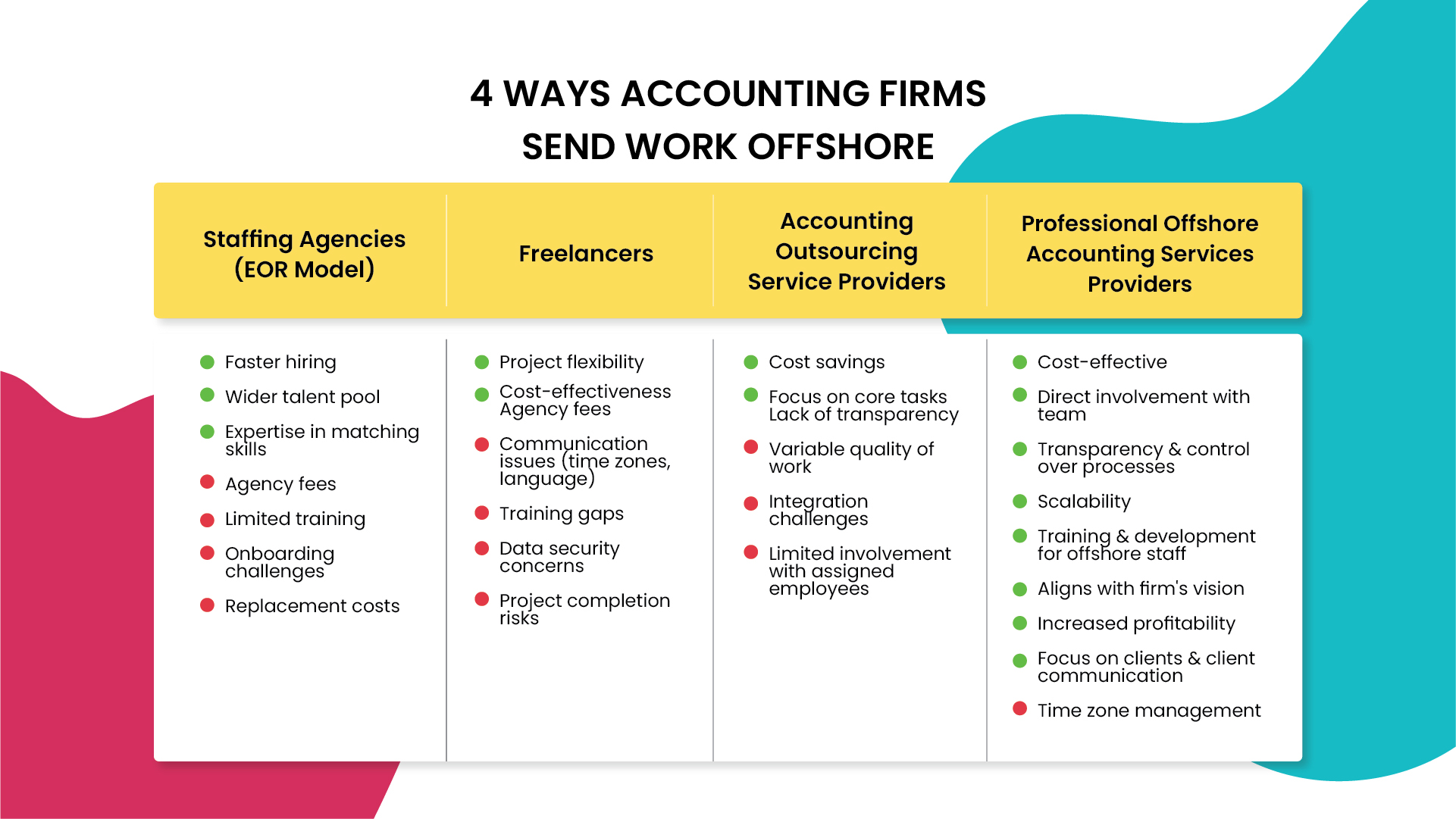
Organizations must choose a staffing model that aligns with their risk profile and budget. In 2026, the hybrid model has emerged as the most resilient approach.
| Feature | In-House Staffing | Fractional/Contract | Managed Services (Outsourced) |
|---|---|---|---|
| Control Level | High – Deep integration with culture. | Moderate – Task-specific focus. | Low – Process-driven results. |
| Cost Structure | High (Salary + Benefits + Tech). | Variable (Hourly or project-based). | Fixed Monthly/Annual Fee. |
| Scalability | Slow – Long hiring cycles. | Fast – Immediate talent access. | Moderate – Based on SLA terms. |
| Expertise Access | Deep institutional knowledge. | Broad industry perspectives. | Highly specialized niche access. |
| Primary Use Case | Day-to-day oversight & leadership. | Seasonal surges or specific audits. | High-volume transactional compliance. |
The Value of Fractional Compliance Officers
For mid-sized firms, hiring a full-time Chief Compliance Officer (CCO) or specialized Tax Director may be cost-prohibitive. The "fractional" model allows firms to staff these roles with highly experienced individuals who work 10–20 hours per week. This provides executive-level compliance oversight at a fraction of the cost, ensuring that the organization meets FinCEN and other regulatory requirements without bloating the payroll.
Strategic Steps for Implementing a Compliance Staffing Plan
Effective staffing is not an event but a continuous process. To secure a compliant future, organizations should follow this structured implementation path.
Step 1: Conduct a Regulatory Gap Analysis
Before hiring, identify where your current team lacks expertise. Are you prepared for the 2026 updates to the Bank Secrecy Act? Do you have the staff to handle the data-heavy requirements of the Corporate Sustainability Reporting Directive (CSRD) if you have European operations?
Step 2: Define the "Tech-to-Human" Ratio
Determine how much of your compliance function will be automated. If you are implementing an AI-driven monitoring system, you may need fewer entry-level "data entry" compliance clerks and more "Compliance Analysts" who can interpret the output of those systems.
Step 3: Targeted Sourcing
Standard job boards are often ineffective for high-level compliance roles. Utilize specialized recruitment firms that focus exclusively on financial governance and risk management. Look for candidates active in organizations like the Association of Certified Anti-Money Laundering Specialists (ACAMS) or the Society of Corporate Compliance and Ethics (SCCE).
Step 4: Rigorous Vetting and Background Checks
Given the sensitivity of compliance roles, background checks must be exhaustive. This includes verifying all credentials (CPA, CIA, CISA), checking professional references specifically regarding ethical conduct, and ensuring there are no past disciplinary actions from state boards or federal regulators.
The Role of AI in Compliance Staffing Decisions
In 2026, AI is not just a tool for the staff to use; it is a tool for managing the staff. Predictive analytics are now used to determine staffing needs by analyzing the volume of regulatory changes and the complexity of the firm's transactions.
Human-AI Collaboration: The most successful compliance teams are those where humans handle the "exceptions" and "judgments" while AI handles the "patterns" and "reconciliations." When staffing, prioritize "Augmented Accountants"—those who view AI as a partner rather than a threat. This mindset is essential for maintaining productivity as regulatory bodies like the AICPA integrate technology standards into their professional frameworks.
Common Pitfalls in Compliance Staffing
Even with the best intentions, organizations often make critical errors when staffing their compliance functions.
- Under-staffing the "Mid-Level": Many firms hire a brilliant CCO and several entry-level clerks but lack the mid-level managers who actually perform the detailed reviews and bridge the gap between strategy and execution.
- Over-reliance on Outsourcing: While managed services are excellent for efficiency, losing all "in-house" compliance knowledge leaves a firm vulnerable if the provider fails or if a unique internal crisis arises.
- Neglecting Continuous Education: Regulation in 2026 moves too fast for static knowledge. A compliance staff member who hasn't been retrained in the last six months is already behind. Staffing plans must include a dedicated budget for ongoing CPE (Continuing Professional Education).
Cost Considerations and ROI
While compliance is often viewed as a "cost center," the ROI of effective account staffing is found in risk mitigation.
- Penalty Avoidance: Fines for non-compliance with AML or SEC regulations can reach hundreds of millions of dollars. A specialized compliance team costing $500,000 per year pays for itself if it prevents even one major violation.
- Audit Efficiency: Well-staffed compliance functions reduce the time and expense of external audits. When an organization is "always audit-ready," external auditors spend fewer hours on-site, leading to lower billable fees.
- Capital Access: In 2026, investors and lenders heavily weigh "Compliance Health" scores. Companies with robust staffing in these areas often secure lower interest rates and higher valuations.
Frequently Asked Questions
What are the most in-demand compliance certifications in 2026?
The most sought-after certifications are the CPA (Certified Public Accountant) for foundational work, the CAMS (Certified Anti-Money Laundering Specialist) for banking, and the newly established CESGA (Certified ESG Analyst) for sustainability reporting. Additionally, the CISA (Certified Information Systems Auditor) remains critical as compliance becomes more digitized.
How has AI changed the headcount requirements for compliance teams?
AI hasn't necessarily reduced headcount, but it has shifted the type of headcount required. There is less demand for "reconciliation clerks" and a higher demand for "data-literate compliance officers" who can manage AI tools and interpret complex, high-volume data outputs. Total staffing numbers remain steady, but salary levels have risen for these more technical roles.
Can a small business afford account staffing for compliance?
Yes, through the use of fractional staffing and cloud-based compliance software. Small businesses in 2026 typically do not hire full-time compliance officers. Instead, they hire specialized firms or independent contractors for a few hours a month to review their books and ensure they meet basic statutory requirements.
Is it better to promote from within or hire external compliance staff?
A mix is usually best. Internal hires have deep institutional knowledge and understand the company's specific "blind spots." However, external hires bring fresh perspectives and knowledge of how other firms are handling new 2026 regulations. External hires are especially important when a firm is entering a new market or facing a new regulatory framework.
How do 2026 ESG requirements affect traditional accounting staff?
ESG requirements now require accountants to track "non-financial" data with the same precision as financial data. This means traditional accounting staff must be trained in carbon accounting, supply chain transparency, and social impact metrics. Staffing for compliance now involves ensuring the team can integrate these metrics into the standard annual report.
Practical Recommendation for 2026
To ensure your organization is adequately staffed for the current regulatory environment, begin by conducting a Skills Inventory. Map your existing team's capabilities against the "2026 Regulatory Maturity Model," which includes AI oversight, ESG fluency, and global tax agility. If gaps exist—particularly in data interrogation or sustainability reporting—look to fill them through a hybrid staffing model. This involves maintaining a core of permanent internal leaders supplemented by fractional experts for high-specialization areas like OECD Pillar Two or crypto-asset compliance. Prioritize candidates who demonstrate "technological adaptability," as the regulations of 2027 and beyond will undoubtedly rely even more heavily on automated systems and real-time data transparency.