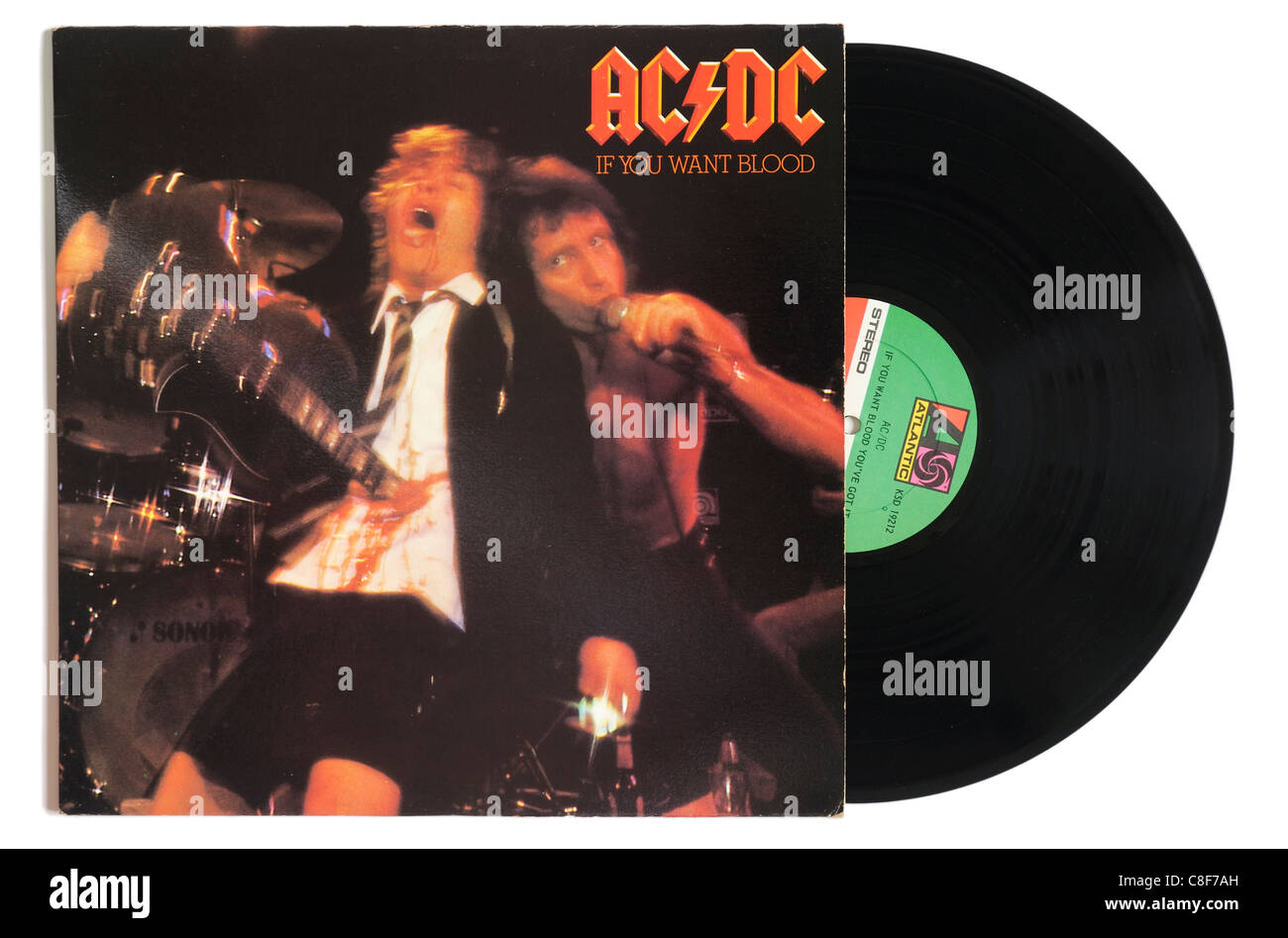
The AC/DC live masterpiece If You Want Blood You’ve Got It remains a cornerstone of rock history, and as of 2026, its status among collectors has only intensified. Whether it is worth the "collector’s toll"—the premium price for original pressings—depends on your valuation of Bon Scott’s legacy and the unrivaled sonic punch of a "Porky Prime Cut" vinyl.
The Genesis of a Live Legend: Glasgow, 1978
To understand why collectors are willing to pay a premium for this specific record, one must understand the environment in which it was captured. Recorded at the Apollo Theatre in Glasgow on April 30, 1978, If You Want Blood You’ve Got It caught AC/DC at the absolute zenith of their early power. The band was touring in support of Powerage, an album often cited by purists as their creative peak.
The Apollo Theatre was known for having one of the most boisterous audiences in the world. For AC/DC, a band with deep Scottish roots via the Young brothers, this was a homecoming. The energy in the room was palpable, and unlike many live albums of the 1970s that were heavily overdubbed in the studio, If You Want Blood retains a raw, unpolished ferocity. This authenticity is the primary driver of its long-term value. In the world of high-end collecting, "authenticity" translates directly into market demand.
By 2026, the historical distance from the Bon Scott era has made these artifacts even more precious. Collectors are not just buying a piece of plastic; they are buying the definitive document of one of rock's greatest frontmen at his most confident. The "toll" paid for a first-pressing UK or Australian copy is a tribute to that lightning-in-a-bottle moment in Glasgow.
Defining the "Collector's Toll": Market Value in 2026
The "collector’s toll" refers to the significant price gap between a standard modern reissue and a period-correct, high-condition original pressing. In the current 2026 market, the entry-point for a playable copy is modest, but the ceiling for investment-grade copies has risen sharply.
Several factors contribute to the pricing of this album:
- Provenance of the Pressing: Original 1978 pressings from the UK (Atlantic K 50532) and Australia (Albert Productions) command the highest prices.
- The "Porky" Factor: Master engineer George Peckham, known by his "Porky" signature in the run-out groove, mastered the original UK release. His "Porky Prime Cut" is legendary among audiophiles for its high output and bass response.
- Condition of the Sleeve: The iconic cover art—Angus Young impaled by his own Gibson SG—is prone to ring wear and edge chipping. A "Mint" or "Near Mint" sleeve is exceptionally rare.
- The 50th Anniversary Halo: Following the 50th-anniversary celebrations of the band’s formation and early discography in 2024, there was a renewed surge in interest that has sustained prices into 2026.
For a serious collector, the "toll" for a UK A1/B1 matrix pressing in Near Mint condition can easily exceed $250. While this may seem steep for a single live album, the scarcity of well-preserved 1970s vinyl makes it a stable asset for those looking to combine a love of music with tangible investment.
Technical Specifications and Pressing Variations
When navigating the collector's market, the "toll" is only worth it if you are certain of the pressing's technical specifications. Not all copies of If You Want Blood were created equal.
The UK First Pressing (Atlantic K 50532)
This is widely considered the gold standard. Look for the orange and green Atlantic label. The dead wax (the area between the last track and the label) should have "A1" and "B1" etched into it, along with "A PORKY PRIME CUT." The sound on this version is noticeably wider and more aggressive than subsequent reissues. The guitars of Malcolm and Angus Young are separated with surgical precision, allowing the listener to hear the distinct tonal differences between their rigs.
The Australian First Pressing (Albert Productions APLP-034)
The Australian version is a different beast entirely. Released on the Albert Productions label with the famous "Kangaroo" logo (though later 78/79 pressings moved to the black label), it is a holy grail for completionists. The mastering is slightly different from the UK version, offering a more mid-range-heavy "thump" that reflects the band’s original production house sound.
The Japanese First Pressing (Warner-Pioneer P-10618A)
As with most Japanese vinyl from the era, the "toll" here is paid for the quality of the vinyl itself. Japanese pressings were often made with "virgin" vinyl, resulting in a lower noise floor (less hiss and pop). For the collector, the value is also in the "OBI strip"—the paper band wrapped around the sleeve. A copy with its original OBI and insert is a high-value item that has seen a 15% value increase between 2024 and 2026.
Evaluating the 50th Anniversary Gold Vinyl (2024)
In 2024, as part of the band's 50th-anniversary campaign, a special gold-colored vinyl edition of If You Want Blood was released. By 2026, these have become the standard "high-quality" option for those who want the collector experience without the three-figure price tag of an original.
While these reissues are aesthetically pleasing and use modern 180g heavyweight vinyl, they are typically sourced from high-resolution digital masters rather than the original analog tapes. For the casual fan, the 2024 gold vinyl is an excellent purchase—it's durable, quiet, and visually striking. However, it does not hold the same "collector's toll" value as the 1978 originals because it lacks the historical immediacy and the specific analog warmth provided by George Peckham's original lacquer cutting.
| Pressing Version | Year | Key Identifier | Estimated Value (NM) | Audiophile Rating |
|---|---|---|---|---|
| UK First Pressing | 1978 | "A Porky Prime Cut" Etching | $200 - $300 | 5/5 |
| Australian First | 1978 | Albert Productions Label | $250 - $400 | 4.5/5 |
| Japanese First | 1978 | OBI Strip / P-10618A | $150 - $225 | 4.5/5 |
| US First | 1978 | Atlantic SD 19212 | $60 - $100 | 3.5/5 |
| 50th Anniversary | 2024 | Gold Vinyl / Limited Sticker | $40 - $60 | 4/5 |
The "Sonic Toll": Why Analog Matters for This Record
The primary argument for paying the collector's price for an original analog pressing is the "air" in the recording. If You Want Blood was recorded using mobile units that captured the room's acoustics. When this is transferred to a digital format, some of the "grit" of the Apollo Theatre is inevitably smoothed over.
On a high-end turntable setup, an original UK pressing allows the listener to hear the physical space. You can hear the pick hitting the strings on "Riff Raff" and the slight distortion of the microphones when the Glasgow crowd roars during "The Jack." This level of detail is what collectors call "transparency," and it is the main reason why the "toll" for a 1978 copy is considered a sound investment. The 1978 pressings were intended to be played loud, and they handle high volumes with a grace that modern compressed digital remasters often lack.
Common Pitfalls and Troubleshooting for Buyers
When you are ready to pay the collector’s toll, you must be wary of several common issues that can plague this specific title:
- Counterfeits and Bootlegs: Because of the high value of original AC/DC vinyl, "unofficial" pressings abound. Always check the matrix numbers in the dead wax. If they are missing or look like they were typed by a computer rather than hand-etched, stay away.
- The "Club Edition" Trap: In the US and some parts of Europe, "Record Club" editions (like Columbia House or BMG) were common. These were often pressed using inferior plates and lack the dynamic range of the retail Atlantic versions. They are worth significantly less.
- Heat Damage on the Sleeve: The 1978 sleeves used a specific type of high-gloss lamination in some regions that is prone to "bubbling" if kept in a humid or hot environment. This damage is irreversible and significantly devalues the record.
- Worn Out Grooves: This was a party record. Many original copies were played on low-quality 1970s turntables with heavy tracking force, leading to "groove wear." Even a record that looks shiny can have "inner groove distortion," where the loud tracks at the end of a side (like "Let There Be Rock") sound fuzzy.
Comparison: If You Want Blood vs. Live at Donington
Collectors often debate whether If You Want Blood or the later Live at Donington (or the Live 1992 double album) is the superior investment. In 2026, the market has clearly favored If You Want Blood.
The reason is twofold: the Bon Scott factor and the brevity of the tracklist. If You Want Blood is a lean, 10-track assault. There is no filler. While the Brian Johnson-era live recordings are spectacular in their own right, they represent a different era of the band—more "stadium rock" than "pub rock on steroids." The rarity of high-quality live footage and audio from the Scott era ensures that If You Want Blood will always carry a higher collector's premium.
Is the Toll Worth It for You?
The decision to pay the collector's toll for If You Want Blood You’ve Got It comes down to your goals as a listener.
- The Audiophile: Yes, it is worth it. Seek out the UK Porky Prime Cut. The difference in the low-end response and the clarity of Phil Rudd’s snare drum is undeniable.
- The Investor: Yes, but only for "Near Mint" copies. The market for "Good" or "Very Good" copies is saturated. The real value growth is in the top 5% of surviving copies.
- The Casual Fan: No. The 2024 50th-anniversary gold vinyl or a standard 180g reissue will provide 90% of the experience for 20% of the cost.
For those who choose to pay the toll, they are rewarded with the definitive version of what many consider the greatest live rock album ever recorded. It is a visceral, loud, and uncompromising piece of history.
Frequently Asked Questions
What is a "Porky Prime Cut" and why does it matter?
A "Porky Prime Cut" is a record mastered by George Peckham. He was famous for cutting grooves deeper and wider, which allowed for a louder, more dynamic sound without distortion. On a high-energy album like If You Want Blood, his mastering technique makes the music feel "alive" compared to standard cuts.
How can I tell if my copy is a first pressing?
Check the matrix numbers etched into the run-out groove next to the label. For a UK first pressing, it should say "K 50532 A1" and "K 50532 B1." For an Australian first pressing, look for the "Alberts" label with the kangaroo logo.
Has the value of this album increased since 2024?
Yes. Since the 50th-anniversary celebrations in 2024, there has been a steady increase in demand for original Bon Scott-era vinyl. While reissues are common, "investment-grade" original copies have seen an estimated 10-15% increase in market value by 2026.
Is the Japanese pressing better than the UK one?
It depends on what you value. The Japanese pressing has "quieter" vinyl (less surface noise), but many fans prefer the UK "Porky" cut because it sounds more aggressive and raw, which suits the band's style.
Why is the cover art so important to collectors?
The cover of If You Want Blood is one of the most famous images in rock. Because the sleeve has a lot of black ink, it shows "ring wear" (the imprint of the record inside) very easily. Finding a copy where the black is still deep and the image of Angus is crisp is very difficult, making those copies highly valuable.
Final Recommendation
If you are looking to add this masterpiece to your collection in 2026, prioritize the UK 1978 Atlantic pressing (K 50532) with the "Porky" etching. It offers the best balance of historical significance and audiophile performance. Before purchasing, request high-resolution photos of the spine and the run-out grooves to verify the condition and pressing details. The collector's toll is high, but for an album that captures the raw essence of AC/DC's greatest era, it is a price well worth paying.