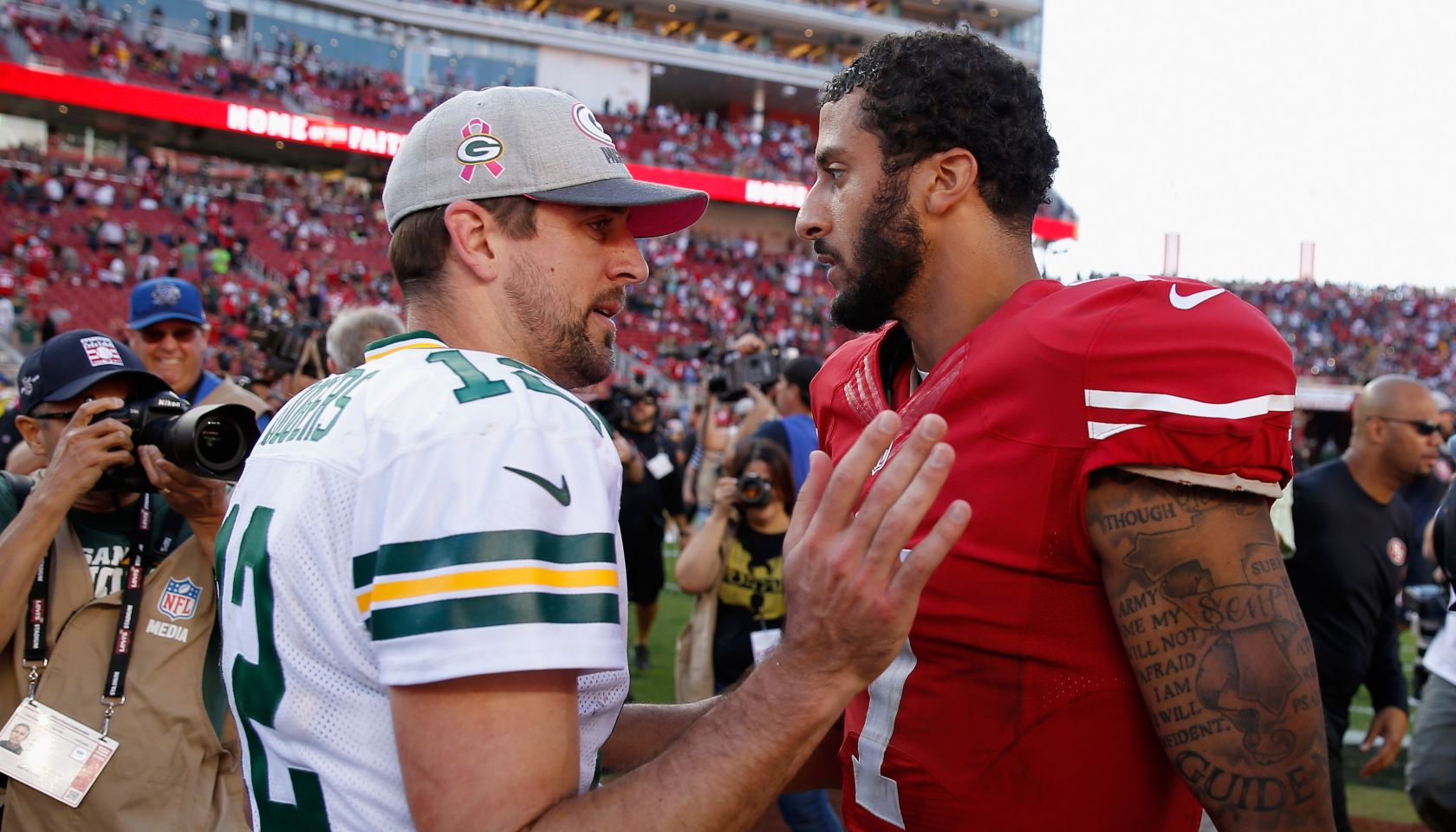
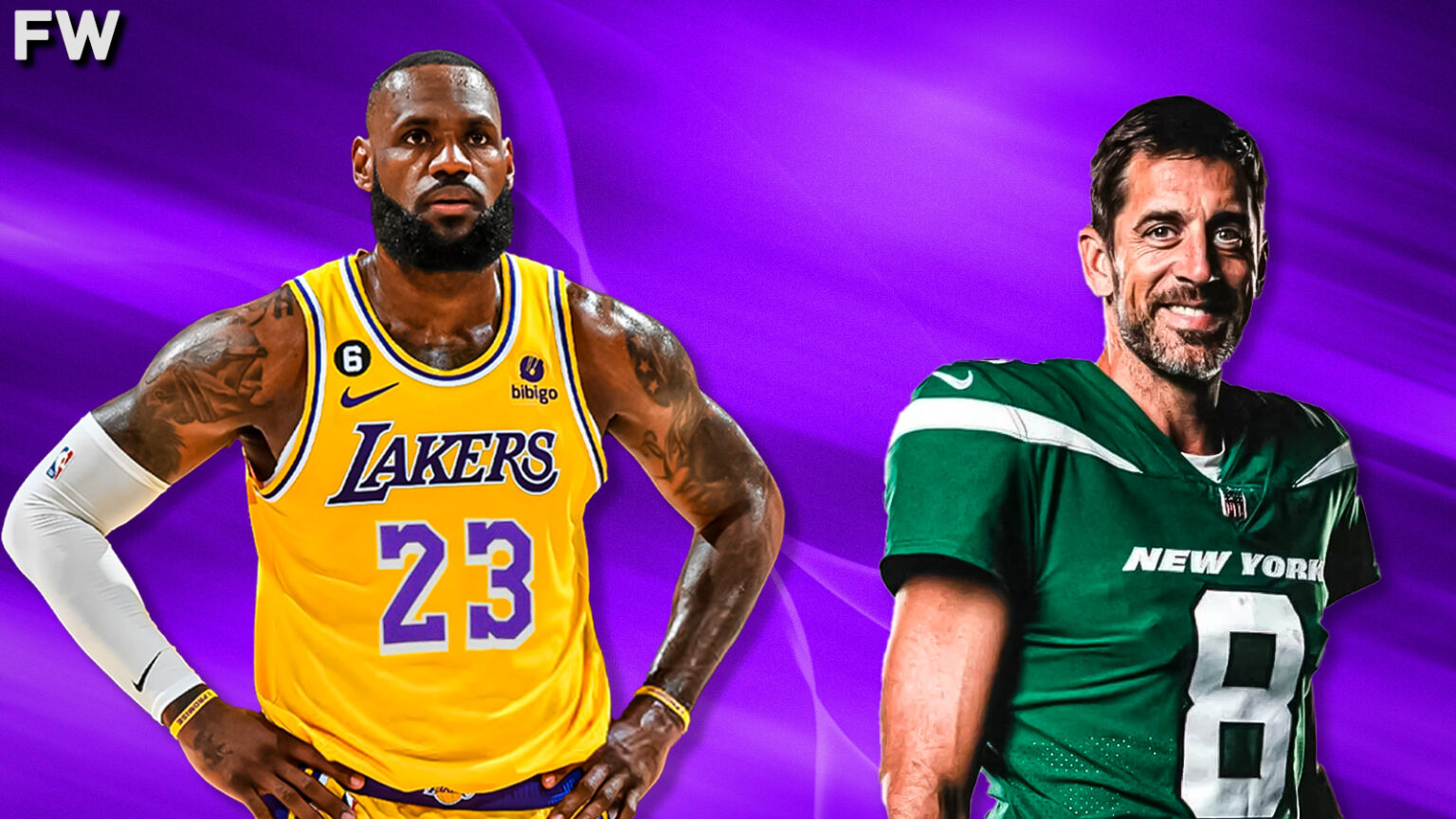
Comparing Aaron Rodgers to LeBron James involves evaluating two of the most technically precise and longevity-defined athletes in professional sports history. While they operate in different leagues—the NFL and the NBA—they share a status as high-IQ cerebral masters of their crafts, perennial MVP contenders, and polarizing cultural figures whose long-term excellence has fundamentally altered how their respective positions and games are perceived.
Defining the Parallel: Longevity, IQ, and Dominance
The comparison between Aaron Rodgers and LeBron James rests on three primary pillars: sustained elite performance across decades, a reputation for possessing an "all-time" basketball and football IQ, and the ability to influence organizational success far beyond their individual play.
LeBron James entered the NBA in 2003, and Aaron Rodgers began his NFL tenure in 2005. Both athletes have remained relevant as starters well into the mid-2020s, an anomaly in sports where physical degradation typically forces retirement or diminished roles long before the age of 40. For Rodgers, this longevity is tied to his mastery of the mechanics of quarterbacking—specifically his efficiency, lack of interceptions, and ability to read complex defensive coverage rotations. For James, it is his physical maintenance, adaptability, and evolution from a high-flying slasher to a cerebral floor general.
Both men are often described as "system-proof." Whether it is a new coaching staff, a change in roster personnel, or a move to a new franchise, both Rodgers and James have historically demanded a high level of situational awareness from teammates. They are known for dissecting defenses (or opposing lineups) in real-time, often acting as coaches on the field or court.
Statistical Dominance and MVP Hardware
To evaluate this comparison objectively, we must look at the hardware. Both athletes have accumulated accolades that place them in the highest tier of historical significance.
Career Accolades Comparison
| Metric | Aaron Rodgers (NFL) | LeBron James (NBA) |
|---|---|---|
| League MVPs | 4 | 4 |
| Championships | 1 (Super Bowl XLV) | 4 |
| All-Pro/All-NBA Selections | 5 First-Team | 13 First-Team |
| Primary Skillset | Efficiency & Accuracy | All-Around Versatility |
| Career Arc | Elite Pocket Passing | Transition to Facilitator |
While LeBron James holds a clear advantage in championships and cumulative statistical volume—due in part to the nature of NBA scheduling and roster sizes—Aaron Rodgers’ efficiency metrics remain the gold standard of professional football. Rodgers holds the highest career passer rating of any quarterback who played during his era, mirroring James’ status as the NBA’s all-time leading scorer. The discrepancy in championships reflects the high-variance, single-elimination nature of the NFL playoffs compared to the seven-game series format of the NBA, which tends to favor the more talented team more consistently.
Cerebral Mastery: The Quarterback and the Point Forward
One of the most frequent arguments in favor of the "Rodgers-James" comparison is the mental component of their game. In the NFL, the quarterback is the most cognitively demanding position in team sports. Rodgers is celebrated for his "hard count," his ability to draw defenders offside, and his "backyard football" improvisation. He operates with a level of autonomy that allows him to audible out of nearly any play, much like LeBron James controls the pace and set of an NBA offense.
LeBron James functions as a point-forward, a player who dictates the flow of the game, decides which teammate receives the ball, and manages the shot clock. Both men share a common trait: they do not just execute plays; they diagnose the opponent's strategy and counter it before the ball is even snapped or the play initiated. This high-level pattern recognition is what has allowed both to remain elite well into the later stages of their careers, as they rely more on intuition and experience than raw, explosive athleticism.
Cultural Impact and Polarization
The comparison extends to their roles as cultural lightning rods. Both Rodgers and James have navigated immense media scrutiny throughout their careers. Their willingness to express opinions on matters outside of sports—ranging from health and wellness to social justice and corporate structures—has made them central figures in the modern sports media cycle.
In 2026, the discourse surrounding both players is often focused on the "twilight" of their careers. The public fascination with their eventual retirement and the legacy they leave behind reflects a shift in how fans view aging athletes. They are no longer viewed merely as players, but as institutional figures who have outlasted their original peers, rivalries, and in some cases, the very eras in which they were drafted.
The Challenges of Cross-Sport Comparison
While the parallels are compelling, there are structural differences that make a direct "LeBron James of the NFL" title difficult to pin down. The NBA is a league driven by star power, where one player typically controls 20-30% of a team's possessions. In the NFL, a quarterback, while influential, is tethered to the performance of ten other players on the field, including the offensive line and a defensive unit that can be entirely out of their control.
Furthermore, the physical requirements are distinct. The NBA requires players to play frequently throughout a long season with high aerobic demands, whereas the NFL is a high-impact, short-season game. The "LeBron James" archetype in the NBA is often defined by his ability to play every position, whereas the "Aaron Rodgers" archetype in the NFL is defined by extreme specialization in the passing game.
Verification of Legacy: The 2026 Context
As of 2026, the consensus remains that while Aaron Rodgers is the most efficient passer in the history of the sport, the comparison to LeBron James is largely one of stature and influence rather than a 1:1 mapping of duties. Rodgers represents the pinnacle of the passing era, a player who mastered the rules of the game to his maximum potential. LeBron James represents the pinnacle of the modern versatile athlete, a player who physically redefined the constraints of his position.
Both players have forced their leagues to adapt. NFL defenses had to evolve to deal with "spread" concepts and the quick release of elite quarterbacks like Rodgers, just as NBA defenses had to become more switchable and versatile to account for the playmaking gravity of a player like James.
Frequently Asked Questions
Is Aaron Rodgers the greatest of all time in the NFL?
Whether Rodgers is the "GOAT" is subjective and dependent on the metrics used. If efficiency, passer rating, and touchdown-to-interception ratio are prioritized, he has a strong case. However, those who prioritize total Super Bowl victories often rank Tom Brady higher.
Why is the LeBron James comparison applied to Aaron Rodgers?
The comparison is primarily a shorthand for "an aging legend who continues to play at a high level while functioning as the primary strategic engine of his team." It highlights their shared traits of high IQ, longevity, and gravitational pull on their respective franchises.
How has the NFL changed since Aaron Rodgers started?
The NFL has transitioned into a pass-heavy league with increased rules protecting the quarterback. Rodgers has been a primary beneficiary and driver of this shift, consistently pushing the boundaries of offensive efficiency through precise timing and protection management.
Are there other athletes who fit the "LeBron James of the NFL" label?
Some analysts point to other perennial leaders like Peyton Manning (for his cerebral approach) or Tom Brady (for his sustained longevity and success). However, the specific "LeBron" comparison is unique because it combines physical longevity with the ability to act as the primary facilitator of an offense.
Does Aaron Rodgers have more control over his team than LeBron James?
This is debatable. While a quarterback has significant control over the play-call via audibles, LeBron James often influences the construction of his team's roster, coaching staff, and game-to-game tactical adjustments, arguably giving him more institutional power.
Next Steps for Sports Analysis
To better understand the legacy of athletes like Rodgers and James, observers should focus on the "post-prime" data—how players adjust their games as their physical tools naturally decline. Watching film from 2005-2010 compared to the current 2026 season provides a roadmap of how elite athletes transition from relying on raw capability to pure tactical mastery. For those seeking to evaluate the "GOAT" status of any player, consider the specific era-dependent variables, such as defensive rule changes and the evolution of analytical modeling, which allow players like Rodgers and James to extend their careers far beyond the traditional athletic shelf life.