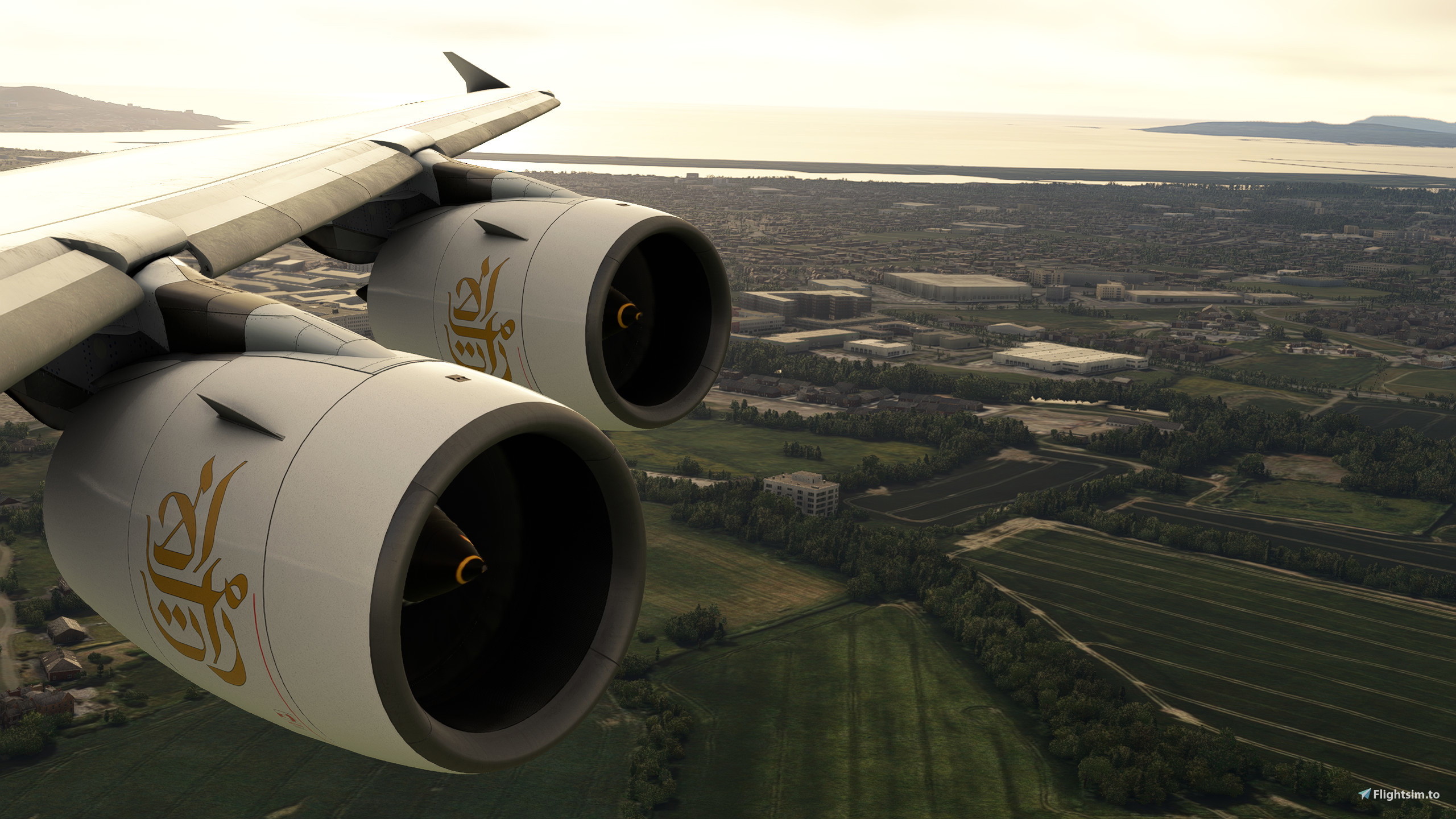
The Airbus A380 wing view offers a unique perspective of the world’s largest passenger airliner, characterized by a massive span, dramatic structural flex during flight, and complex aerodynamic control surfaces. This visual experience stems from the aircraft's immense proportions, cutting-edge wing engineering, and specialized high-lift systems designed to manage massive weight efficiently at cruising altitudes.
Introduction to the Airbus A380 and Its Architectural Scale
When passengers gaze out of the cabin window of an Airbus A380, they are looking at one of the most remarkable feats of modern aerospace engineering. The double-deck, wide-body aircraft developed by Airbus features an engineering footprint that redefines what commercial airliners can achieve in terms of capacity and aerodynamic efficiency. To understand the wing view, one must first comprehend the sheer scale of the platform. The A380-800 features a wingspan of 79.75 meters (261.6 feet) and a total wing area of 845 square meters (9,100 square feet). This immense surface area is necessary to generate the lift required to get a maximum takeoff weight of up to 575 metric tons (1,268,000 pounds) safely into the air.
For travelers seated over the wings—typically rows positioned across the middle sections of both the main deck and the upper deck—the visual landscape is dominated by the vast expanse of the structure stretching toward the horizon. Unlike smaller narrow-body aircraft where the wing appears compact and close to the fuselage, the A380 wing extends so far outward that passengers often feel as though they are viewing an entirely separate flying structure. This visual dominance is matched by the complexity of the internal systems, fuel storage capabilities, and aerodynamic controls embedded within the wing box.
The Aerodynamics of the A380 Super-Wing
The primary function of the A380 wing is to generate lift while minimizing drag, and its design reflects decades of aerodynamic research. The wing utilizes a supercritical airfoil cross-section. This shape is meticulously engineered to delay the onset of wave drag—resistance caused by air compressibility as the aircraft approaches transonic speeds—by maintaining smooth, laminar airflow over both the upper and lower surfaces for as long as possible.
When observing the wing in flight, passengers frequently notice the absence of heavy winglets at the tips. Instead, the A380 utilizes large, sophisticated fence-like structures known as blended wingtip fences (or sharklets in later terminology iterations). These devices, measuring roughly 2.3 meters in height, are designed to reduce induced drag by breaking up the swirling vortexes of air that naturally form at the tips of high-aspect-ratio wings. By mitigating these tip vortices, the wing reduces aerodynamic drag, which directly translates to enhanced fuel efficiency during long-haul intercontinental flights.
The aerodynamic profile changes dynamically depending on the phase of flight. During takeoff and landing, the wing transforms dramatically through the deployment of its high-lift systems. Passengers sitting near the windows can observe the complex choreography of slats on the leading edge extending forward and downward, alongside massive Fowler flaps sliding backward and tilting downward on the trailing edge. These surfaces dramatically increase both the surface area and the camber of the wing, allowing the A380 to generate sufficient lift at lower speeds during approach and departure phases.
Structural Flexibility: Why the A380 Wings Flex and Bend
One of the most striking phenomena observed from the A380 cabin window is the dramatic bending and flexing of the wings during flight. To the uninitiated flyer, seeing a massive metallic wing flex upward by several meters can induce anxiety. However, this flexibility is an intentional, vital design characteristic of modern commercial aircraft, particularly those with exceptionally long spans.
The Physics of Wing Flex
Wings are not rigid beams; if they were, they would snap under the extreme aerodynamic loads encountered at high altitudes. Instead, they are designed to act as flexible cantilevers that absorb turbulence and distribute structural stress evenly.
- Upward Lift Loads: In cruising flight, the upward force of lift generated along the entire span of the wing works against the downward pull of gravity acting on the heavy fuselage and fuel-laden center box.
- Elastic Deformation: Materials such as high-grade aluminum alloys and advanced carbon-composite materials possess high elasticity, allowing them to bend significantly without reaching their yield point.
- Load Alleviation: By flexing upward, the wing tips move significantly higher than their resting position on the ground. This deflection reduces the bending moment at the wing root where the wing attaches to the central fuselage structure.
During severe turbulence or heavy takeoff rotation, the tips of the A380 wings can flex upward by an impressive margin—often cited in engineering tests as moving several meters from their static ground position. This controlled elasticity acts as a natural shock absorber, smoothing out the ride for passengers inside the cabin and protecting the structural integrity of the airframe from catastrophic stress concentrations.
Fuel Management and Structural Distribution
The visual appearance of the A380 wing view is also influenced by its role as a massive fuel reservoir. The wings house the vast majority of the aircraft's fuel capacity, which can exceed 320,000 liters (84,500 US gallons) depending on the specific variant and operational setup.
Fuel distribution inside the wings is not merely a matter of storage; it is an active engineering tool used for weight and balance management. During long-haul sectors, fuel is consumed from specific tanks in a precise sequence to optimize the center of gravity and minimize aerodynamic trim drag. Furthermore, storing heavy fuel weight directly inside the wings provides a structural benefit known as "fuel load relief." Because the weight of the fuel pushes downward against the upward aerodynamic lift generated by the wing, it counteracts the bending moments at the wing root, effectively reducing structural fatigue on the fuselage attachment points during flight.
Passengers looking out over the trailing edge may occasionally notice fuel vent surge tanks or see subtle reflections indicating the sheer volume of fuel stored within the wet wings. The integration of fuel storage across the inner and outer wing boxes demonstrates the multifunctional nature of the A380 architecture.
Comparative Overview of A380 Wing Features vs. Other Wide-Body Aircraft
To fully appreciate the A380 wing view, it is helpful to compare its physical and operational characteristics with other prominent wide-body airliners commonly found in international airspace.
| Aircraft Model | Wingspan (Approx.) | Wingtip Design | Primary Visual Characteristic from Cabin |
|---|---|---|---|
| Airbus A380-800 | 79.75 m (261 ft) | Blended Wingtip Fences | Vast span extending far into the distance; noticeable upward flex in flight |
| Boeing 747-8 | 68.45 m (224 ft) | Raked Wingtips | Swept-back profile, classic upper-deck perspective over the inboard engines |
| Boeing 777-300ER | 64.80 m (212 ft) | Raked Wingtips | Long, slender wing with prominent Engine Alliance or GE90 powerplants |
| Airbus A350-900 | 64.75 m (212 ft) | Curved Winglets | Distinctive scimitar-like curved wingtips with clean, aerodynamic lines |
As illustrated in the comparison, the A380 possesses the largest wingspan among operational commercial passenger airliners, creating a distinct visual horizon that sets it apart from twin-engine wide-bodies.
Passenger Perspective: Selecting the Best Seat for the Ultimate View
For aviation enthusiasts and travelers seeking the ultimate photographic or visual experience, seat selection relative to the A380 wing is a critical consideration. Because the A380 features two full-length passenger decks, the viewing angle varies significantly depending on whether a passenger is seated on the main deck (Deck 1) or the upper deck (Deck 2).
Main Deck (Deck 1) Perspective
Seating over the wing on the main deck (typically rows 40 through 65, depending on the airline's specific cabin configuration) places the passenger relatively close to the engine exhausts and the lower surface of the wing. From this vantage point, the sheer mass of the inboard and outboard Rolls-Royce Trent 900 or Engine Alliance GP7200 engines dominates the lower frame. Passengers have a direct view of the massive flaps, slats, and spoiler panels operating during takeoff and landing phases.
Upper Deck (Deck 2) Perspective
The upper deck of the A380 offers a unique, elevated perspective. Because the upper cabin sits higher relative to the wing root, travelers look down across the upper surface of the wing. This angle provides an unobstructed view of the smooth laminar flow lines, the movement of the ailerons, and the dramatic upward flex of the wingtips against the backdrop of clouds or the horizon. Many frequent flyers consider upper-deck window seats situated just aft of the wing (such as rows 90 to 95 in typical layouts) to be the prime location for capturing the interaction between the wing structure and the surrounding airflow.
Frequently Asked Questions
Why do the A380 wings bend so much during turbulence?
The wings are engineered to be flexible rather than rigid. This elasticity allows them to absorb sudden changes in airflow and severe turbulence without transferring destructive shock loads directly to the fuselage. The upward bending acts as a natural shock absorber, relieving stress on the wing root and ensuring structural safety.
Can the A380 wings break if they flex too far?
No. Airbus subjects the A380 wing design to rigorous static and fatigue testing in specialized facilities, bending the wings far beyond the maximum loads expected in extreme operational service. The wings are tested to withstand loads safely exceeding any normal or severe turbulence encountered in commercial flight.
Where is the best seat on an A380 for viewing the wing?
To observe the full span and structural movement of the wing, an upper-deck window seat situated just behind the trailing edge provides an elevated, panoramic angle. For a closer look at the engines and high-lift mechanical surfaces, a main-deck window seat located directly over the wing is ideal.
Do the wingtip fences on the A380 fold like those on the Boeing 777X?
No. Unlike the Boeing 777X, which utilizes folding wingtips to fit into standard airport gate boxes, the A380 utilizes fixed blended wingtip fences. Because airport infrastructure was specifically modified at major international hubs to accommodate the A380's fixed 80-meter wingspan gate requirements during its development phase, folding mechanisms were deemed unnecessary.
How much fuel do the A380 wings hold?
The wings are the primary fuel storage area for the aircraft, holding the vast majority of the total fuel capacity, which exceeds 320,000 liters. This fuel is distributed across internal tanks to manage aircraft weight, balance, and structural load relief throughout long-haul flights.
Conclusion and Next Actions
Understanding the A380 wing view transforms a standard window seat observation into an appreciation of advanced aerospace engineering, fluid dynamics, and structural mechanics. Whether you are preparing for an upcoming journey on this iconic superjumbo or simply studying modern aviation, selecting the right seat on either the main or upper deck will provide a front-row perspective of human ingenuity in motion. When planning your next long-haul itinerary, review airline-specific cabin maps to secure an optimal window seat aligned with or just aft of the wing root for the most compelling visual experience.