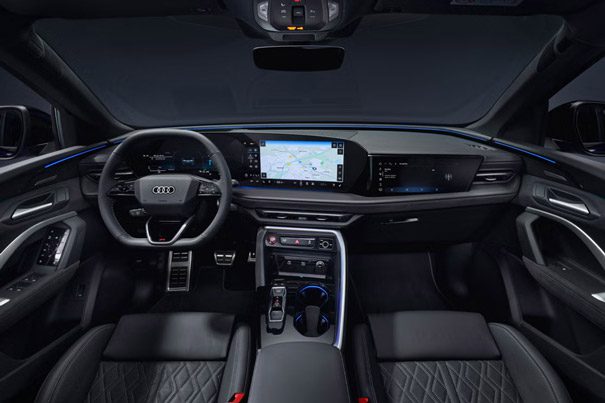
The Audi SQ5 delivers an impressive 0 to 60 mph acceleration time of approximately 4.2 to 5.1 seconds, depending on the model year, powertrain generation, and whether it is equipped with the supercharged V6, turbocharged V6, or the European-market TDI diesel engine. This high-performance luxury compact crossover bridges the gap between everyday family utility and sports car agility.
Introduction to the Audi SQ5 Performance Heritage
When Audi introduced the SQ5 to the global market, it reshaped expectations for what a compact luxury crossover could achieve. Blending the practical cabin space and elevated driving position of the popular Q5 with the engineering prowess of Audi's S performance division, the SQ5 quickly carved out a dedicated following. Buyers looking at the "5 sq5 0 60 performance overview" are typically interested in understanding how this sporty SUV accelerates, what mechanical changes have influenced its speed over the years, and how it measures up against fierce competition in the luxury performance segment.
Evaluating the performance of any modern vehicle requires looking beyond a single acceleration metric. While the 0-to-60 mph sprint serves as a universally understood benchmark, real-world drivability involves power delivery, transmission shift speeds, chassis tuning, and all-weather traction. This overview dives deep into the generation-by-generation evolution of the SQ5, examining the exact powertrain specifications, independent testing figures, handling dynamics, and practical considerations that define its performance character.
Evolution of Powertrains and Acceleration Metrics
The performance trajectory of the Audi SQ5 is defined by two distinct mechanical eras: the supercharged gasoline V6 era and the subsequent turbocharged gasoline V6 (alongside regional diesel) era. Understanding these shifts is vital for interpreting why 0-to-60 mph times vary across model years.
First Generation (2014–2017): The Supercharged Era
In North America and several other markets, the first-generation Audi SQ5 debuted with a 3.0-liter supercharged V6 engine. Pushing out 354 horsepower and 346 lb-ft of torque, this powerplant utilized an Eaton roots-type supercharger mounted in the V of the engine block. Power was routed through a conventional 8-speed Tiptronic automatic transmission to Audi’s legendary quattro permanent all-wheel-drive system.
Independent automotive testing publications routinely clocked this initial iteration running from 0 to 60 mph in roughly 5.1 to 5.3 seconds. The supercharged engine was widely praised for its instantaneous throttle response, devoid of turbo lag, and a distinct, aggressive exhaust note that appealed to driving enthusiasts.
Second Generation (2018–Present): The Turbocharged Evolution
For the 2018 model year, Audi redesigned the SQ5, replacing the supercharged engine with a newly developed 3.0-liter turbocharged V6. Although horsepower remained identical at 354 hp, torque increased significantly to 369 lb-ft, and peak torque arrived much lower in the rev range (at a mere 1,370 RPM). Furthermore, the transmission switched from the 8-speed Tiptronic to an 8-speed automatic (varying by market, with some regions adopting a dual-clutch Stronic setup in earlier second-gen phases before standardizing back to the smooth 8-speed Tiptronic for handling higher torque loads).
This mechanical shift drastically improved off-the-line acceleration. Independent tests of the 2018–2020 models saw the 0-to-60 mph time drop into the 4.7- to 4.9-second range.
When Audi refreshed the SQ5 for the 2021 model year and beyond, subtle software and calibration updates kept the 3.0-liter turbocharged V6 operating at peak efficiency. Recent independent instruments-tested figures routinely place the current SQ5 at an impressive 4.2 to 4.5 seconds when utilizing launch control under optimal track conditions.
| Generation / Model Year | Engine Type | Horsepower | Torque (lb-ft) | Transmission | Tested 0-60 mph (Seconds) |
|---|---|---|---|---|---|
| First Gen (2014–2017) | 3.0L Supercharged V6 | 354 hp | 346 lb-ft | 8-Speed Tiptronic | 5.1 – 5.3 seconds |
| Second Gen (2018–2020) | 3.0L Turbocharged V6 | 354 hp | 369 lb-ft | 8-Speed Tiptronic | 4.7 – 4.9 seconds |
| Facelift Gen (2021–2026) | 3.0L Turbocharged V6 | 349 hp | 369 lb-ft | 8-Speed Tiptronic | 4.2 – 4.5 seconds |
| European Diesel (SQ5 TDI) | 3.0L Turbo Diesel V6 | 341 hp | 516 lb-ft | 8-Speed Tiptronic | 5.1 seconds |
Key Mechanical Factors Influencing SQ5 Acceleration
Achieving consistent 0-to-60 mph times in a luxury crossover weighing over 4,000 pounds requires advanced engineering. Several core components work in unison to translate engine output into forward momentum.
quattro All-Wheel Drive and Traction Management
One of the primary reasons the Audi SQ5 achieves such repeatable acceleration figures is its quattro all-wheel-drive system. Unlike front-wheel-drive-based crossovers that scramble for traction when heavy throttle is applied, the SQ5 distributes power across all four contact patches instantaneously.
In older models, a mechanical Torsen center differential managed torque splits dynamically. Newer variants utilize ultra technology or sport differential enhancements that actively push torque to the rear wheels with the most grip, minimizing wheel slip during hard launches. This mechanical mechanical efficiency ensures that even on damp or imperfect asphalt, the SQ5 hooks up and accelerates without excessive drama or electronic power-cut interventions.
Launch Control and Transmission Tuning
Modern iterations of the SQ5 feature a built-in launch control protocol. By turning off traction control, shifting the transmission into Sport mode, holding the brake firmly with the left foot, and depressing the accelerator pedal fully, the vehicle builds boost and holds engine speed near the optimal sweet spot (typically around 3,005 RPM). Releasing the brake pedal triggers an aggressive, seamless clutch engagement that hurls the SUV forward with maximum efficiency.
The 8-speed Tiptronic automatic transmission is engineered to handle high torque thresholds while executing rapid, crisp upshifts. Paddle shifters mounted behind the steering wheel allow drivers to take manual control, though the automatic shifting logic in Dynamic mode is sharp enough to keep the engine in its optimal power band during spirited driving.
Chassis Dynamics, Braking, and Handling
Straight-line speed is only one facet of the SQ5’s performance profile. A vehicle capable of hitting 60 mph in under 4.5 seconds must possess the braking and suspension architecture to manage that velocity safely and securely.
Suspension Options and Ride Quality
The standard SQ5 comes equipped with an S-tuned steel spring suspension that sits lower than the conventional Q5, lowering the center of gravity and reducing body roll through tight corners. However, many models are specified with the optional Adaptive Air Suspension.
The air suspension system alters ride height and damping characteristics dynamically based on the selected Audi drive select profile (Auto, Comfort, Dynamic, Individual). In Dynamic mode, the suspension stiffens significantly, limiting squat under acceleration and dive under braking. In Comfort mode, it absorbs road imperfections with surprising compliance, making it an effective long-distance cruiser.
Braking Performance
Hauntingly quick acceleration demands robust stopping power. The standard SQ5 braking setup utilizes ventilated disc brakes front and rear, clamped by multi-piston calipers bearing the S logo. For enthusiasts tracking their vehicles or demanding maximum fade resistance, Audi offers upgraded brake packages with larger rotors and high-performance friction materials. Independent testing reveals that a modern SQ5 can brake from 60 mph to a complete stop in roughly 150 to 160 feet, providing reassuring confidence in emergency stopping scenarios.
Comparing the SQ5 to Competitors
To fully contextualize the performance capabilities of the Audi SQ5, it is helpful to examine how its acceleration and dynamic traits stack up against primary German and domestic rivals in the luxury performance crossover segment.
- BMW X3 M40i / M50: BMW’s inline-six engine is widely celebrated for its silken power delivery and ferocious acceleration. The X3 M40i / M50 typically undercuts the SQ5 slightly in instrumented 0-to-60 mph testing, frequently registering times in the 4.1- to 4.4-second window. While the BMW leans slightly more toward aggressive rear-wheel-drive handling dynamics, the Audi balances ride comfort and interior craftsmanship exceptionally well.
- Mercedes-AMG GLC 43: Powered by turbocharged four-cylinder hybrid setups or older V6 bi-turbo engines depending on the model year, the AMG GLC 43 matches the SQ5 stride for stride in a straight line. The Mercedes often favors a stiffer, more track-focused suspension tune, whereas the SQ5 maintains a slightly more composed everyday ride profile.
- Porsche Macan S / GTS: Sharing platform lineage and engine architecture with parts of the Volkswagen Group, the Porsche Macan represents the sharper, more expensive sports-car-first alternative to the SQ5. A Macan S or GTS will typically match or slightly edge out the SQ5 in cornering agility and braking feel, though at a substantially higher price point and with less cargo capacity.
Practical Considerations and Ownership Costs
Purchasing or driving a performance-oriented luxury crossover involves factoring in specific operational realities beyond initial acquisition costs.
Fuel Economy and Efficiency
Performance engines exact a toll at the fuel pump. The supercharged first-generation models and the turbocharged second-generation variants generally return EPA fuel economy ratings in the neighborhood of 18 mpg city and 23 to 24 mpg highway. Heavy acceleration and frequent use of the Dynamic drive mode will quickly push real-world figures lower. Premium gasoline (91 octane or higher) is strictly required to prevent engine knocking and maintain rated power outputs.
Maintenance and Tuning Potential
Maintaining an Audi S-model requires adherence to strict service intervals. Spark plugs, ignition coils, transmission fluid flushes, and differential services must be performed on schedule to preserve reliability.
Furthermore, the 3.0-liter turbocharged engine possesses substantial tuning headroom. Enthusiasts frequently install aftermarket engine control unit (ECU) software tunes, upgraded intercoolers, and high-flow air intakes to push horsepower well past 400 hp, drastically improving 0-to-60 mph acceleration times into the high-3-second bracket. Buyers should note that such modifications can impact factory warranty coverage.
Frequently Asked Questions
What is the official 0-60 mph time for a stock Audi SQ5?
Depending on the model year and generation, a stock Audi SQ5 achieves 0 to 60 mph in 4.2 to 5.1 seconds. Newer models equipped with the turbocharged V6 and launch control regularly achieve times near the 4.2- to 4.5-second mark under ideal conditions.
Does the Audi SQ5 have a launch control feature?
Yes. Modern Audi SQ5 models feature an integrated launch control system. Activating it requires switching the stability control to sport mode, selecting Dynamic via Audi drive select, holding the brake pedal firmly with your left foot, and flooring the throttle to build boost before releasing the brake.
Is the SQ5 faster than the standard Audi Q5?
Significantly faster. While a standard four-cylinder Q5 takes approximately 6.0 to 6.3 seconds to reach 60 mph, the performance-tuned SQ5 cuts that time down by nearly two full seconds thanks to its larger V6 engine, increased horsepower, and enhanced drivetrain calibration.
Can the Audi SQ5 be tuned for faster acceleration?
Yes, the 3.0-liter turbocharged V6 engine responds exceptionally well to aftermarket ECU tunes. Simple software remaps can increase horsepower and torque significantly without altering physical hardware, dropping 0-to-60 mph times closer to the high-3-second range.
Which model year of the SQ5 is the fastest?
The facelifted second-generation models (2021 through 2026) are generally the fastest stock variants due to optimized engine management software, improved turbo spool characteristics, and refined transmission shift logic that maximize launch efficiency.
Conclusion and Final Recommendation
The Audi SQ5 stands as a benchmark for balanced automotive engineering. It offers sports-car-slaying straight-line acceleration—hitting 60 mph in as little as 4.2 seconds—while retaining the weather-conquering capability of quattro all-wheel drive and the everyday usability of a luxury crossover. For drivers seeking a versatile daily driver that does not compromise on excitement, the SQ5 remains a top-tier contender in the luxury performance segment.