Choosing life insurance at age 62 requires a careful balancing act between immediate budget realities, long-term estate goals, and shifting financial obligations. Whether you are nearing retirement, recently retired, or looking for ways to protect a surviving spouse and cover final expenses, understanding the structural differences between term and whole life insurance is critical. At this life stage, insurance is rarely purchased to replace a decades-long mortgage or fund young children’s college tuitions; instead, it serves as a precise tool for income replacement, legacy planning, or debt management.
For a 62-year-old retiree, term life insurance offers affordable, temporary coverage for a fixed period, such as 10, 15, or 20 years. Conversely, whole life insurance provides lifelong protection paired with a cash value savings component that grows on a tax-deferred basis, though it comes with significantly higher initial premiums. Because mortality risk increases significantly in your early sixties, premium pricing between these two structures diverges sharply. Evaluating the five key differences—cost, duration, cash value accumulation, underwriting requirements, and conversion flexibility—allows you to select a policy that aligns with your retirement cash flow and legacy objectives.
1. Premium Cost and Affordability in Retirement
The most immediate and impactful distinction between term and whole life insurance for a 62-year-old is the ongoing cost of the premiums. Insurance companies calculate risk based on actuarial tables, which project that a policyholder entering their sixties has a shorter life expectancy than someone in their thirties or forties. Consequently, base rates are higher across the board, but the pricing mechanism between term and whole life creates a stark financial contrast.
Term life insurance isolates the cost of pure death protection. For a healthy 62-year-old, a 10-year or 15-year term policy provides a high death benefit—such as $250,000 or $500,000—at a relatively manageable monthly or annual premium. Because the policy is temporary and expires after the chosen term, the insurer assumes less long-term liability, passing those savings on to the policyholder through lower upfront rates.
Whole life insurance, on the other hand, is designed to remain in force until the insured's death, provided premiums are paid. To guarantee this lifelong coverage and fund the cash value account, whole life premiums are substantially higher—often five to ten times more expensive than a comparable term policy for a 62-year-old. Retirees living on fixed incomes or drawing down retirement accounts must carefully weigh whether committing to a permanent, high monthly premium is sustainable over a 20-to-30-year retirement horizon.
2. Policy Duration and Expiration Rules
The fundamental purpose of any life insurance contract is defined by its timeline. Understanding how long a policy lasts ensures that your financial safety net matches the duration of your liabilities.
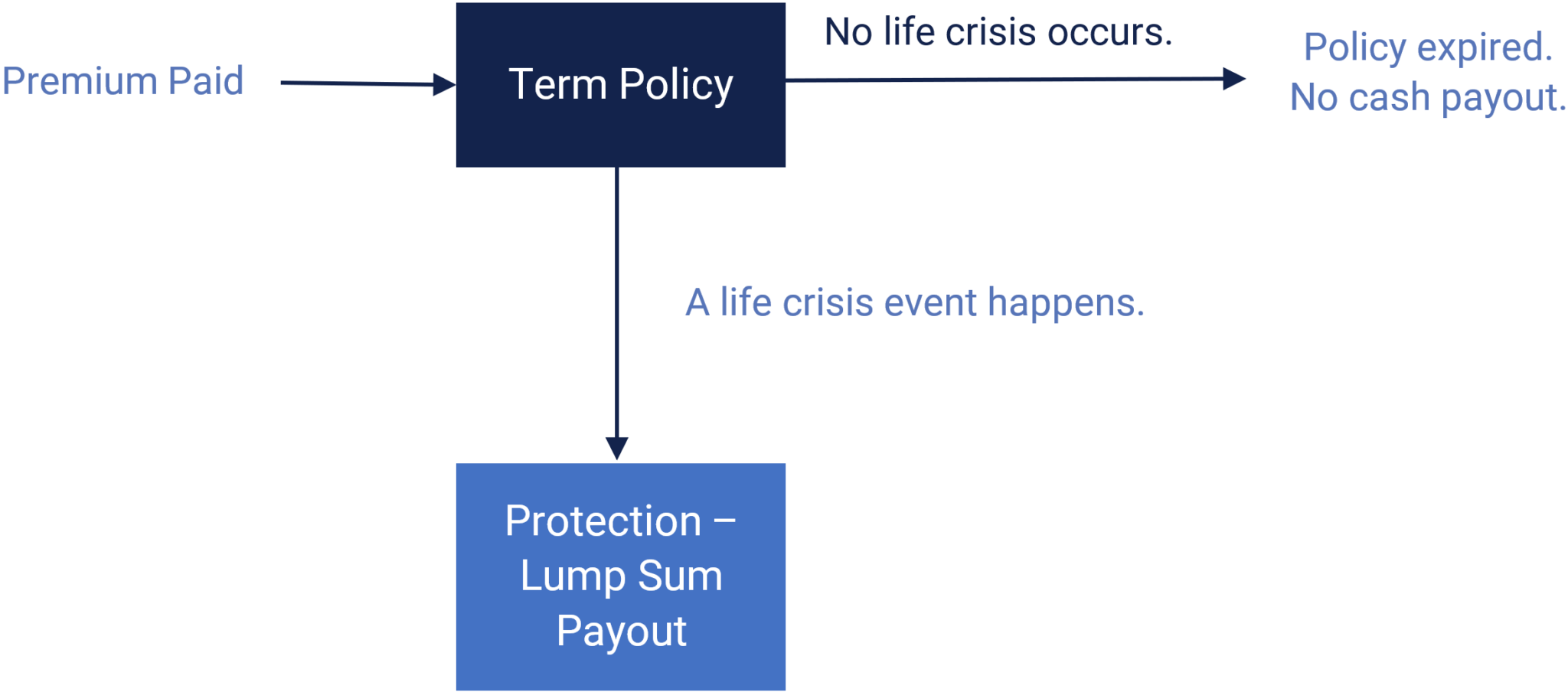
- Term Life Insurance: Operates on a specific timeframe (e.g., 10, 15, 20, or 30 years). If the insured outlives the term, the policy expires, and no death benefit is paid out unless the policy includes a specialized return-of-premium rider. For a 62-year-old, a 20-year term policy will cover them until age 82. If their financial obligations—such as a late-in-life mortgage or dependent support—dissolve within that window, term insurance functions as intended.
- Whole Life Insurance: Provides permanent coverage that lasts for the entirety of the insured's life, regardless of how long they live, provided premiums are maintained. For retirees concerned about living into their nineties or hundreds, whole life guarantees that a payout will eventually reach their beneficiaries, securing an inheritance or funding final expenses no matter when passing occurs.
3. Cash Value Accumulation and Investment Growth
A major differentiator between these two insurance types is the inclusion of a savings vehicle within permanent policies. Term and whole life handle asset accumulation in completely opposite ways.
Term life insurance features no cash value component. It is strictly a risk-protection product. Every dollar paid toward a term premium goes directly toward the cost of insurance and administrative fees. If you cancel a term policy, you receive no monetary return.
Whole life insurance includes a tax-deferred cash value account. A portion of every premium payment is funneled into this account, where it grows at a guaranteed minimum interest rate set by the insurer, sometimes augmented by non-guaranteed dividends if purchased through a mutual insurance company. For a 62-year-old, the cash value acts as a conservative, fixed-income asset within an overall retirement portfolio. Policyholders can borrow against this cash value via policy loans or withdraw funds to supplement retirement income, though doing so reduces the ultimate death benefit.
4. Underwriting Strictures and Health Requirements
Qualifying for life insurance at age 62 involves scrutiny of your medical history, current health status, and lifestyle habits. However, the stringency and implications of underwriting vary significantly between term and whole life contracts.
Most traditional term and whole life policies require full medical underwriting, which typically entails:
- A paramedical exam (blood pressure, height, weight, blood, and urine samples).
- Review of medical records and prescription history.
- Motor vehicle record checks and lifestyle questionnaires (tobacco use, hazardous hobbies).
Because whole life insurance represents a lifelong financial commitment by the insurer, its underwriting guidelines can be more rigorous, particularly regarding age limits. Many whole life products set a maximum issue age between 80 and 85, meaning a 62-year-old is still well within eligibility, but any emerging health conditions—such as elevated cholesterol, high blood pressure, or pre-diabetic markers—will cause premium rates to spike.
If health issues prevent a 62-year-old from qualifying for fully underwritten policies, simplified issue or guaranteed acceptance whole life insurance products are often available. These policies do not require a medical exam, but they feature lower coverage limits, higher premiums, and graded death benefit periods (where full payouts are restricted during the first two to three policy years).
5. Conversion Options and Future Flexibility
As retirees age, their financial needs and health statuses evolve. A term policy purchased at age 62 may no longer be appropriate when the insured reaches age 75 or 80. This is where conversion flexibility becomes a vital feature.
Many reputable term life insurance policies include a convertible rider. This contractual clause allows the policyholder to convert their temporary term insurance into a permanent whole life or universal life policy without undergoing a new medical exam or answering health questionnaires. For a 62-year-old, this serves as an essential safety hedge. If your health deteriorates during the term period, you retain the legal right to secure permanent coverage that would otherwise be prohibitively expensive or impossible to obtain on the open market.
Whole life insurance inherently lacks this conversion requirement because it is already permanent, but it often includes riders that allow policyholders to adjust premium payment schedules, paid-up additions, or utilize accelerated death benefit riders to access funds in the event of a terminal or chronic illness.
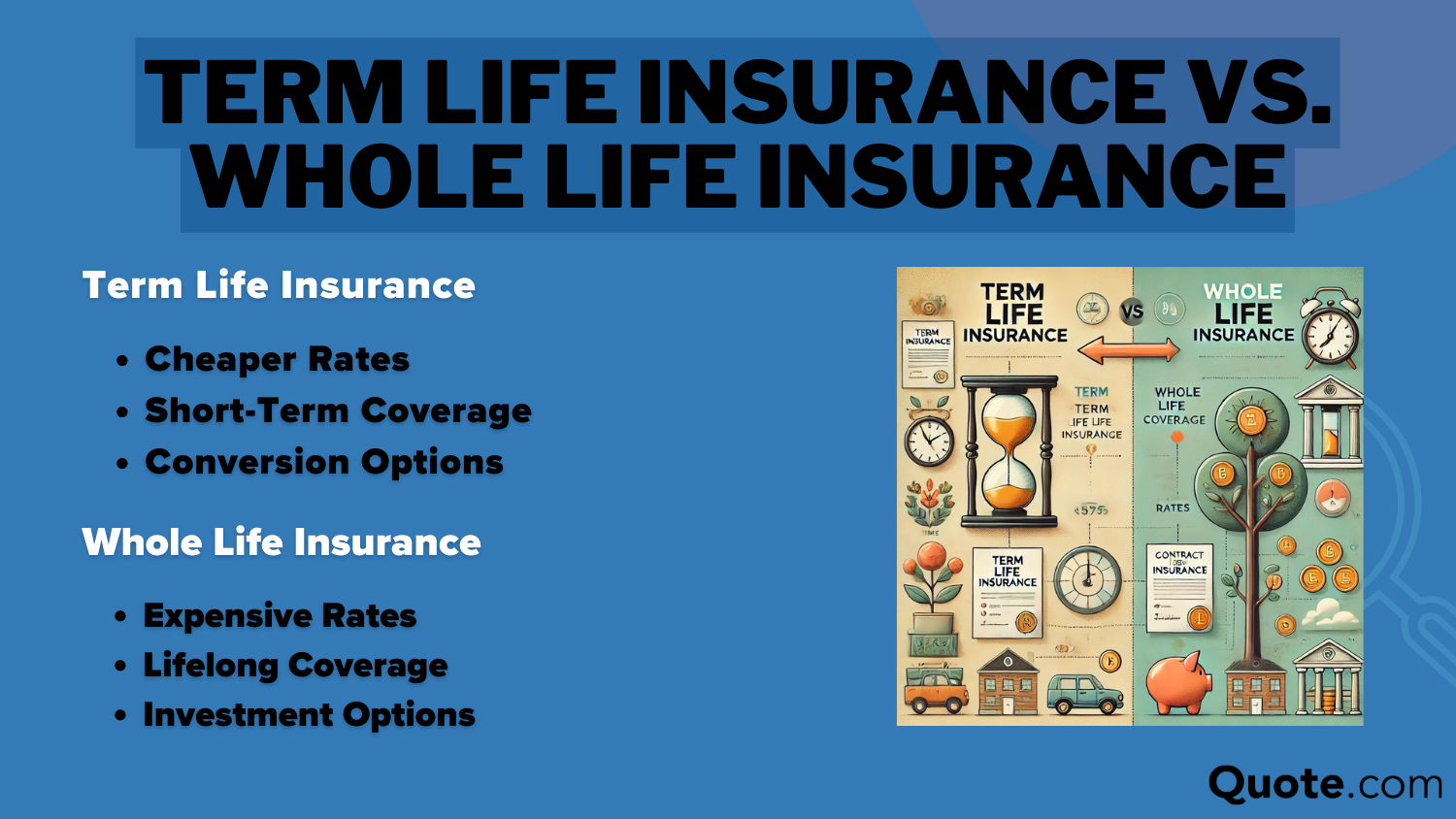
Feature Comparison: Term vs. Whole Life at Age 62
| Feature | Term Life Insurance | Whole Life Insurance |
|---|---|---|
| Duration | Fixed period (10, 15, 20, or 30 years) | Lifelong (to age 100 or beyond) |
| Cost | Significantly lower initial premiums | Substantially higher fixed premiums |
| Cash Value | None (pure protection) | Builds tax-deferred cash value over time |
| Underwriting | Medical exam usually required | Rigorous medical exam or simplified issue options |
| Conversion | Often convertible to permanent coverage | N/A (already permanent) |
| Primary Retirement Use | Temporary income replacement, mortgage coverage | Estate planning, final expenses, legacy building |
Frequently Asked Questions
Is it too late to buy term life insurance at age 62?
No, it is not too late. Many insurance carriers offer term policies with durations of 10, 15, or 20 years to applicants in their early sixties. However, premiums will be higher than they would have been at younger ages, and you must consider whether you will still need coverage when the term expires in your seventies or eighties.
Can I get whole life insurance at 62 without a medical exam?
Yes, simplified issue and guaranteed acceptance whole life insurance policies do not require a medical exam. However, these policies generally offer lower maximum coverage amounts (often capped between $10,000 and $40,000) and feature higher relative costs and graded death benefit clauses.
How does cash value in a whole life policy affect retirement taxes?
The cash value inside a whole life insurance policy grows on a tax-deferred basis, meaning you do not pay annual income taxes on the interest or dividends credited to the account. Additionally, policy loans taken against the cash value are generally tax-free, provided the policy remains active and does not lapse.
What happens if I outlive a term life insurance policy purchased at 62?
If you outlive the specified term (for example, a 20-year term ending when you are 82), the policy expires, coverage ceases, and no death benefit is paid to your beneficiaries. To prevent this, some retirees choose convertible term policies that allow them to transition to permanent coverage before the term expires.
Which policy type is better for covering final funeral expenses?
Whole life insurance is traditionally used for final expense planning because it guarantees a payout whenever death occurs, provided premiums are maintained. Term life insurance can be risky for final expenses if you outlive the policy term, leaving your estate without dedicated funds for burial costs.
Practical Next Actions for a 62-Year-Old Retiree
Determining whether term or whole life insurance fits your financial plan at age 62 requires a structured review of your current assets, debts, and legacy goals.
- Audit Your Liabilities: Calculate outstanding debts, including mortgages, vehicle loans, or personal guarantees, and determine how many years those obligations will remain active.
- Review Income Streams: Assess your fixed retirement income (pensions, Social Security) against discretionary investments to see what monthly premium you can comfortably sustain without straining your budget.
- Define Your Legacy Goals: Decide whether your primary objective is to leave a guaranteed inheritance to children or grandchildren (favoring whole life) or to protect a surviving spouse from temporary income shortfalls (favoring term).
- Consult an Independent Agent: Speak with an independent financial advisor or insurance broker who can compare quotes across multiple carriers to find policies matching your specific health profile and financial objectives.
Disclaimer: Insurance rules, underwriting guidelines, and product availability vary by jurisdiction and carrier. Consult with a qualified financial or insurance professional before purchasing any policy.