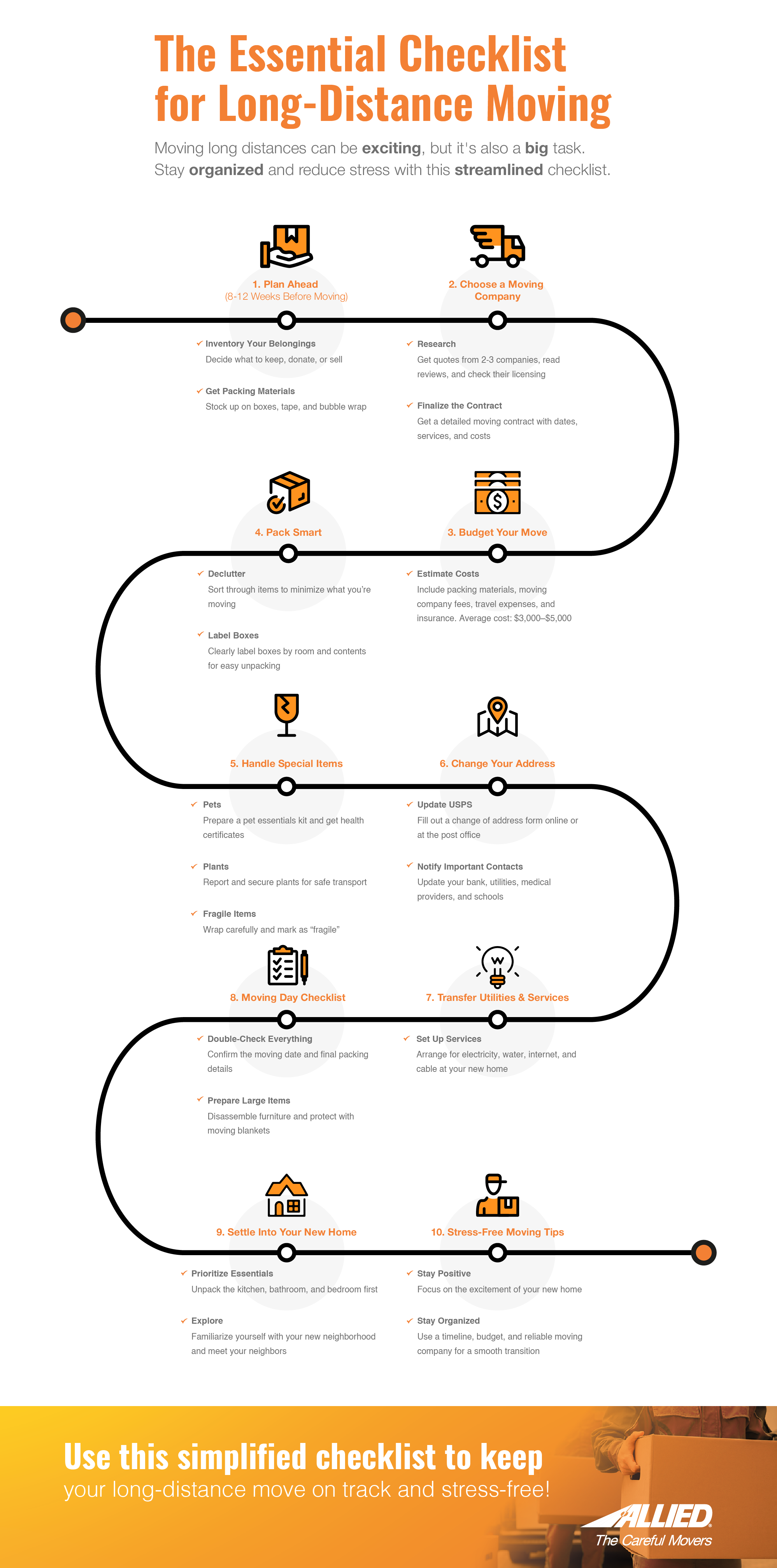
Successful long-distance moving in 2026 requires a rigorous combination of early logistical planning, strict verification of interstate carriers, and aggressive inventory management. By securing binding "not-to-exceed" estimates, utilizing professional-grade packing standards, and understanding federal valuation protections, you can mitigate the high risks of damage and cost overruns associated with cross-country relocation.
Relocating across state lines or across the continent is a monumental task that differs significantly from a local move. In 2026, the logistics industry has become more technologically integrated, yet the fundamental challenges of physical transport remain. The distance increases the "vibration debt" on your belongings, the complexity of scheduling, and the potential for regulatory hurdles. To ensure your transition is as smooth as possible, these five essential tips provide a technical and practical roadmap for your journey.
1. Verify and Vet Interstate Moving Companies
When moving across state lines, you are entering the jurisdiction of federal regulations. In the United States, any mover performing interstate relocations must be registered with the Federal Motor Carrier Safety Administration (FMCSA). This is not a suggestion; it is a legal requirement designed to protect consumers from "rogue movers" and fraudulent business practices.
Check USDOT and MC Numbers
Before signing any contract, ask for the company’s USDOT (U.S. Department of Transportation) number and their MC (Motor Carrier) number. You should verify these credentials on the FMCSA’s Protect Your Move portal. This database provides a snapshot of the company's safety record, their authorized fleet size, and any formal complaints filed by previous customers. A company that only provides a local business license or refuses to share its USDOT number is a significant red flag.
Distinguishing Between Brokers and Carriers
It is vital to understand whether you are talking to a moving broker or a moving carrier. A broker is a sales agent that does not own trucks or employ movers; they sell your job to a third party. A carrier is the company that actually owns the equipment and performs the labor. While some reputable brokers exist, they often lead to communication breakdowns regarding pricing and scheduling. Whenever possible, work directly with a carrier to ensure accountability and a direct line of communication with the crew handling your assets.
The Importance of In-Home or Virtual Estimates
Legitimate long-distance movers will never give you a "guaranteed" price over the phone based on a simple room count. For an estimate to be accurate, the mover must see the volume and weight of your items. In 2026, many companies utilize AI-driven virtual surveys where you walk through your home with a smartphone camera. Ensure the estimator looks inside closets, attics, and garages. If a mover refuses to perform a detailed visual survey and insists on a "flat rate" via email, seek another provider immediately.
2. Master the Inventory Purge and Weight Optimization
The cost of a long-distance move is primarily determined by two factors: the distance traveled and the total weight (or volume) of your shipment. Every pound you move across 1,000 miles costs money. Therefore, the most effective way to lower your moving quote is to reduce the physical mass of your household.
The "Cost-to-Replace" Analysis
Before packing an item, perform a "Cost-to-Replace" analysis. If you have an IKEA bookshelf that cost $150 three years ago, but it will cost $80 in added weight to move it 2,000 miles, you are effectively paying more than half its value just for transport. It is often more economical to sell mid-range furniture on local marketplaces and buy new items at your destination. This is particularly true for heavy, low-value items like old appliances, exercise equipment, and outdated electronics.
Strategic Sorting Categories
Organize your purge into four distinct streams:
- Sell: High-value items that can recoup moving costs. Start this process at least six weeks before the move.
- Donate: Quality items that don't have high resale value but are still functional. Obtain receipts for potential tax deductions.
- Recycle: Specifically for E-waste (old monitors, batteries, and printers) which should not be thrown in the trash or moved.
- Dispose: Items that are broken, stained, or otherwise unusable.
Digital Inventory Management
Use a digital inventory app to catalog the items you decide to keep. In 2026, most high-end moving companies offer integrated apps that allow you to take photos of each box and its contents. This creates a digital paper trail that is invaluable if you need to file an insurance claim later. It also helps you stay organized during the unpacking phase, as you will know exactly which box contains the coffee maker or the television remote.
3. Implement Professional-Grade Packing Standards
Local moves are forgiving; long-distance moves are not. Your belongings will be subjected to thousands of micro-vibrations, gear shifts, and potential temperature fluctuations inside a trailer. Standard cardboard boxes from a grocery store are often insufficient for the structural integrity required for a cross-country haul.
Use Double-Wall Boxes for Fragiles
For kitchenware, electronics, and glassware, invest in double-wall corrugated boxes. These provide a much higher "bursting strength" and can withstand the weight of other boxes stacked on top of them during the long journey. Use specialized "dish packs" which include cell dividers to prevent plates and glasses from clinking against each other.
The Science of Void Filling
The primary cause of damage in long-distance transit is not the truck hitting a bump, but items shifting inside the box. Every box should be packed so there is zero movement when shaken. Use acid-free packing paper, bubble wrap, or even linens and towels to fill "voids." Avoid using newspaper for wrapping high-value items, as the ink can leach into porous surfaces over time, especially in non-climate-controlled trailers.
Labeling for the "First Night" and Beyond
Label every box with its destination room and a brief summary of contents. However, you should also implement a priority system. Label 3-5 boxes as "Priority 1: Open First." These should contain:
- Basic toiletries and towels.
- A tool kit for reassembling furniture.
- Charging cables and power strips.
- Pet food and bowls.
- Basic kitchen essentials (one pot, one pan, coffee maker).
4. Understand Valuation and Insurance Coverage
A common misconception in the moving industry is that movers provide "insurance." In reality, they provide "valuation," which is a level of liability for your belongings. Understanding the difference between the two can save you from a catastrophic financial loss if a truck is involved in an accident or a shipment is lost.
Released Value Protection (Basic Coverage)
By federal law, movers must provide "Released Value Protection" at no additional cost. However, this coverage is minimal, usually set at $0.60 per pound per article. If your 100-pound high-end OLED television (worth $2,000) is destroyed, the mover is only liable for $60 (100 lbs x $0.60). For long-distance moves, this level of protection is almost never sufficient.
Full Value Protection (FVP)
Under Full Value Protection, the mover is liable for the replacement value of lost or damaged goods in the entire shipment. If an item is damaged, the mover can choose to repair it, replace it with a similar item, or offer a cash settlement for the current market value. This option requires the payment of a premium and often includes a deductible. Given the duration and risks of long-haul transport, FVP is the industry-standard recommendation for most households.
High-Value Inventory Forms
If you own items valued at more than $100 per pound (such as jewelry, fine art, or high-end electronics), you must declare them on a "High-Value Inventory" form. Failure to disclose these items specifically often limits the mover's liability to the standard $0.60 per pound, even if you purchased Full Value Protection.
5. Master the Logistics of the "Gap Period"
In a local move, you move out and move in on the same day. In a long-distance move, there is often a "gap period" of 3 to 14 days between when the movers load the truck and when they arrive at your new home. Managing this interval is critical to reducing stress and ensuring you can function upon arrival.
The Delivery Window vs. The Delivery Date
Be aware that most long-distance moving contracts provide a "delivery window" rather than a specific date. The company may have 7 to 21 business days to deliver your goods, depending on the distance and the size of your shipment. Do not schedule contractors (like floor refinishers or painters) for the day you expect the truck to arrive; give yourself a buffer of several days.
The Essentials "Go-Bag"
Since you will be without your furniture and household goods for a week or more, you must pack as if you are going on a long vacation. Each family member should have a suitcase with enough clothing for 10 days, along with any necessary medications, passports, and birth certificates. Never pack essential documents or expensive jewelry on the moving truck; these should stay with you in your personal vehicle or on your flight.
Utility and Service Coordination
In 2026, most utility transfers can be handled through centralized digital platforms, but they still require lead time. Ensure that water, electricity, and internet are scheduled to be active at least 48 hours before your arrival. There is nothing more stressful than arriving at a new home after a 15-hour drive only to find you have no lights or climate control.
| Moving Method | Estimated Cost (Long Distance) | Best For | Level of Effort |
|---|---|---|---|
| Full-Service Movers | $4,500 - $12,000+ | Large families, high-value items | Very Low (Professionals pack/load) |
| Moving Containers | $2,500 - $6,000 | Flexible timelines, mid-range budgets | Moderate (You pack/load) |
| Rental Truck (DIY) | $1,500 - $4,000 | Small apartments, budget-conscious | Very High (You drive/load/pack) |
| Freight Shipping | $2,000 - $5,000 | Minimalist moves (boxes only) | High (Curb-to-curb delivery) |
Frequently Asked Questions
What is a "Binding Not-To-Exceed" estimate?
A Binding Not-To-Exceed (BNTE) estimate is the most consumer-friendly contract in the moving industry. It guarantees that you will not pay more than the quoted price, even if the final weight of your shipment exceeds the estimate. However, if your shipment weighs less than the estimate, you receive a reduction in price. This differs from a standard "Binding" estimate, where you pay the quoted price regardless of whether the weight is lower than expected.
How much should I tip long-distance movers?
Tipping is not mandatory but is customary for good service. For long-distance moves, it is common to tip $40 to $60 per mover for the loading crew and a similar amount for the unloading crew at the destination. If the crew provides exceptional service, such as navigating difficult stairs or packing fragile items with extreme care, a higher tip is appropriate. It is often better to tip each individual worker directly rather than giving a lump sum to the foreman.
Can I move my houseplants across state lines?
Moving plants over long distances is legally and logistically difficult. Many states (like California and Florida) have strict agricultural inspections to prevent the spread of pests and diseases. Furthermore, moving trucks are not climate-controlled; a plant inside a dark trailer for a week will likely perish from extreme heat or cold. It is usually best to gift your plants to friends or neighbors and start a new collection at your destination.
Is moving insurance tax-deductible in 2026?
Under current federal tax laws, moving expenses are generally not deductible for most individuals. The 2018 Tax Cuts and Jobs Act suspended the deduction for moving expenses through 2025, and this status has largely remained into 2026. The only major exception is for active-duty military members who are moving due to a permanent change of station (PCS) order. Always consult a tax professional for the most current regulations regarding your specific jurisdiction.
How do I handle "Storage-in-Transit" (SIT)?
If your new home isn't ready when your shipment arrives, you may need Storage-in-Transit. Most moving companies offer SIT for up to 90 days. Be aware that once your goods enter SIT, the valuation coverage may change, and you will be charged for both the storage and the "redelivery" from the warehouse to your new home. Clarify these costs and insurance implications before the truck leaves your original residence.
Final Recommendation
The single most important action you can take for a successful long-distance move is to start the vetting process at least eight to twelve weeks before your target move date. High-quality, FMCSA-certified carriers often book their schedules months in advance, especially during the peak summer moving season. By securing a Binding Not-To-Exceed estimate early and aggressively downsizing your inventory, you position yourself for a move that is defined by organization rather than chaos. Ensure you have all agreements in writing and never rely on verbal promises regarding delivery dates or pricing caps.