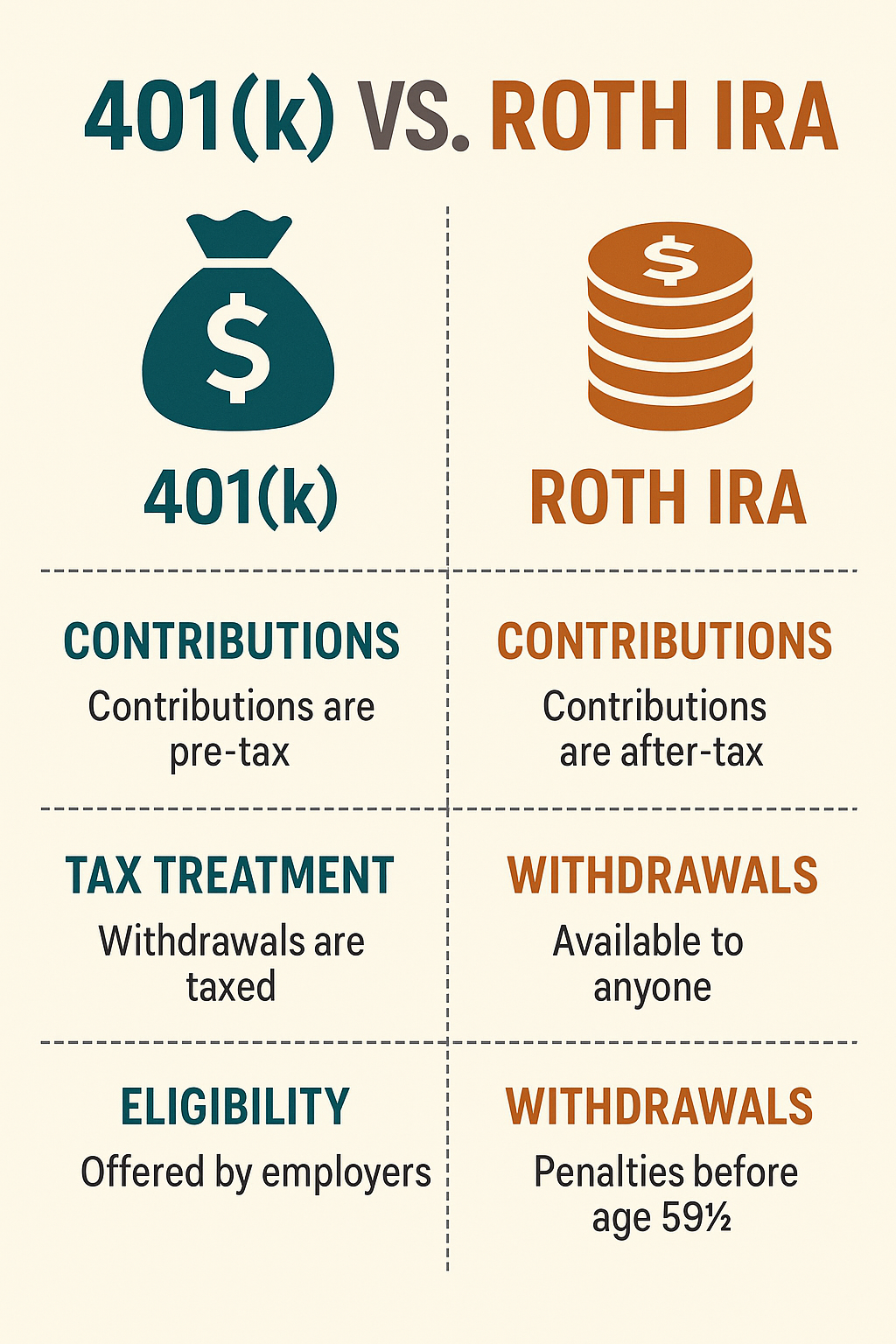
For the 2024 tax year, the IRS set the individual contribution limit for 401(k) plans at $23,000, while the limit for Roth IRAs was established at $7,000. Savers aged 50 and older were eligible for "catch-up" contributions, allowing an additional $7,500 in 401(k)s and $1,000 in Roth IRAs, bringing their total possible elective deferrals to $30,500 and $8,000, respectively.
As we evaluate financial strategies from the vantage point of 2026, the 2024 tax year stands out as a period of significant upward adjustments. These changes were driven by high inflationary data from the preceding years, leading the Internal Revenue Service (IRS) to implement some of the largest cost-of-living adjustments (COLA) in the history of modern retirement accounts. Understanding these specific limits is essential for taxpayers conducting historical audits, correcting past over-contributions, or analyzing long-term wealth accumulation patterns.
The 2024 401(k) Contribution Framework
The 401(k) remains the cornerstone of employer-sponsored retirement savings in the United States. For 2024, the IRS increased the elective deferral limit to $23,000, a $500 increase from the 2023 limit of $22,500. This limit applies to the total of all elective employee deferrals made to traditional and Roth 401(k) plans.
It is important to distinguish between the individual elective deferral limit and the total annual addition limit. While an employee could only contribute $23,000 of their own salary, the total amount that could be deposited into a 401(k) account—including employer matching and profit-sharing contributions—was much higher. For 2024, this total limit, governed by Section 415(c)(1)(A) of the Internal Revenue Code, was $69,000 (or $76,500 including catch-up contributions for those 50 and older).
Catch-Up Contributions for Older Workers
The "Catch-Up" provision is designed to help those nearing retirement age accelerate their savings. In 2024, the catch-up limit for 401(k), 403(b), and most 457 plans remained at $7,500. This meant that any participant who reached age 50 by December 31, 2024, could contribute a total of $30,500 into their employer-sponsored plan.
These catch-up contributions are not subject to the same "total limit" constraints as standard contributions. Even if a participant's total account additions (employee + employer) reached the $69,000 cap, the $7,500 catch-up could still be added on top, effectively allowing for a maximum of $76,500 to be sheltered in a tax-advantaged environment during the 2024 calendar year.
Roth IRA Limits and the Income Phase-Out Barrier
Unlike the 401(k), which is generally available to anyone with an employer offering the plan regardless of income, the Roth IRA has strict eligibility requirements based on Modified Adjusted Gross Income (MAGI). For 2024, the base contribution limit was increased to $7,000, up from $6,500 in 2023.
The Roth IRA is particularly attractive because, while contributions are made with after-tax dollars (providing no immediate tax deduction), the growth and qualified withdrawals in retirement are entirely tax-free. However, the IRS restricts who can contribute directly to these accounts to prevent high-income earners from benefiting disproportionately from the tax-free growth.
2024 Income Phase-Out Ranges
If your MAGI exceeded certain thresholds in 2024, your ability to contribute to a Roth IRA was either reduced or eliminated entirely. These ranges are adjusted annually for inflation.
- Single Filers and Heads of Household: The phase-out range for 2024 was $146,000 to $161,000. If your MAGI was below $146,000, you could contribute the full $7,000. If it fell within the range, your contribution limit was reduced. If it exceeded $161,000, you could not contribute directly to a Roth IRA.
- Married Filing Jointly: The phase-out range was $230,000 to $240,000.
- Married Filing Separately: The range remained $0 to $10,000, effectively barring most individuals in this tax status from Roth IRA participation if they lived with their spouse at any time during the year.
The SECURE 2.0 Impact on IRA Catch-Ups
A significant change that took effect in 2024 was the indexing of the IRA catch-up contribution. Historically, the $1,000 catch-up limit for IRAs (both traditional and Roth) was a fixed dollar amount that did not change with inflation. Under the SECURE 2.0 Act of 2022, this $1,000 amount became subject to cost-of-living adjustments. While it remained $1,000 for the 2024 tax year, the mechanism for future increases was officially established during this period.
| Feature | 401(k) Limit (2024) | Roth IRA Limit (2024) |
|---|---|---|
| Standard Contribution | $23,000 | $7,000 |
| Catch-Up (Age 50+) | $7,500 | $1,000 |
| Total Individual Limit | $30,500 | $8,000 |
| Income Limits | None (for employee deferral) | $146k-$161k (Single) / $230k-$240k (MFJ) |
| Employer Match | Allowed (up to $69k total) | Not Applicable |
| Tax Treatment | Pre-tax or Roth options | After-tax only |
Navigating the Total Annual Addition Limit (Section 415)
One of the most complex aspects of 2024 retirement planning was the Section 415 limit. This is the "hard cap" on the total amount of money that can enter a defined contribution plan account from all sources. For 2024, this was the lesser of 100% of the participant's compensation or $69,000.
This limit is particularly relevant for three groups of people:
- High Earners with Generous Matches: If a company offered a 10% match or a significant profit-sharing contribution, the total of the employee's $23,000 and the employer's portion could approach the $69,000 mark.
- Self-Employed Individuals: For those using a Solo 401(k), the 2024 limit allowed them to contribute as both the employer and the employee, potentially reaching the full $69,000 (plus catch-up) threshold, depending on their business income.
- Mega Backdoor Roth Seekers: This strategy involves making after-tax (non-Roth) contributions to a 401(k) beyond the $23,000 limit, up to the $69,000 cap, and then converting those funds to a Roth 401(k) or Roth IRA. In 2024, the headroom for this strategy was substantial, often exceeding $40,000 for those with no employer match.
Deadlines and Correction of Excess Contributions
The timeframe for making 2024 contributions differed between the two account types. For a 401(k), contributions had to be made via payroll deduction by the end of the calendar year (December 31, 2024). For a Roth IRA, taxpayers had until the tax filing deadline of the following year, which was April 15, 2025, to make contributions designated for the 2024 tax year.
If a taxpayer inadvertently exceeded the 2024 limits—for example, by contributing to two different 401(k) plans at two different jobs—they were required to take corrective action. The "Return of Excess" must typically occur by the tax filing deadline. Failure to remove excess contributions results in a 6% excise tax for IRAs for every year the excess remains in the account. For 401(k)s, the excess deferral is taxed twice: once in the year contributed and again in the year distributed, unless corrected by the April 15 deadline following the year of the mistake.
Comparing 401(k) vs. Roth IRA for the 2024 Tax Year
Deciding where to allocate funds in 2024 often came down to a "hierarchy of savings." Most financial advisors recommended a specific order of operations based on the 2024 limits and tax benefits.
The 2024 Hierarchy of Savings
- Step 1: The Employer Match. This was the highest priority. Since most 401(k) matches represented a 50% or 100% immediate return on investment, contributing enough to the 401(k) to max out the match was the first move.
- Step 2: The Roth IRA. Once the match was secured, many savers turned to the Roth IRA due to its superior flexibility. Unlike 401(k)s, Roth IRA contributions (but not earnings) can be withdrawn at any time without penalty or tax. With the 2024 limit at $7,000, this was a manageable goal for many mid-career professionals.
- Step 3: Unmatched 401(k) Contributions. After exhausting the Roth IRA limit, savers would return to the 401(k) to fill the remainder of the $23,000 elective deferral bucket. This was especially beneficial for high-income earners looking to lower their 2024 taxable income through traditional (pre-tax) contributions.
Technical Nuances: MAGI and Eligibility
A common point of confusion in 2024 involved the calculation of MAGI for Roth IRA eligibility. MAGI is not the same as your "take-home pay" or even your "Gross Income." It is your Adjusted Gross Income (AGI) with certain deductions added back, such as student loan interest, half of the self-employment tax, and excluded foreign income.
Because the 2024 Roth IRA phase-out for single filers started at $146,000, many individuals found themselves in a "gray area." If a single filer had an AGI of $150,000, their $7,000 contribution limit would be reduced proportionately. The IRS provided a specific worksheet in Publication 590-A to calculate the exact reduced amount. Contributing even $1 over the allowed reduced limit would trigger the aforementioned 6% excise tax.
Frequently Asked Questions
Can I contribute to both a 401(k) and a Roth IRA in 2024?
Yes. There is no IRS rule prohibiting you from contributing to both. In fact, if you met the income requirements for the Roth IRA, you could have contributed the full $23,000 to your 401(k) and the full $7,000 to your Roth IRA, for a total of $30,000 in tax-advantaged savings (excluding catch-ups). The limits for these two types of accounts are entirely independent of one another.
What if I turned 50 in 2024?
The IRS uses a "full year" rule for age-based eligibility. If your 50th birthday occurred at any point during the 2024 calendar year—even on December 31—you were legally entitled to the full catch-up contribution amounts for both your 401(k) ($7,500) and your Roth IRA ($1,000).
Does my employer's match count toward the $23,000 401(k) limit?
No. The $23,000 limit only applies to your own elective deferrals (the money taken out of your paycheck). Employer matching and profit-sharing contributions count toward the Annual Addition Limit, which was $69,000 for 2024. For example, if you contributed $23,000 and your employer contributed $10,000, your total of $33,000 was well within the $69,000 aggregate cap.
Can I contribute to a Roth IRA if I have a 401(k) at work?
Yes, having a 401(k) at work does not prevent you from contributing to a Roth IRA. However, it can affect your ability to deduct contributions to a Traditional IRA. Since Roth IRA contributions are never tax-deductible, the existence of a workplace 401(k) does not change the Roth IRA rules—only your income (MAGI) matters for Roth IRA eligibility.
What was the "Backdoor Roth IRA" and was it legal in 2024?
The Backdoor Roth IRA is a strategy used by individuals whose income exceeds the 2024 phase-out limits ($161,000 for singles). It involves making a non-deductible contribution to a Traditional IRA and then immediately converting it to a Roth IRA. This strategy remained fully legal and widely used in 2024, as there were no income limits on Roth conversions.
Final Recommendations for Reviewing 2024 Contributions
If you are reviewing your 2024 financial records in 2026, ensure that your total contributions across all platforms align with these IRS mandates. If you discover that you over-contributed in 2024 and have not yet corrected it, you should consult a tax professional immediately. While the deadline for a "clean" correction has passed, filing an amended return and paying the excise tax is necessary to stop further penalties from accumulating.
For those planning for future years, use the 2024 benchmarks as a reminder of how quickly inflation-protected limits can rise. Always prioritize securing your employer match first, then maximize your Roth options to build a tax-free "bucket" for retirement, and finally, utilize the full elective deferral limit of your 401(k) to maximize your long-term compound growth potential.