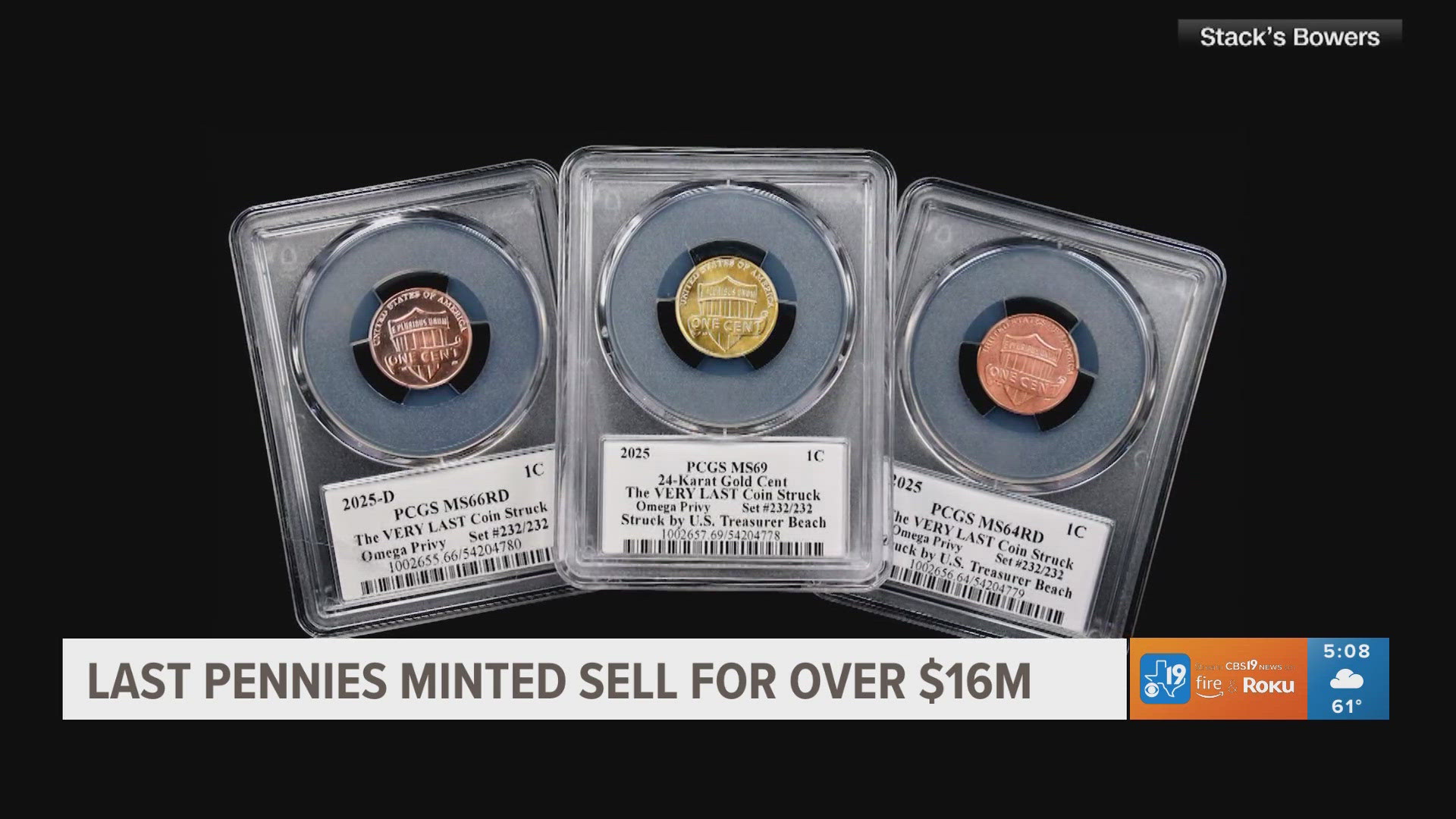
When calculating the monetary value of 3 million pennies, the math yields exactly $30,000, because each individual U.S. cent represents one-hundredth of a dollar. However, managing, transporting, and converting such a massive volume of copper-plated zinc currency involves substantial weight, spatial requirements, banking hurdles, and potential metal-value considerations that go far beyond the baseline face value.
Dealing with 3 million individual coins transforms a simple arithmetic equation into a major logistical operation. Whether you have inherited a massive coin collection, accumulated years of spare change, or are examining the intrinsic metal composition of modern U.S. coinage, understanding the physical properties, banking procedures, and legal regulations surrounding such a massive sum requires careful planning. This guide explores the financial, physical, and practical realities of handling 3 million pennies.
Mathematical Breakdown and Face Value
At its core, the conversion of pennies to dollars relies on a straightforward decimal calculation. Since 100 pennies equal one dollar, dividing any quantity of pennies by 100 reveals its official U.S. currency value.
$$3,000,000 \div 100 = 30,000$$
This establishes the baseline face value at thirty thousand dollars. However, face value is only the beginning of the story. Numismatic value, metal composition, and transaction costs can alter how much those pennies are actually worth or how much effort is required to realize that value.
Face Value vs. Intrinsic Metal Value
The United States Mint produces pennies primarily out of copper-plated zinc. Since 1982, composition standards dictate that a circulating penny consists of 97.5% zinc and 2.5% copper plating. Prior to 1982, pennies were composed of 95% copper and 5% tin or zinc.
Because the market price of copper and zinc fluctuates, the intrinsic metal value—often called the melt value—of older pre-1982 pennies can occasionally exceed one cent. Conversely, modern zinc pennies cost more for the U.S. Mint to manufacture than one cent, but their melt value typically remains below face value. If a collection of 3 million pennies contains a high percentage of vintage copper coins minted before 1982, the raw metal might hold a different economic value than the standard face value, though melting U.S. currency remains federally regulated and restricted.
Physical Logistics: Weight, Volume, and Storage
The most immediate challenge of handling 3 million pennies is not the math, but the sheer physical burden. Coins are dense, heavy, and occupy significant space.
Calculating Total Weight
A modern post-1982 U.S. penny weighs 2.5 grams. An older pre-1982 copper penny weighs 3.11 grams. Assuming a standard mixed or modern collection where the vast majority of coins weigh 2.5 grams each:
- Total Weight in Grams: $3,000,000 \times 2.5\text{ g} = 7,500,000\text{ grams}$
- Total Weight in Kilograms: $7,500,000 \div 1,000 = 7,500\text{ kg}$
- Total Weight in Pounds: $7,500\text{ kg} \times 2.20462 \approx 16,534\text{ lbs}$
A pile of 3 million pennies weighs over 16.5 pounds short of 8.5 tons. This massive weight introduces severe structural and transportation challenges. Storing 16,500 pounds of coins in a residential home can exceed standard floor load limits, risking structural damage to subfloors or basements. Transporting this weight requires heavy-duty commercial vehicles, as standard passenger cars or light trucks would quickly exceed their maximum payload capacities.
Spatial Volume Requirements
Beyond weight, coins take up substantial physical space. A single U.S. penny has a diameter of 19.05 mm and a thickness of 1.52 mm. When packed loosely in containers, bags, or vaults, they create significant negative space, but even compressed, their volume is immense.
- The volume of a single penny is approximately $0.433\text{ cubic centimeters}$.
- For 3 million pennies, the raw volumetric space required is roughly $1,299,000\text{ cubic centimeters}$, or about $45.9\text{ cubic feet}$.
While 46 cubic feet sounds manageable—roughly equivalent to a large home refrigerator—distributing that weight safely across that small footprint is nearly impossible without specialized industrial racking or reinforced commercial vaults.
Banking, Conversion, and Deposit Procedures
Converting 3 million pennies into spendable currency or bank deposits is a complex administrative hurdle. Commercial banks and credit unions are not legally obligated to accept unlimited loose or even rolled coin without restrictions, fees, or prior notice.
Commercial Bank Policies and Coin Counters
Most local bank branches rely on automated coin-counting machines designed for modest customer deposits, such as a jar of change collected over a few years. Depositing 3 million pennies would completely overwhelm a local branch's coin hopper, jam sorting machines, and exhaust available vault space.
Financial institutions typically enforce strict guidelines for large coin deposits:
- Prior Notice: Customers must coordinate with branch managers weeks in advance.
- Rolling Requirements: Banks often require loose coins to be hand-rolled or machine-rolled in standard paper wrappers ($0.50 per roll for pennies) before acceptance. Rolling 3 million pennies requires 60,000 individual wrappers.
- Fee Structures: Non-customers or even account holders may face high processing fees—ranging from 5% to 15%—on large coin deposits if the bank uses third-party coin-processing services. A 10% fee on $30,000 amounts to a $3,000 loss.
Coin-Counting Kiosks
Public coin-counting kiosks found in grocery stores and retail locations are entirely unsuited for this volume. These machines take a percentage fee (often around 11% to 12% for cash, or lower for gift cards) and have strict transaction limits designed to prevent commercial abuse. Using a retail kiosk for 3 million pennies would result in thousands of dollars in fees and frequent machine breakdowns.
Freight and Armored Transport Solutions
To properly liquidate 3 million pennies, individuals or businesses typically must work directly with commercial armored car services (such as Brinks or Loomis) and Federal Reserve-linked commercial banks. These institutions can handle palletized coin shipments, but the logistical costs—including armed transport, specialized security, and commercial processing fees—must be factored into the final net return.
| Metric / Factor | Specification for 3 Million Pennies | Operational Implications |
|---|---|---|
| Total Face Value | $30,000.00 USD | Baseline monetary conversion rate ($3M \div 100$). |
| Total Weight | Approx. 16,534 lbs (~7.5 metric tons) | Requires heavy-duty commercial freight transport. |
| Physical Volume | Approx. 46 cubic feet (loose) | Exceeds standard residential floor load capacities. |
| Required Wrappers | 60,000 standard paper penny rolls | Significant labor requirement if hand-rolled. |
| Standard Bank Fees | 0% to 15% depending on institution | Can reduce net return by thousands of dollars. |
Legal, Regulatory, and Tax Considerations
Accumulating and liquidating $30,000 in pennies triggers specific legal and regulatory frameworks that must be navigated to maintain compliance with federal law.
Legal Tender Status
Under the Coinage Act of 1965 (specifically 31 U.S.C. 5103), U.S. coins and currency—including pennies—are legal tender for all debts, public charges, taxes, and dues. However, this statute does not force private businesses, retailers, or even banks to accept thousands of dollars in pennies for a single transaction without prior agreement. Private establishments are legally permitted to set their own policies regarding acceptable payment methods.
Tax Reporting and Documentation
Converting $30,000 in physical currency into a bank account may trigger standard anti-money laundering (AML) and Bank Secrecy Act (BSA) reporting protocols.
- Currency Transaction Reports (CTRs): Financial institutions must file a CTR for cash transactions exceeding $10,000. While physical coin deposits differ from paper currency handling, large cash-equivalent deposits are subject to verification of origin.
- Source of Funds: If the pennies represent an inheritance, a business revenue stream, or a long-term collection, maintaining clear records of ownership prevents compliance freezes or tax audits regarding unexplained asset increases.
Frequently Asked Questions
Can a bank legally refuse to accept 3 million pennies?
While U.S. currency is legal tender, commercial banks operate under private business charters and regulatory guidelines. A local branch can refuse an unannounced deposit of 16,000 pounds of pennies due to lack of storage, safety hazards, and operational disruption. Working with commercial banking divisions and armored couriers is required for transactions of this scale.
How long would it take to roll 3 million pennies by hand?
An efficient person can roll about 20 to 30 pennies a minute, or roughly one standard roll (50 pennies) every two minutes. Rolling 60,000 rolls at two minutes per roll requires approximately 120,000 minutes, or 2,000 hours of continuous manual labor. This makes manual rolling economically unfeasible compared to commercial sorting solutions.
Are any of the 3 million pennies worth more than one cent?
It is statistically probable that a collection of 3 million pennies contains numismatic rarities, error coins, or high-purity pre-1982 copper specimens. Reviewing millions of coins requires automated optical sorting technology to identify rare dates, mint marks (such as the 1909-S VDB or 1943 copper/steel errors) that could elevate the total collection value far beyond $30,000.
What is the cheapest way to cash in a massive coin collection?
The most cost-effective method is establishing an account with a commercial bank that offers free coin-counting services to high-value account holders, provided they accept scheduled, palletized deposits. Avoiding retail kiosks prevents steep percentage fees, preserving the full $30,000 face value.
Can pennies be melted down for their metal content?
Federal regulations under 31 CFR Part 82 prohibit the melting or export of U.S. one-cent and five-cent coins due to their intrinsic metal value exceeding face value. Violating these restrictions can result in heavy fines and criminal penalties, meaning holders cannot legally profit by melting modern or vintage pennies into raw metal ingots.
Strategic Next Steps for Managing Large Coin Assets
If you find yourself responsible for 3 million pennies, avoid attempting to move, store, or deposit them without a structured plan. Begin by assessing the storage environment to ensure floor safety, consult with a commercial bank or financial advisor regarding institutional deposit policies, and investigate the collection for potential numismatic value before liquidation. Proper preparation ensures that the full $30,000 face value—or more—is successfully realized without incurring excessive logistical expenses or regulatory delays.