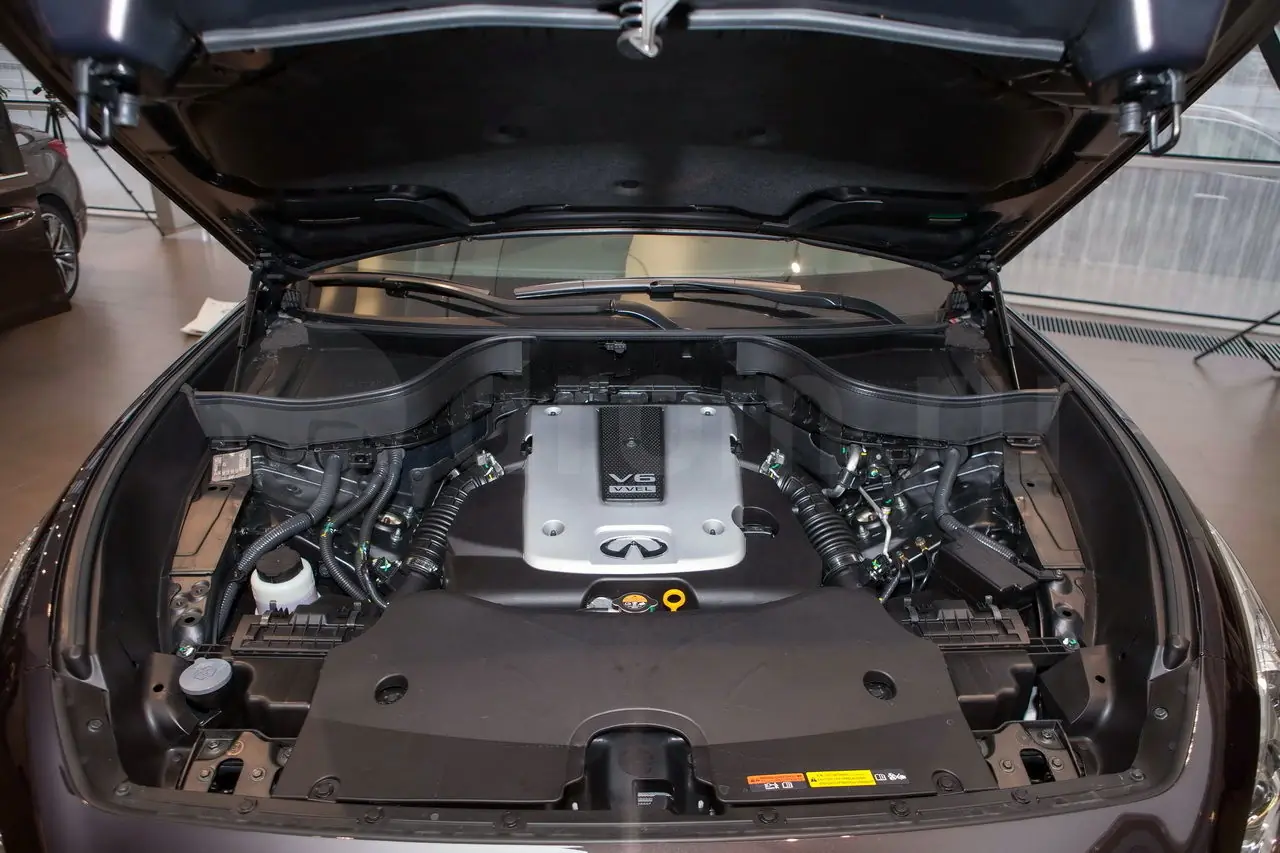
The Infiniti 3.7-liter V6 engine, officially designated as the VQ37VHR, typically produces between 325 and 354 horsepower and 267 to 276 lb-ft of torque, depending on the specific model and trim level. This naturally aspirated powerplant is renowned for its high-revving nature, reaching a redline of 7,500 RPM, and its implementation of Variable Valve Event and Lift (VVEL) technology.
As of 2026, the VQ37VHR remains one of the most celebrated engines in the used luxury-performance market. While Infiniti has largely transitioned to turbocharged four-cylinder and VR30DDTT twin-turbo V6 engines in its newer fleet, the "3.7" remains a benchmark for reliability and linear power delivery. Understanding the horsepower ratings for this engine requires looking at how Nissan and Infiniti tuned the block for different chassis, ranging from the nimble G37 coupe to the heavier QX70 crossover.
The Engineering Behind the Horsepower: What is the VQ37VHR?
To understand why the 3.7L Infiniti engine hits its specific horsepower ratings, one must look at the "VHR" suffix in its name. It stands for Very High Revving with Variable Valve Event and Lift. This was a significant evolution from the previous 3.5L VQ35HR engine.
Variable Valve Event and Lift (VVEL)
Unlike traditional engines that use a throttle butterfly to regulate air intake, the VQ37VHR utilizes VVEL to control the intake valves' lift and duration. This allows the engine to "breathe" more efficiently. At low speeds, the valve lift is kept low to improve fuel efficiency and torque. At high RPMs, the lift increases significantly, allowing for the massive air intake necessary to generate over 330 horsepower. This technology is the primary reason the 3.7L engine can sustain power all the way to its 7,500 RPM redline without the "choking" sensation common in smaller displacement or less advanced naturally aspirated engines.
Structural Integrity and Displacement
The engine features a 95.5 mm bore and an 86 mm stroke, totaling a displacement of 3,696cc. To support the high-revving nature and the heat generated at 350 hp levels, the engine utilizes a ladder-frame construction for the lower block, which increases rigidity and reduces vibration. The pistons are also coated in a dry film lubricant to reduce friction, contributing to the engine’s snappy throttle response.
Model-Specific Horsepower Ratings
The horsepower rating of the 3.7L engine is not universal across the Infiniti lineup. Intake design, exhaust routing, and ECU (Engine Control Unit) mapping vary between sedans, coupes, and SUVs.
Infiniti G37 (Sedan, Coupe, and Convertible)
The G37 was the flagship carrier for this engine starting in 2008. In the G37 Sedan, the engine was typically rated at 328 horsepower. The G37 Coupe often saw a slight bump to 330 horsepower, largely due to a slightly more aggressive exhaust setup. The G37 Convertible, because of the added weight and different structural bracing, maintained the 325-330 hp range but often felt slower due to the vehicle's mass.
Infiniti Q50 and Q60 (Early Generations)
When Infiniti rebranded its lineup to the "Q" nomenclature, the 3.7L engine was carried over into the early Q50 (2014-2015) and the first-year Q60. In these models, the engine was standardly rated at 328 horsepower. Despite the rebranding, the mechanical internals remained identical to the late-model G37, providing a proven, "bulletproof" alternative to the newer turbocharged engines that would eventually replace it.
The IPL Performance Peak
The Infiniti Performance Line (IPL) represented the pinnacle of factory tuning for the 3.7L engine. Found in the G37 IPL Coupe and Convertible, this version of the VQ37VHR was pushed to 348 horsepower and 276 lb-ft of torque. This was achieved through a high-flow dual exhaust system that reduced backpressure by nearly 30% and a recalibrated ECU that optimized ignition timing and fuel delivery for high-octane gasoline.
Infiniti SUVs: QX50 and QX70
The 3.7L engine also powered the EX37 (later QX50) and FX37 (later QX70). In these applications, the engine was usually rated between 325 and 330 horsepower. While the numbers look similar to the coupes, the torque curve was often shifted slightly lower in the RPM range via software to help move the heavier SUV chassis from a standstill.
| Model | Years Active (3.7L) | Horsepower Rating | Peak Torque (lb-ft) |
|---|---|---|---|
| Infiniti G37 Sedan | 2009–2013 | 328 hp | 269 lb-ft |
| Infiniti G37 Coupe | 2008–2013 | 330 hp | 270 lb-ft |
| Infiniti G37 IPL | 2011–2014 | 348 hp | 276 lb-ft |
| Infiniti Q50 | 2014–2015 | 328 hp | 269 lb-ft |
| Infiniti Q60 | 2014–2015 | 330 hp | 270 lb-ft |
| Infiniti Q70 / M37 | 2011–2019 | 330 hp | 270 lb-ft |
| Infiniti QX70 / FX37 | 2013–2017 | 325 hp | 267 lb-ft |
Real-World Performance: Crank vs. Wheel Horsepower
It is important for owners and enthusiasts to distinguish between "crank horsepower" (the figures provided by Infiniti) and "wheel horsepower" (the power actually reaching the ground).
The 3.7L engine is typically paired with either a 7-speed automatic transmission or a 6-speed manual. Drivetrain loss—the energy consumed by the transmission, driveshaft, and differential—is usually estimated at 15% to 20%.
On a chassis dynamometer (dyno), a stock Infiniti G37 rated at 330 hp at the crank will typically produce between 270 and 285 wheel horsepower (whp). Factors such as ambient temperature, fuel quality (91 vs. 93 octane), and the health of the catalytic converters play a significant role in these real-world numbers. In 2026, as these vehicles age, carbon buildup on the intake valves and aging oxygen sensors can cause a slight decline in these figures if the vehicle has not been meticulously maintained.
Factors That Influence HP Output and Longevity
The HP rating of an Infiniti 3.7L is not a static number; it is a ceiling of potential that depends on the engine's operational health.
- Fuel Quality: The VQ37VHR is a high-compression engine (11.0:1 ratio). It requires premium unleaded fuel (91 octane or higher). Using lower octane fuel will cause the knock sensors to retard ignition timing, which can result in a loss of 10 to 20 horsepower and decreased throttle response.
- Oil Pressure and VVEL: The VVEL system relies on precise oil pressure to operate the actuators. The early models (2008–2011) were notorious for a "paper" oil gallery gasket that could blow out, leading to a drop in oil pressure. If this happens, the engine may enter "limp mode," significantly capping horsepower to prevent internal damage.
- Air Induction: The factory dual-intake system is quite efficient, but the paper filters can become restricted. Replacing these with high-flow filters is a common way owners maintain their factory HP ratings over time.
Increasing the HP Rating: Common Modifications
Because the 3.7L is naturally aspirated, it is difficult to see massive horsepower gains without forced induction (turbos or superchargers). However, the engine responds well to "bolt-on" modifications that improve its ability to breathe.
Cold Air Intakes (CAI)
Systems that position the air filters behind the front grille (such as the Stillen Gen 3 or Takeda) can add between 10 and 15 horsepower. These work by drawing in denser, colder air from outside the engine bay.
Exhaust Manifolds and Test Pipes
The factory catalytic converters are a major point of restriction. By replacing them with "test pipes" or high-flow cats, owners can unlock 10–20 wheel horsepower. When paired with long-tube headers, the VQ37VHR can produce a much more aggressive sound and a significant bump in high-RPM power.
ECU Tuning (EcuTek or Uprev)
A professional tune is the most effective way to increase the HP rating without changing hardware. Tuners can adjust the VVEL maps, fueling, and timing. On a completely stock car, a tune might add 10 whp, but on a car with intakes and exhaust, a tune is necessary to "sync" the parts, often resulting in total gains of 30–40 horsepower over stock.
Reliability of the 3.7L Engine in 2026
By 2026, the VQ37VHR has earned a reputation for extreme durability. It is common to see these engines surpass 200,000 miles with original internals. The primary concerns for maintaining performance are:
- Cleaning the Throttle Bodies: Carbon buildup can cause a fluctuating idle and hesitating acceleration.
- Spark Plug Replacement: Using the correct Denso or NGK Iridium plugs is vital for maintaining the ignition spark necessary for the 330 hp output.
- Cooling System: The 3.7L runs hot. Ensuring the coolant is flushed and the water pump is functional is essential for preventing heat-soak, which kills horsepower during spirited driving.
FAQ: Frequently Asked Questions
Is the Infiniti 3.7L V6 a good engine?
Yes, it is widely considered one of the best naturally aspirated V6 engines ever produced. It won multiple "Ward's 10 Best Engines" awards. Its combination of a high redline, timing-chain-driven cams (rather than a belt), and robust internal construction makes it both powerful and reliable.
How much HP does a G37 have with a tune?
A G37 with basic "bolt-on" modifications (intake and exhaust) and a professional EcuTek tune typically produces between 310 and 330 wheel horsepower, which translates to roughly 360 to 380 crank horsepower.
Why did Infiniti stop using the 3.7L engine?
The shift was primarily driven by fuel economy standards and the industry-wide move toward turbocharging. While the 3.7L is powerful, it is not particularly fuel-efficient, especially in city driving. Turbocharged engines like the 3.0L VR30DDTT provide more torque at lower RPMs, which is better for daily drivability and emissions testing.
Does the 3.7L require premium gas?
Yes. To achieve the advertised horsepower ratings, the engine requires at least 91 octane fuel. Using 87 octane will result in the ECU pulling timing to prevent engine knock, which reduces power and fuel efficiency.
What is the 0-60 mph time for an Infiniti with the 3.7L?
In a rear-wheel-drive G37 or Q50, the 0-60 mph time is typically between 5.0 and 5.5 seconds. All-wheel-drive (AWD) models can sometimes achieve the lower end of that range due to better traction off the line, despite the added weight.
Summary of Next Steps for Owners
If you are looking to verify or maximize the horsepower of your Infiniti 3.7L in 2026, start with a health check. Perform a compression test and check the oil gallery pressure to ensure the engine is performing at its baseline. For those seeking more power, prioritize high-quality cold air intakes and a professional ECU tune, as these provide the best "bang for your buck" while maintaining the engine's legendary reliability.