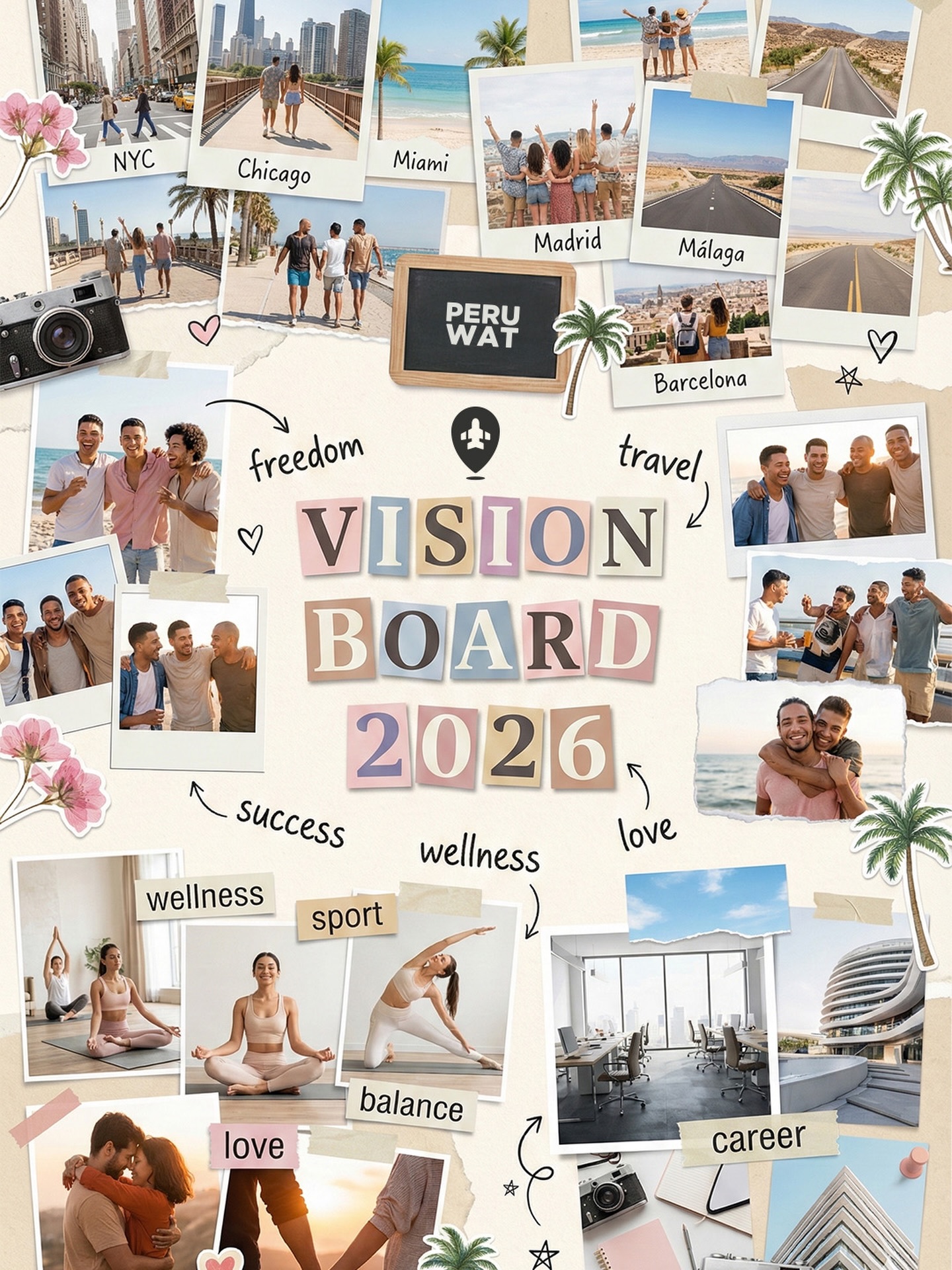
Selecting the right 2026 vision board pictures requires shifting from generic aesthetic inspiration to intentional imagery that triggers neural priming and emotional resonance. Effective vision board pictures depict specific actions, tangible outcomes, and sensory details aligned with your core values—whether curated digitally on platforms like Canva and Pinterest or printed for traditional physical display.
The Science of Visual Priming: Why Image Selection Matters
A vision board is far more than a decorative college of aspirational photography; it serves as a visual priming instrument designed to engage the brain's reticular activating system (RAS). The RAS acts as a cognitive filter, processing millions of bits of sensory data daily and prioritizing information relevant to your focused attention. When you consistently expose yourself to specific, meaningful imagery, your brain becomes conditioned to notice opportunities, resources, and behaviors aligned with those visual cues.
However, arbitrary image selection can impair this neurological process. Research in motivational psychology reveals that imagery evoking specific, actionable behaviors triggers stronger behavioral follow-through than imagery representing passive luxury or unanchored outcomes. A image of a runner tying their shoes on a morning track stimulates the brain's motor cortex and reinforces daily habits far more effectively than a generic photo of a marathon trophy.
The Visual Priming Cycle:
- Intentional Visuals
- Neural Priming (RAS Activation)
- Enhanced Opportunity Awareness
- Sustained Execution
When building your collection of 2026 vision board pictures, every image should meet three strict criteria:
- Specific Clarity: The image clearly represents a concrete goal or habit, avoiding vague metaphors.
- Emotional Resonance: Looking at the image generates a visceral feeling of commitment, enthusiasm, or calm rather than passive envy.
- Behavioral Alignment: The photo depicts the process, environment, or realistic milestone necessary to achieve the desired outcome.
Essential Categories for 2026 Vision Board Pictures
Organizing your visual goals into structured life domains prevents one single area—such as career or financial wealth—from dominating your board at the expense of well-being, relationships, or personal development.
2026 Vision Board Life Domains:
- Career & Ambition
- Financial Growth
- Health & Energy
- Personal & Social
Career, Skill Mastery, and Professional Ambition
Focus on pictures that show environments where you wish to work, tools of your trade, or representations of professional milestones.
- Process Images: A quiet, well-lit ergonomic workspace, a podium at an industry conference, or a clean codebase on a monitor.
- Milestone Images: An award badge, a published book cover template, or a signed contract document.
- Skill Development: Open textbooks, technical certifications, or mentorship interactions.
Financial Growth, Independence, and Asset Building
Financial imagery easily devolves into cliché photos of stacked cash or luxury items that fail to inspire daily discipline. Focus instead on imagery representing security, strategic investment, and active building.
- Balance & Security: Clean debt-free ledger graphics, emergency fund savings milestones, or investment portfolio allocation charts.
- Tangible Assets: Real estate deeds, keys to a primary home, or green energy residential updates.
- Financial Freedom: Pictures representing time autonomy, such as working flexible hours from a serene location without financial anxiety.
Physical Health, Longevity, and Mental Energy
Health imagery should promote sustainable, restorative vitality rather than unreachable body ideals.
- Active Habits: A freshly packed nutritious meal prep, functional movement exercises, trail running shoes on dirt paths, or swim goggles beside a pool.
- Rest and Recovery: A serene bedroom free of digital distraction, meditation cushions, or a hot tea cup beside a journal.
- Metric Goals: Photos representing improved stamina, clean blood pressure readouts, or completed race bibs.
Relationships, Community, and Emotional Connection
Visualizing social health helps balance solo productivity goals with meaningful human engagement.
- Intimate Relationships: Shared meals around a candlelit dining table, joint travel moments, or hands held on a walk.
- Family and Parenting: Dedicated offline game nights, park visits, or multi-generational family dinners.
- Community: Collaborative volunteer projects, book club gatherings, or local community gardens.
Lifestyle, Mindful Travel, and Personal Projects
Capture experiences that broaden your perspective or restore your visual energy.
- Exploration: Specific travel destinations (e.g., a quiet library in Kyoto, a hiking trail in the Pacific Northwest) rather than generic beach shots.
- Creative Outlets: Ceramic wheels, woodworking tools, oil paints, or music production software.
- Environment: A clutter-free living room, outdoor garden spaces, or energy-efficient home upgrades.
Sourcing Authentic, High-Resolution Imagery
Finding images that feel authentic to your personal journey requires moving past basic web searches. Standard search engines often yield repetitive, low-resolution royalty photos that lack emotional depth.
Optimal Image Source Framework:
- High-Intent Goal Definition
- Select Optimal Image Source Platform
- Royalty-Free Stock (Unsplash)
- Custom AI Generators
- Personal Archive & Scanning
Royalty-Free Unsplash and Pexels Photography
Platforms like Unsplash and Pexels host millions of high-resolution, royalty-free photographs taken by global photographers. These images offer realistic lighting, genuine human expressions, and high visual contrast, making them far superior to polished stock photography.
- Search Strategy: Use specific, mood-based search queries. Instead of searching "success," search for "focused professional writing in notebook morning light."
AI Image Generation for Specific Visuals
When standard photography cannot capture a highly unique goal, generative AI platforms allow you to create precise, bespoke visuals.
- Prompt Precision: Describe specific lighting, subjects, and environments. For example: * "A clean minimalist office desk with a finished manuscript, warm morning sunlight, shot on 35mm lens, natural colors."*
- Custom Mockups: You can generate tailored images displaying exact numeric targets, custom logo branding, or precise architectural layouts.
Personal Archives and Scanned Ephemera
Incorporating personal photographs grounds your vision board in concrete reality.
- Historical Anchors: Use photos of past moments when you felt exceptionally healthy, creative, or peaceful to remind your brain of reachable states.
- Physical Artifacts: Scan ticket stubs, trail maps, event badges, or personal letters to add tactile realism to digital prints.
Digital vs. Physical Vision Board Picture Comparison
Choosing between a physical or digital board depends on your daily routines, spatial preference, and visual engagement style.
| Comparison Factor | Physical Vision Board | Digital Vision Board |
|---|---|---|
| Primary Media | Printed photo paper, magazine clippings, poster board, corkboard | Canva, Pinterest, Notion, desktop backgrounds, lock screens |
| Image Resolution Needs | High DPI (300 DPI minimum for clear physical printing) | Screen native resolution (1080p, 4K, or mobile device pixels) |
| Tactile Engagement | High: Involves cutting, arranging, tactile texture, and manual craft | Low: Drag-and-drop digital alignment |
| Spatial Flexibility | Fixed physical footprint (e.g., office wall, bedroom door) | Multi-device access (phone, tablet, computer monitor) |
| Update Velocity | Low: Requires printing new photos and manual physical repositioning | High: Real-time image swapping, editing, and digital updating |
| Distraction Risk | Zero digital distraction during review | Moderate risk if viewed within distracting app environments |
| Cost Profile | Printing costs, physical boards, adhesives, cutting tools | Mostly free or minimal software subscription costs |
Step-by-Step Assembly Framework for 2026
An organized assembly methodology prevents chaotic visual clutter and keeps your primary goals front and center.
- STEP 1: Goal Audit & Mindful Filtering: Narrow down to 7-10 core priority outcomes for 2026.
- STEP 2: Curate & Ratio Test Imagery: Source 2-3 images per goal (Action, Outcome, Setting).
- STEP 3: Grid Composition & Focal Hierarchy: Position key anchor visual in center; group by domain.
- STEP 4: Environmental Placement & Active Priming: Place board in daily high-traffic line of sight.
Step 1: Goal Audit and Mindful Filtering
Before gathering pictures, list 7 to 10 high-priority outcomes for 2026. Avoid overwhelming your board with dozens of competing targets. Group these outcomes across key life domains (career, health, relationships, personal growth).
Step 2: Curate and Ratio Test Imagery
Source 2 to 3 candidate images per goal. Evaluate each candidate using a 70/30 ratio rule:
- 70% Process and Action Imagery: Visuals depicting daily habits, tools, focused environments, and effort.
- 30% Outcome Imagery: Visuals depicting the completed result or celebration point.
Step 3: Grid Composition and Spatial Hierarchy
Whether arranging images on physical poster board or a digital canvas:
- Central Focal Point: Place your single most transformative core value or overarching theme for 2026 directly in the center.
- Domain Quadrants: Group related images into distinct spatial clusters (e.g., top-left for health, top-right for career). This visual separation prevents cognitive fatigue.
- Visual Balance: Alternate dense detail photos with negative space (e.g., simple color blocks, short typography, or minimalist landscape shots) to allow the eye to rest naturally.
Step 4: Daily Integration and Active Priming
Place your completed board where you are guaranteed to engage with it daily without active effort.
- Physical Boards: Mount on the wall directly opposite your office desk or beside your bathroom mirror.
- Digital Boards: Set as your desktop wallpaper, tablet home screen, or pinned visual widget in personal dashboards like Notion.
Common Pitfalls When Selecting Vision Board Pictures
Even well-intentioned vision boards can prove ineffective if they fall into common psychological traps.
| Pitfall | Corrective Strategy |
|---|---|
| 1. Generic Aesthetic Trap | Swap luxury goods for specific actionable environment photos. |
| 2. Sensory & Visual Overload | Limit board to 12-15 images max; preserve natural visual whitespace. |
| 3. Passive Outcome Staging | Include process images (shoes, desks, tools) over trophies. |
The Generic Aesthetic Trap
Selecting images purely because they match an attractive color palette or represent viral trends dilutes personal meaning. An image of an idyllic luxury villa may look appealing, but if it does not reflect a real, actionable milestone for your 2026 plan, it consumes valuable spatial attention without triggering personal motivation.
Visual Overload and Spatial Clutter
Overcrowding a board with dozens of overlapping photos causes visual friction. When the brain encounters visual clutter, it experiences mild cognitive overwhelm rather than focused clarity. Leave ample space around each visual element so every goal stands out distinctly.
Exclusive Focus on End Outcomes
Relying entirely on end-result imagery (such as holding a diploma or standing on a mountain summit) overlooks the daily effort required to get there. Incorporate images that celebrate the daily process—such as a clean study space, early morning alarm indicators, or raw raw materials for your projects.
Frequently Asked Questions
How many pictures should be on a 2026 vision board?
An effective vision board typically contains 12 to 18 high-intent pictures. Quality and personal relevance matter far more than visual density. Keeping the total image count within this range allows your brain to focus clearly on key goals without cognitive overload.
Is a digital or physical vision board more effective?
Neither medium is inherently superior; effectiveness depends entirely on daily visibility and engagement. Digital boards created in Canva or Pinterest work exceptionally well for mobile professionals who update their targets frequently and want multi-device synchronization. Physical boards on poster board or corkboard offer valuable tactile engagement and continuous physical presence free from digital screen fatigue.
Can I use AI-generated images for my vision board?
Yes, generative AI tools are excellent for creating highly custom visual representations of specific personal goals. They allow you to define exact scenarios, target numbers, architectural spaces, or project mockups that standard stock photography platforms may not have available.
How often should I update or replace pictures on my vision board?
Review your board quarterly to assess goal progress. If you complete a goal early in 2026, replace that specific image with a photo representing the next milestone or growth stage. Major updates across the entire board are usually best saved for annual or mid-year planning cycles.
Where can I find high-resolution, copyright-free vision board pictures to print?
High-resolution, non-commercial imagery can be downloaded for free from platforms like Unsplash, Pexels, and Pixabay. For physical printing, verify that downloaded photos have a resolution of at least 300 DPI to avoid pixelated or blurry prints.
Next Steps for Your 2026 Planning
- Conduct a Goal Audit: Spend 20 minutes writing down your top 7 to 10 priorities across career, health, finances, and relationships for 2026.
- Gather High-Intent Visuals: Spend time searching platforms like Unsplash or scanning personal photos, collecting 2 to 3 candidate images per goal that emphasize daily action and realistic environments over generic luxury.
- Choose Your Medium and Assemble: Decide whether a physical poster board or a digital desktop layout fits your daily routine, apply a clean grid layout with positive spatial margins, and place the finished board in a high-visibility location.