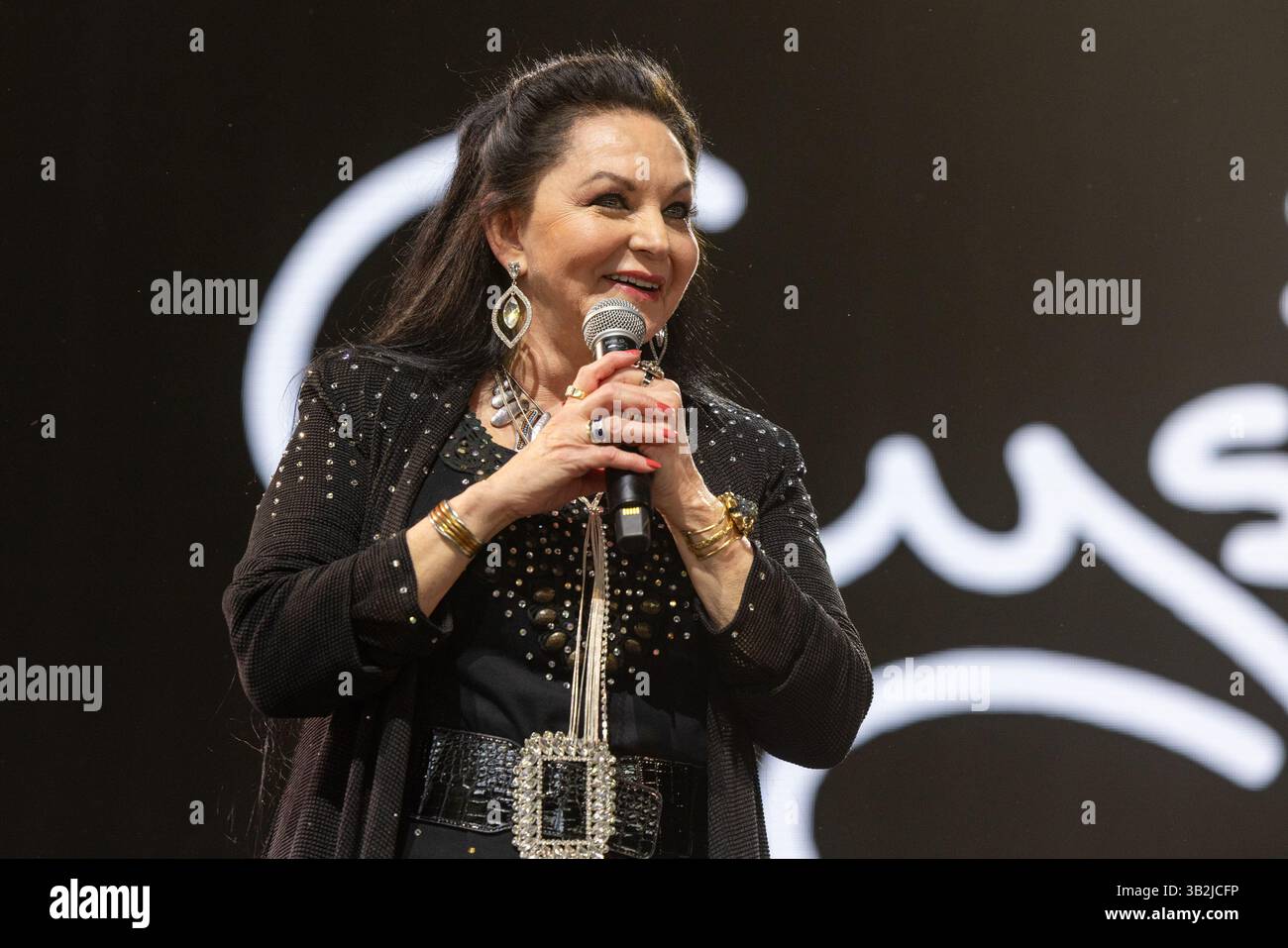
Ultra-long, high-shine hair inspired by country music legend Crystal Gayle emerged as a defining fashion statement in 2025. Marked by waist-to-floor lengths, glass-like sheen, and sleek center parts, this trend combines nostalgic 1970s glamour with cutting-edge hair extension technology, bond-repair science, and scalp-first hair preservation routines.
The Origins and Resurgence of the Crystal Gayle Hair Aesthetic
In the late 1970s and throughout the 1980s, singer Crystal Gayle captivated international audiences not only with her chart-topping country pop hits but also with her signature physical feature: dark, glossy hair that flowed all the way to her ankles. At a time when shorter feathered cuts and voluminous perms dominated mainstream style, Gayle’s floor-skimming, straight locks established a distinct standard for dramatic length and natural lustre.
The fashion landscape of 2025 witnessed a dramatic resurgence of this hyper-long aesthetic. Driven by advances in weight-balanced hair extensions, custom lace prosthetics, and bond-rebuilding cosmetics, hair stylists reinterpreted Gayle’s iconic look for contemporary aesthetics. Rather than viewing ultra-long hair as an unreachable genetic rarity, modern salon culture approaches the "Crystal Gayle" look as a achievable style built on precise installation techniques, scalp health, and meticulous length maintenance.
Several cultural and technological factors converged to propel ultra-long tresses back into fashion spotlight:
- High-Fashion Runway Influence: Luxury fashion houses showcased models featuring floor-sweeping hair extensions, using extra-long locks as architectural accents to complement minimalist garments.
- Advancements in Hair Extension Safety: The development of lighter, bio-compatible extension materials allowed stylists to add substantial length without causing the mechanical strain traditionally associated with heavy hair pieces.
- The "Liquid Hair" Movement: Parallel trends emphasizing high-gloss, ultra-hydrated hair finishes aligned perfectly with the reflective, silky texture long associated with Crystal Gayle's iconic style.
Core Elements Defining Modern Crystal Gayle Hair Trends
Achieving the authentic 2025 Crystal Gayle look involves more than simply growing out one's hair; it requires a structured balance of length, density, texture, and light reflectivity. Stylists break the look down into four core structural components.
- Ultra-Long Length (Waist-to-Floor Range)
- High-Gloss "Liquid" Finish (Smooth Cuticle Layer)
- Precise Center Part (Symmetrical Face Framing)
- Scalp & Cuticle Integrity (Strength & Elasticity)
1. XL and XXL Lengths
Standard long hair typically sits around the mid-back or waist. The Crystal Gayle trend pushes boundaries into XL (hip-length) and XXL (tailbone, thigh, or floor-skimming) categories. The key challenge at these lengths is maintaining consistent density from the root to the ends, avoiding the tapered, thin appearance common in natural long hair that suffers from mechanical wear.
2. Glass-Like "Liquid" Texture
A central requirement of this trend is an ultra-smooth cuticle layer. The hair must appear completely cohesive, moving like a single strand of silk rather than separated, frizzy fibers. Hair stylists utilize keratin smoothing treatments and glossing glazes to flatten the hair cuticle, maximizing its capacity to reflect light and generate a mirror-like shine.
3. Symmetrical Center Parting
Staying true to vintage 1970s aesthetics, the contemporary Crystal Gayle look relies heavily on a precise, clean center part. This framing balances the extreme length on either side of the head, creating a clean vertical line that elongates the neck and torso.
4. Density and Cuticle Health
Because length without volume can look stringy, the trend prioritizes structural body. Whether achieved through natural density or strategically placed extension rows, the hair must maintain uniform thickness from the crown down to the terminal ends.
Technical Methods: How to Achieve Crystal Gayle Length
Achieving floor-sweeping or hip-length hair in a salon setting requires tailored application methods suited to the client's existing hair density, lifestyle, and scalp sensitivity.
- Extension & Length Application Options
- Invisible Bead Wefts
- Nano-Ring & Keratin Bond
- Custom Wigs & Toppers
Invisible Bead Hand-Tied Wefts
Hand-tied wefts sewn onto invisible beads represent one of the most popular methods for achieving dramatic length with minimal tension. Stylists create a foundation using small silicone-lined beads attached to natural hair sections, then stitch lightweight fabric-bound wefts across the track. This distributes weight evenly across the scalp, reducing the risk of traction damage while allowing maximum movement.
Nano-Ring and Micro-Bond Extensions
For clients who desire seamless movement around the hairline or have fine natural hair, nano-ring and keratin micro-bond extensions offer discrete, single-strand application. Nano-rings use tiny, undetectable metal beads to secure individual extension strands without heat or adhesive. Keratin bonds use a thermal tool to melt a tiny protein tip around natural hair strands, creating a durable bond that resists slipping during washing.
Custom Wigs and Hair Systems
For editorial shoots, special occasions, or individuals who prefer not to commit to continuous wear, custom full-lace wigs and top pieces offer an immediate transformation. Medical-grade adhesives or non-slip silicone linings secure the unit, protecting the wearer's natural hair entirely while instantly providing ankle-length density.
Essential Hair Care and Preservation Protocols
Maintaining ultra-long hair—whether natural or enhanced—requires a deliberate care regimen aimed at reducing friction, retaining moisture, and preserving structural integrity. The hair near the bottom of an extra-long style can be several years old and demands delicate handling.
Advanced Bond Building and Protein Balance
Extra-long hair fibers experience thousands of brushing cycles, thermal exposure, and environmental stress. Modern care routines rely on chemical bond-building treatments containing active ingredients like bis-aminopropyl diglycol dimaleate or biomimetic peptides. These molecules reconnect broken disulfide bonds within the hair shaft, restoring elasticity and tensile strength to prevent breakage along the length.
Moisture Sealing and "Hair Slugging"
To prevent split ends from traveling up the hair shaft, moisture retention is paramount. The modern adaptation of traditional oiling, frequently termed "hair slugging," involves applying lightweight, non-comedogenic oils (such as argan, jojoba, or squalane) to the bottom third of the hair lengths before sealing them inside a silk sleeve overnight. This shields ends from friction against bedding and prevents moisture loss.
Scalp Health Management
Extra length adds physical weight, which exerts constant low-level tension on scalp follicles. According to guidance from the American Academy of Dermatology, continuous tension on hair roots can lead to traction alopecia if unmanaged. Maintain healthy scalp conditions with these key steps:
- Exfoliate Periodically: Use gentle salicylic acid or fruit-enzyme scalp scrubs monthly to clear product residue and dead skin around follicles.
- Rotate Styles: Switch between loose low ponytails, protective braids, and down styles to vary stress points on the scalp.
- Perform Scalp Massage: Use fingertip pressure or soft silicone massagers daily to stimulate local blood circulation without tangling hair roots.
Comparing Extension & Enhancement Methods
Selecting the correct enhancement strategy requires balancing physical comfort, maintenance demands, and hair health. The following comparison outlines the primary modern methods used to achieve Crystal Gayle-inspired lengths.
| Method | Typical Length Added | Longevity Before Maintenance | Scalp Tension Level | Best Suited For |
|---|---|---|---|---|
| Hand-Tied Wefts | 12 to 30 inches | 6 to 8 weeks | Low to Moderate | Medium to thick natural hair seeking maximum density and length. |
| Tape-In Extensions | 10 to 24 inches | 4 to 6 weeks | Moderate | Fine to medium hair needing quick installation and smooth lay-flat alignment. |
| Nano-Ring / Micro-Bead | 12 to 28 inches | 8 to 12 weeks | Low | Fine or delicate hair requiring 360-degree strand movement and discrete bonds. |
| Keratin Fusion Bonds | 12 to 30 inches | 12 to 16 weeks | Moderate | Dense natural hair seeking long-term wear without maintenance adjustments. |
| Full Lace Wigs | Full coverage (Unlimited) | Daily removal or 2 to 4 weeks | Very Low (when unglued) | Complete transformations, hair protection, or dramatic stylistic changes. |
Modern Styling Techniques for Ultra-Long Hair
While traditional 1970s long hair was often worn straight and natural, modern styling incorporates specialized tools and products to elevate the look for contemporary occasions.
- Crystal Gayle Styling Approaches
- Mirror Glass Blowout
- Soft Brushed 70s Waves
- Sculpted Half-Up
The Mirror Glass Blowout
This technique focuses on creating a completely flat, reflective surface:
- Apply a heat-activated polymer sealant to damp, towel-dried hair.
- Blow-dry in downward sections using a concentrated nozzle and a large ceramic round brush to smooth the cuticle layer.
- Pass a titanium flat iron set to a precise, hair-safe temperature (typically 300°F to 380°F depending on hair structure) quickly through narrow sections.
- Finish with a weightless dry-oil spray to catch ambient light without weighing down the ends.
Soft Brushed-Out 1970s Waves
For an authentic retro vibe that avoids a stiff finish, stylists use large-barrel curling irons (1.5 to 2 inches) to introduce loose, cascading movement:
- Wrap large sections of hair around the barrel, keeping the iron moving to avoid localized heat damage.
- Allow curls to cool completely in long palm-held coils or clips.
- Gently comb through the entire length using a wide-tooth boar-bristles paddle brush, creating seamless, flowing waves that cascade down the back.
The Sculpted Half-Up Crown
To showcase dramatic length while keeping hair away from the face, the sculpted half-up style pulls top sections back smoothly into a secure pony or mini braid at the crown, leaving the remainder of the hair to flow down past the hips. This reduces front weight while emphasizing length from behind.
Mistakes to Avoid When Wearing Ultra-Long Hair
Sustaining extra-long hair requires avoiding common physical and procedural mistakes that compromise strand integrity.
- Neglecting Thermal Protection: Applying direct heat tools to long hair without a siloxane- or polymer-based thermal barrier strips moisture, causing split ends that migrate upward.
- Rough Detangling Techniques: Ripping through long hair from the roots down causes severe mechanical breakage. Always detangle starting from the bottom 2–3 inches, working upward in gentle, incremental sections.
- Sleeping with Wet or Loose Hair: Wet hair is in its most elastic, vulnerable state. Sleeping on damp long hair creates intense friction and matting against bedding. Always dry hair thoroughly and secure it in a soft, low braid or silk bonnet before sleep.
- Over-Cleansing the Ends: Applying harsh clarifying shampoos directly to the mid-lengths and ends strips essential lipids. Wash the scalp directly, allowing the running lather to gently cleanse the lengths as it rinses down.
Frequently Asked Questions
Can people with fine hair safely wear floor-length extensions?
Yes, provided the installation method uses weight-balanced techniques like nano-rings or custom lightweight hand-tied wefts. Fine hair requires careful tension distribution and lighter weight per section to prevent follicle strain and breakage.
How often should ultra-long hair be trimmed to maintain density?
Micro-trimming or "dusting" every 8 to 12 weeks is ideal. Removing just a fraction of an inch eliminates frayed ends before they split further up the hair shaft, preserving overall end density over time.
What is the difference between Cher hair and Crystal Gayle hair?
While both styles emphasize sleek, long dark locks with center parts, "Cher hair" typically features bone-straight, pin-flat strands ending around the waist or hips. "Crystal Gayle hair" refers specifically to floor-skimming or ankle-length tresses with a slightly softer, cascading body and extreme, high-gloss shine.
Do ultra-long hair extensions cause neck strain or headaches?
If extensions are applied incorrectly or if too much hair weight is concentrated on a small scalp area, tension headaches can occur. Distributing weight evenly through professional installation methods prevents localized strain and keeps long hair comfortable for daily wear.
How do you dry waist- or floor-length hair efficiently without damage?
Pat excess water gently using a micro-fiber towel or cotton wrap rather than rubbing. Apply a leave-in conditioner and heat protectant, then use a high-airflow, ionic hairdryer on medium heat held at least 6 inches away from the hair shaft, moving continually from root to tip.
Practical Actions for Achieving the Look
If you are planning to adopt the ultra-long Crystal Gayle aesthetic, follow this structured approach to ensure optimal results and protect your scalp health:
- Schedule a Professional Consultation: Work with a licensed stylist certified in hand-tied or nano-ring extensions to evaluate your hair's density, scalp elasticity, and suitableness for extra length.
- Establish a Protective Night Routine: Invest in a 100% pure mulberry silk pillowcase and a satin hair sleeve or bonnet to prevent friction damage during sleep.
- Upgrade Your Care Arsenal: Incorporate a bond-rebuilding treatment, a sulfate-free hydrating shampoo, and a lightweight finishing oil into your weekly hair wash routine.
- Monitor Scalp Comfort: If wearing heavy extensions, inspect your scalp regularly for red patches, bumpiness, or tenderness, and schedule maintenance adjustments every 6 to 8 weeks.