The unspoken shift in higher education that solidified throughout 2025 represents a fundamental pivot from "degree-as-a-proxy" to "competency-as-a-currency." As of 2026, the industry has moved beyond traditional enrollment models to embrace a fragmented, skills-first ecosystem. This transformation is driven by the 2025 demographic cliff, the total integration of generative AI into core pedagogy, and a radical restructuring of the perceived return on investment (ROI) for four-year residential programs.
The Catalyst of 2025: Why the Shift Went "Unspoken"
For years, the "enrollment cliff"—a projected sharp decline in college-aged individuals—was discussed as a future threat. In 2025, that threat became a structural reality. However, the shift was "unspoken" because many institutions did not publicly admit to the desperation of their pivoting strategies. Behind closed doors, university boards moved away from the "holistic liberal arts" marketing and toward aggressive vocational alignment.
By the start of 2026, the landscape had fractured into two distinct tiers: elite "brand-name" institutions that maintain the traditional model as a luxury good, and "functionalist" institutions that have essentially become high-end trade schools for the digital economy. This shift was not televised or heralded by policy changes; it happened through the quiet shuttering of humanities departments, the rebranding of "career centers" as the central hub of the university, and the adoption of micro-credentials as a survival mechanism.
The Demographic Cliff and the Death of the Middle-Tier University
The demographic downturn, stemming from the birth rate decline following the 2008 financial crisis, hit its stride in 2025. This has resulted in a hyper-competitive environment where the "middle-tier" private and public regional colleges are facing an existential crisis.
The Survival of the Fittest
Institutions that survived the 2025 purge did so by acknowledging an unspoken truth: they could no longer be all things to all people. In 2026, we see the results of this specialization. Regional schools have largely abandoned high-cost research aspirations to focus on local workforce needs. This has led to a "hyper-localization" of higher education, where a university's value is tied directly to the specific industry clusters in its immediate geographic area—such as biotech in Boston or advanced manufacturing in the Midwest.
Consolidation and "Ghost Campuses"
Another aspect of the unspoken shift is the rise of institutional consolidation. In 2025, a record number of mergers occurred, often framed as "strategic partnerships" to avoid the stigma of failure. Today, in 2026, many students are attending "ghost campuses"—satellite locations of larger state systems that have absorbed smaller, struggling colleges. The physical infrastructure remains, but the administrative and academic soul has been centralized to save costs.
The Skills-First Revolution: Degrees vs. Competencies
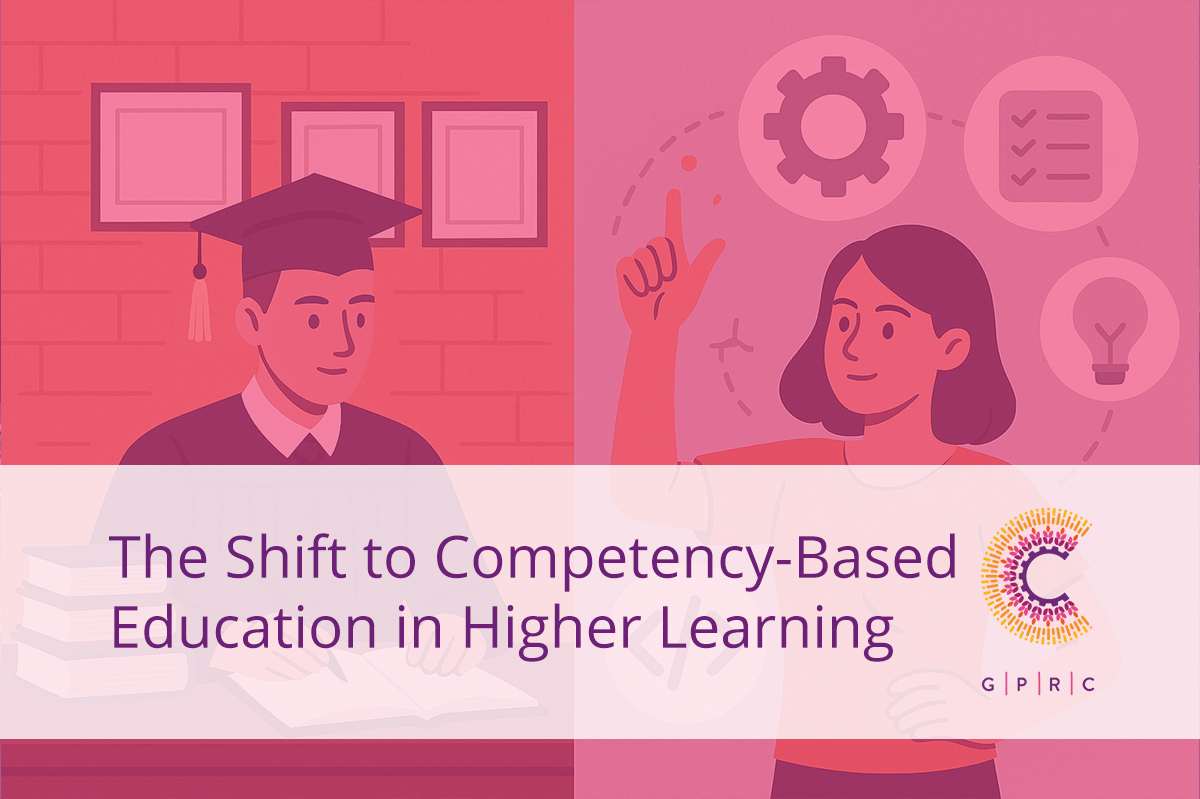
Perhaps the most significant unspoken shift is the decoupling of "learning" from "the degree." Throughout 2025, major employers—including a significant portion of the Fortune 500—quietly removed degree requirements from their job descriptions, opting instead for verified skill assessments.
The Rise of Verified Skill Sets
In 2026, the transcript is no longer the most important document a student owns. It has been replaced by the "Comprehensive Learner Record" (CLR). This digital ledger tracks specific competencies, such as "Advanced Python for Data Analysis" or "Strategic Crisis Communication," rather than generic course titles like "English 101."
This shift was unspoken because it undermined the traditional university business model, which relied on "bundling" various courses into a high-priced four-year package. As students began demanding "unbundled" education in 2025, universities had to adapt or lose their market share to private bootcamps and corporate academies.
Industry-Academic Convergence
We are now seeing the full maturation of industry-designed curricula. In 2025, companies like Google, Amazon, and Salesforce didn't just offer external certifications; they embedded their training programs directly into university degree paths. A student graduating in 2026 often holds a degree from a university and a professional certification from a tech giant simultaneously, with the latter often carrying more weight in the initial hiring process.
AI-Native Pedagogy: The Silent Overhaul of the Classroom
In 2024 and early 2025, higher education was obsessed with "detecting" AI and preventing "cheating." By late 2025, that battle was over. The unspoken shift was the total surrender to, and integration of, Generative AI as a baseline requirement for all academic work.
From "Using AI" to "AI-Native"
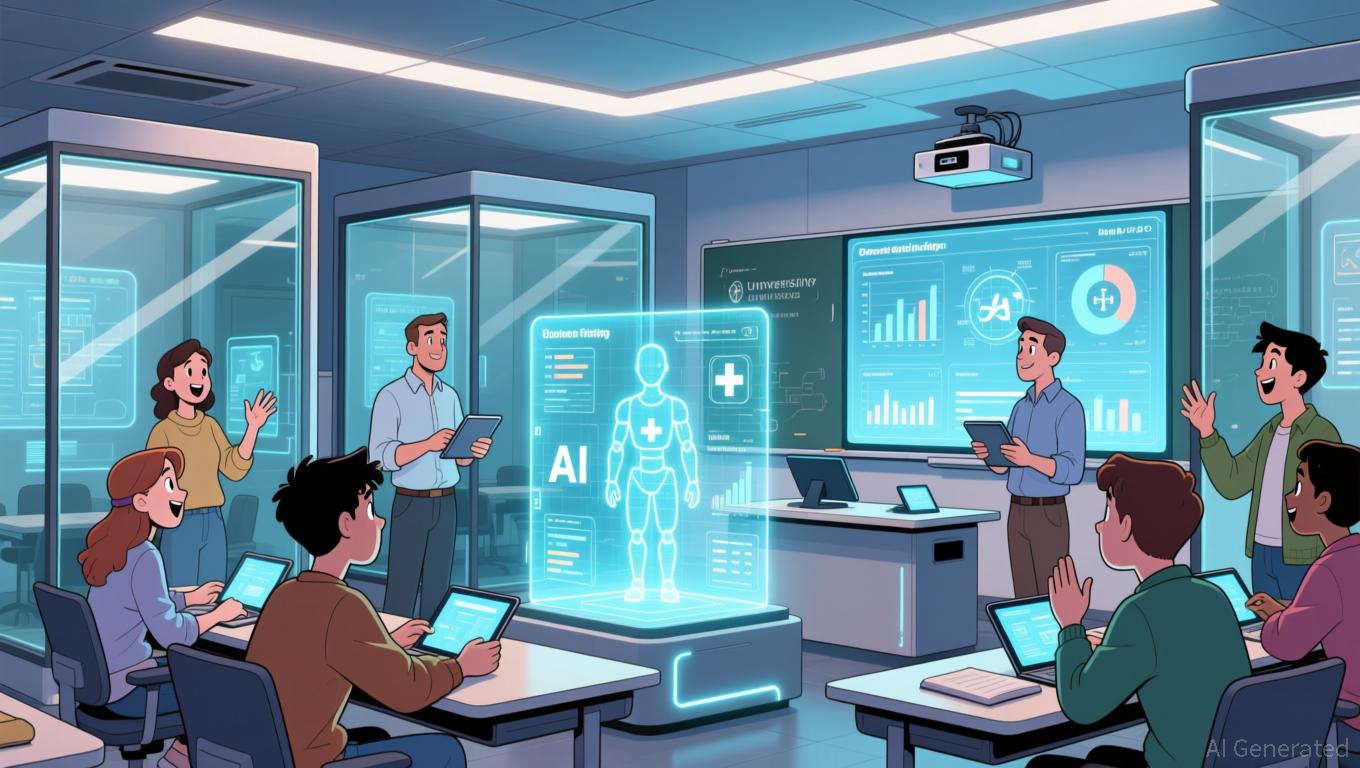
In 2026, we no longer talk about "integrating AI" into the classroom—it is the classroom. Pedagogy has shifted from testing a student’s ability to generate content to testing their ability to curate, verify, and prompt AI systems. The "unspoken" part of this transition was the obsolescence of the traditional essay and the standard multiple-choice exam.
Current assessment models in 2026 focus on "Process-Oriented Evaluation." Professors now grade the "history of the prompt" and the critical iterations a student went through to reach a conclusion, rather than the final output itself. This has required a massive, often painful retraining of faculty who spent decades teaching in a pre-AI paradigm.
The Personal AI Tutor
Every student entering a top-tier or functionalist university in 2026 is issued (or brings) a fine-tuned LLM (Large Language Model) trained on the specific curriculum of their institution. This "Personal AI Tutor" provides 24/7 support, effectively replacing the traditional TA (Teaching Assistant) model. While this has increased accessibility for many, it has also created a new "digital divide" based on who has access to the most sophisticated, least-biased models.
The Economic Realignment of Higher Education
The unspoken shift of 2025 was also a financial one. The "tuition-discounting" model, which had been stretched to its breaking point, finally collapsed for many institutions.
The New Pricing Tiers
As we navigate 2026, higher education pricing has stratified into three distinct tiers:
| Model Tier | Primary Audience | Core Value Proposition | Average Duration |
|---|---|---|---|
| The Luxury Residential | High-net-worth & Merit Scholars | Networking, Brand Prestige, "The Experience" | 4 Years |
| The Hybrid Professional | Career Switchers & Upskillers | Industry Certs, Flexibility, Direct ROI | 1–2 Years (Modular) |
| The Public Technical | Local Workforce | Guaranteed Job Placement, Low Cost | 6 Months – 2 Years |
| The Subscription Model | Lifelong Learners | Continuous Access to Updates/Skills | Ongoing |
Subscription-Based Learning
A radical "unspoken" change that took root in 2025 was the "Education-as-a-Service" (EaaS) model. Instead of paying a massive lump sum for a four-year degree, many 2026 learners pay a monthly or annual subscription to their university. This grants them continuous access to updated course materials, career coaching, and new micro-credentials as the market evolves. This shift acknowledges that in a 2026 economy, a degree is a "depreciating asset" that requires constant maintenance.
Practical Implications: How to Navigate the 2026 Landscape
Whether you are a prospective student, a parent, or an educator, understanding the unspoken shift is critical for making informed decisions.
For Students and Parents
The primary question is no longer "Where should I go to college?" but "What is the specific ROI of this credential?" In 2026, you must look past the brochures and demand data on:
- Competency Mapping: Does the school provide a Comprehensive Learner Record that employers actually recognize?
- AI Integration: Is the institution teaching with AI, or is it still stuck in a "prohibition" mindset?
- Industry Direct-Link: Does the curriculum include embedded certifications from major employers?
For Academic Leaders
The shift requires a move away from "Enrollment Management" and toward "Lifecycle Relationship Management." Success in 2026 is measured by the length of the relationship with the learner (the subscription model) rather than the number of "heads in beds" for a four-year window.
The Future of the "Unspoken" Trend
As we look toward the remainder of 2026 and into 2027, the shift will become more "spoken" and formalized. We expect to see the first major federal regulations regarding AI-driven credentials and the potential for a "National Skills Registry" that could eventually compete with the traditional accreditation system. The institutions that recognized the "unspoken" signals in 2025 are the ones thriving today; those that ignored them are currently navigating bankruptcy or forced mergers.
Frequently Asked Questions
What exactly was the "2025 demographic cliff"?
The demographic cliff refers to the significant drop in the number of 18-year-olds in the United States, beginning in 2025. This was caused by a sharp decline in birth rates during the 2008 financial crisis. For higher education, this meant a smaller "customer base," leading to intense competition and the closure of institutions that could not differentiate themselves.
Is a traditional four-year degree still worth it in 2026?
The answer is "yes," but with caveats. In 2026, the value of a degree depends entirely on the institution's brand and its ability to provide networking opportunities that AI and online courses cannot. For high-prestige institutions, the "social capital" remains highly valuable. For others, the value has shifted to the specific skills and industry certifications bundled within the degree.
How has AI changed university admissions in 2026?
Admissions have moved away from the "personal essay," as AI can now generate perfect responses. Instead, many universities in 2026 use video interviews, proctored in-person assessments, and "portfolio reviews" of a student's actual work or projects. The focus is on "human-centric" traits like leadership, resilience, and complex problem-solving.
What is a "Comprehensive Learner Record" (CLR)?
A CLR is a digital, verifiable document that goes beyond the traditional transcript. It lists specific skills, competencies, and achievements (such as "Proficient in Agile Project Management") that a student has mastered. These records are often blockchain-verified and can be easily scanned by applicant tracking systems used by employers.
Are liberal arts degrees dead because of the 2025 shift?
No, but they have been "re-tooled." In 2026, successful liberal arts programs emphasize "Human-AI Collaboration." The focus is on philosophy, ethics, and critical thinking—skills that are essential for managing and auditing AI systems. However, many "pure" liberal arts programs that failed to integrate technology were forced to close or merge.
Recommended Next Actions
- Audit Your Skills: If you are a current professional or student, compare your current "transcript" against the 2026 skills-first requirements. Identify gaps in AI literacy and data-driven decision-making.
- Research Modular Education: Explore "unbundled" education options. Before committing to a full degree, see if a series of micro-credentials from a reputable university-industry partnership can achieve your career goals.
- Verify Institutional AI Policy: If applying to schools, ask specifically how they integrate Generative AI into their core curriculum. Avoid institutions that are still in "detection and punishment" mode.
- Focus on Networking: In an AI-dominated world, "who you know" has become even more important. Prioritize institutions or programs that offer strong, physical-world networking and mentorship opportunities.