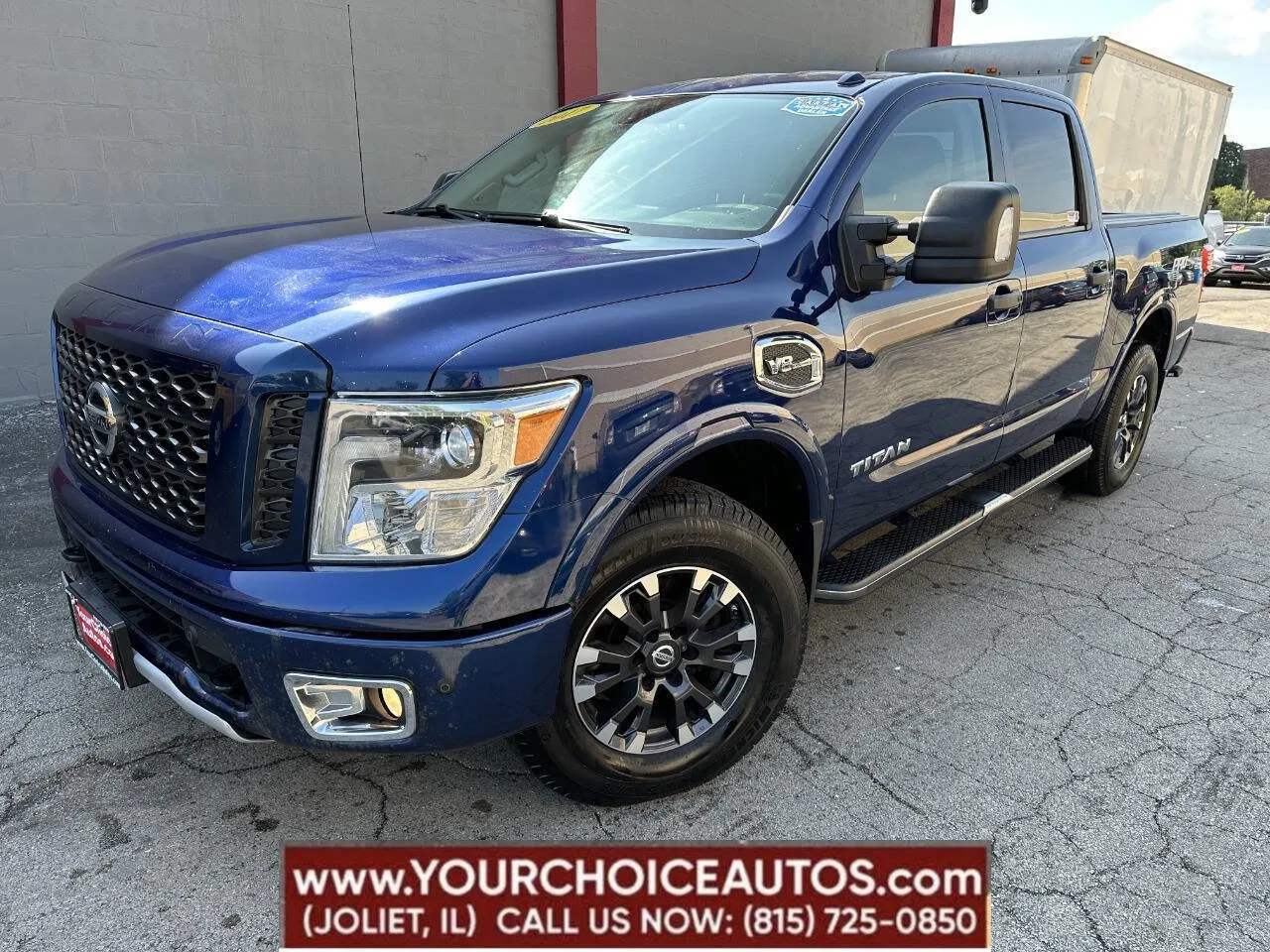
The 2017 Nissan Titan XD PRO-4X Diesel offers a middle ground between half-ton light-duty trucks and three-quarter-ton heavy-duty rigs. Powered by a 5.0-liter Cummins V8 turbo-diesel engine paired with an Aisin six-speed automatic transmission, it delivers 555 lb-ft of torque and dedicated off-road hardware. However, prospective buyers must evaluate known emissions vulnerabilities, fuel system requirements, and long-term parts availability.
Position in the Truck Market: The Heavy-Duty/Light-Duty Hybrid
When Nissan introduced the second-generation Titan XD for the 2016 model year and carried it into 2017, the automaker targeted a specific niche: truck owners who needed more towing capacity, frame rigidity, and payload than standard 1500-series half-ton trucks provided, but who did not want the harsh ride quality, high step-in height, and elevated price tags of traditional 2500-series heavy-duty pickups.
Nissan built the Titan XD on a commercial-grade, fully boxed ladder frame derived from its NV commercial vehicle line, giving it a longer wheelbase, heavier axles, and larger brakes than the standard half-ton Titan. The PRO-4X trim stands as the off-road-focused model in the lineup, featuring dedicated suspension components, underbody protection, and electronic traction aids.
PRO-4X Trim Specifics
The PRO-4X package equips the Titan XD with targeted hardware designed for rough terrain and utility:
- Suspension: Monotube Bilstein performance shocks tuned for control on washboard roads and trails while retaining towing stability.
- Traction Control: Electronic locking rear differential activated via a dash switch, replacing the standard open differential.
- Underbody Protection: Heavy-duty steel skid plates covering the oil pan, transfer case, and radiator.
- Wheels and Tires: 18-inch dark-finished aluminum-alloy wheels wrapped in all-terrain tires.
- Drive System: Switch-operated shift-on-the-fly four-wheel-drive (4WD) system with 2WD, 4H, and 4LO settings, supplemented by Hill Descent Control and Hill Start Assist.
- Interior Features: Stain-resistant water-repellent cloth seats (with optional leather trim), PRO-4X embroidery, all-weather floor mats, and an integrated trailer brake controller as standard equipment.
Powertrain Specifications and Architecture
The defining characteristic of the 2017 Titan XD Diesel is its engine. Built in Columbus, Indiana, the 5.0-Liter Cummins V8 Turbo Diesel (ISV5.0) was designed specifically for light commercial and medium-duty pickup applications.
- Engine Architecture: 90-degree V8, Cast-Iron Block, Aluminum Cylinder Heads
- Displacement: 5.0 Liters (305 cubic inches)
- Aspiration: Sequential Two-Stage Turbocharger (Holset / Cummins Turbo Technologies)
- Fuel Injection: Bosch High-Pressure Common-Rail System (CP4.2 Injection Pump)
- Horsepower: 310 hp @ 3,200 rpm
- Torque: 555 lb-ft @ 1,600 rpm
- Transmission: Aisin A466ND 6-Speed Automatic
- Axle Ratio: 3.916:1
Sequential Two-Stage Turbocharger Operation
The 5.0L Cummins engine utilizes a sequential two-stage turbocharger assembly manufactured by Holset. It incorporates a smaller primary high-pressure turbocharger for quick boost response at low engine speeds and a larger secondary low-pressure turbocharger to deliver air volume at higher engine speeds. A rotary valve controls exhaust gas flow between the two turbines. This setup virtually eliminates turbo lag and supplies maximum torque early in the rev range (555 lb-ft at just 1,600 rpm).
Aisin 6-Speed Heavy-Duty Automatic
Nissan opted not to use its internal automatic transmission for the Cummins diesel, pairing it instead with a heavy-duty Aisin A466ND six-speed automatic. Known for its durability in commercial vehicle applications, the Aisin transmission features a neutral control system to reduce engine load at stops and manual shift control for engine braking on steep downhill grades.
2017 Nissan Titan XD PRO-4X Diesel Specifications
| Metric / Feature | Specification |
|---|---|
| Engine Type | 5.0L Cummins V8 Turbo-Diesel (ISV5.0) |
| Horsepower | 310 hp @ 3,200 rpm |
| Torque | 555 lb-ft @ 1,600 rpm |
| Transmission | Aisin 6-Speed Heavy-Duty Automatic |
| Drivetrain | 4WD with Electronic Transfer Case & Locking Rear Differential |
| Rear Axle Ratio | 3.916:1 |
| Maximum Towing Capacity (Gooseneck/Receiver) | ~11,700 – 12,000 lbs (varies by equipment/hitch type) |
| Maximum Payload Capacity | ~1,730 – 1,870 lbs |
| Gross Vehicle Weight Rating (GVWR) | 8,990 lbs |
| Fuel Tank Capacity | 26.0 gallons (98.4 liters) |
| Front Suspension | Double-wishbone with Bilstein shocks & stabilizer bar |
| Rear Suspension | Multi-leaf rigid axle with Bilstein shocks |
| Brake Rotor Size (Front / Rear) | 14.17 inches / 14.49 inches (Ventilated Discs) |
Known Mechanical Issues and Inspection Points
While the 2017 Titan XD PRO-4X Diesel offers robust capabilities, secondary market buyers must navigate several documented engineering and reliability concerns. Nissan discontinued the Cummins 5.0L diesel option after the 2019 model year, making thorough pre-purchase scrutiny essential.
1. Bosch CP4.2 High-Pressure Fuel Pump
Like several contemporary diesel powertrains from other manufacturers, the 5.0L Cummins uses the Bosch CP4.2 high-pressure fuel pump. This pump relies entirely on ultra-low-sulfur diesel (ULSD) fuel for internal lubrication.
- The Vulnerability: If fuel is contaminated with water or debris, or if fuel starves due to neglected fuel filters, the internal roller lifters can rotate 90 degrees out of alignment with the camshaft lobes. This causes metal-on-metal grinding, sending fine metallic debris throughout the entire fuel system (injectors, fuel rails, lines, and tank).
- Repair Cost: Complete fuel system replacement following a CP4 failure often ranges from $8,000 to $11,000.
- Buyer Mitigation: Inspect fuel filter change history. Installing a aftermarket fuel lift pump with enhanced air/water separation or a CP4 disaster prevention kit (which reroutes contaminated return fuel back to the tank instead of the engine) is a common preventive upgrade.
2. Turbocharger Actuator & Rotary Valve Sticking
The Holset sequential turbocharger uses a complex rotary control valve to direct exhaust flow. Over time, soot buildup from the Exhaust Gas Recirculation (EGR) system can cause the rotary valve or its electronic actuator to stick.
- Symptoms: Loss of power under acceleration, erratic boost pressure, check engine lights (DTC codes P00AF, P0299), or the vehicle entering limp mode.
- Buyer Action: Test drive the vehicle under hard acceleration from a complete stop up to highway speeds. Ensure seamless power delivery without dead spots or stuttering.
3. Exhaust Aftertreatment & Emissions Systems
The 2017 Titan XD Diesel utilizes a Selective Catalytic Reduction (SCR) system, Diesel Particulate Filter (DPF), Exhaust Gas Recirculation (EGR) valve, and Diesel Exhaust Fluid (DEF) injection to meet EPA emissions standards.
- EGR Cooler Cracking: Thermal stress can cause internal cracking within the EGR cooler, leading to slow coolant loss without visible external leaks.
- DEF Tank Heater & Sensor Failures: The DEF tank assembly houses level and temperature sensors along with a heating element. Sensor failures trigger engine restart countdown warnings on the instrument cluster.
- DPF Regeneration Clogging: Short trips that prevent full exhaust heating cause frequent, incomplete DPF regenerations, leading to soot saturation and reduced fuel economy.
- Buyer Action: Use an OBD-II diagnostic scanner during inspection to check for pending diagnostic trouble codes (DTCs), permanent codes, and DPF soot soot-load percentages.
4. Crankshaft Main Bearing Concerns
Early production runs of the 5.0L Cummins engine experienced isolated reports of crankshaft failures or main bearing spinning. Nissan issued Technical Service Bulletins (TSBs) addressing engine block machining tolerances and main cap bolt torque procedures.
- Buyer Action: Request full dealer service records to confirm whether any TSB repairs or engine replacements were completed under warranty. Listen closely for deep metallic knocking sounds from the lower engine block during a warm engine idle.
5. Tailgate & Structural Recalls
Nissan issued recalls covering tailgate latch hardware on certain 2017 Titans where the tailgate could unexpectedly unlatch while driving. Ensure all open safety recalls have been cleared through a Nissan dealership using the Vehicle Identification Number (VIN).
Operating Costs, Maintenance Schedule, and Parts Availability
Owning a used 2017 Nissan Titan XD PRO-4X Diesel requires strict adherence to maintenance routines and an understanding of ownership costs compared to gasoline trucks.
Fuel Economy Realities
Despite being a diesel, the heavy 8,990 lb GVWR chassis and 3.916 rear axle ratio limit fuel efficiency.
- City Driving: 13 – 15 MPG
- Highway Driving: 17 – 19 MPG
- Towing (7,000+ lbs): 10 – 12 MPG
Unlike light-duty trucks, the EPA does not publish official fuel economy estimates for vehicles with GVWRs above 8,500 lbs, but real-world owner data consistently falls into these ranges.
Essential Maintenance Schedule
Maintaining the 5.0L Cummins requires disciplined oil and filter changes:
- Engine Oil & Filter: Change every 10,000 miles (or 6 months) under normal use, or 5,000 miles under severe towing conditions. The engine requires 10.0 quarts of 5W-40 or 15W-40 engine oil meeting API CK-4 / CJ-4 specifications.
- Dual Fuel Filters: The Titan XD has two fuel filters: a primary filter under the chassis near the frame rail and a secondary filter under the hood. Both filters must be changed every 10,000 miles. Never skip fuel filter service, as clean fuel is the primary defense against CP4 pump failure.
- Diesel Exhaust Fluid (DEF): The DEF tank holds approximately 4.5 gallons, which lasts between 2,500 and 4,000 miles depending on towing frequency.
- Aisin Transmission Fluid: Flush and replace fluid every 45,000 to 60,000 miles using genuine Nissan Aisin-compatible automatic transmission fluid.
- Transfer Case & Differential Oils: Change synthetic gear oil in front and rear differentials every 30,000 to 45,000 miles, particularly if the truck is used for off-road trail driving or water crossings.
Long-Term Parts Availability Considerations
Because Nissan dropped the Cummins 5.0L engine option in 2019 and retired the Titan nameplate entirely by 2024, buyers should anticipate potential challenges with engine-specific original equipment manufacturer (OEM) parts. While routine maintenance items (filters, brake pads, fluids, shocks) remain widely available through aftermarket suppliers, engine-specific sensors, turbocharger components, and specialized electrical harnesses may require sourcing through specialized diesel vendors or Cummins commercial distributor networks.
Towing and Payload Realities: Half-Ton vs. 2017 Titan XD vs. 3/4-Ton
Buyers considering the 2017 Titan XD PRO-4X Diesel often compare it against standard half-ton trucks (such as the Ford F-150 or Ram 1500) and full three-quarter-ton trucks (such as the Ford F-250 Powerstroke or Ram 2500 Cummins).
| Feature | 1/2-Ton Truck (e.g., F-150) | 2017 Titan XD PRO-4X Diesel | 3/4-Ton Truck (e.g., Ram 2500) |
|---|---|---|---|
| Frame Construction | Light/Standard | Commercial Heavy | Commercial Heavy |
| Axle / Brake Size | Standard | Heavy-Duty | Extra Heavy-Duty |
| Max Towing | 9,000-13,000 lbs | 11,700-12,000 lbs | 15,000-20,000 lbs |
| Max Payload | 1,500-2,100 lbs | 1,700-1,870 lbs | 2,500-4,000 lbs |
| Ride Comfort | Excellent (Car) | Moderate / Firm | Stiff / Rigorous |
| Daily Parking Ease | High | Moderate | Low |
Key Takeaway for Towing Performance
Where a standard half-ton truck towing 9,000 lbs will often experience suspension squat, wind drift, and high engine RPMs, the heavy-duty frame, larger brakes, and 555 lb-ft of low-end torque on the Titan XD provide significantly greater stability under load. However, if your regular towing needs exceed 10,000 lbs, a dedicated 2500-series heavy-duty truck provides superior payload margins and raw towing capacity.
Pre-Purchase Inspection (PPI) Walkthrough
Before finalizing the purchase of a 2017 Nissan Titan PRO-4X Diesel, perform a systematic pre-purchase inspection using this step-by-step procedure:
- Cold Start Test
- Verify engine is cold to the touch before starting.
- Check instrument cluster for glow plug operation.
- Listen for extended cranking, white smoke, or rough idle.
- Check for instant oil pressure build-up.
- Diagnostic Scan (OBD-II)
- Check for active diagnostic trouble codes (DTCs).
- Verify all emissions readiness monitors are set.
- Check DPF soot load level and differential pressure sensors.
- Inspect historic codes for past turbocharger or EGR faults.
- Fluid & Leak Inspection
- Remove engine oil cap; check for moisture or fuel dilution odor.
- Inspect coolant reservoir for oil sheen (EGR cooler failure indicator).
- Check fuel filters for metal shavings (sign of CP4 pump distress).
- Inspect steering rack, transfer case, and rear axle for active leaks.
- Chassis & Suspension Verification
- Inspect frame rails for structural rust or damage from towing/plowing.
- Check Bilstein shocks for oil leaks or blown seals.
- Confirm skid plates are secure and untorn.
- Test electronic locking rear differential engagement in 4LO.
- Road Test & Load Acceleration
- Accelerate hard from 0 to 65 mph; verify smooth turbo transitions.
- Test Aisin transmission shift points (upshifts and downshifts).
- Engage Hill Descent Control and 4WD High / Low modes.
- Apply firm braking to check rotor warp or pulling under load.
Frequently Asked Questions
Is the 5.0L Cummins engine in the 2017 Titan XD identical to the 6.7L Cummins in the Ram 2500?
No. The 5.0L Cummins ISV5.0 is a 90-degree V8 engine featuring a cast-iron block and aluminum cylinder heads, designed specifically for light-to-medium duty applications. The 6.7L Cummins used in Ram 2500/3500 trucks is an inline-six cylinder engine with a cast-iron block and iron head. They share no major mechanical components, dimensions, or internal architectures.
Can I run biodiesel in the 2017 Nissan Titan XD Diesel?
Nissan approves the use of B5 biodiesel blends (5% biodiesel, 95% petroleum diesel) that conform to ASTM D975 standards. Using higher biodiesel blends such as B20 is generally not recommended by the manufacturer because higher concentrations can degrade fuel system seals and cause fuel dilution in the engine oil during DPF regeneration cycles.
Does the 2017 Titan XD PRO-4X Diesel require DEF (Diesel Exhaust Fluid)?
Yes. The 2017 model year relies on Selective Catalytic Reduction (SCR) technology, which requires DEF to reduce nitrogen oxide (NOx) emissions. The DEF tank filler neck is located right next to the diesel fuel cap behind the fuel door for easy refilling at gas stations or commercial pump lanes.
What is the practical lifespan of the 5.0L Cummins engine?
With strict adherence to fluid and filter maintenance intervals, the 5.0L Cummins engine block and rotating assembly can routinely exceed 200,000 to 250,000 miles. However, auxiliary components—such as DEF sensors, DPF filters, turbocharger actuators, and fuel pumps—often require maintenance or replacement between 100,000 and 150,000 miles.
Is the PRO-4X trim available in 2WD or only 4WD?
The PRO-4X trim level on the 2017 Nissan Titan XD is strictly a four-wheel-drive (4WD) model. If you encounter a two-wheel-drive Titan XD, it is either an S, SV, SL, or Platinum Reserve trim level.
Final Buyer Recommendation
The 2017 Nissan Titan PRO-4X Diesel represents a compelling value on the used market for buyers who want an off-road-capable, heavy-duty chassis with towing stability that eclipses standard half-ton trucks. Its Bilstein suspension, locking rear differential, and 555 lb-ft of torque make it ideal for hauling enclosed car haulers, travel trailers, or work equipment over varied terrain.
However, it is not a low-maintenance truck. Success with a used 2017 model requires a buyer who understands diesel operating needs: strict 10,000-mile dual fuel filter intervals, regular highway driving to clear the DPF, and immediate attention to check-engine lights. Prioritize well-documented vehicles with verified service histories, clear emissions monitors, and no signs of fuel system contamination.