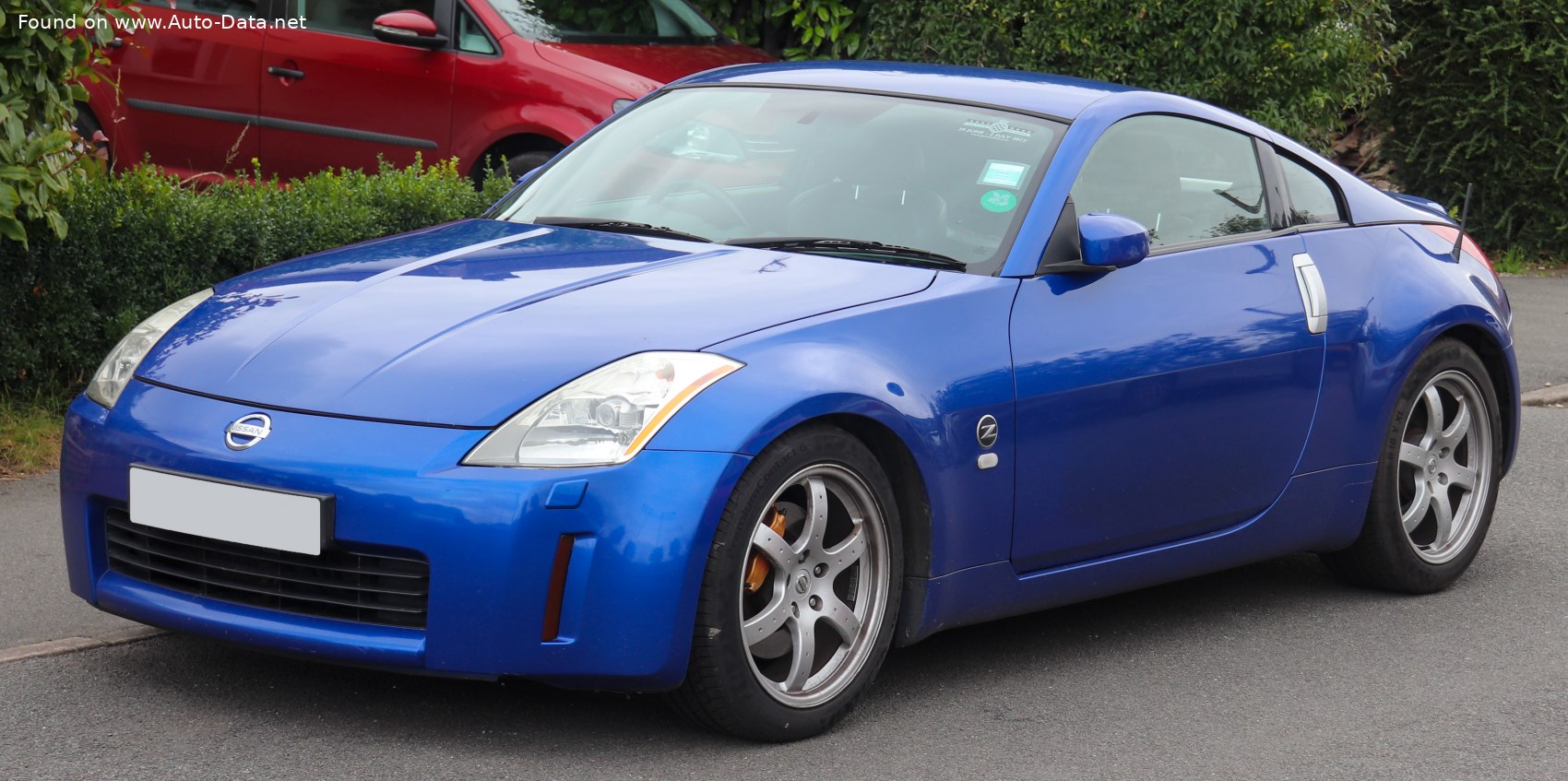
The 2004 Nissan 350Z features a front-engine, rear-wheel-drive layout powered by a 3.5-liter VQ35DE V6 engine generating 287 horsepower and 274 lb-ft of torque. It offers a 0-60 mph time of approximately 5.3 to 5.6 seconds, a top speed of 155 mph, and a curb weight ranging from 3,188 to 3,366 pounds depending on the trim level and transmission configuration.
When Nissan reintroduced the "Z" car moniker to the North American market for the 2003 model year, it revitalized the brand's sports car heritage. The 2004 Nissan 350Z built upon this momentum, introducing the eagerly anticipated Roadster (convertible) variant alongside the established coupe. Enthusiasts and collectors alike look to the 2004 model year for its balanced chassis, naturally aspirated V6 powerplant, and pure analog driving dynamics.
Understanding the precise engineering, dimensions, powertrain capabilities, and chassis metrics of the 2004 Nissan 350Z requires a deep dive into factory specifications. Whether you are evaluating a potential purchase, restoring a classic modern sports car, or tracking factory performance data, a comprehensive examination of the technical architecture is essential.
Powertrain and Engine Architecture
At the heart of the 2004 Nissan 350Z lies the acclaimed VQ35DE engine. This 3.5-liter (3,498 cc) 60-degree V6 features an aluminum block and aluminum cylinder heads, equipped with a DOHC (Dual Overhead Cam) layout utilizing four valves per cylinder. Nissan incorporated Continuous Variable Valve Timing Control (CVTCS) to optimize the intake valve timing, ensuring a broad and flat torque curve across the rev range.
The engine breathes through an electronically controlled throttle body and features a multi-point port fuel injection system. With a compression ratio of 10.3:1, the VQ35DE requires premium unleaded gasoline (91 octane or higher) to achieve its factory-rated output.
- Horsepower: 287 hp @ 6,200 rpm
- Torque: 274 lb-ft (371 Nm) @ 4,800 rpm
- Redline: 6,600 rpm (Manual transmission) / 6,200 rpm (Automatic transmission)
- Bore x Stroke: 95.5 mm × 81.4 mm
The engine bay layout features a front-midship engine placement, pushing the center of gravity closer to the center of the car for improved handling agility. A structural strut tower brace ties the front suspension towers together directly from the factory, enhancing chassis rigidity under heavy cornering loads.
Transmission and Drivetrain Options
The 2004 Nissan 350Z transferred power to the rear wheels via two transmission choices, tailored to different driving preferences.
6-Speed Manual Transmission
The close-ratio 6-speed manual transmission (manufactured by JK Technologies/Aisin) is the preferred choice for driving enthusiasts. It features direct mechanical linkage, a dual-mass flywheel, and optimized gear ratios that keep the VQ35DE engine in its optimal power band during aggressive driving.
5-Speed Automatic Transmission
An electronically controlled 5-speed automatic transmission with manual shift mode (Downshift Rev Matching in select trims) was available for buyers seeking daily-driving convenience without completely sacrificing manual control. While slower-shifting than modern dual-clutch units, this transmission handles stock torque levels reliably.
Both transmission options route power through an open differential on base models, while higher trim levels—such as the Enthusiast, Performance, Touring, and Track models—benefit from a viscous limited-slip differential (VLSD) to improve rear-wheel traction during acceleration out of corners.
Suspension, Steering, and Braking Systems
The chassis architecture of the 2004 Nissan 350Z relies on a FM (Front Midship) platform designed specifically for rear-wheel-drive sports car dynamics.
Suspension Layout
- Front: Independent multi-link suspension with coil springs, gas-pressurized shock absorbers, and a stabilizer bar.
- Rear: Independent multi-link suspension with separate coil springs and shock absorbers, plus a stabilizer bar.
This geometry provides exceptional camber stability and predictable handling characteristics, though factory alignment sensitivity can lead to inner tire wear if lowered or driven hard.
Steering
The steering system utilizes a vehicle-speed-sensitive rack-and-pinion setup with hydraulic power assistance. It offers direct feedback with approximately 2.6 turns lock-to-lock, ensuring sharp turn-in response and high-speed stability.
Braking Performance
Stopping power varies by trim level. Base and Enthusiast models feature standard ventilated disc brakes with single-piston sliding calipers. Higher performance trims—specifically the Track and Grand Touring models—come equipped with Brembo braking packages:
- Front Brakes: 12.8-inch ventilated discs with 4-piston opposing aluminum calipers.
- Rear Brakes: 12.7-inch ventilated discs with 2-piston opposing aluminum calipers.
- Safety Aids: Anti-lock Braking System (ABS) with Electronic Brake-force Distribution (EBD) and Brake Assist (BA) were standard across all trims. Vehicle Dynamic Control (VDC) and Traction Control System (TCS) were available on select models.
Comprehensive Technical Specifications Table
The following table summarizes the key factory technical specifications for the 2004 Nissan 350Z Coupe and Roadster models.
| Specification Category | Metric / Value (Coupe) | Metric / Value (Roadster) |
|---|---|---|
| Engine Type | 3.5L V6 (VQ35DE) DOHC | 3.5L V6 (VQ35DE) DOHC |
| Horsepower | 287 hp @ 6,200 rpm | 287 hp @ 6,200 rpm |
| Torque | 274 lb-ft @ 4,800 rpm | 274 lb-ft @ 4,800 rpm |
| Transmission | 6-speed manual / 5-speed auto | 6-speed manual / 5-speed auto |
| Drivetrain | Front-engine, Rear-wheel drive | Front-engine, Rear-wheel drive |
| Wheelbase | 104.3 inches (2,650 mm) | 104.3 inches (2,650 mm) |
| Overall Length | 168.9 inches (4,290 mm) | 168.9 inches (4,290 mm) |
| Overall Width | 71.5 inches (1,816 mm) | 71.5 inches (1,816 mm) |
| Overall Height | 52.1 inches (1,323 mm) | 53.0 inches (1,346 mm) |
| Curb Weight | 3,188 – 3,247 lbs | 3,465 – 3,595 lbs |
| Fuel Capacity | 20.0 US gallons (75.7 liters) | 20.0 US gallons (75.7 liters) |
| EPA Fuel Economy | 17/24 mpg (Manual city/hwy) | 17/24 mpg (Manual city/hwy) |
| Wheel Size | 17" or 18" cast aluminum | 18" cast aluminum |
| Tire Size (Front) | 225/50R17 or 225/45R18 | 225/45R18 |
| Tire Size (Rear) | 235/50R17 or 245/45R18 | 245/45R18 |
Trim Levels and Equipment Hierarchies
Nissan structured the 2004 lineup into distinct trim levels, allowing buyers to prioritize raw track performance, luxury appointments, or open-air cruising.
Base
The entry-level model stripped away unnecessary weight and amenities, featuring cloth manual seats, 17-inch alloy wheels, automatic climate control, and standard power windows and locks. It lacked a limited-slip differential and cruise control in early production runs.
Enthusiast
Adding driver-focused enhancements, this trim introduced cruise control, traction control (on automatic models), an auto-dimming rearview mirror, aluminum pedal covers, and a HomeLink universal transceiver.
Performance
Designed for canyon carving, the Performance trim added 18-inch wheels wrapped in wider tires, front and rear aerodynamic spoilers, and a viscous limited-slip differential (VLSD).
Touring
Focusing on grand touring comfort, this model incorporated heated leather-trimmed power seats, a premium Bose audio system with a 6-disc in-dash CD changer, and vehicle dynamic control (VDC).
Track (Coupe Only)
The Track model prioritized raw circuit capability. It featured the upgraded Brembo braking system, lightweight 18-inch Rays engineering forged aluminum wheels, aggressive aerodynamic body parts, and carbon-composite driveshaft components to reduce rotational mass.
Roadster (Enthusiast and Touring trims)
The Roadster variant featured a power-operated cloth soft top with a heated glass rear window, a glass wind deflector between the seats, and structural chassis reinforcements designed to compensate for the absence of a fixed roof structure, resulting in a weight penalty of roughly 250 to 300 pounds over the coupe.
Interior Dimensions and Cargo Capacity
Inside the cabin, the 2004 Nissan 350Z embraces a driver-centric, cockpit-style layout.
- Seating Capacity: 2 passengers
- Headroom: 38.2 inches (Coupe) / 38.3 inches (Roadster)
- Legroom: 42.6 inches
- Shoulder Room: 53.3 inches
- Hip Room: 53.5 inches
- Cargo Volume: 6.8 cubic feet (Coupe) / 4.1 cubic feet (Roadster)
A prominent stylistic feature of the interior is the rear suspension strut tower brace that cuts across the cargo area in the coupe. While this significantly improves chassis rigidity, it creates a split cargo floor that limits the ability to load bulky, oversized items. The Roadster features a slightly reduced trunk capacity due to the mechanical storage well required for the folding soft top.
Frequently Asked Questions
What is the factory horsepower rating for a 2004 Nissan 350Z?
The factory-rated output for the 2004 Nissan 350Z is 287 horsepower at 6,200 rpm and 274 lb-ft of torque at 4,800 rpm. This power level applies to both manual and automatic transmission variants equipped with the standard VQ35DE engine.
Does the 2004 Nissan 350Z have a limited-slip differential?
Not all 2004 models include a limited-slip differential. Base and Enthusiast models typically featured an open differential, while Performance, Touring, Track, and Grand Touring trims were equipped with a viscous limited-slip differential (VLSD) for enhanced rear-wheel traction.
What is the 0-60 mph time for a 2004 Nissan 350Z?
When tested in factory specifications with a 6-speed manual transmission, the 2004 Nissan 350Z achieves 0 to 60 mph in approximately 5.3 to 5.6 seconds, depending on track conditions, driver skill, and whether the heavier Roadster or lighter Coupe model is tested.
What kind of fuel does the 2004 Nissan 350Z require?
The high-compression 10.3:1 VQ35DE engine requires premium unleaded gasoline with an octane rating of 91 (AKI) or higher to prevent engine knock and deliver maximum factory performance. Using lower octane fuel can trigger the knock sensor and reduce power output.
How much does a 2004 Nissan 350Z weigh?
Curb weight varies significantly based on body style and equipment. A base coupe with a manual transmission weighs approximately 3,188 pounds, while heavily optioned coupes and the convertible Roadster variants range between 3,366 and 3,595 pounds.
Final Recommendations for Enthusiasts and Buyers
Reviewing the 2004 Nissan 350Z specs reveals a remarkably balanced sports car platform that bridges the gap between analog mechanical feedback and modern reliability. If you are shopping for a 2004 model, prioritize inspecting the suspension bushings, checking for oil consumption common in early VQ35DE engines, and verifying whether the vehicle is equipped with desired performance upgrades like the Brembo brakes and VLSD. For track use, the Track or Performance trims offer the best out-of-the-box foundation, while Touring models excel as comfortable weekend grand tourers.