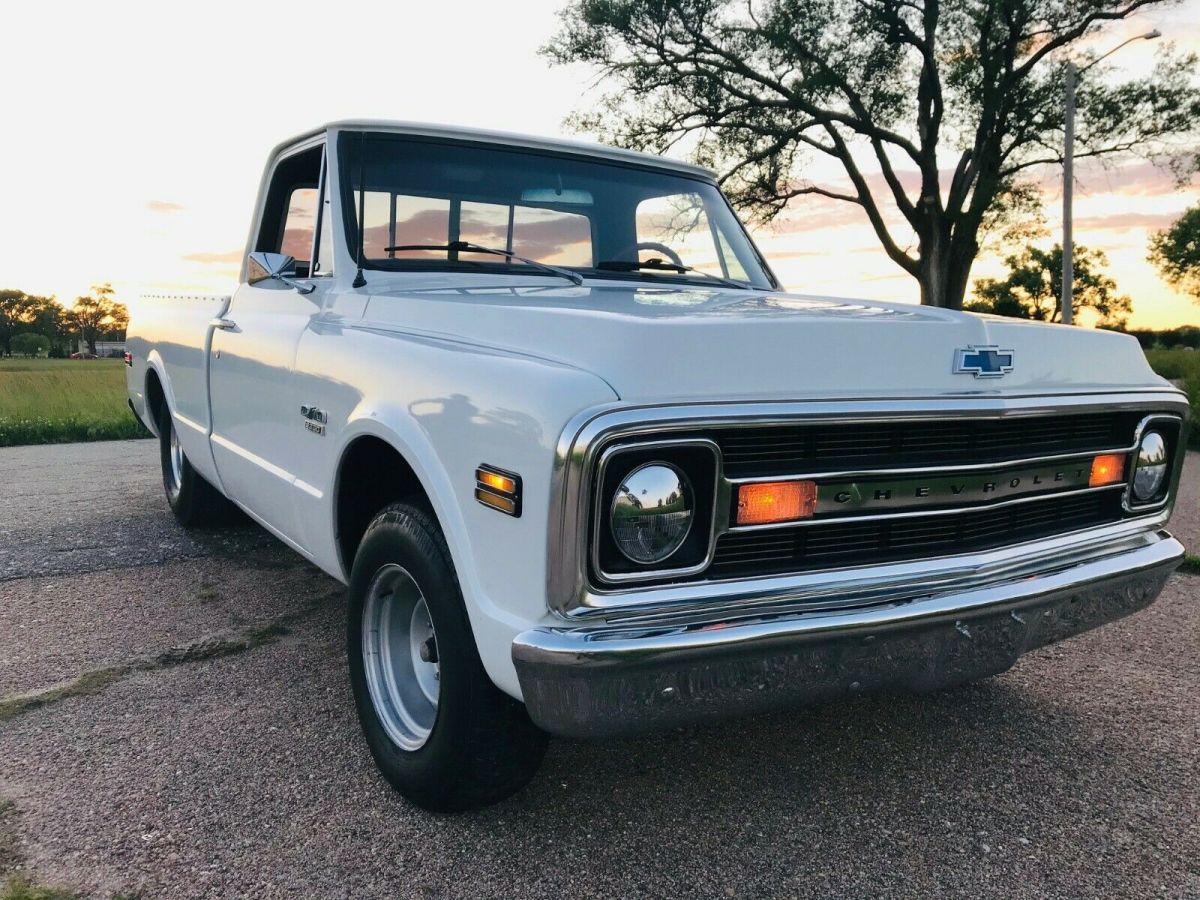
The 1970 Chevrolet C10 short bed is one of the most sought-after classic pickup trucks, celebrated for its iconic "Action Line" styling, coil-spring trailing arm rear suspension, and exceptional balance of utility and style. Positioned in the middle of the 1967–1972 generation, the 1970 model year introduced subtle yet enduring design refinements that set it apart from its siblings, making it a prime candidate for both factory restorations and high-end restomods.
The Evolution of the 1967–1972 "Action Line" Generation
General Motors introduced the second-generation C/K series trucks for the 1967 model year, completely redefining the aesthetic and functional expectations of a utility vehicle. Before this era, pickups were strictly viewed as utilitarian workhorses designed for farms, construction sites, and municipal fleets. The "Action Line" design changed that paradigm by introducing lower beltlines, curved side glass, an aggressive front fascia, and smoother body contours that appealed to everyday drivers.
By 1970, Chevrolet had refined several elements of this design lineage. While the basic cab and bed architecture remained consistent with 1967 through 1969 models, 1970 brought a distinct visual update to the front grille and side trim. The egg-crate plastic grille design replaced the earlier horizontal bars, flanked by revised parking light assemblies and optional upper body-side molding with wood-grain inserts on higher trim levels like the Custom Deluxe and Cheyenne. These styling updates gave the 1970 model a slightly more upscale, aggressive stance that enthusiasts continue to seek out today.
The "short bed" configuration—featuring a 6.5-foot cargo box on a 115-inch wheelbase—added to the truck's balanced proportions. Unlike the long-wheelbase variant, which favored maximum cargo capacity, the short bed delivered tighter handling, a sportier profile, and superior weight distribution. This combination transformed the half-ton C10 short bed into an accessible platform for customization, laying the groundwork for its current status as an automotive icon.
Exterior Styling and Interior Trim Levels
The visual appeal of a 1970 Chevrolet C10 short bed lies in its clean sheetmetal and purposeful proportions. The front end features a dominant hoodline that flows into the front fenders, framing the revised 1970 egg-crate grille. Buyers could choose between standard round headlights or upgraded trims featuring bright bezels. The cab offered generous glass area, providing visibility superior to many contemporary passenger cars, while the step-side and fleetside bed options allowed buyers to choose between traditional fender flare styling or the modern smooth-sided utility look of the Fleetside.
Inside the cabin, Chevrolet bridged the gap between utility and comfort. While base models offered rubber floor mats, painted metal dashboards, and vinyl bench seats, upper-tier trims elevated the driver experience significantly:
- Custom (Base): Utilitarian layout with a rubber floor mat, painted interior metal surfaces, and a standard bench seat upholstered in heavy-duty vinyl.
- Custom Deluxe: Added bright instrument cluster trim, a foam-cushioned bench seat, color-keyed floor mats or basic loop carpeting, and additional sound-deadening insulation.
- Cheyenne: The top-tier luxury trim introduced for the 1971 model year had its roots in the upgraded custom interiors of 1970, featuring wood-grain dash accents, deluxe steering wheels, bright exterior moldings, and premium door panels.
Instrumentation typically consisted of a horizontal speedometer flanked by warning lights, though buyers could opt for the desirable gauge package, which added circular readouts for oil pressure, coolant temperature, ammeter, and fuel level, mounted neatly within the driver's line of sight.
| Trim Level | Standard Flooring | Seat Upholstery | Notable Interior Features |
|---|---|---|---|
| Base / Custom | Rubber Mat | Heavy-Duty Vinyl | Painted metal dash, basic steering wheel, manual crank windows. |
| Custom Deluxe | Color-Keyed Mat / Carpet | Premium Vinyl | Foam-cushioned bench, bright instrument bezel, headliner. |
| Cheyenne (Late '70) | Cut-Pile Carpeting | Patterned Vinyl / Cloth | Wood-grain trim, deluxe door panels, optional factory air conditioning. |
Powertrain Options: Engines and Transmissions
The 1970 C10 lineup offered a diverse array of powerplant options, ranging from economical inline-sixes to high-displacement big-block V8s. This mechanical flexibility is a major reason why these trucks remain popular; engine bays were engineered with ample room, making swaps and maintenance straightforward.
Inline-Six Engines
- 250 cubic-inch (4.1L) Thriftmaster: Serving as the standard base engine, this OHV inline-six produced 155 horsepower. It was favored for its simplicity, reliability, and respectable fuel economy, making it a common choice for fleet operations and light utility work.
- 292 cubic-inch (4.8L) inline-six: A larger torque-heavy six-cylinder option that pushed output to 165 horsepower, offering enhanced pulling capability for those who wanted the durability of an inline block without stepping up to a V8.
Small-Block V8 Engines
- 307 cubic-inch (5.0L) V8: A mild small-block producing 200 horsepower, serving as an accessible entry point to V8 performance.
- 350 cubic-inch (5.7L) V8: The legendary small-block Chevy (SBC) was available in various configurations, most notably producing 250 to 300 horsepower depending on carburetion and compression. It remains the most popular engine for both restoration and restomod projects due to its endless aftermarket support.
- 400 cubic-inch (6.6L) V8: Introduced later in the generation, this small-block variant provided big-block torque within a lighter small-block footprint.
Big-Block V8 Engines
- 402 cubic-inch (6.6L) V8: Marketed commercially as a "396," this big-block produced 300 to 350 horsepower, delivering immense low-end torque for towing and highway performance.
- 454 cubic-inch (7.4L) V8: The pinnacle of factory muscle for the C10 platform, offering massive displacement and torque output for enthusiasts seeking maximum straight-line performance.
Transmission Pairings
Power was routed through a variety of transmissions, including the traditional 3-speed manual ("three-on-the-tree"), a floor-shifted 4-speed manual (often paired with a "granny gear" first ratio), the 2-speed Powerglide automatic, and the robust 3-speed Turbo Hydra-Matic 350 (TH350) or heavy-duty Turbo Hydra-Matic 400 (TH400) automatic transmissions.
Suspension and Handling: The Trailing Arm Revolution
One of the most significant engineering milestones of the 1967–1972 C10 generation was the departure from traditional leaf-spring rear suspensions. While competitors like Ford and Dodge utilized leaf springs that often resulted in a harsh, bouncy ride when the bed was empty, Chevrolet engineered a coil-spring rear suspension utilizing heavy-duty trailing arms and a Panhard bar.
This design allowed the rear axle to move vertically while maintaining precise lateral alignment, mimicking the suspension geometry of contemporary passenger cars. Combined with an independent front suspension featuring unequal-length control arms and coil springs, the 1970 C10 delivered a remarkably smooth, car-like ride quality. This innovative setup is a primary reason why modern restomod builders favor the C10 platform; the stock geometry provides an exceptional foundation for lowered stances, air-ride systems, and modern performance handling upgrades without requiring a complete rear chassis overhaul.
The Restomod and Collector Market Landscape
In the contemporary collector vehicle market, the 1970 Chevrolet C10 short bed commands significant attention and robust valuations. While long-bed trucks are often purchased as affordable entry points into classic truck ownership, short-bed models are treated as prime collector assets.
Restomods—classic trucks outfitted with modern fuel-injected engines (such as LS or LT small-blocks), overdrive automatic transmissions, power disc brakes, vintage-style air conditioning, and upgraded sound systems—dominate the high end of the market. Buyers are drawn to the combination of vintage styling and modern daily-driver reliability. Factory-correct restorations, particularly those featuring rare paint codes, original interior packages, and numbers-matching big-block engines, also achieve strong auction results.
When evaluating a 1970 C10 short bed for purchase, key inspection areas include:
- Cab Corners and Rocker Panels: Moisture accumulation leads to rust in the lower cab corners, rocker panels, and floorboards.
- Outer Bed Sills: Inspect the bottom edges of the Fleetside bedside panels for corrosion caused by trapped debris.
- Trailing Arm Mounts: Check the structural integrity of the frame where the rear trailing arms attach, as rust can compromise structural safety.
- Originality vs. Modification: Verify whether the VIN decodes correctly as a half-ton short-bed truck, as long-bed-to-short-bed conversions are common in the marketplace.
Frequently Asked Questions
How can you distinguish a factory short-bed C10 from a converted long-bed?
The Vehicle Identification Number (VIN) plate located on the driver-side door pillar provides the definitive answer. A factory half-ton short-bed C10 will typically feature a prefix sequence indicating a half-ton rating and wheelbase specifications, while physical inspection of the frame rails will reveal factory crossmember placement rather than cut-and-welded frame modifications.
What factory brakes did the 1970 C10 come with?
While four-wheel drum brakes were standard equipment on base models earlier in the generation, power front disc brakes became increasingly common by 1970 and greatly improved stopping performance. Many surviving trucks have since been upgraded with modern four-wheel disc brake conversion kits.
Are replacement parts easy to find for a 1970 Chevy C10?
Yes. The 1967–1972 Chevrolet truck generation enjoys some of the most comprehensive aftermarket and reproduction support in the classic automotive industry. Sheetmetal, interior trim, wiring harnesses, suspension components, and glass are widely available from specialized vendors.
What is the towing capacity of a 1970 C10 short bed?
Factory towing capacity depends heavily on the equipped engine, transmission, rear axle gear ratio, and suspension configuration. While half-ton C10s were rated for light-to-moderate hauling and towing (typically ranging from 2,000 to 5,000 pounds with proper hitch equipment), modern upgrades to braking and suspension systems often enhance practical utility.
Conclusion
The 1970 Chevrolet C10 short bed successfully bridges the gap between rugged utility and timeless automotive design. Its revolutionary coil-spring rear suspension, diverse engine lineup, and iconic "Action Line" aesthetics ensure its continued popularity among collectors and builders. Whether preserved in factory-original specification or modernized as a high-performance restomod, the C10 remains a defining chapter in American truck history.