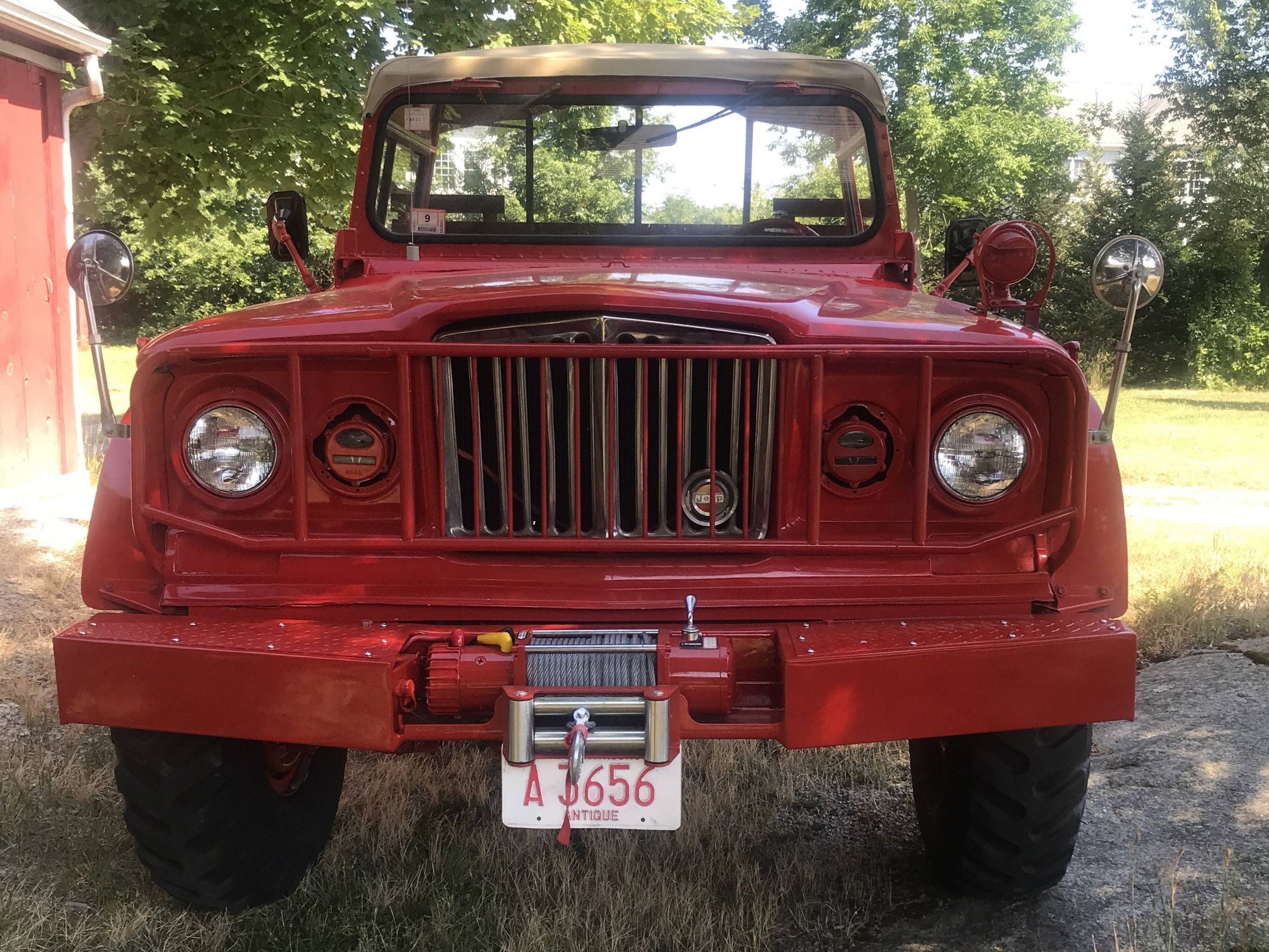
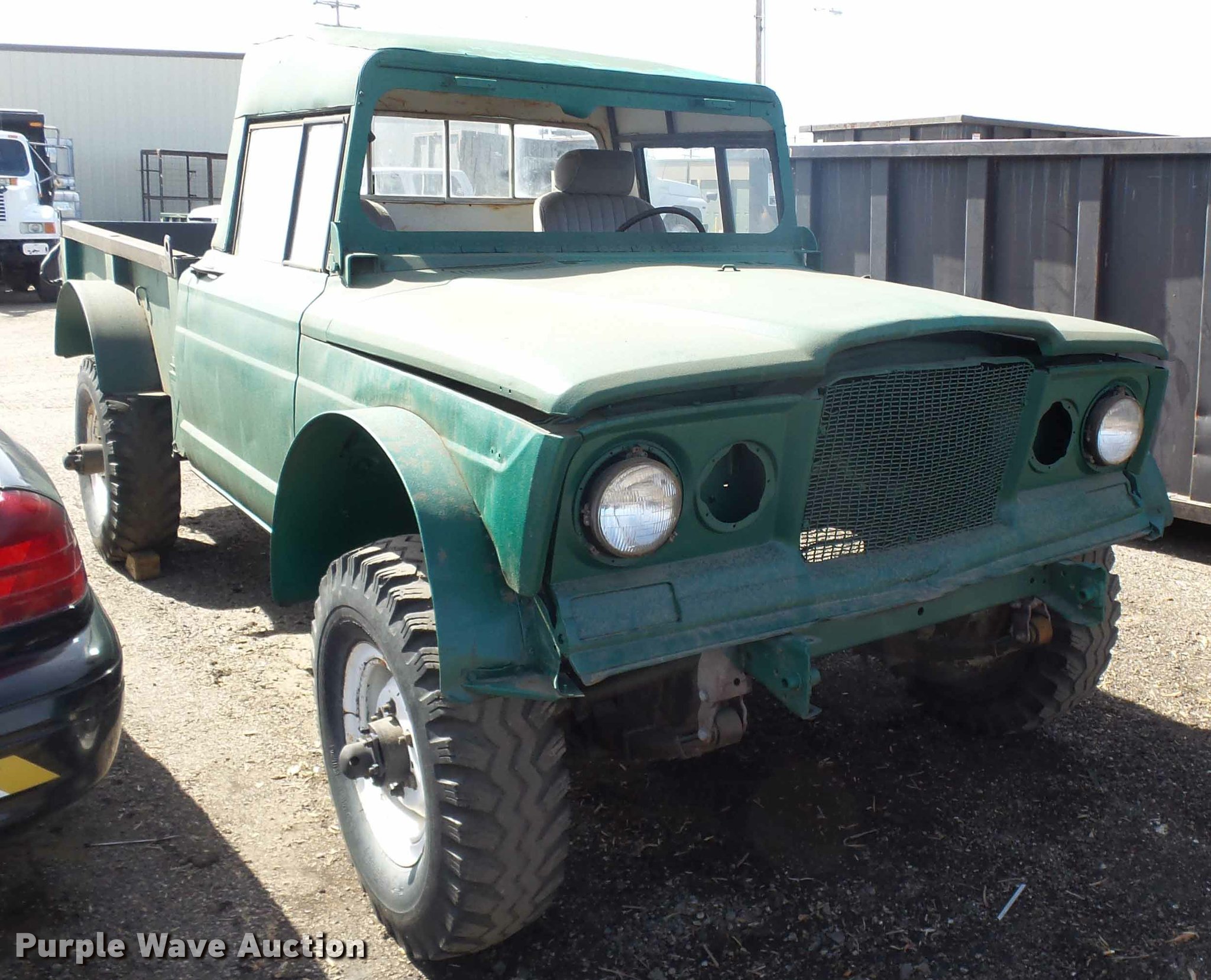
The 1968 Kaiser Jeep represents a pivotal era of transition for American utility vehicles, balancing rugged post-war military heritage with growing civilian demand for comfort, power, and versatility just before American Motors Corporation (AMC) acquired the company.
Introduction to the Kaiser Jeep Era (1963–1970)
To understand the 1968 Kaiser Jeep, one must first look at the corporate landscape of the era. Kaiser Industries had purchased Willys-Overland in 1953, renaming the enterprise Willys Motors before finally shifting the corporate identity to Kaiser-Jeep Corporation in 1963. By 1968, the brand had firmly established itself as a dominant force in both specialized commercial utility vehicles and the burgeoning recreational four-wheel-drive market.
Vehicles produced during the 1968 model year carry a distinct historical significance. They retain the rugged, straightforward engineering philosophy born out of military applications like World War II and the Korean War, yet they incorporate creature comforts, advanced powertrain options, and styling updates designed to appeal to suburban families and outdoor enthusiasts. While competitors like Ford, International Harvester, and Chevrolet were rapidly modernizing their truck and utility lineups, Kaiser Jeep leaned into its reputation for unyielding off-road capability while carefully upgrading its product catalog.
The 1968 Kaiser Jeep Lineup
The 1968 model year featured a diverse stable of vehicles catering to commercial operators, municipal fleets, and recreational buyers alike. The Jeep brand was no longer just a single utilitarian flivver; it was an entire family of specialized four-wheel-drive machines.
| Model | Primary Market & Purpose |
|---|---|
| CJ-5 / CJ-6 | Civilian Universal, Recreation, Ag |
| Jeep Wagoneer (SJ) | Luxury 4x4 Family Station Wagon |
| Jeep Gladiator (J-Se) | Full-Size Pickup Truck |
| Jeepster Commando | Sporty Compact Utility / Convertible |
| M715 Series | 1 1/4-Ton Military Tactical Truck |
The Universal Series: CJ-5 and CJ-6
The Civil Jeep (CJ) lineage remained the spiritual heart of the Kaiser Jeep brand in 1968. The CJ-5, with its 81-inch wheelbase, and the longer CJ-6, featuring a 101-inch wheelbase, were the direct descendants of the wartime MB and the civilian CJ-3B.
By 1968, buyers demanded more than the standard inline-four "Hurricane" engine. While the 134 cubic-inch F-head four-cylinder remained an option, Kaiser introduced greater versatility by offering the legendary Buick 225 cubic-inch "Dauntless" V6 engine. Pushing out 160 horsepower and a stout 235 lb-ft of torque, the Dauntless V6 transformed the lightweight CJ-5 into an agile, highly responsive performer both on and off the road.
The Jeep Wagoneer (SJ)
Introduced for the 1963 model year, the Jeep Wagoneer designed by Brooks Stevens was revolutionary. By 1968, it was cementing its place as the definitive luxury four-wheel-drive family wagon, decades before the modern SUV craze. Available in both two-door and four-door body styles, the Wagoneer combined independent front suspension (on select early models, though returning to solid front axles by 1968 for enhanced durability) with luxurious interior appointments, optional automatic transmissions, and full-time or part-time four-wheel-drive systems.
The Jeep Gladiator (J-Series) Pickup
Sharing its platform with the Wagoneer, the Gladiator pickup truck was offered in various configurations for 1968, including the J-2000 (short wheelbase) and J-3000 (long wheelbase) models, with gross vehicle weight ratings (GVWR) accommodating heavy-duty payloads. Gladiators could be outfitted with standard Townside or Thriftside (stepside) beds, or purchased as chassis-cabs for specialized municipal and agricultural utility upfitting.
The Jeepster Commando
Reviving a classic nameplate from the late 1940s, the Kaiser Jeepster Commando was introduced in 1966 and remained a core offering for 1968. Designed to compete directly with the Ford Bronco and International Scout, the Commando was available in four distinct body configurations: a pickup, a roadster, a convertible, and a station wagon. It offered comfortable seating, passenger car-like styling cues, and standard four-wheel drive powered by either the F-head four-cylinder or the Dauntless V6 engine.
Powertrains and Engineering Specifications
Engineering choices in 1968 reflected a period of transition from utilitarian agricultural powerplants to high-torque overhead-valve engines capable of sustained highway speeds.
Engine Options
- F-134 Hurricane I4: Displacing 134 cubic inches, this venerable iron-block four-cylinder produced roughly 75 horsepower. It was valued for its fuel efficiency and low-end tractor-like grunt, though it struggled with modern interstate speeds.
- Dauntless V6 (Buick 225): Acquired from Buick in 1965, this 90-degree V6 became the gold standard for 1968 Jeep buyers. It provided smooth power delivery and immense reliability.
- AMC V8 Engines: As the decade progressed and the impending acquisition by American Motors drew closer, AMC-designed V8 powerplants began making their way into larger Jeep platforms, setting the stage for the heavy-duty engines of the 1970s.
Drivetrains and Axles
Power was typically routed through manual transmissions—such as the Warner T-90 or T-86 three-speed, or the heavy-duty T-18 four-speed—or the Turbo Hydra-Matic (TH400) automatic transmission supplied by General Motors. Transfer cases were predominantly the rugged Dana 20 or the heavy-duty process units found in larger trucks, paired with Dana 27 or Dana 30 front axles and Dana 44 rear axles. This robust drivetrain architecture ensured that 1968 Kaiser Jeeps could withstand severe off-road articulation and towing stresses.
Military Contracts: The M715 Legacy
While civilian vehicles drove consumer sales, Kaiser-Jeep remained a vital defense contractor. The most prominent military vehicle produced during this era was the M715, a 1 1/4-ton tactical truck developed for the United States Armed Forces starting in 1967 and heavily produced through 1969.
Based closely on the civilian Jeep Gladiator pickup, the M715 featured heavy-duty axles (Dana 60 front and Dana 70 rear), a rugged open or soft-top cab, a 24-bit electrical system, and the Tornado 230 cubic-inch overhead-cam inline-six engine (though later military variants adapted other powerplants). Thousands of M715 units saw service during the Vietnam War, proving invaluable for troop transport, communications, and field logistics due to their commonality with commercial tooling and ease of maintenance in austere environments.
The Road to AMC: Corporate Transitions
By the late 1960s, Kaiser Industries sought to divest itself of its automotive operations to concentrate on its core heavy industrial, aluminum, and real estate businesses. American Motors Corporation (AMC), under the leadership of Roy D. Chapin Jr., recognized the immense global value of the Jeep brand, particularly its unmatched reputation for four-wheel-drive technology and its lucrative international manufacturing footprint.
In 1970, AMC officially acquired the Kaiser-Jeep Corporation for approximately $70 million. This acquisition immediately infused fresh capital, advanced styling resources, and streamlined engineering into the Jeep lineup. However, the models built in 1968 remain cherished by purists precisely because they represent the final pure expression of the Kaiser era—retaining unique badges, specific trim lines, and mechanical configurations that disappeared shortly after AMC took the helm.
Collecting, Restoring, and Maintaining a 1968 Kaiser Jeep
Owning and operating a 1968 Kaiser Jeep today requires an appreciation for vintage mechanical systems, non-synchronized transmissions, and period-correct maintenance schedules.
Common Restoration Challenges
- Rust and Sheet Metal: Because these vehicles were constructed before modern corrosion-protection standards and were frequently utilized in harsh agricultural, winter, or military environments, structural rust in floorboards, rocker panels, and frame rails is common.
- Electrical Systems: Many civilian 1968 models still utilized generator-based charging systems (or early alternators) and vintage wiring harnesses that degrade over time. Upgrading to a modern single-wire alternator and replacing brittle wiring is a frequent modification among restorers.
- Parts Availability: While mechanical components (engines, transmissions, and axles) share broad compatibility with GM, Dana, and standard Jeep parts networks, specific trim pieces, interior upholstery, and unique dash components for models like the Jeepster Commando or early Wagoneer can be scarce.
Frequently Asked Questions
What engines were available in a 1968 Kaiser Jeep CJ-5?
Buyers could choose between the traditional 134 cubic-inch F-head "Hurricane" inline-four engine or upgrade to the popular 225 cubic-inch "Dauntless" V6 engine sourced from Buick, which significantly boosted horsepower and highway driveability.
How does a 1968 Jeep Wagoneer differ from modern SUVs?
The 1968 Wagoneer is a body-on-frame full-size utility vehicle featuring heavy-duty solid axles, leaf spring suspension, manual steering (or early hydraulic power assist), and basic interior controls. Unlike modern unibody crossovers packed with computerized driver aids, the 1968 Wagoneer is prized for its mechanical simplicity, classic wood-grain trim aesthetics, and genuine truck-based capability.
Did Kaiser Jeep build vehicles for the military in 1968?
Yes. Kaiser Jeep was a major defense contractor during this period, most notably manufacturing the M715 1 1/4-ton tactical truck for the U.S. military, along with specialized utility variants for global allied armed forces.
When did American Motors Corporation (AMC) take over Kaiser Jeep?
AMC officially acquired Kaiser-Jeep Corporation in 1970, rebranding the division simply as the Jeep Corporation and integrating AMC engines and styling cues into the existing vehicle architecture.
Are parts easy to find for 1968 Kaiser Jeep models?
Mechanical parts such as brakes, suspension components, and Dana axle parts are widely available through specialized vintage Jeep parts distributors. However, finding body panels and interior trim for less common models like the Jeepster Commando or rare Gladiator trims can require searching enthusiast networks and salvage yards.
Conclusion and Next Actions
The 1968 Kaiser Jeep stands as a monument to a transitional era in American automotive history, bridging the gap between utilitarian post-war transport and the modern recreational SUV. For enthusiasts considering the purchase or restoration of a 1968 model, the primary next step is to perform a thorough structural inspection of the frame rails, floor supports, and bulkhead integrity before evaluating the mechanical health of the drivetrain. Verifying serial numbers against factory production records will ensure authenticity and guide a successful preservation project.