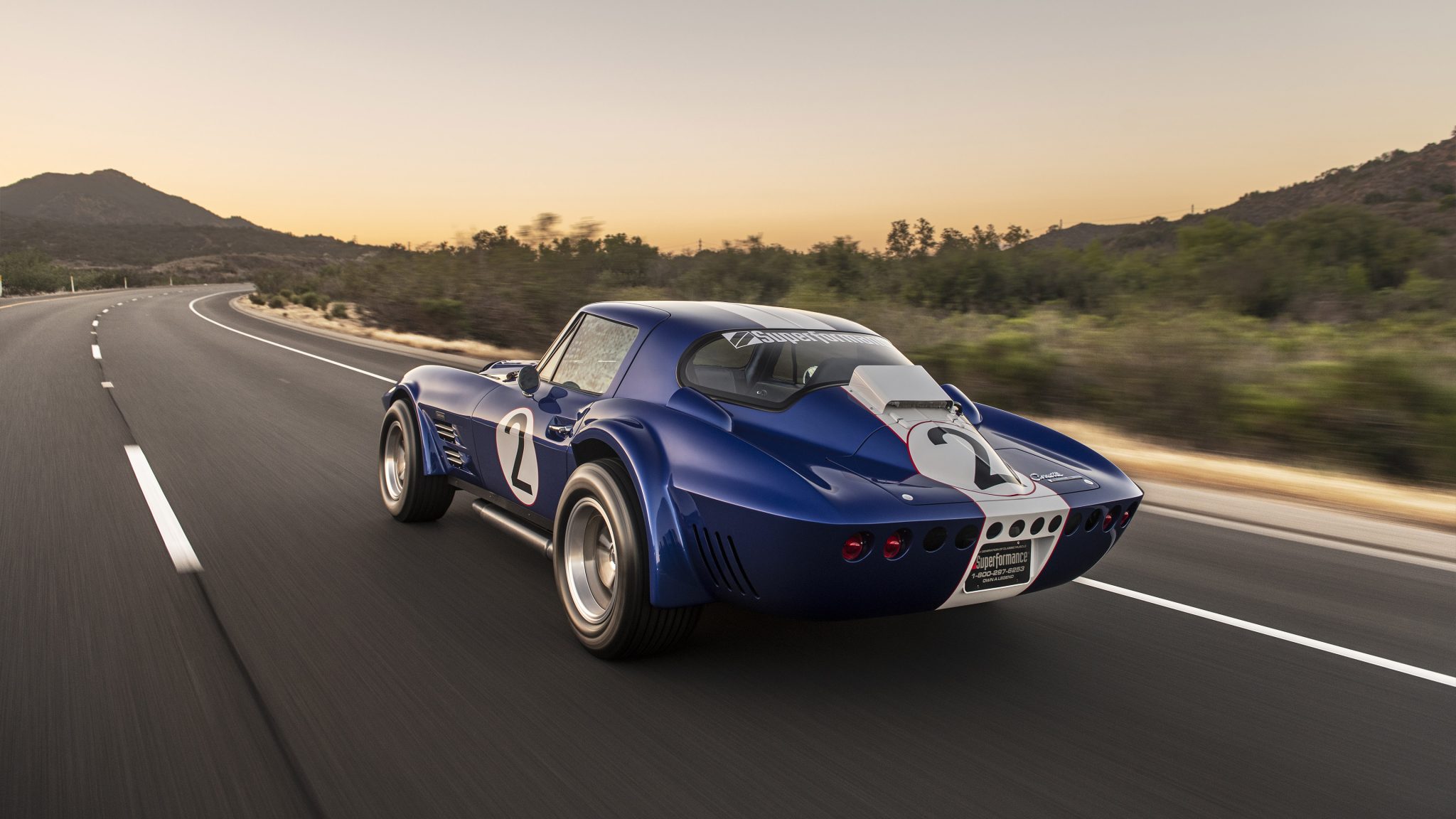
The 1963 Chevrolet Corvette Z06 performance package is one of the most coveted factory-installed track-ready options in American automotive history, combining heavy-duty suspension components, massive sintered metallic brakes, and a high-output fuel-injected V8 engine designed specifically for SCCA and endurance racing.
Introduction to the 1963 Z06 Corvette
When Chevrolet introduced the second-generation Corvette for the 1963 model year—famously known as the Sting Ray—it revolutionized sports car design with its iconic split-window coupe configuration and completely independent rear suspension. Beneath the fiberglass styling penned by Larry Shinoda and Bill Mitchell lay a serious racing pedigree championed by Zora Arkus-Duntov, the legendary Chief Engineer for Chevrolet. Duntov recognized that privateer racers needed more than just a stylish street car; they needed a factory-engineered package capable of competing directly against Shelby Cobras and European sports cars on road courses across North America.
The solution was the Regular Production Option (RPO) Z06, introduced specifically for the 1963 model year. Often referred to as the "Special Performance Equipment" package, the Z06 transformed the refined Sting Ray into a brutal, race-ready machine straight off the assembly line. Because General Motors and the Automobile Manufacturers Association (AMA) had agreed to a voluntary ban on factory-sponsored racing participation in 1957, Duntov and his team had to be clever. They created the Z06 package as a discreet option box on order forms, allowing private racers to acquire a competitive competition car without violating corporate racing restrictions. Understanding the intricate details of this rare package requires examining its mechanical components, production history, and enduring legacy in the collector car market.
Origins and Development Under Zora Arkus-Duntov
Zora Arkus-Duntov’s vision for the Corvette was always rooted in motorsport competition. Throughout the late 1950s, he developed experimental racing components, including heavy-duty springs, larger anti-roll bars, and specialized braking systems. By the time the C2 Sting Ray development cycle was finalized, Duntov ensured that the new chassis architecture could accommodate aggressive track tuning.
The Z06 package was conceived as the spiritual successor to the 1957fuel-injected racing Corvettes and the ultra-rare 1962 "Big Brake" RPO options. However, for 1963, Chevrolet engineered the Z06 as a comprehensive, cohesive system rather than just a collection of separate heavy-duty parts. Duntov's engineering team tested prototypes on tracks like Marlboro Speedway and Riverside International Raceway, ensuring the car could handle the punishing demands of endurance events such as the 12 Hours of Sebring.
The package was officially released at the start of the 1963 production run, though its availability evolved rapidly during the model year. Initially restricted to coupe models because of structural rigidity requirements, the package was later opened to convertibles. Despite its competitive intent, the Z06 was street-legal, meaning owners could drive their race cars to the circuit, compete, and drive them home.
Comprehensive Breakdown of Z06 Package Components
The RPO Z06 was not merely an aesthetic trim upgrade or a simple engine tune; it represented a complete overhaul of the Corvette's dynamic capabilities. Selecting the Z06 option added $1,818.30 to the base price of a 1963 Corvette coupe, a substantial sum when the base car cost around $4,252. This investment bought a meticulously engineered suite of performance modifications.
The L84 Fuel-Injected V8 Engine
At the heart of every 1963 Z06 was the legendary L84 327 cubic-inch V8 engine equipped with Rochester mechanical fuel injection. While this engine was available as a standalone option (RPO L84) on non-Z06 Corvettes, it was a mandatory foundation of the Z06 package.
- Horsepower and Torque: The engine officially rated at 360 horsepower at 6,000 RPM and 352 lb-ft of torque at 4,000 RPM.
- Compression Ratio: An aggressive 11.0:1 compression ratio demanded high-octane fuel.
- Valvetrain: It utilized a high-lift solid lifter camshaft, specialized cylinder heads, and aluminum intake manifolds.
- Fuel Delivery: The Rochester continuous-flow mechanical fuel injection system replaced traditional carburetors, providing instantaneous throttle response and superior fuel delivery under high lateral cornering loads.
Heavy-Duty Suspension and Handling Dynamics
The independent rear suspension of the 1963 Sting Ray was already advanced, but the Z06 package pushed its structural limits to withstand punishing track use.
- Spring Rates: The front coil springs were nearly twice as stiff as standard units, while the multi-leaf rear transverse spring was significantly stiffened to minimize body roll and squat.
- Anti-Roll Bar: A larger, heavy-duty front stabilizer bar was added to reduce understeer and flatten cornering attitudes.
- Shock Absorbers: Specially valved heavy-duty shock absorbers controlled wheel oscillation under severe track conditions.
Competition Brakes and Cooling
Stopping a heavyweight sports car from high speeds on a road course requires exceptional thermal capacity. The Z06 braking system was arguably its most radical and specialized feature.
- Sintered Metallic Linings: The brake shoes used specialized metallic linings that required high operating temperatures to become truly effective, making them notorious for poor cold-weather stopping performance on the street.
- Vacuum Booster and Dual-Master Cylinder: A specialized dual-circuit brake master cylinder and vacuum brake booster ensured consistent pedal effort.
- Cast-Iron Drums with Air Scoops: The backing plates featured dedicated cooling scoops, and the cast-iron drums were reinforced with cooling fins and venting holes to evacuate heat and prevent brake fade during prolonged racing sessions.
Additional Track-Ready Features
To complete the transformation, early Z06 coupes were equipped with a massive 36.5-gallon auxiliary fuel tank (often referred to as the "big tank" option). This allowed racers to run longer stints in endurance events without stopping for fuel. However, because the giant fiberglass tank occupied the entire rear luggage area, the spare tire had to be omitted, and luggage space was eliminated. Later in the production run, due to slow uptake by street buyers who found the large tank impractical, Chevrolet made the 36.5-gallon tank optional, allowing customers to order the Z06 package with the standard 20-gallon fuel tank.
| Component Category | Standard 1963 Corvette Specification | 1963 Z06 Performance Package Specification |
|---|---|---|
| Engine | 327 ci V8 (300 hp carb or 340 hp carb available) | 327 ci L84 V8 with Rochester Fuel Injection (360 hp) |
| Brakes | Standard hydraulic drum brakes | Heavy-duty sintered metallic linings, finned drums, cooling scoops, and vacuum booster |
| Suspension | Standard coil front / transverse leaf rear | Heavy-duty high-rate springs, firmer shocks, and larger front stabilizer bar |
| Fuel Capacity | 20-gallon standard rear tank | 36.5-gallon auxiliary endurance tank (early standard, later optional) |
| Transmission | 3-speed manual (4-speed optional) | Muncie M20 close-ratio 4-speed manual transmission |
Production Numbers and Rarity
The 1963 Z06 is exceptionally rare due to its high cost, specialized nature, and the fact that it was only offered for a single model year in this exact configuration (though heavy-duty parts continued in 1964).
Exact production figures have been a subject of historical debate among marque historians and registries, but consensus records indicate that only 199 units of the 1963 Corvette Z06 were produced. Of those, the vast majority were built with the early-production 36.5-gallon large fuel tank, while only a small handful left the St. Louis assembly plant with the standard 20-gallon tank after the large tank option became independently selectable later in the model year.
This extreme scarcity has made original, matching-numbers 1963 Z06 Corvettes some of the most valuable and heavily scrutinized vehicles in the collector car hobby. Because many were modified, raced hard, and occasionally crashed on racetracks during their active competition years, finding an authentic, undamaged example is remarkably difficult.
Authenticity Verification and Common Counterfeits
Because genuine 1963 Z06 Corvettes command substantial multi-million dollar or high six-figure prices at premier collector car auctions, counterfeit clones and tribute cars are a significant concern for buyers. Restorers and prospective purchasers must look for specific factory markers to verify authenticity.
Factory Documentation and Identifiers
- Tank Stampings and Fiberglass Work: For big-tank Z06 models, the interior fiberglass floor must feature the correct contours, mounting brackets, and drain plugs specific to the 36.5-gallon fuel cell. Factory build sheets (tank stickers), when preserved, provide definitive proof, though these are frequently missing or forged.
- Brake Backing Plates and Front Spindles: The unique dust shields, air scoop cutouts, and heavy-duty front steering spindles are difficult and expensive to replicate accurately, making them key inspection points for marque experts.
- Engine Pad Stamps: The engine block must feature the correct "RF" suffix code stamped on the passenger-side front pad, corresponding to the 360-horsepower fuel-injected manual transmission application.
- Pedal Assembly and Brake Booster: The presence of the specialized dual-master cylinder setup and vacuum booster bracketry is mandatory for verification.
Collecting, Valuation, and Market Trends
In the contemporary collector vehicle market, the 1963 Z06 occupies elite status alongside Shelby 427 Cobras and lightweight Corvettes of the era. Values fluctuate based on provenance, documentation, originality of components, and whether the car retains its rare big-tank configuration.
Top-tier, numbers-matching examples with documented vintage racing history or meticulous professional restorations regularly command prices exceeding $500,000, with exceptionally rare, pristine specimens achieving even higher marks at major auction houses like Mecum and Barrett-Jackson. Prospective buyers are strongly advised to secure verification from recognized National Corvette Restorers Society (NCRS) master judges or recognized Z06 historians prior to committing capital.
Frequently Asked Questions
Why is the 1963 Z06 considered so important in Corvette history?
The 1963 Z06 represents the birth of factory-engineered track performance for Chevrolet. It bridged the gap between streetable sports cars and dedicated race cars, establishing the foundational engineering philosophy that eventually birthed modern performance icons like the C5, C6, C7, and C8 Z06 models.
Can a standard 1963 fuel-injected Corvette be converted into a Z06?
While owners can install aftermarket or OEM-style heavy-duty suspension, brakes, and fuel tanks onto a standard 1963 Corvette, a converted car will never match the historical provenance, factory assembly records, or market value of an authentic, factory-built Z06.
Did all 1963 Z06 Corvettes feature the split-window design?
Yes. Because the Z06 package was exclusively offered during the 1963 model year—the only year of the split-window coupe—every coupe version of the Z06 features the iconic dividing center pillar in the rear glass.
What maintenance challenges do original 1963 Z06 brakes present?
Original sintered metallic brake pads require significant operating heat to function effectively. Driving a Z06 with original-specification metallic brakes on public roads requires immense pedal effort and long stopping distances when the brakes are cold, leading many modern owners to install period-correct organic linings for street driving while preserving the original parts.
How many 1963 Z06 Corvettes were built with the large fuel tank?
Out of the 199 total Z06 units produced for the 1963 model year, the vast majority were originally built with the 36.5-gallon auxiliary fuel tank, while only a small minority featured the standard 20-gallon tank built later in production.
Conclusion
The 1963 Chevrolet Corvette Z06 stands as a monumental achievement in American automotive engineering. By channeling motorsport development through a clandestine factory package, Zora Arkus-Duntov provided privateers with a dominant track weapon wrapped in iconic Sting Ray styling. Today, its extreme rarity, specialized mechanical specifications, and fierce racing heritage ensure that it remains a crown jewel of classic performance collecting.