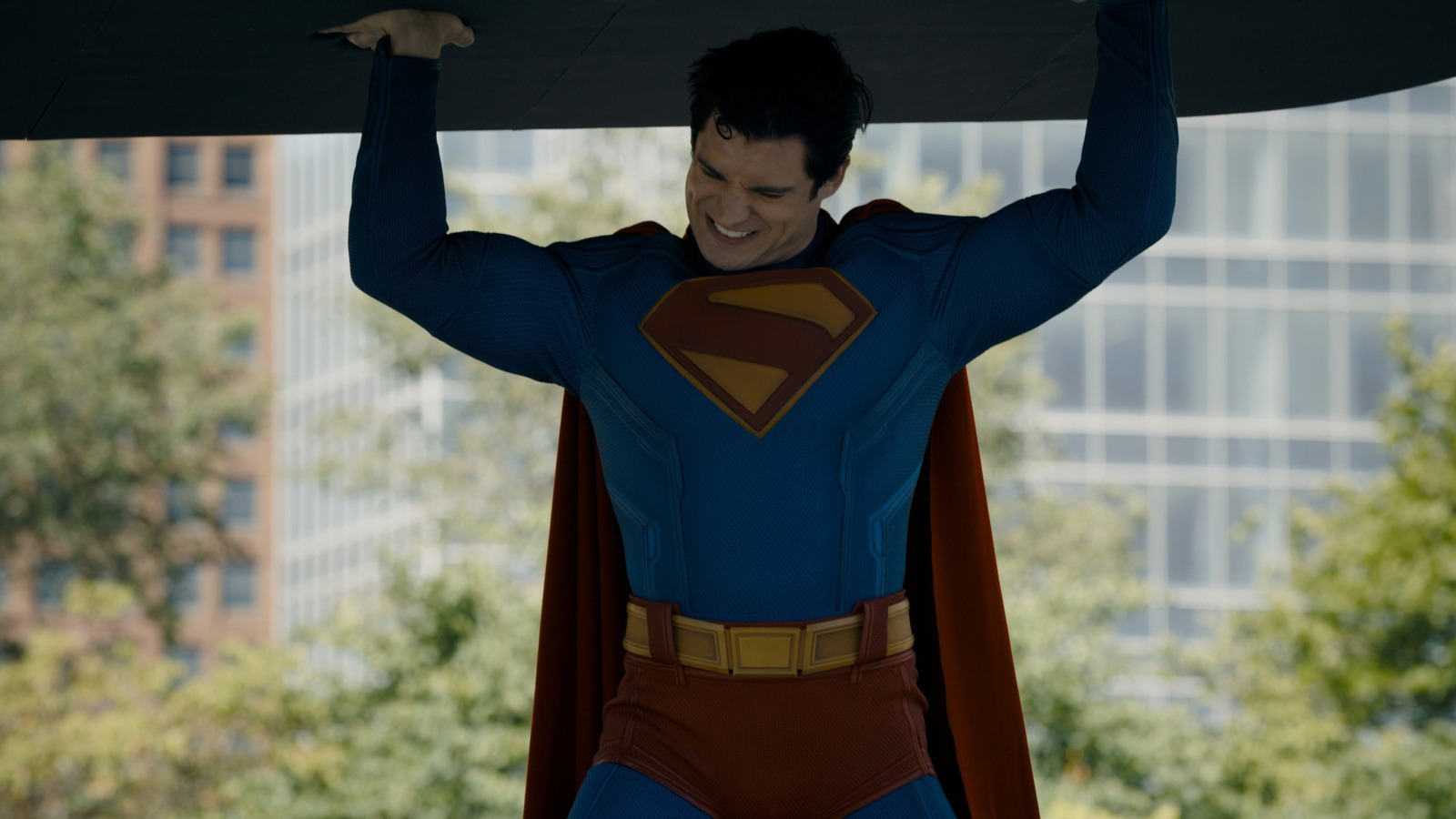
The budget for Superman III (1983) totaled approximately $40 million, representing a substantial investment for its era and reflecting the soaring financial ambitions of the superhero film genre following the massive success of its predecessors. This expenditure covered extensive global location shooting, ambitious physical and optical special effects, significant star salaries, and a shifting creative direction that balanced comedy with spectacle.
Understanding the financial architecture of Hollywood blockbusters in the early 1980s requires looking past a single headline figure. The production of Superman III unfolded during a turbulent period for its parent studio, Alexander and Ilya Salkind's international production banner, and Warner Bros. As inflation, escalating star demands, and changing audience tastes converged, the allocation of every dollar dictated not only what made it onto the screen, but also how the franchise would pivot for the remainder of the decade. This comprehensive analysis breaks down the anatomy of the Superman III budget, examining where the money went, how it compared to industry standards, and what its ultimate financial return meant for the cinematic future of the Man of Steel.
Historical Context: The Escalating Costs of the Franchise
To understand the $40 million price tag of Superman III, one must trace the financial evolution of the franchise from its modest origins to its mid-1980s peak. The original Superman (1978) was conceived as a monumental gamble. Produced concurrently with its sequel, Superman II (1980), the initial enterprise faced severe logistical hurdles, script rewrites, and ballooning costs that ultimately pushed the combined production budget past the $55 million mark—an astronomical sum for the 1970s.
By the time Superman III entered active development in the early 1980s, the economic landscape of filmmaking had shifted dramatically. Double-digit inflation, rising union labor costs, and the expectation of bigger, flashier spectacles drove production expenses upward across the industry. Ilya and Alexander Salkind, the independent producers behind the series, were no longer sharing costs with a simultaneous sequel shoot. Instead, Superman III had to stand entirely on its own financial feet while retaining the grand scale associated with the brand.
Furthermore, the departure of original director Richard Donner and the reduced creative involvement of Mario Puzo shifted the stylistic approach. The Salkinds brought in director Richard Lester, who had finished Superman II, to steer the third installment. Lester favored a lighter, more comedic tone, which influenced how funds were distributed. Rather than pouring the entire budget into groundbreaking, earth-shattering visual effects like the first two films, a significant portion of the Superman III budget was diverted toward physical stunts, elaborate comedic set pieces, and high-profile casting choices designed to broaden the film's commercial appeal.
Breaking Down the Expenses: Where the Money Went
A production budget of $40 million in 1983 was divided among several major operational categories, including talent compensation, technical execution, physical production, and post-production. While detailed, itemized ledger sheets from the production are closely guarded studio secrets, historical reporting, trade publications, and biographies of key personnel provide a clear picture of how capital was deployed.
Star Salaries and Talent Acquisition
A major share of the Superman III budget was allocated to above-the-line talent. Christopher Reeve returned as the titular hero, commanding a significantly higher salary than the modest $250,000 he received for the first film. Alongside Reeve, the production sought to inject fresh star power to revitalize the narrative, most notably through the casting of comedian Richard Pryor as the computer programmer Gus Gorman.
Pryor’s salary represented one of the single largest talent expenditures in the film. At the height of his box-office dominance, Pryor commanded a multi-million-dollar paycheck, which was a risky investment for a comic-book movie but one the Salkinds hoped would cross over into mainstream comedy audiences. Other notable casting expenses included retaining veteran actors like Jackie Cooper and Margot Kidder, alongside introducing Annette O'Toole as Lana Lang and Robert Vaughn as the megalomaniacal industrialist Ross Webster.
Special Effects and Technological Advancements
The visual effects landscape of the early 1980s was at a crossroads, bridging traditional optical printing with early digital experimentation. For Superman III, the visual effects budget was tasked with creating iconic flying sequences, the chaotic destruction of a synthetic kryptonite-induced rampage, and a climactic battle with a massive, sentient super-computer.
Unlike the first film, which relied heavily on innovative front-projection techniques developed by Zemeckis and Zoran Perisic (dubbed the "Zoptic" process), Superman III refined these methods while also investing heavily in physical miniature work and optical composites. The creation of the cave-like computer lair at the film's climax required extensive set construction, complex animatronics, and intricate lighting schemes that consumed a large portion of the physical production budget.
Location Shooting and Production Design
While the first two films utilized extensive global backdrops—from the plains of Alberta standing in for Smallville to the urban canyons of New York City representing Metropolis—Superman III shifted a significant portion of its principal photography to the United Kingdom, supplemented by prominent location shoots in Calgary, Alberta, and the striking architecture of Calgary’s Centennial Planetarium (which served as the exterior of the Ross Webster corporate headquarters).
British studios, primarily Pinewood Studios, housed the massive indoor sets required for the film's intricate action sequences and interior gags. Maintaining large crews, transporting equipment internationally, and building complex, custom practical sets contributed substantially to the baseline production expenditures.
Comparative Budget Analysis of the Early Superman Series
To contextualize the financial footprint of Superman III, it is helpful to compare its budget and box-office performance against the other entries produced by the Salkinds during this era.
| Film Title | Release Year | Estimated Budget | Box Office Gross | Estimated Profit / ROI |
|---|---|---|---|---|
| Superman | 1978 | $55M (combined w/ II) | $300M+ | High (Blockbuster success) |
| Superman II | 1980 | Shared with Superman | $190M+ | High (Commercial success) |
| Superman III | 1983 | $40M | $80.2M | Moderate (Diminishing returns) |
| Superman IV: The Quest for Peace | 1987 | $17M | $15.7M | Financial Failure |
As illustrated by the data, Superman III cost roughly $40 million to produce. While it grossed over $80 million worldwide—making it a profitable venture that safely covered its production and marketing costs—it marked a clear downward trend in audience enthusiasm compared to the unprecedented cultural phenomena of the first two films. The diminishing returns signaled to the studio that the formula was beginning to wear thin, leading to a drastic budget reduction for the subsequent installment, Superman IV: The Quest for Peace.
Financing Structures and Studio Economics
The financial backing of Superman III reflects the complex web of independent financing and studio distribution deals that characterized 1980s Hollywood. Alexander and Ilya Salkind operated as independent producers who retained creative control and financial risk, partnering with major studios like Warner Bros. for domestic distribution while selling international rights independently to various foreign territories to pre-finance production costs.
This financial model meant that the Salkinds had to recoup their investment quickly through a combination of domestic theatrical box office, foreign sales, and future ancillary markets such as home video and television syndication. By 1983, the home video market was in its nascent stages of commercial viability, meaning theatrical exhibition remained the primary engine for profitability.
Because the production budget had escalated to $40 million, the film faced immense pressure to perform on par with its predecessors. Although the movie turned a profit, the rising costs of production relative to ticket sales convinced the Salkinds to step away from the franchise, ultimately selling the film rights to Cannon Films, which produced the low-budget Superman IV under severe financial constraints.
Common Misconceptions Regarding the Production Budget
Over the decades, numerous myths and exaggerations have circulated regarding the financial history of Superman III. Separating verified trade reports from fan lore provides a more accurate understanding of the film's economic reality.
- The Richard Pryor Budget Myth: A persistent rumor suggests that Richard Pryor’s salary consumed half of the movie's budget. While Pryor commanded an exceptionally high fee for his appearance—reportedly in the range of $4 million to $5 million, plus backend points—this represented roughly 10 to 12 percent of the total production budget, not half.
- The Bankruptcy Rumor: Some retrospective accounts claim that the modest box-office performance of Superman III bankrupted the Salkinds. In reality, while the film underperformed relative to studio expectations, it still cleared a profit, and the Salkinds successfully transitioned to producing other projects, including the 1984 film Supergirl and the television series Superboy.
- Budget Inflation vs. Actual Costs: Comparisons between 1980s budgets and modern superhero blockbusters often fail to account for inflation. A $40 million budget in 1983 carries purchasing power equivalent to over $120 million in modern currency, placing Superman III firmly in the upper tier of contemporary studio expenditures for its time.
Practical Lessons from the Superman III Production Model
The financial trajectory of Superman III offers enduring lessons for modern film financing, franchise management, and risk mitigation in high-budget cinema.
- Tone and Budget Alignment: Shifting a high-stakes, action-oriented superhero franchise toward slapstick comedy can alienate core audiences, making it difficult to justify a blockbuster-tier budget. When production costs scale upward, box-office expectations require broad, uncompromised appeal.
- Talent ROI: Investing heavily in celebrity casting outside the core genre can yield mixed results. While Richard Pryor brought undeniable star power, his comedic style dictated structural changes in the narrative that polarized critics and longtime fans.
- Sustainable Cost Controls: The sharp drop-off from Superman III ($40 million budget) to Superman IV ($17 million budget) demonstrates the dangers of reactionary financial planning. Overcorrecting a budget downward often compromises production values so severely that the final product fails to engage audiences altogether.
Conclusion
The budget of Superman III stands as a fascinating case study in 1980s Hollywood economics, illustrating the delicate balance between escalating production costs and shifting commercial strategies. At $40 million, the film pushed the financial boundaries of the genre, fueled by rising star salaries, international production overhead, and ambitious visual effects. While it ultimately turned a profit, its diminishing returns marked the end of the Salkinds' tenure as stewards of the franchise and signaled a sobering reality for studio executives: throwing money at a blockbuster cannot substitute for a cohesive, audience-aligned creative vision.