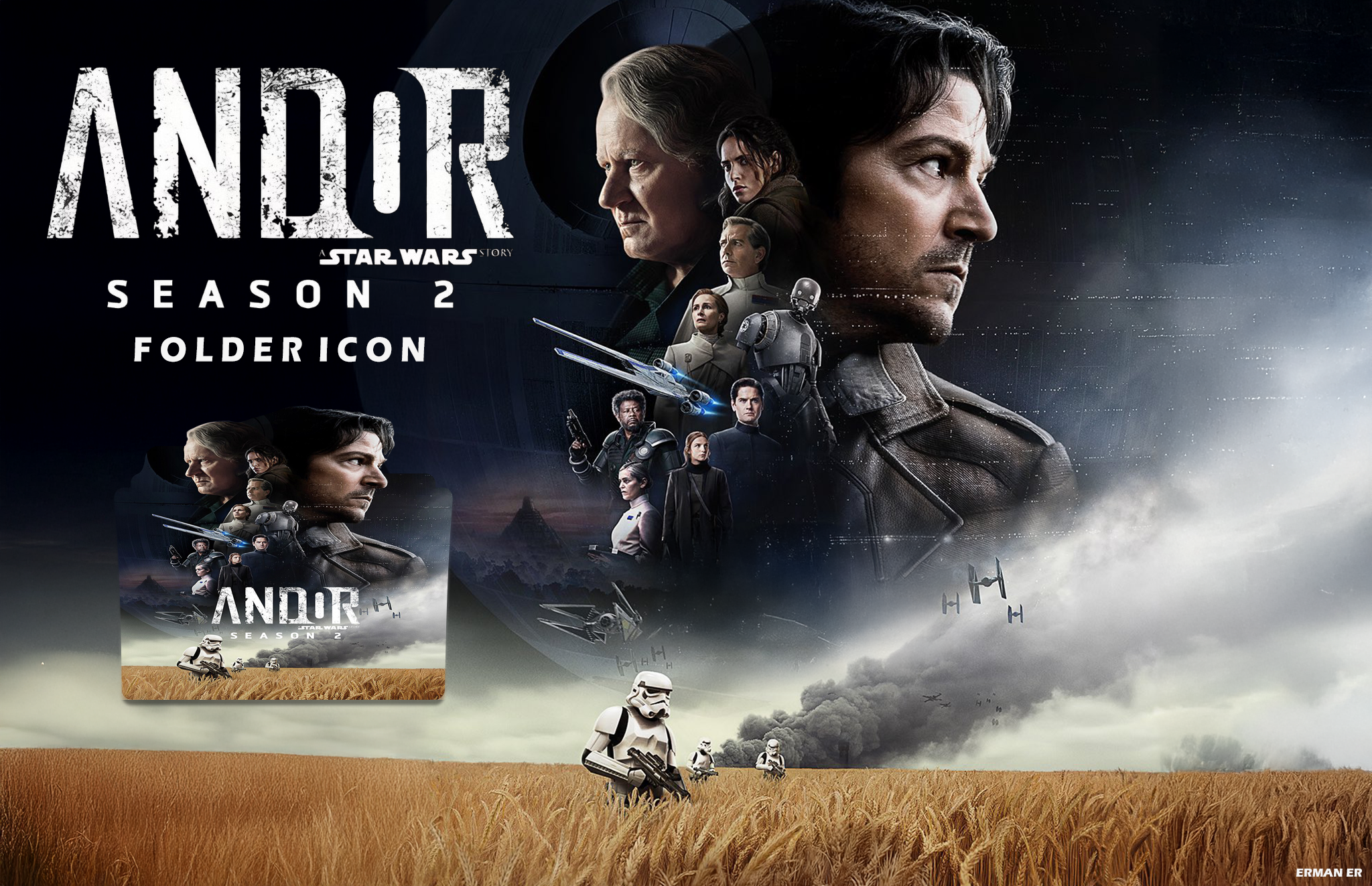
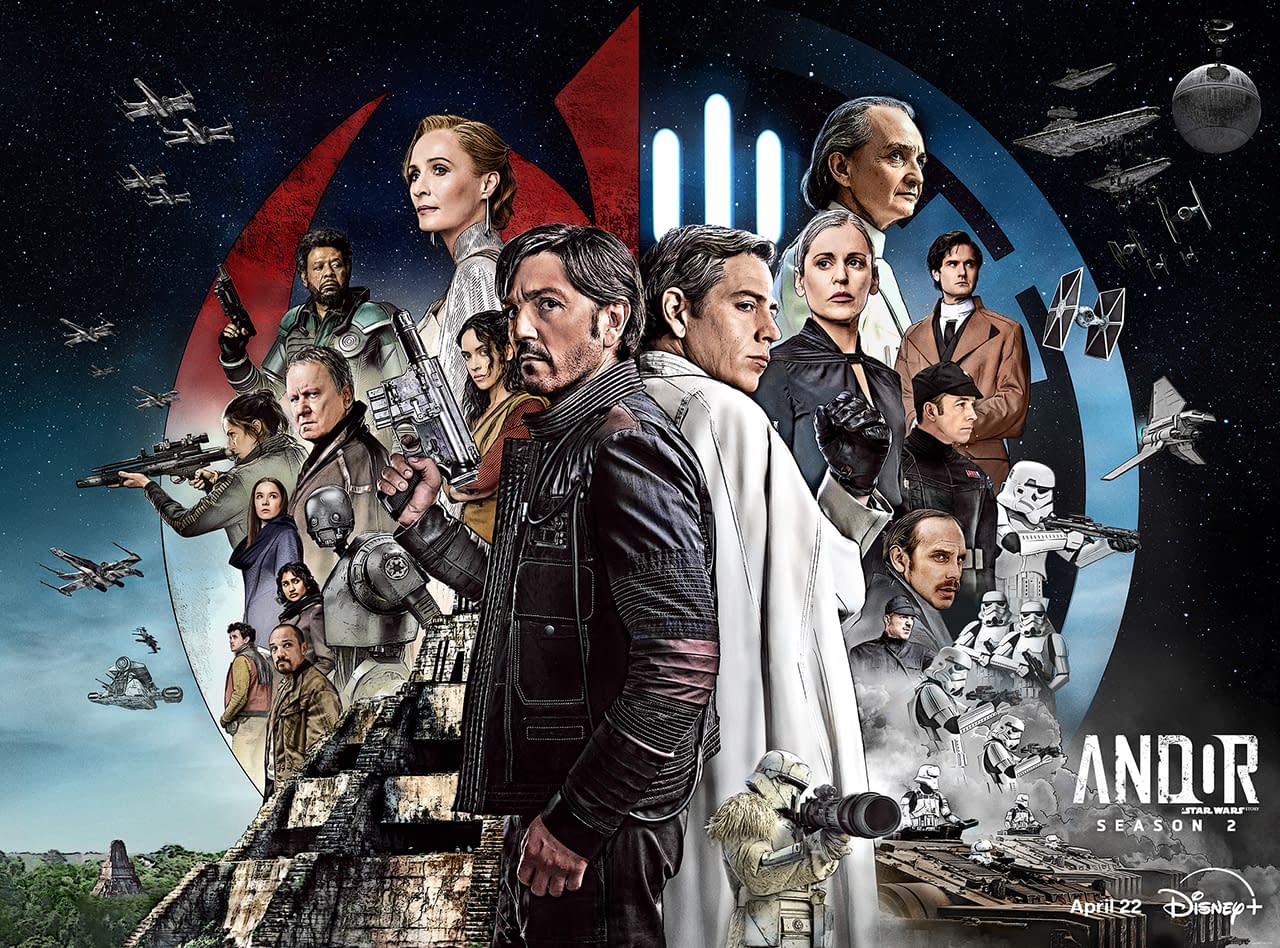
The second and final season of Andor represents a pivotal conclusion to Cassian Andor’s journey, bridging the five-year gap between the series premiere and the events of Rogue One: A Star Wars Story. Following production delays during the 2023 industry strikes, the 12-episode season premiered in 2025, utilizing a unique narrative structure where every three episodes cover one year of the character’s life within the Rebellion.
The Narrative Timeline: Spanning Four Years of Insurrection
The primary distinguishing factor of Andor Season 2 is its ambitious narrative scope. While the first season focused on a concentrated period in 5 BBY (Before the Battle of Yavin), Season 2 is designed to cover the remaining four years leading directly into the opening moments of Rogue One. This structure was a deliberate creative choice by showrunner Tony Gilroy to ensure the series remained a tight, two-season arc rather than an open-ended procedural.
The Three-Episode "Block" Strategy
The season is divided into four distinct blocks of three episodes each. Each block represents a one-year leap in time, allowing the audience to witness the gradual radicalization of the galaxy and the formalization of the Rebel Alliance.
- Block 1 (4 BBY): Focuses on the immediate fallout of the heist on Aldhani and the funeral on Ferrix. This period explores how the disparate rebel cells begin to realize they cannot survive in isolation.
- Block 2 (3 BBY): Shifts the focus toward the political maneuvering on Coruscant. As Mon Mothma’s position becomes increasingly untenable, the "legal" opposition to the Empire begins to crumble, forcing her toward the more militant path seen in the films.
- Block 3 (2 BBY): Details the escalating imperial crackdown. During this period, the Imperial Security Bureau (ISB) becomes more efficient at hunting insurgents, raising the stakes for characters like Dedra Meero and Syril Karn.
- Block 4 (1 BBY to 0 BBY): The final episodes lead directly to the Rebel base on Yavin 4. This block is designed to end exactly where Rogue One begins, providing the connective tissue for Cassian’s ultimate sacrifice.
This accelerated timeline requires the audience to pay close attention to character evolution. Unlike the first season’s slow-burn approach, Season 2 uses these time jumps to highlight the cost of war and the aging of its protagonists under extreme stress.
Production Outlook: Navigating the 2023-2024 Industry Shifts
The journey to bring Andor Season 2 to the screen was one of the most complex production cycles in modern Star Wars history. Writing and pre-production for the second season began even before the first season premiered in late 2022. However, the external reality of the film industry in 2023 significantly impacted the release calendar.
The Impact of the WGA and SAG-AFTRA Strikes
Principal photography for Season 2 originally began in November 2022 at Pinewood Studios in the United Kingdom. Production was well underway when the Writers Guild of America (WGA) strike began in May 2023, followed by the SAG-AFTRA strike in July 2023. Unlike many other productions that shut down immediately, Andor initially continued filming in the UK with non-SAG actors and scripts that had been completed prior to the strike.
However, showrunner Tony Gilroy, a staunch supporter of the guild, stepped away from his producing duties during the strike to comply with union rules. Eventually, the production faced a hiatus as the strikes persisted throughout the summer and autumn of 2023. Filming did not fully resume until early 2024, pushing the anticipated 2024 release date into 2025.
Directorial Teams and Locations
To manage the massive scale of the four-year story, Gilroy employed a rotating team of directors, each tasked with a specific three-episode/one-year block:
- Ariel Kleiman: Handled the opening block and the final episodes, ensuring a consistent tone for the beginning and end of the season.
- Janus Metz: Directed the middle segments focusing on the widening scope of the rebellion.
- Alonso Ruizpalacios: Brought a distinct visual style to the high-tension transition years.
Filming locations remained a priority for the production’s "practical-first" philosophy. While many Star Wars series utilize "The Volume" (StageCraft LED technology), Andor continued to favor massive practical sets and location shoots. Key locations included the Barbican Centre in London (re-purposed for Coruscant), the streets of Valencia in Spain (providing the architecture for new planetary locales), and various coastal regions in the UK.
Cast Evolution and Character Dynamics
The second season sees the return of the core ensemble while introducing legacy characters that bridge the gap to the original trilogy. Diego Luna continues to serve as an executive producer, ensuring that Cassian’s transformation from a cynical survivor to a dedicated martyr remains the emotional core of the show.
Returning Protagonists and Antagonists
- Stellan Skarsgård (Luthen Rael): The puppet master of the early rebellion remains a central figure. Season 2 explores his background further and his willingness to sacrifice everything—and everyone—for the cause.
- Genevieve O’Reilly (Mon Mothma): Her transition from a frustrated senator to the formal leader of the Rebel Alliance is one of the season's most critical arcs. The show explores the personal cost of her rebellion, specifically regarding her family and her finances.
- Denise Gough (Dedra Meero) and Kyle Soller (Syril Karn): The villains of Season 1 return with increased agency. Their pursuit of Andor becomes a microcosm of the Empire’s obsession with order and the crushing of dissent.
The K-2SO Connection
One of the most anticipated elements of the Season 2 production was the return of Alan Tudyk as K-2SO. While Tudyk was absent from the first season, his involvement in Season 2 was essential to explain the origin of the bond between Cassian and the reprogrammed Imperial security droid. The production utilized a combination of motion capture and practical puppetry to integrate the character into the gritty, grounded world established in the first season.
Technical Specifications and Visual Philosophy
Andor Season 2 maintained the high-fidelity, cinematic standard established by cinematographer Adriano Goldman. The series was shot using Sony Venice cameras and Panavision lenses, aiming for a look that feels more like a 1970s political thriller than a traditional space opera.
| Production Aspect | Details |
|---|---|
| Total Episodes | 12 Episodes |
| Release Window | 2025 (Following 2023-24 Production Rescheduling) |
| Narrative Span | 4 BBY to 0 BBY (Four years) |
| Primary Filming Locations | UK (Pinewood, London), Spain (Valencia) |
| VFX Strategy | Heavy emphasis on practical sets and location shooting over LED volumes |
| Musical Score | Composed by Nicholas Britell (incorporating evolving themes) |
| Lead Writer | Tony Gilroy (with Dan Gilroy and Beau Willimon) |
The Evolution of the Score
Composer Nicholas Britell returned for the second season, expanding on the experimental electronic and orchestral hybrid score. A key technical feature of the production was the creation of a new title theme variation for every episode, a tradition started in Season 1 that continued to reflect the changing mood and tension as the story approached the events of Rogue One.
Connecting the Dots: The Road to Yavin 4
The final production outlook for Andor emphasizes its role as the "connective tissue" of the Star Wars franchise. Unlike other series that may leave plot threads open for future seasons or spin-offs, Andor was produced with a definitive expiration date.
The production team worked closely with Lucasfilm’s story group to ensure that the final scenes of Season 2 aligned perfectly with the beginning of the 2016 film. This included de-aging technology (where necessary) and the reconstruction of sets from the Yavin 4 base. The "Outlook" for the show in 2026 is one of a completed masterpiece—a 24-episode epic that redefined what Star Wars could be by focusing on the bureaucracy, the logistics, and the human cost of a galactic revolution.
Frequently Asked Questions
Why did Andor Season 2 take so long to release?
The primary reason for the gap between Season 1 (2022) and Season 2 (2025) was the dual WGA and SAG-AFTRA strikes in 2023. Production began in late 2022 but was forced into a lengthy hiatus during the labor disputes. Because the show relies heavily on location filming and complex practical sets, the delay in filming also delayed the extensive post-production and visual effects work required for a series of this scale.
Is there a Season 3 planned for Andor?
No. Showrunner Tony Gilroy and Disney have officially confirmed that Andor is a two-season series. The story was always designed to be a 24-episode arc that concludes at the start of Rogue One. By the time viewers reached 2026, the series was fully concluded, serving as a closed-loop narrative.
How does the time jump work in Season 2?
Season 2 uses a "jump" every three episodes. For example, Episodes 1-3 might take place in 4 BBY, and then Episode 4 picks up a full year later in 3 BBY. This allows the show to cover the massive amount of political and social change occurring in the galaxy without needing five or six seasons to do so.
Do I need to watch Rogue One before watching Season 2?
While Andor is a prequel to Rogue One, it is designed to stand on its own. However, watching the film provides significant context for where these characters are heading. Season 2 specifically fills in the gaps regarding how Cassian became a captain in the Rebel Intelligence and how he met K-2SO.
Will other legacy characters like Princess Leia or Darth Vader appear?
While the show focuses on the "ground-level" of the rebellion, Season 2 does feature more legacy characters than Season 1, as the story moves closer to the established movie timeline. Characters like Saw Gerrera (Forest Whitaker) and Mon Mothma play larger roles, and other figures from the Rebel leadership on Yavin 4 make appearances to bridge the gap.
Final Recommendation for Viewers
For those revisiting the series or watching for the first time in 2026, the best approach is to watch Andor Season 1 and Season 2 as a single, continuous narrative. The technical depth and political complexity of the show benefit from a "binge" format where the subtle payoffs and character evolutions are more easily tracked. Once the final episode of Season 2 concludes, it is highly recommended to immediately follow up with a viewing of Rogue One: A Star Wars Story to experience the full, seamless transition of Cassian Andor’s heroic journey.