The primary value of ISO 27001 PDF resources lies in their ability to provide authorized, portable, and structured guidance for implementing an Information Security Management System (ISMS). Whether you are sourcing official standards documentation from the International Organization for Standardization (ISO) or utilizing supplemental implementation guides, these digital documents serve as the authoritative baseline for auditing, risk assessment, and compliance certification within an organization.
The Role of Official ISO 27001 Documentation
When professionals search for "ISO 27001 PDF resources," they are often looking for the standard itself—ISO/IEC 27001:2022. This document is the international benchmark for establishing, implementing, maintaining, and continually improving an ISMS. Relying on official PDF copies sourced directly from the ISO website or authorized national standards bodies (such as ANSI in the United States or BSI in the United Kingdom) is critical.
Unofficial summaries or secondary copies found in public repositories often lack the rigorous editorial oversight and the specific annexes required for formal certification. Because ISO 27001 is a copyrighted technical standard, any legitimate PDF resource must clearly identify the edition year—the current active version is 2022. Utilizing outdated versions, such as the 2013 edition, can lead to significant gaps in security controls and failure during third-party certification audits.
Essential Components of ISO 27001 PDF Content
A comprehensive ISO 27001 resource is not just a single file; it is usually comprised of several layers of information. To effectively implement the standard, organizations need to understand that the "1 key point" regarding these resources is their modularity.
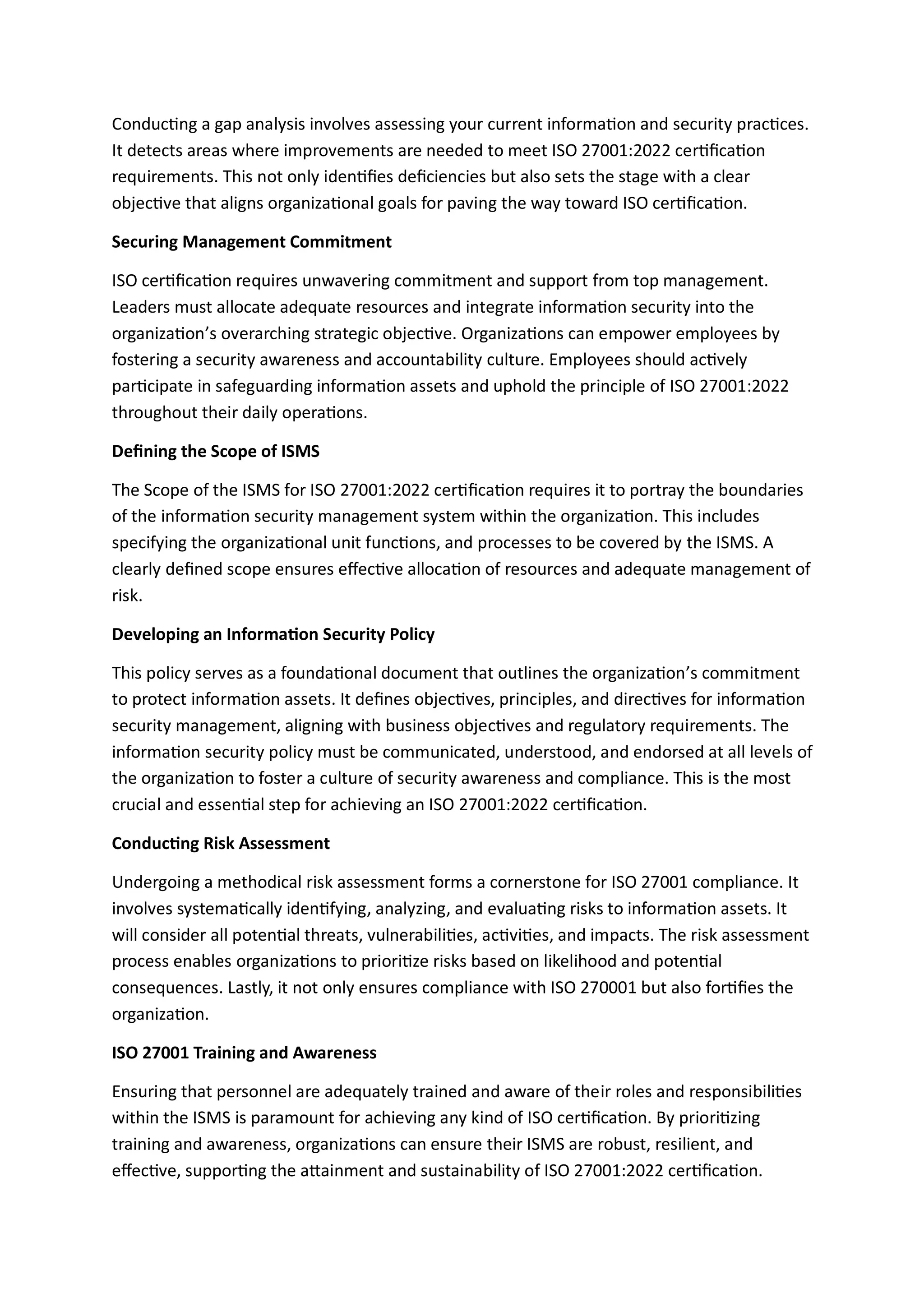
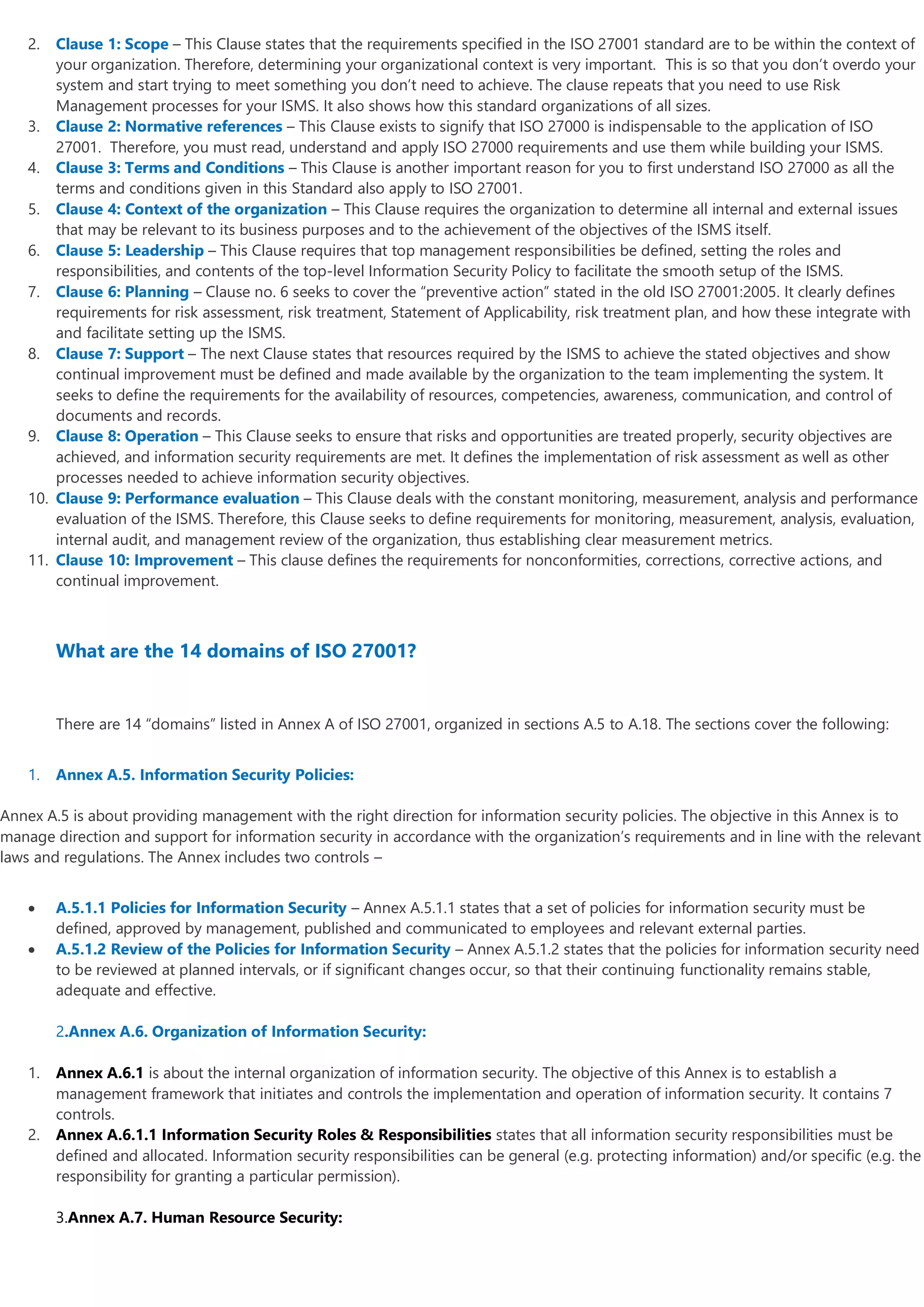
- The Clauses (4–10): These represent the mandatory management requirements of the ISMS. Any official PDF of the standard will dedicate the bulk of its pages to these requirements, covering context, leadership, planning, support, operation, performance evaluation, and improvement.
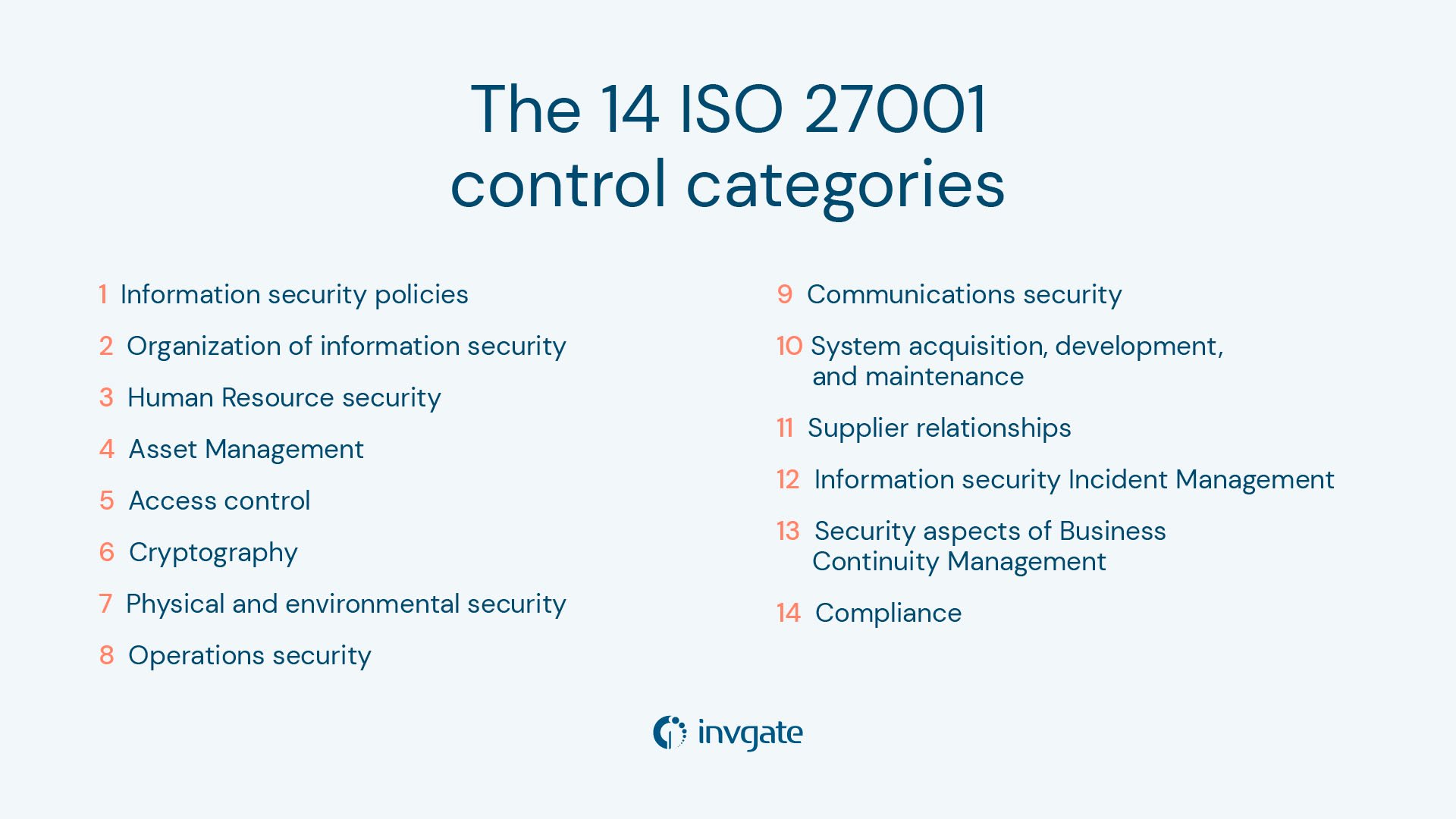
- Annex A: This is arguably the most referenced section of the PDF. It lists the reference controls that organizations must evaluate. In the 2022 iteration, these controls are categorized into four themes: organizational, people, physical, and technological.
- The Statement of Applicability (SoA) Framework: While the standard does not provide a pre-filled SoA, effective PDF guidance documents often provide templates. The SoA is the most critical document for an auditor; it bridges the gap between the standard’s requirements and your organization’s specific risk profile.
Evaluating the Credibility of Supplemental PDF Guides
Beyond the official standard, there is a vast market of implementation guides, whitepapers, and checklists available in PDF format. Navigating these requires a critical eye. Not all PDF resources are created equal, and many are designed primarily as marketing collateral for consulting firms rather than as technical blueprints.
When assessing a third-party PDF resource, verify the following:
- Alignment with 2022 Revisions: Does the document reference the current ISO/IEC 27001:2022 framework? Any reference to older control sets indicates the document is obsolete.
- Source Authority: Is the author a recognized cybersecurity certification body or an accredited registrar? Documentation from organizations like the International Accreditation Forum (IAF) or certified bodies carries more weight than generalized blog-based PDFs.
- Actionable vs. Descriptive Content: High-quality resources move beyond describing what the standard is and explain how to generate the required documentation, such as the Information Security Policy or the Risk Treatment Plan.
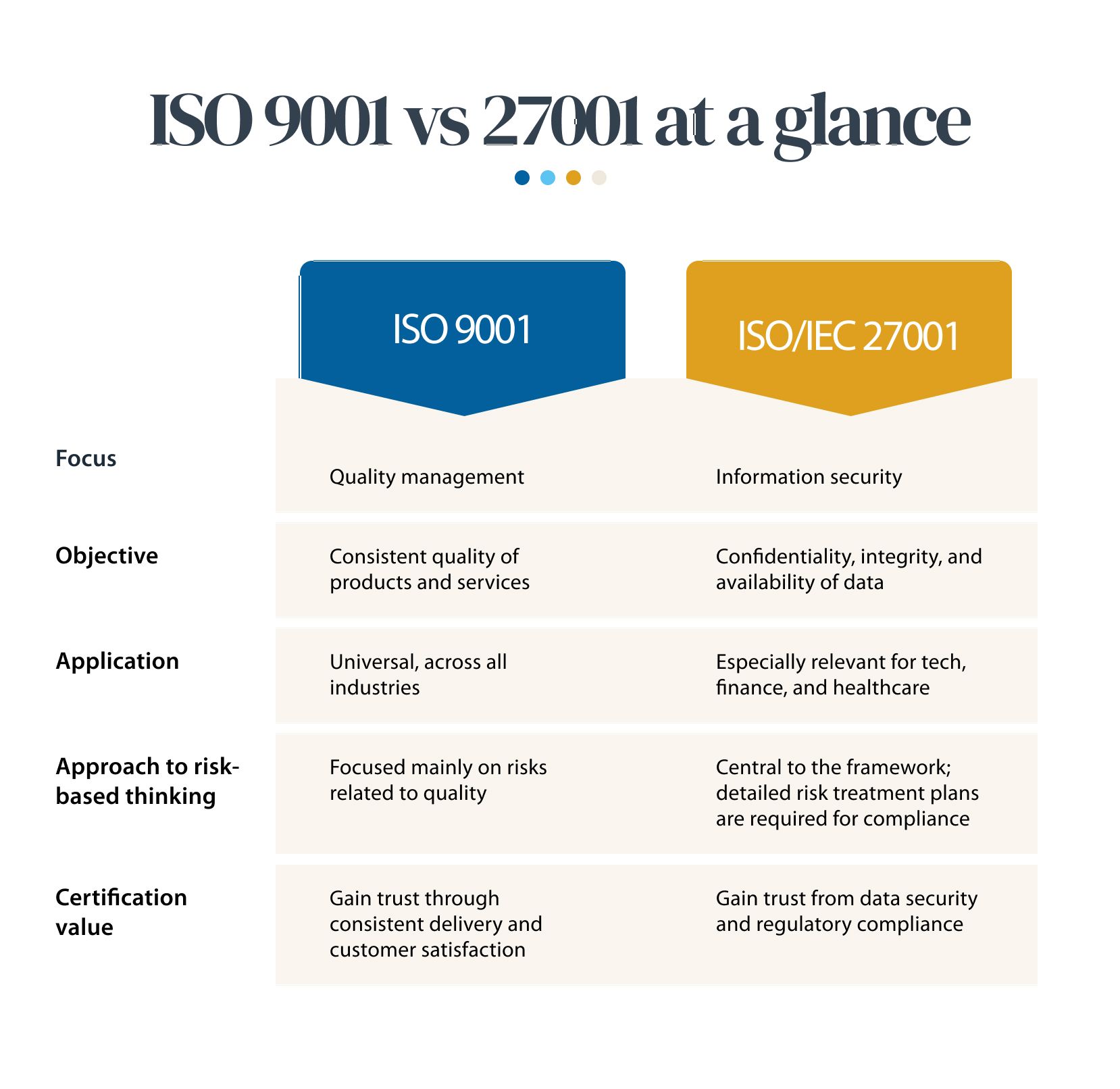
Comparison Table: Official Standards vs. Supplemental Resources
| Feature | Official ISO/IEC 27001 PDF | Supplemental/Third-Party PDFs |
|---|---|---|
| Purpose | Defines the mandatory requirements | Offers implementation advice/templates |
| Authority | Legally binding for certification | Informational or advisory |
| Copyright | Strictly protected by ISO/IEC | Varies (Creative Commons to Proprietary) |
| Detail Level | High-level (what to achieve) | Granular (how to achieve it) |
| Updates | Periodic (e.g., 2005, 2013, 2022) | Frequent (updated for market trends) |
Bridging the Gap: From PDF to Practical Implementation
Reading the PDF is only the first step. The standard requires that an organization demonstrate that its ISMS is "fit for purpose." A common mistake is to treat the standard as a checklist. If you download a PDF checklist and simply mark off items without integrating them into the company’s daily operations, the resulting ISMS will collapse under the scrutiny of an external audit.
Instead, use your PDF resources to construct a Documented Information Matrix. This matrix should map every requirement in the ISO standard to specific internal documents—policies, procedures, and records—within your organization. For example, if the standard requires "Clause 5.2 Policy," your matrix should point directly to your internal "Information Security Policy Document (v1.0)."
Common Pitfalls in Using PDF Resources
Many organizations struggle because they rely on static, outdated, or generic PDF templates found online. A recurring theme in audit failures is the "copy-paste" error. If an organization downloads a template PDF and fails to customize the document to reflect the specific size, complexity, and risk environment of their own enterprise, they are essentially documenting a system they do not actually operate.
Furthermore, ensure that your PDF resources are managed under a strict version-control system. If you utilize an implementation guide PDF, store it in your document management system with metadata regarding its source and review date. This prevents "document drift," where the organization accidentally relies on conflicting guidance from different documents.
Compliance and Legal Considerations
ISO 27001 is a standard, not a law, but it is often contractually required by clients or regulators. When using PDF resources to achieve compliance, you must be aware of the "Documented Information" requirement. The standard explicitly states that the organization must retain documented information as evidence of the implementation of the ISMS.
Your PDFs should serve as the foundation for this evidence. Always ensure that the resources you rely on are interpreted through the lens of your specific jurisdictional requirements—such as GDPR in Europe or CCPA in California—if those laws overlap with your information security obligations. The ISO 27001 standard acts as a universal language, but your implementation must respect the local legal nuances of your operational region.
Frequently Asked Questions
Where is the best place to download the official ISO 27001 PDF?
The official, current version of the standard is available for purchase directly from the ISO web store or through your national standards organization, such as ISO’s member bodies. Avoid "free" downloads of the full text, as these are frequently pirated, incomplete, or contain malicious code.
Can I use a 2013 version PDF for a 2026 audit?
No. ISO 27001:2013 was retired and replaced by the 2022 version. Certification bodies will not accept documentation based on the 2013 version. You must transition your existing ISMS to the 2022 framework to maintain valid certification.
Do I need to buy every ISO 27000-series PDF?
While ISO 27001 is the core certification standard, ISO 27002 (which provides guidance on the controls listed in Annex A) is highly recommended. It acts as an interpretive guide for the controls, making it much easier to understand how to implement them in practice.
How do I prove to an auditor that my PDF-based documentation is compliant?
You prove compliance through the "plan-do-check-act" cycle. Your documentation should include not just the policies, but also records, logs, and meeting minutes that prove the policies described in your PDF resources are being followed daily.
Is there a difference between an "ISO 27001 Checklist" and the standard itself?
Yes, a profound difference. A checklist is a simplified interpretation often created by third parties. It cannot be used as a substitute for the official standard, as it lacks the legal and technical precision required to pass an actual certification audit.
Next Actions for Implementation
If you are preparing for ISO 27001 certification in 2026, begin by purchasing the official ISO/IEC 27001:2022 standard. Use it as your primary document. Once you have read the standard, supplement your efforts by searching for "ISO 27002 implementation guidance" from verified accreditation bodies. Start your project by identifying your ISMS scope and conducting a formal gap analysis; treat all other PDF resources strictly as support tools rather than as authoritative substitutes for the standard itself.