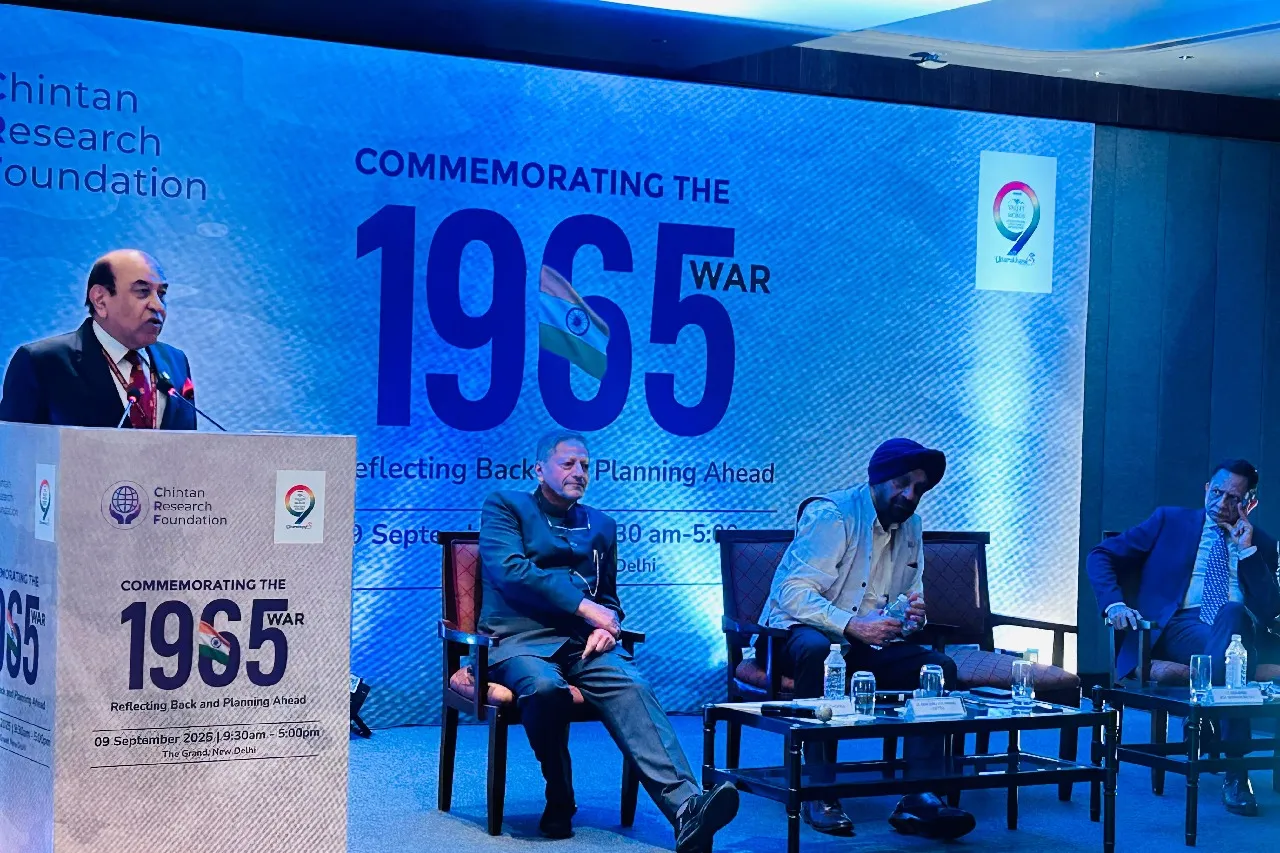
The 1965 India-Pakistan War was a seventeen-day military conflict fought along the international border and the Line of Control between September and September 1965, culminating in a United Nations-mandated ceasefire following a massive armored clash in the Indian subcontinent.
Introduction to the 1965 Conflict
The Indo-Pakistani War of 1965 represents a major turning point in modern South Asian history. While the partition of British India in 1947 and the First Kashmir War of 1947–1948 established the foundational territorial disputes between India and Pakistan, the 1965 war escalated these unresolved tensions into a full-scale conventional military confrontation. Unlike the localized skirmishes that characterized earlier flashpoints, this conflict involved large-scale armored divisions, heavy artillery, and air force operations spanning multiple fronts from the deserts of Rajasthan to the rugged terrain of Jammu and Kashmir.
Understanding this war requires analyzing the geopolitical context of the Cold War, the shifting military alliances in the region, the strategic miscalculations of both leaderships, and the ultimate diplomatic intervention that brought an end to hostilities. As military historians and geopolitical analysts examine the campaign, several key facts emerge regarding its origins, conduct, and long-term consequences.
Historical Background and Origins
The roots of the 1965 war extend directly from the unresolved status of the princely state of Jammu and Kashmir following the 1947 partition. Throughout the late 1950s and early 1960s, bilateral talks mediated by international actors failed to yield a permanent political settlement. Several critical developments exacerbated the friction between New Delhi and Islamabad:
- Military Aid and Modernization: Following the 1962 Sino-Indian War, India embarked on a major military expansion and modernization program. Concurrently, Pakistan had entered into mutual defense assistance agreements with the United States, receiving advanced military hardware such as Patton tanks and F-86 Sabre fighter jets, which shifted the perceived tactical balance of power in the region.
- The Rann of Kutch Skirmishes: In early 1965, border clashes broke out in the disputed salt marshland of the Rann of Kutch along the boundary between Gujarat, India, and Sindh, Pakistan. British mediation helped broker a ceasefire in June 1965, but the relatively successful defense by Pakistani forces emboldened the leadership in Islamabad.
- Operation Gibraltar: Convinced that a localized insurgency in Indian-administered Kashmir could trigger a general uprising against Indian rule without escalating into a full-scale conventional war, Pakistan launched Operation Gibraltar in August 1965, deploying covert infiltrators across the ceasefire line.
Key Military Chronology and Escalation
When Indian security forces detected and neutralized the infiltration campaign under Operation Gibraltar, the nature of the conflict transformed rapidly. India chose not to limit its military response to the disputed territory of Kashmir, deciding instead to open a new front across the international border in Punjab to relieve military pressure on the northern sector.
The following table outlines the major phases and strategic milestones of the seventeen-day war:
| Date / Phase | Strategic Event | Key Participants and Locations | Outcome / Significance |
|---|---|---|---|
| August 1965 | Operation Gibraltar | Pakistani irregulars and regular officers infiltrating Jammu and Kashmir | Uncovered by local shepherds and security forces; failed to spark a civilian uprising. |
| September 1, 1965 | Operation Grand Slam | Pakistani armored and infantry assault in the Chhamb sector | Threatened the vital Akhnoor bridge, prompting India to open a new front. |
| September 6, 1965 | International Border Crossing | Indian Army forces crossing the Punjab border toward Lahore | Compelled Pakistan to pull back forces from the northern sector to defend its heartland. |
| September 8–10, 1965 | Battle of Asal Uttar | Indian 4th Mountain Division and armored elements versus Pakistani 1st Armored Division | Celebrated as one of the largest tank battles of the post-World War II era, resulting in heavy losses of Pakistani Patton tanks. |
| September 22, 1965 | UN Security Council Resolution 211 | International diplomatic pressure led by the United Nations | Demanded an immediate ceasefire, accepted by both nations, ending active hostilities. |
The Scale of Armored Warfare and Tactical Operations
One of the defining characteristics of the 1965 war was the heavy reliance on mechanized armor. Military planners on both sides expected decisive breakthroughs through rapid armored thrusts. However, doctrinal rigidities, logistical constraints, and determined defensive preparations prevented either side from achieving a knockout blow.
The Battle of Asal Uttar
Fought in the Khem Karan sector of Punjab, the Battle of Asal Uttar stands out as a tactical masterclass in defensive warfare by the Indian Army. Anticipating the Pakistani armored assault, Indian forces intentionally flooded cane fields, creating muddy terrain that immobilized heavy tanks. The Pakistani 1st Armored Division suffered devastating losses, leading to the abandonment of numerous American-built M48 Patton tanks in what later became known to historians and journalists as "Patton Nagar" (Patton Town).
Air Superiority and Aerial Combat
The Pakistan Air Force (PAF) and the Indian Air Force (IAF) engaged in extensive counter-air operations, close air support, and intercept missions. While the PAF utilized advanced Sidewinder missiles and radar-equipped aircraft to inflict notable initial losses, the IAF quickly adapted, reorganizing its command structure and maintaining high sortie rates across multiple contested sectors. Both air forces claimed significant enemy aircraft destruction, though independent post-war assessments indicate that actual losses were relatively balanced.
Diplomatic Resolution and the Tashkent Declaration
As the military campaign settled into a bloody stalemate with neither side capable of achieving a decisive strategic victory, the international community intervened decisively. The United Nations Security Council passed Resolution 211 on September 20, 1965, calling for a cessation of hostilities and a withdrawal of armed forces to pre-conflict positions.
In January 1966, Indian Prime Minister Lal Bahadur Shastri and Pakistani President Ayub Khan met in Tashkent (then part of the Soviet Union) under the mediation of Soviet Premier Alexei Kosygin. The resulting Tashkent Declaration committed both nations to restoring normal diplomatic relations, withdrawing troops to pre-August 5 positions, and resolving disputes through peaceful means. Tragically, Prime Minister Shastri suffered a fatal heart attack in Tashkent hours after signing the agreement, adding a somber historical note to the conclusion of the conflict.
Strategic Consequences and Long-Term Impact
The 1965 war reshaped military planning, defense budgeting, and foreign policy across South Asia for decades to follow:
- Military Reorganization: Both nations realized the critical gaps in their intelligence, logistics, and joint service coordination. India initiated a comprehensive military expansion and modernization program, significantly increasing defense allocations and restructuring its command hierarchy.
- Shift in Alliances: The conflict exposed the limits of foreign military assistance. The United States imposed arms embargoes on both India and Pakistan, prompting Islamabad to seek alternative diplomatic and military alignments, particularly with China, while New Delhi increasingly leaned toward strategic cooperation with the Soviet Union.
- Prelude to 1971: The inability of the Pakistani military establishment to secure Kashmir or decisively defeat Indian forces created severe internal political friction. The grievances of East Pakistan regarding military focus and resource allocation during the 1965 war further widened the domestic divide, directly setting the stage for the Bangladesh Liberation War of 1971.
Frequently Asked Questions
What caused the 1965 India-Pakistan War?
The war was primarily caused by unresolved territorial disputes over Jammu and Kashmir, escalating border skirmishes in the Rann of Kutch, and Pakistan's covert infiltration campaign known as Operation Gibraltar, which aimed to incite an insurgency in Indian-administered Kashmir.
Who won the 1965 India-Pakistan War?
Most military historians classify the 1965 war as a military stalemate. While neither country achieved its primary strategic objectives or captured significant territory permanently, India successfully repelled the invasion of Kashmir and halted Pakistani armored thrusts before the UN-mandated ceasefire took effect.
How long did the 1965 war last?
The active military conflict lasted for seventeen days, commencing with major escalations on September 1, 1965, and concluding with a formal ceasefire that took effect on September 23, 1965.
What was the significance of the Battle of Asal Uttar?
The Battle of Asal Uttar was a major armored engagement in the Punjab sector where the Indian Army repulsed a powerful Pakistani armored assault, destroying or capturing numerous advanced Patton tanks and halting the enemy's offensive capability in that sector.
What was the outcome of the Tashkent Declaration?
Signed in January 1966, the Tashkent Declaration was a peace agreement mediated by the Soviet Union that required both India and Pakistan to withdraw their forces to pre-conflict positions and resolve future disputes through bilateral diplomatic dialogue.
Conclusion and Further Historical Study
The 1965 India-Pakistan War remains a complex study in conventional military strategy, operational friction, and diplomatic intervention. For readers seeking a deeper understanding of this era, consulting official military histories, archival documents released by governments, and peer-reviewed analyses by defense historians provides a comprehensive view beyond generalized summaries. Evaluating primary source documents from the United Nations and contemporary journalistic accounts helps maintain a balanced, objective perspective on a conflict that continues to influence modern South Asian geopolitics.