At the end of a standard 15-year term life insurance policy, the single key fact about cash value is that pure term life insurance policies do not accumulate cash value, meaning the policy typically expires with a cash value balance of exactly zero. While permanent life insurance products like whole life or universal life build a cash reserve over time through a portion of the premium payments, traditional term life insurance functions purely as temporary risk protection. It provides a death benefit for a specified 15-year window without any savings or investment component.
Understanding how life insurance contracts function requires navigating the fundamental differences between temporary and permanent structures. Consumers shopping for insurance protection often encounter various product types and marketing terms that can blur the line between pure risk coverage and cash-accumulating assets. Examining the precise mechanics of a 15-year term policy clarifies what happens financially when the coverage period concludes, helping policyholders avoid common misconceptions and plan effectively for their long-term financial security.
Understanding Term Life Insurance Fundamentals
Term life insurance is designed to provide maximum death benefit protection for the lowest possible initial cost. When an individual purchases a 15-year term policy, they enter into a contract with an insurance carrier that guarantees a specific payout to beneficiaries if the insured passes away within that 15-year window.
Unlike permanent policies, which remain active for the entire life of the insured as long as premiums are paid, term life has an explicit expiration date. Because the insurer's liability is strictly limited to this 15-year term, premium calculations are straightforward. The monthly or annual payments cover the pure cost of insurance—the statistical probability of mortality during those specific years—alongside a proportional share of the company's administrative expenses.
No portion of a standard term premium is diverted into an interest-bearing account, mutual fund, or equity index. Consequently, the policy acts similarly to auto or homeowners insurance: you pay for protection over a specific timeframe, and if no claim is filed before the policy lapses or expires, the contract simply terminates with no residual monetary value returned to the policyholder.
Why Traditional 15-Year Term Policies Lack Cash Value
The absence of cash value in a standard 15-year term life insurance policy stems from the fundamental pricing model of temporary insurance. Insurance companies price term policies based on the concept of level term rates, where premiums remain constant for the duration of the 15-year period.
During the early years of a 15-year term, the premium paid is actually higher than the statistical cost of insuring a younger, healthier person. Conversely, in the later years of the term, that same level premium is lower than the actual cost of insuring an older person. In financial products that build cash value, insurers take the excess premiums paid in the early years, invest them, and reserve them to offset the escalating mortality costs of later years, or to build a cash surrender value.
However, in a pure term contract, those early "surplus" premium dollars are not placed into a cash accumulation account for the policyholder. Instead, they are pooled by the insurance company to maintain the level premium structure across the entire block of policyholders and to cover administrative costs and anticipated claims. Because there is no investment vehicle attached to a standard term policy, the policy does not generate dividends, interest credits, or cash value that can be withdrawn or borrowed against.
Rare Exceptions: Return of Premium (ROP) Riders
While standard 15-year term policies do not build cash value, consumers occasionally encounter a specialized variation known as a Return of Premium (ROP) term life insurance policy. It is critical to distinguish an ROP rider from true policy cash value, though it frequently causes confusion in the marketplace.
An ROP rider is an optional endorsement added to a term policy at the time of purchase. It dictates that if the insured outlives the 15-year term and the policy expires, the insurance company will refund 100% of the base premiums paid over the life of the contract.
| Feature | Standard 15-Year Term | 15-Year Term with ROP |
|---|---|---|
| Cash Value Accumulation | None ($0) | None (Returns Premiums) |
| Premium Cost | Lower | Significantly Higher |
| Payout at Expiration | Nothing | Total Premiums Refunded |
| Surrender Value Mid-Term | Little to None | Partial/Vested ROP |
While an ROP policy results in a cash payout at the end of the 15 years, this money is merely a return of the policyholder's own overpayments rather than investment earnings or accumulated cash value. Furthermore, ROP policies come with distinct trade-offs:
- Higher Premiums: ROP term policies typically cost 30% to 50% more in monthly premiums than a standard, non-ROP term policy.
- Opportunity Cost: Because the extra premium dollars are returned without interest at the end of 15 years, inflation erodes the purchasing power of those returned funds. Investing that premium difference independently often yields a higher financial return.
- Surrender Penalties: Canceling an ROP policy midway through the 15-year term usually results in a diminished payout or complete forfeiture of the return-of-premium benefit, depending on the carrier's vesting schedule.
What Happens Financially When a 15-Year Term Expires
When the 15-year term concludes, the policyholder faces a definitive financial crossroads. Because there is no cash value to roll over or borrow against, the policy ceases to provide coverage unless specific actions are taken prior to the expiration date.
1. Policy Expiration and Termination
If the policyholder takes no action, the coverage simply lapses. The insurance company retains all premiums paid (assuming a standard term policy without an ROP rider), and the policyholder is left without life insurance protection. At this stage, attempting to secure a new policy will require underwriting based on the insured's age and health status at that current time, resulting in significantly higher premium rates.
2. Converting to Permanent Coverage
Most reputable term life insurance contracts include a conversion privilege. This contractual clause allows the policyholder to convert their 15-year term policy into a permanent life insurance policy (such as whole life or universal life) before the term expires—often without undergoing a new medical exam or proving insurability.
- Upon conversion, the new permanent policy will begin accumulating cash value.
- Premiums for the permanent policy will be substantially higher than the expiring term rates, calculated based on the insured's attained age at the time of conversion.
3. Entering Renewable Term (Annual Renewable Term)
Many term policies feature a guaranteed renewable provision. This allows the policyholder to extend their coverage past the 15-year mark on a year-to-year basis without proving insurability.
- However, premiums increase drastically every year upon renewal, reflecting the advancing age of the insured.
- This option is generally used as a short-term bridge rather than a long-term solution due to the prohibitive cost.
Common Misconceptions About Term Life and Cash Value
Misunderstandings regarding insurance mechanics frequently lead to misplaced financial expectations. Clarifying these myths helps consumers make informed choices when structuring their personal risk management plans.
- Myth: Term insurance builds equity like a home mortgage. Unlike a home mortgage where monthly payments gradually pay down principal and build home equity, term life insurance payments are strictly an expense for risk transfer. There is no principal being paid down and no asset ownership transferred to the policyholder.
- Myth: All life insurance policies pay out something eventually. Permanent policies can build lifelong cash value, but term life insurance is strictly a contingent contract. If the event (death) does not occur within the 15-year timeframe, the contract fulfills its obligation by providing 15 years of peace of mind, leaving no financial residue.
- Myth: Cash value can be withdrawn tax-free at any time from a term policy. Because standard term policies lack cash value entirely, there are no funds to withdraw, surrender, or borrow against. Any discussion of tax-free policy loans or cash withdrawals strictly applies to permanent life insurance products.
Alternative Financial Strategies for Long-Term Savings
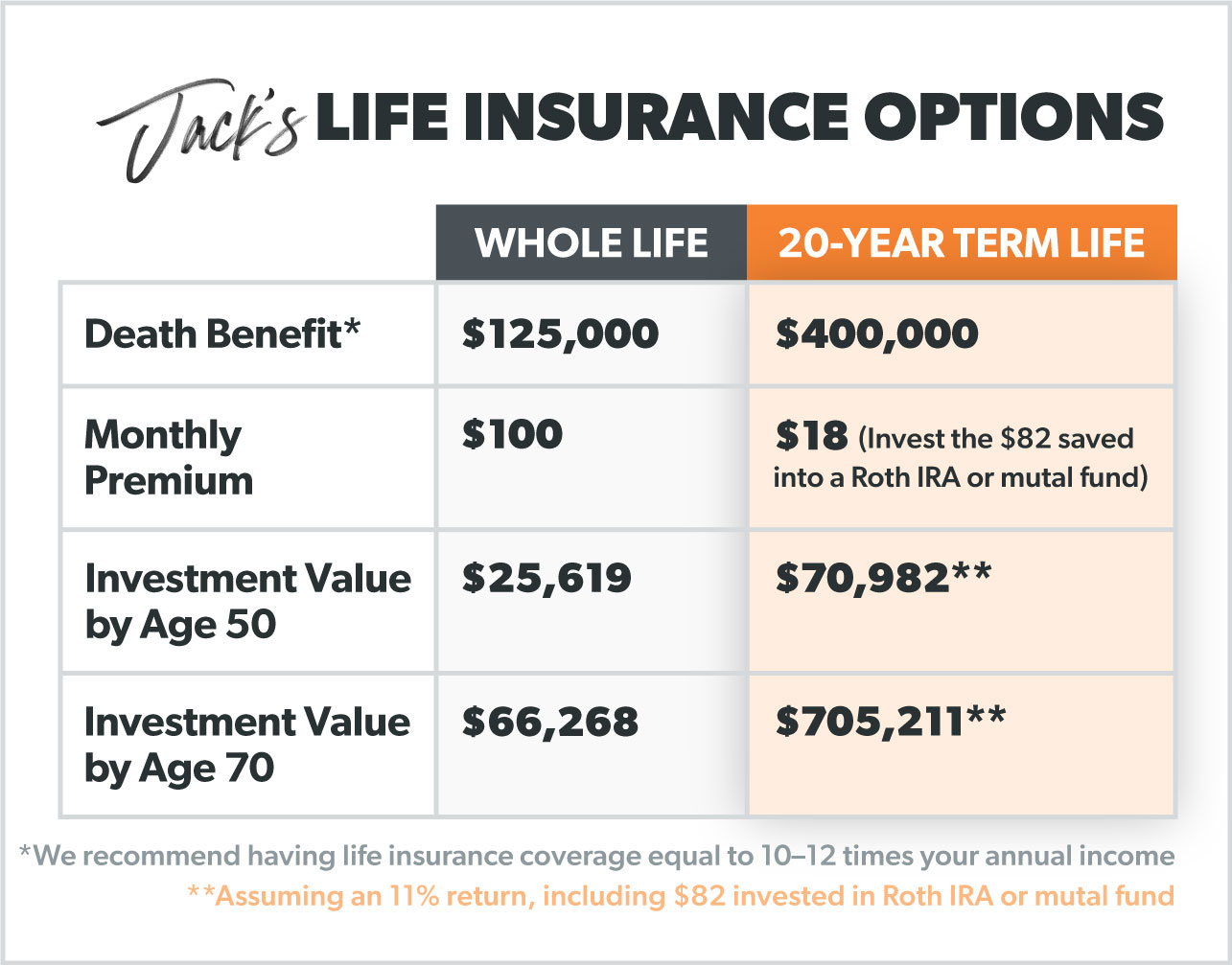
Recognizing that a 15-year term life insurance policy will not yield a cash payout at the end of its term highlights the importance of separating insurance needs from investment goals. Financial planners often advocate the "Buy Term and Invest the Difference" (BTID) strategy.
Under this approach, individuals purchase a cost-effective 15-year term life insurance policy to cover temporary financial obligations—such as income replacement for dependent children or paying off a 15-year mortgage. Because term premiums are low compared to permanent insurance, the policyholder takes the surplus cash they would have spent on a whole life policy and invests it in dedicated wealth-building vehicles, such as:
- Employer-sponsored retirement accounts (like a 401(k) or 403(b))
- Individual Retirement Accounts (IRAs)
- Taxable brokerage accounts invested in diversified index funds or exchange-traded funds (ETFs)
This separation ensures that insurance is utilized purely for risk mitigation, while investments are deployed in assets historically designed to outpace inflation and generate true compounding cash growth over a 15-year horizon.
Frequently Asked Questions
Can I get any money back if I cancel my 15-year term policy after 10 years?
On a standard 15-year term policy, canceling after 10 years yields no cash surrender value because the policy does not accumulate cash reserves. If you purchased an optional Return of Premium rider, some carriers offer a graded or prorated surrender value after a specific number of years, though canceling early often results in a significant financial penalty or forfeiture of the returned premiums.
Is it possible to borrow money against a 15-year term life insurance policy?
No. Policy loans are exclusively a feature of permanent life insurance policies (such as whole life or universal life) that have accumulated a positive cash value balance. Standard term insurance contracts do not contain cash value, meaning there are no funds available to borrow against.
What happens to my beneficiaries if I die on the final day of the 15-year term?
If the insured passes away on or before the final day of the 15-year term while the policy is active and premiums are paid up to date, the insurance company is legally obligated to pay the full face amount of the death benefit to the designated beneficiaries. The policy must be active and within its effective dates at the exact time of death.
Can a 15-year term policy automatically renew into a cash value policy?
No. A standard term policy that reaches its 15-year expiration date will either lapse or enter an annual renewable term phase if specified in the contract. It does not automatically convert into a permanent cash-value policy. Converting to a permanent policy requires an explicit request and adherence to the carrier's conversion rules before the term expires.
How do I know if my policy has cash value?
Review your annual policy statement or contact your insurance provider directly. Permanent policies explicitly detail accounts such as "Cash Surrender Value," "Account Value," or "Dividend Accumulation." A standard term policy statement will list a cash value balance of zero.
Conclusion and Next Actions
The primary takeaway regarding a 15-year term life insurance policy is clear: it does not build cash value, and upon expiration, it terminates with a balance of zero unless an explicit conversion or ROP rider was established. If your financial goals include accumulating cash reserves or building long-term equity through an insurance vehicle, evaluate permanent life insurance products or consult a licensed fiduciary financial advisor to explore parallel investment strategies. Review your current policy documents today to confirm your expiration date and evaluate whether your coverage still aligns with your family's evolving financial protection needs.