The primary insight into the VOO S&P 500 ETF landscape is that low expense ratios and continuous liquidity drive long-term compounding advantages, making it a foundational instrument for passive index investing. Vanguard's offering operates within a highly competitive ecosystem where structural tracking efficiency, asset scale, and secondary market liquidity dictate how effectively investors capture broad United States large-cap equity returns.
Introduction to the Vanguard S&P 500 ETF
The financial landscape for retail and institutional investors features numerous products tracking the S&P 500 Index, but the Vanguard S&P 500 ETF (ticker: VOO) occupies a distinct role. Navigating this landscape requires more than simply choosing an index fund; it demands a clear understanding of how exchange-traded funds (ETFs) function, how index tracking operates, and how cost structures compound over decades.
When evaluating the VOO S&P 500 ETF landscape, investors often focus solely on past performance. However, structural mechanics—such as expense ratios, tracking error, bid-ask spreads, and securities lending revenue—shape the actual net returns delivered to shareholders. This analysis explores these core components, providing a comprehensive evaluation of what drives the VOO ecosystem in 2026.
Structural Mechanics of the S&P 500 Index Landscape
To understand VOO, one must first examine the index it tracks. The S&P 500 comprises 500 of the largest publicly traded corporations in the United States, weighted by float-adjusted market capitalization. This market-cap weighting methodology means that larger companies exert a significantly higher influence on the index's daily price movements than smaller constituent firms.
Within this landscape, VOO serves as a vehicle that holds a basket of stocks designed to mimic the performance of the S&P 500. Unlike actively managed mutual funds where portfolio managers attempt to beat the market by selecting individual securities, VOO pursues a passive indexing strategy.
- S&P 500 Index (Benchmark)
- Vanguard S&P 500 ETF (VOO) Replication
- Full Physical Replication (Holding All 500+ Stocks)
- Capitalization Weighting
- Secondary Market Trading
- Continuous Intraday Liquidity
- Authorized Participants Managing Creation/Redemption
- Vanguard S&P 500 ETF (VOO) Replication
The primary operational mechanism relies on physical replication. Rather than using derivatives or sampling methods, VOO generally holds all or a representative sample of the stocks making up the S&P 500 index in roughly the same proportions. This structural design minimizes tracking error—the divergence between the performance of the fund and the performance of the benchmark index.
The Role of Expense Ratios and Cost Efficiencies
Cost is the single most controllable factor in long-term investing. The VOO landscape is defined heavily by an ultra-low expense ratio, which stands at 0.03% (meaning $3 annually for every $10,000 invested). While fractional differences in percentage fees may appear negligible over short horizons, compounding turns high fees into a severe drag on portfolio wealth over multi-decade timelines.
| ETF Ticker | Expense Ratio | Replication Method | Average Daily Volume (Approx.) |
|---|---|---|---|
| VOO | 0.03% | Full Physical | High (Millions of Shares) |
| SPY | 0.0945% | Full Physical | Extremely High (Institutional Heavy) |
| IVV | 0.03% | Full Physical | High |
Beyond the stated expense ratio, total cost of ownership includes trading costs such as commissions (largely eliminated across major brokerages), bid-ask spreads, and tax efficiency. ETFs utilize a unique in-kind creation and redemption mechanism managed by authorized participants. This structure helps minimize capital gains distributions within the fund, making VOO tax-efficient for taxable brokerage accounts compared to many traditional mutual funds.
Liquidity, Trading Dynamics, and Secondary Markets
Liquidity is often misunderstood by retail investors who confuse the liquidity of an ETF with the liquidity of its underlying holdings. While VOO trades on secondary market exchanges like any common stock throughout the trading day, its underlying portfolio consists of some of the most heavily traded equities in the global financial system.
- Primary Market Creation/Redemption: Authorized participants step in when supply and demand imbalances cause the market price of VOO to deviate significantly from its Net Asset Value (NAV). They exchange baskets of underlying stocks for ETF shares (or vice versa), arbitrating away discrepancies and keeping the market price tightly tethered to the NAV.
- Bid-Ask Spreads: Because of high trading volume, the bid-ask spread for VOO is typically razor-thin. This reduces execution costs for buyers and sellers, even when executing large block trades.
- Intraday Trading: Unlike traditional open-ended mutual funds that price once per day after market close, VOO can be bought and sold continuously during standard market hours.
Comparing S&P 500 Alternatives: VOO vs. SPY vs. IVV
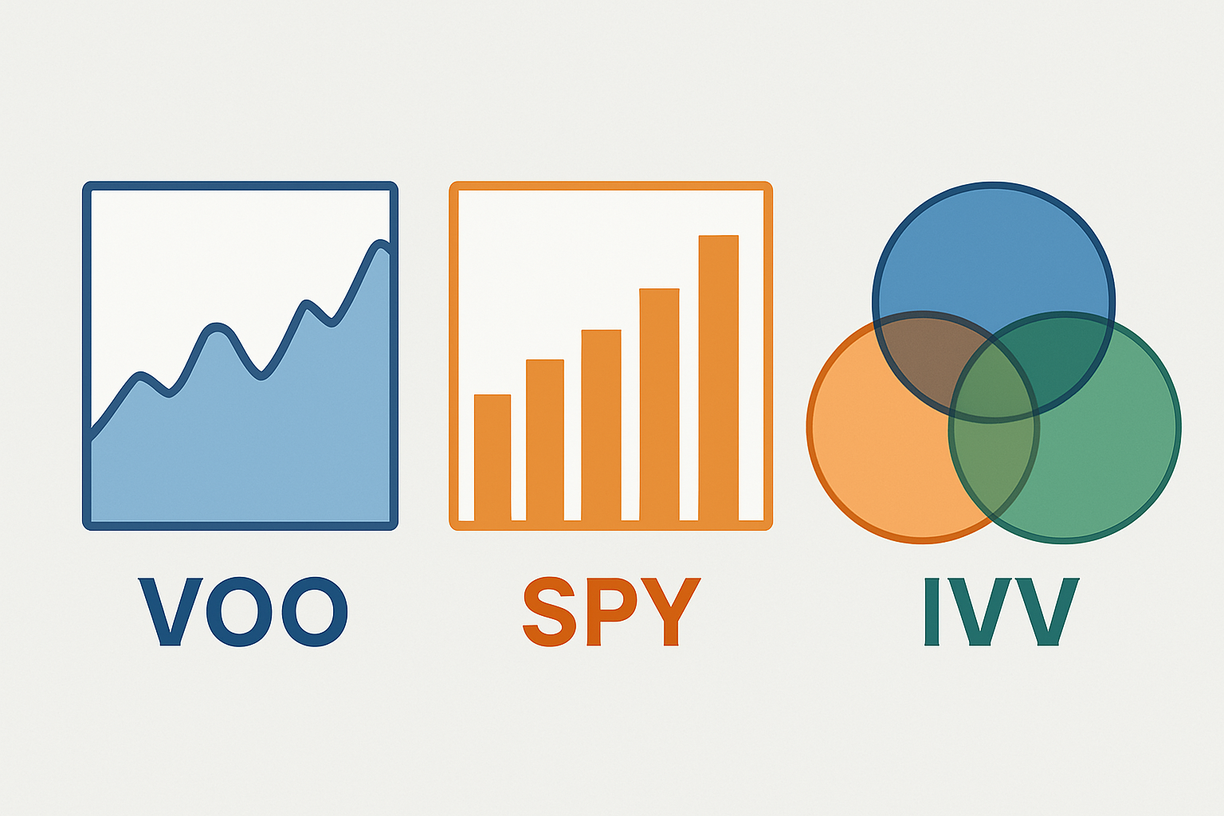
Investors evaluating the VOO landscape must acknowledge that Vanguard is not the sole provider of an S&P 500 ETF. State Street Global Advisors offers the SPDR S&P 500 ETF Trust (SPY), and BlackRock offers the iShares Core S&P 500 ETF (IVV).
While all three track the exact same benchmark index, their intended user bases and structural nuances differ:
- SPY (SPDR S&P 500 ETF Trust): Launched in 1993, SPY is the oldest and most liquid ETF in the world. It is the preferred vehicle for institutional traders, options market makers, and short-term speculators due to its massive options liquidity and deep order books. However, its expense ratio of 0.0945% makes it slightly more expensive for long-term buy-and-hold investors than VOO or IVV.
- IVV (iShares Core S&P 500 ETF): Matching VOO’s expense ratio of 0.03%, IVV is structurally identical for long-term investors. BlackRock’s fund competes directly with Vanguard for retail and institutional buy-and-hold capital.
- VOO (Vanguard S&P 500 ETF): Backed by Vanguard’s unique client-owned structure, VOO is heavily favored by long-term individual investors, retirement planners, and independent wealth builders seeking low-cost core portfolio allocation.
Potential Risks and Limitations of the S&P 500 Landscape
Despite its popularity, relying entirely on an S&P 500 ETF like VOO involves structural and macroeconomic risks that investors must consider:
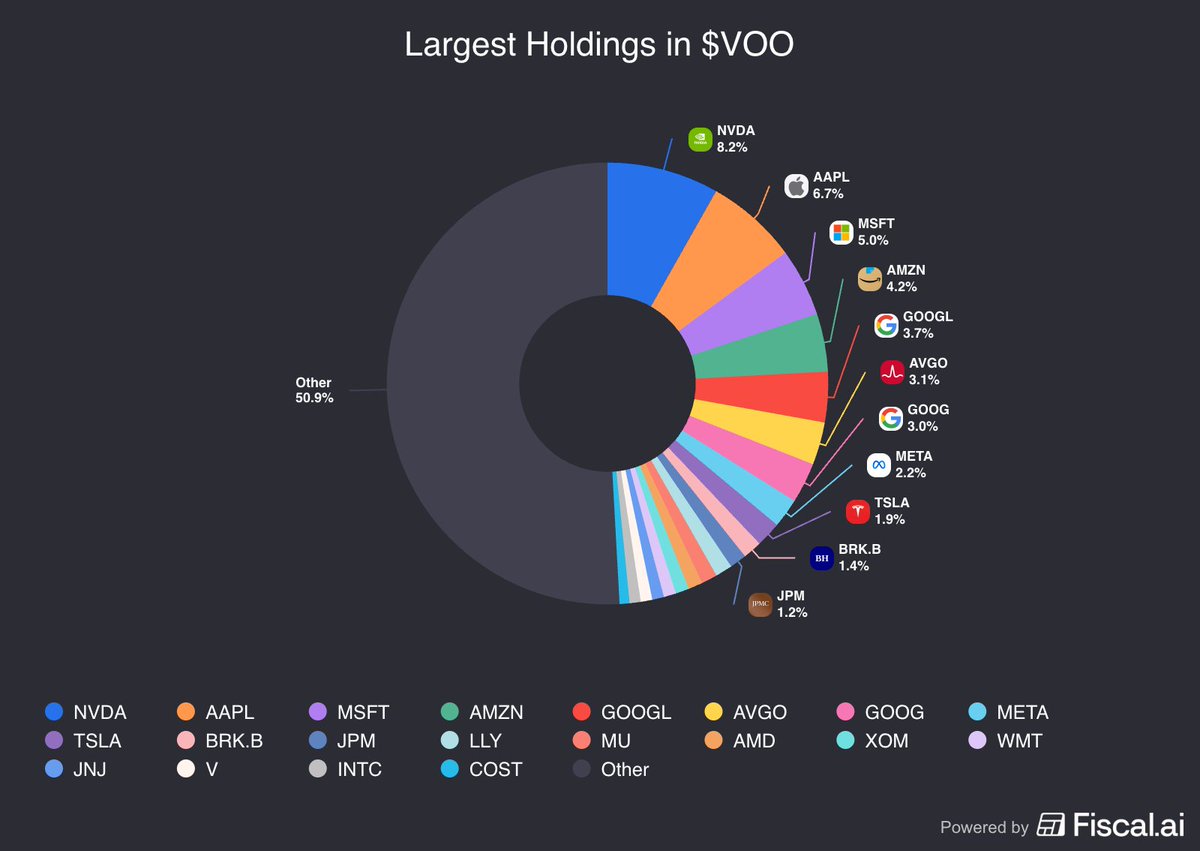
- Concentration Risk: Because the S&P 500 is market-cap weighted, a small number of mega-cap technology and growth companies (such as Apple, Microsoft, NVIDIA, Amazon, and Alphabet) often account for a disproportionately large percentage of the index's total weight. When these specific giants experience a downturn, the entire index drops significantly, regardless of how the other 490 companies perform.
- Lack of International Diversification: VOO restricts its holdings exclusively to United States-domiciled corporations. While many of these multinational firms generate significant revenue overseas, the fund completely excludes foreign markets (such as Europe, emerging markets, and Japan), leaving investors exposed to domestic macroeconomic policy shifts and currency risks.
- Systemic Market Risk: As a broad equity index fund, VOO offers no protection against broad market corrections, bear markets, or economic recessions. Investors must possess the risk tolerance and time horizon necessary to endure multi-year drawdowns without panic-selling.
Frequently Asked Questions
What is the expense ratio of the VOO ETF?
The expense ratio for VOO is 0.03%, meaning you pay $3 annually for every $10,000 invested. This low fee is a direct result of Vanguard's competitive pricing model and massive asset scale under management.
How does VOO differ from mutual funds tracking the S&P 500?
While both hold the same underlying stocks, VOO trades on an exchange throughout the day like an individual stock, whereas mutual funds price only once at the end of the trading day. Additionally, ETFs generally offer greater tax efficiency due to the in-kind creation and redemption mechanism.
Can I use VOO for a retirement portfolio?
Yes, VOO is widely utilized as a core holding in retirement portfolios, including individual retirement accounts (IRAs) and taxable brokerages, due to its low cost, broad diversification across US large caps, and historically consistent long-term performance.
Does VOO pay dividends?
Yes, VOO collects dividends from the underlying companies in the S&P 500 and distributes them to shareholders on a quarterly basis. Investors can choose to take these distributions as cash or automatically reinvest them through a dividend reinvestment plan (DRIP).
Is VOO insured against market losses?
No. VOO is an equity investment subject to market risk, including the possible loss of principal. It is not insured by the Federal Deposit Insurance Corporation (FDIC) or any other government agency.
Practical Next Actions and Implementation
For investors looking to engage with the VOO landscape, execution requires alignment with personal financial plans. Begin by verifying account eligibility through a reputable brokerage platform that offers commission-free trading for US-listed ETFs. Assess your investment horizon; because equities experience short-term volatility, capital allocated to VOO should typically target a timeline of at least five to ten years.
Establish whether you prefer lump-sum investing or dollar-cost averaging—systematically purchasing fixed dollar amounts at regular intervals to mitigate timing risk. Finally, review your broader asset allocation to ensure that holding a US large-cap core fund aligns with your desired balance of international equities, fixed income, and cash reserves.