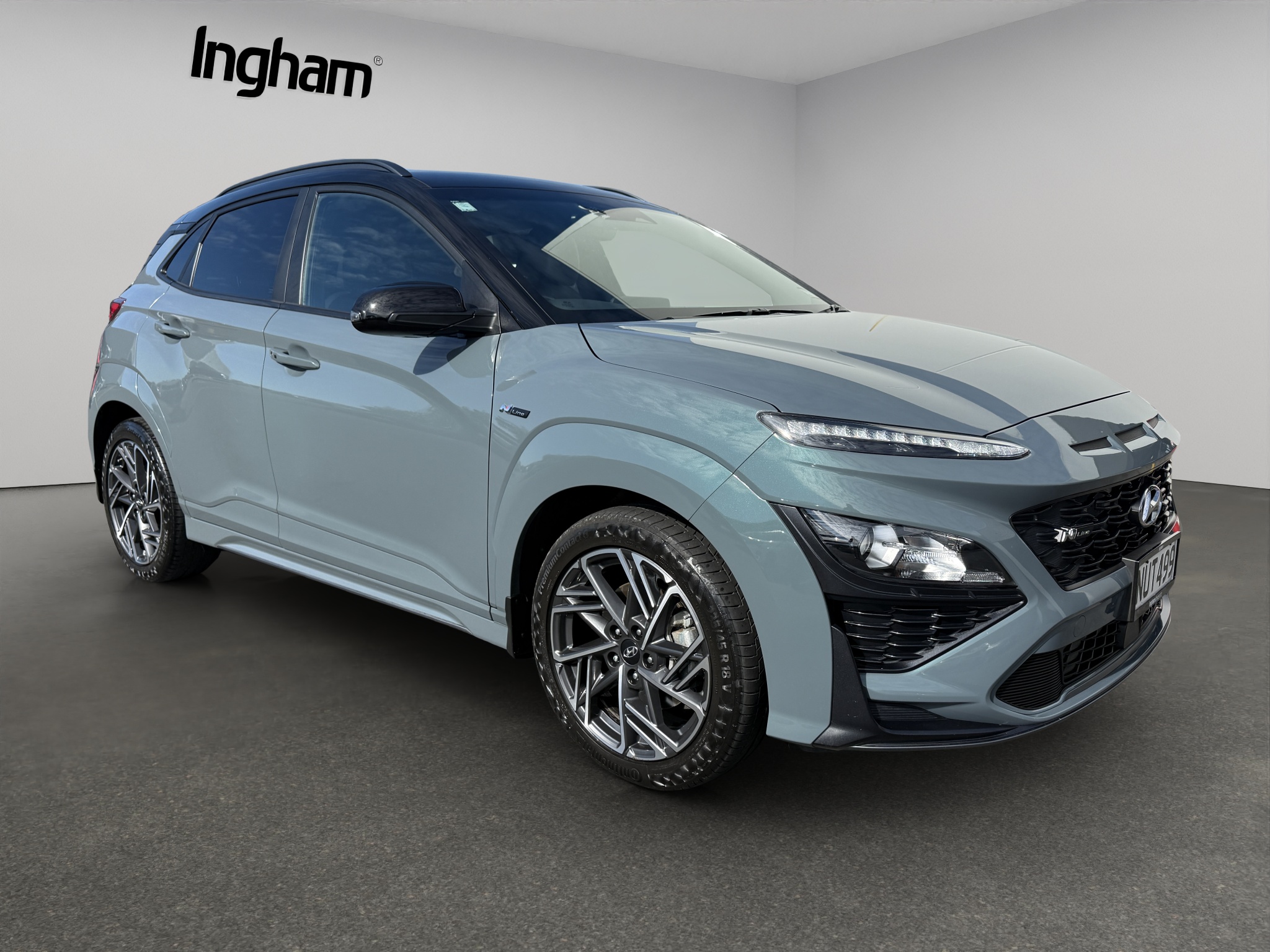
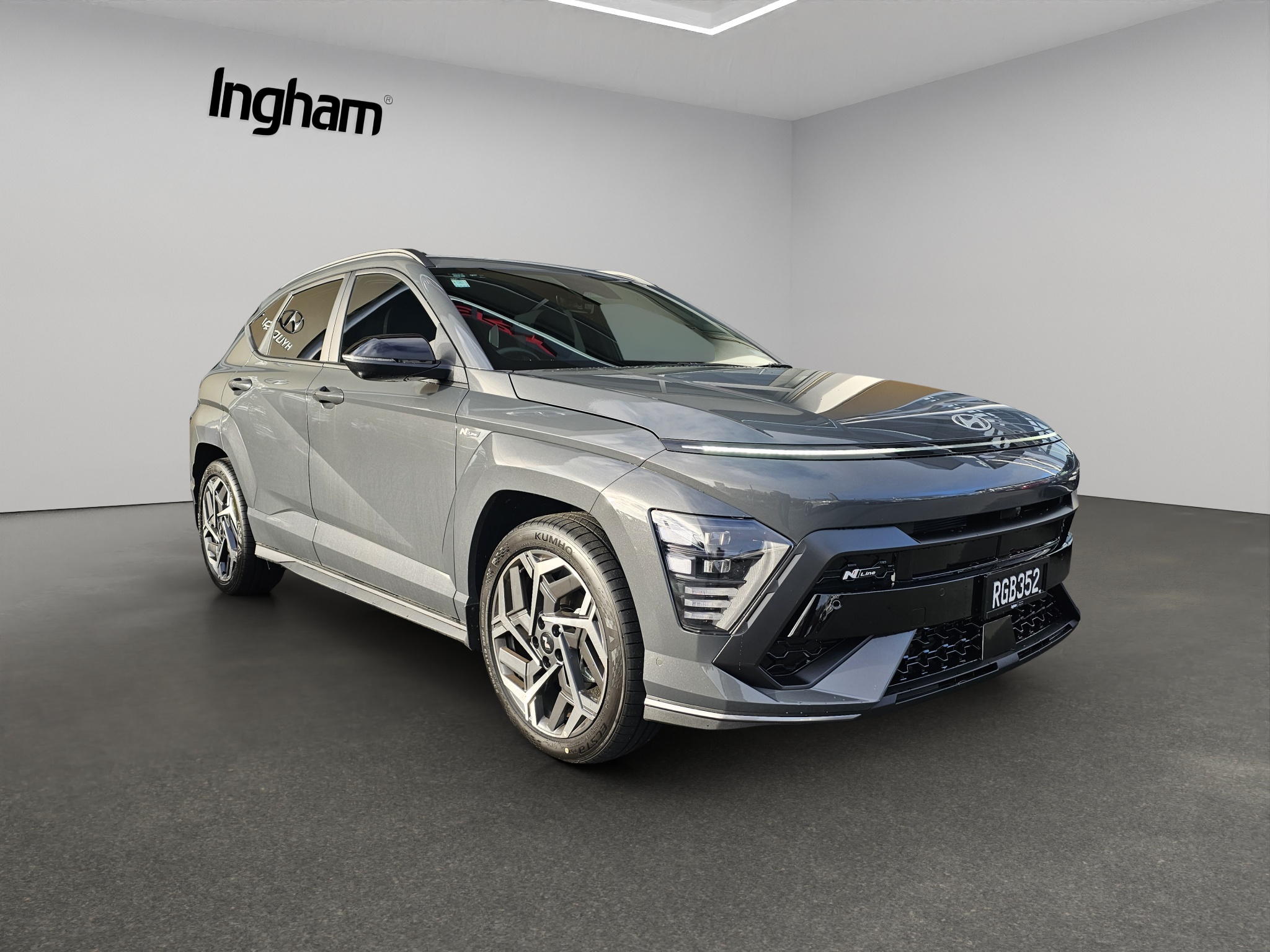
The 1.6T Hyundai Kona refers to the turbocharged 1.6-liter Gasoline Direct Injection (GDI) variants of Hyundai’s popular subcompact SUV, specifically found in the N Line and Limited trims. This powertrain is designed for drivers seeking a significant performance upgrade over the base 2.0-liter engine, offering better torque, quicker acceleration, and enhanced highway passing power.
Evolution of the 1.6T Powertrain: From Gamma to Smartstream
To understand the 1.6T Kona in 2026, one must look at the mechanical evolution of the engine itself. Hyundai has utilized two distinct versions of the 1.6-liter turbocharged four-cylinder engine across the Kona’s lifespan. The first generation (2018–2023) primarily used the Gamma II T-GDi engine, while the second generation (2024–2026) transitioned to the more advanced Smartstream G1.6 T-GDi.
The Smartstream iteration, which defines the current 2026 models, features Hyundai’s proprietary Continuously Variable Valve Duration (CVVD) technology. Unlike standard variable valve timing, which only controls when a valve opens or closes, CVVD controls the actual duration of the valve opening. This allows the engine to switch seamlessly between performance-oriented and efficiency-oriented cycles, optimizing combustion across the entire RPM range.
In terms of raw output, the 2026 Kona 1.6T typically produces 190 horsepower and 195 lb-ft of torque. While the horsepower figure is slightly lower than some earlier high-output iterations of the Gamma engine, the torque curve is flatter, providing more immediate "punch" during city driving. This engine is specifically tuned to provide a balance between the fuel economy required for a daily commuter and the responsiveness expected from a "warm" crossover.
Transmission Dynamics: The Shift from DCT to 8-Speed Automatic
One of the most critical aspects of the 1.6T Kona overview is the transmission. For years, the 1.6T engine was paired exclusively with a 7-speed Dual-Clutch Transmission (DCT). While the DCT offered lightning-fast shifts and high efficiency, it was often criticized for "shuddering" or "hesitation" at low speeds, particularly in heavy stop-and-go traffic.
Starting with the 2024 redesign and continuing through the 2026 model year, Hyundai replaced the DCT with a traditional 8-speed torque-converter automatic transmission. This change significantly altered the driving character of the 1.6T Kona:
- Low-Speed Smoothness: The torque converter allows for much smoother "creeping" in traffic, eliminating the mechanical jerkiness associated with the old dry-clutch DCT.
- Towing and Inclines: The 8-speed automatic handles heat better during prolonged climbs or when carrying a full load of passengers and cargo, reducing the risk of transmission overheating.
- Refinement: While the shifts are marginally slower than a DCT, the overall refinement levels are higher, making the Kona feel more like a premium vehicle rather than a budget-oriented sport crossover.
For enthusiasts, the loss of the DCT might feel like a reduction in "sportiness," but for the average driver, the 8-speed automatic is a more reliable and comfortable daily companion.
Performance and Drivetrain Configuration
The 1.6T engine is almost always paired with higher-tier hardware than the base 2.0L Kona. One of the primary advantages of selecting the 1.6T model—specifically in the N Line or Limited trims—is the suspension architecture.
While the base FWD (Front-Wheel Drive) Kona models often utilize a simpler torsion beam rear suspension to save costs and weight, the 1.6T models equipped with HTRAC All-Wheel Drive (AWD) utilize a multi-link rear suspension. This setup provides superior handling, better mid-corner stability, and a more composed ride over uneven pavement.
Acceleration and Speed
The 1.6T Kona is capable of reaching 0-60 mph in approximately 7.2 to 7.5 seconds. Compared to the base 2.0L engine, which often takes upwards of 9 seconds, the 1.6T feels significantly more confident on short highway on-ramps. The peak torque of 195 lb-ft arrives as low as 1,700 RPM, meaning the power is available almost instantly without needing to redline the engine.
Fuel Efficiency Expectations
Despite the turbocharging, the 1.6T remains relatively efficient. According to FuelEconomy.gov, the AWD versions of the 1.6T typically return around 26-28 MPG combined, while the FWD versions can push closer to 30 MPG. However, aggressive driving—which the turbo engine encourages—can see these numbers drop significantly as the turbocharger requires more fuel to maintain the stoichiometric air-fuel ratio under high boost.
| Feature | 2.0L Atkinson Cycle (Base) | 1.6T GDI Turbo (N Line/Limited) |
|---|---|---|
| Horsepower | 147 hp | 190 hp |
| Torque | 132 lb-ft | 195 lb-ft |
| Transmission | Intelligent Variable (IVT) | 8-Speed Automatic |
| Rear Suspension | Torsion Beam (FWD) | Multi-link (AWD) |
| 0-60 MPH | ~9.2 Seconds | ~7.3 Seconds |
| Recommended Fuel | 87 Octane Regular | 87 Octane (91 for peak performance) |
Interior Amenities and Trim-Specific Features
The 1.6T engine is reserved for the premium side of the Kona lineup. In 2026, this means buyers of the 1.6T also receive the most advanced technological suite Hyundai offers in the subcompact segment.
The N Line Trim
The N Line is the "sport-appearance" variant. It features aggressive exterior styling, including a unique mesh grille, body-colored cladding, and 19-inch alloy wheels. Inside, the N Line focuses on a driver-centric cockpit with red contrast stitching, Alcantara or specialized cloth inserts, and sport pedals. It is important to note that the N Line is not a full "N" car (like the discontinued Kona N); it uses the 1.6T engine rather than the high-output 2.0T.
The Limited Trim
The Limited trim focuses on luxury. It pairs the 1.6T engine with high-end features such as:
- H-Tex Leatherette upholstery with ventilated front seats.
- Bose Premium Audio System with eight speakers.
- Surround View Monitor (SVM) and Blind-Spot View Monitor (BVM), which projects a live camera feed of your blind spot into the digital instrument cluster.
- Power Sunroof and hands-free smart liftgate.
Both trims benefit from the dual 12.3-inch panoramic display screens, which integrate the digital gauge cluster and the infotainment system into a single seamless glass panel.
Long-Term Reliability and Maintenance Requirements
Owning a 1.6T Kona requires a slightly more disciplined maintenance approach compared to a naturally aspirated vehicle. Turbocharged engines operate under higher internal pressures and temperatures, which can accelerate oil degradation.
GDI Carbon Buildup
Because the 1.6T is a Gasoline Direct Injection (GDI) engine, fuel is sprayed directly into the combustion chamber rather than over the intake valves. Over time, carbon deposits can accumulate on the back of the intake valves because there is no fuel "washing" them clean. To mitigate this, owners in 2026 are advised to use high-quality Top Tier gasoline and consider a professional intake valve cleaning every 40,000 to 50,000 miles.
Turbocharger Care
The turbocharger in the 1.6T is cooled by both oil and coolant. While modern "water-cooled" turbos are very resilient, it is still best practice to avoid immediate engine shut-off after a spirited high-speed run. Allowing the engine to idle for 30 seconds helps circulate oil and cool down the turbo bearings, preventing "coking" (the baking of oil onto internal components).
Oil Selection
Hyundai recommends synthetic oil for the 1.6T engine. Using conventional oil in a turbo-GDI engine can lead to Low-Speed Pre-Ignition (LSPI), a phenomenon where the fuel-air mixture ignites prematurely, potentially causing catastrophic piston damage. Always ensure the oil meets the API SP or ILSAC GF-6 standards, which are specifically formulated to prevent LSPI.
Safety and Driver Assistance Systems
Safety is a cornerstone of the Kona's appeal. The 1.6T models come standard with Hyundai SmartSense, a comprehensive suite of Advanced Driver Assistance Systems (ADAS). For the 2026 model year, this includes:
- Forward Collision-Avoidance Assist (FCA): Now includes Junction Turning detection, which can apply the brakes if it senses an oncoming vehicle while you are making a left turn at an intersection.
- Highway Driving Assist (HDA): A Level 2 semi-autonomous system that combines Adaptive Cruise Control with Lane Centering. It is particularly effective on well-marked highways, reducing driver fatigue during long commutes.
- Remote Smart Parking Assist (RSPA): Available on the Limited trim, this allows the driver to move the car forward or backward into a tight parking space using only the key fob while standing outside the vehicle.
The 2024–2026 Kona was designed with an improved "K-Platform" that utilizes more high-strength steel than previous generations, aiming for top marks in IIHS crash testing, particularly in the challenging side-impact and small-overlap tests.
Common Issues and Troubleshooting
While the 1.6T is generally reliable, there are a few documented areas that potential owners and current drivers should monitor:
- Oil Consumption: Some high-mileage 1.6T units have shown tendencies for oil consumption. Checking the dipstick every 1,000 miles is a simple preventive habit to ensure the turbo remains lubricated.
- Sensors and Electronics: With the heavy reliance on ADAS, sensor calibration is vital. If the windshield is replaced, the front-facing camera must be recalibrated, or systems like Lane Keeping Assist may malfunction.
- DCT Related (Pre-2024 Models): If you are looking at a used 1.6T Kona from the 2018–2023 era, be aware of the DCT heat warning. If the car is held on an incline using the throttle instead of the brake, the clutches can overheat. This is not an issue for the 2024–2026 models with the 8-speed automatic.
Comparison: 1.6T vs. The Competition
In the subcompact SUV segment, the 1.6T Kona competes primarily with the Mazda CX-30 Turbo and the Kia Seltos SX (which shares the same 1.6T engine).
- Vs. Mazda CX-30 Turbo: The Mazda offers more power (up to 250 hp on 93 octane) and a more premium "near-luxury" interior. However, the Kona 1.6T offers more rear legroom and a much more modern infotainment system with better wireless smartphone integration.
- Vs. Kia Seltos SX: Since they share a platform, the choice between the Seltos and Kona 1.6T often comes down to aesthetics and warranty. Both offer a 10-year/100,000-mile powertrain warranty in the US market, but the Kona’s 2026 styling is more futuristic, whereas the Seltos maintains a traditional SUV boxy shape.
FAQ: Frequently Asked Questions
Does the 1.6T Kona require premium fuel?
No, the 1.6T engine is designed to run on 87-octane regular unleaded gas. While the engine's ECU (Electronic Control Unit) can adjust timing to take advantage of 91 or 93 octane—potentially offering a slight increase in torque and smoother performance in hot weather—it is not a requirement for the vehicle's longevity or standard operation.
Is the 1.6T Kona good for towing?
The 1.6T Kona has a modest towing capacity, typically rated around 5,000 lbs if properly equipped? No, that is incorrect for this segment. The Hyundai Kona 1.6T is generally rated for up to 2,000 lbs with trailer brakes, though Hyundai often recommends against heavy towing for this specific vehicle class. It is best suited for small utility trailers or bike racks. Always consult your specific owner's manual for the 2026 weight limits.
How often should I change the spark plugs in the 1.6T?
Because it is a turbocharged engine, spark plugs are subject to more wear than in a naturally aspirated engine. Hyundai typically recommends inspection or replacement every 40,000 to 45,000 miles. Using the correct Iridium-tipped plugs is essential to prevent misfires under boost.
What is the difference between the 1.6T and the 2.0L engines?
The 2.0L engine is a naturally aspirated "Atkinson Cycle" engine paired with an IVT (CVT). It is built for maximum fuel economy and low production cost. The 1.6T is a turbocharged "Otto Cycle" engine paired with an 8-speed automatic. The 1.6T offers 43 more horsepower and 63 lb-ft more torque, making it significantly faster and better suited for highway driving.
Is the 1.6T Kona 4WD or AWD?
The Kona uses an AWD (All-Wheel Drive) system branded as HTRAC. It is an "on-demand" system, meaning it primarily powers the front wheels but can send up to 50% of power to the rear wheels when sensors detect slippage. It also includes a "Lock" mode for low-speed situations like deep snow or mud, which forces a 50/50 power split.
Final Recommendation: Should You Choose the 1.6T?
For the majority of drivers in 2026, the 1.6T is the definitive choice for the Hyundai Kona. While the base 2.0L engine is sufficient for strict city commuting, the 1.6T provides the necessary power to make the Kona feel "complete." The transition to the 8-speed automatic transmission has resolved the most significant reliability and drivability complaints of previous generations, making the N Line and Limited trims highly competitive in the subcompact segment.
If you prioritize a smooth, refined driving experience with the safety of all-wheel drive and the latest cabin technology, the 1.6T Limited is the optimal trim. If you prefer a more aggressive aesthetic and a slightly firmer road feel, the 1.6T N Line offers the same mechanical prowess with a sportier edge. In both cases, ensure you adhere to the synthetic oil change intervals to protect the turbocharger for the long term.