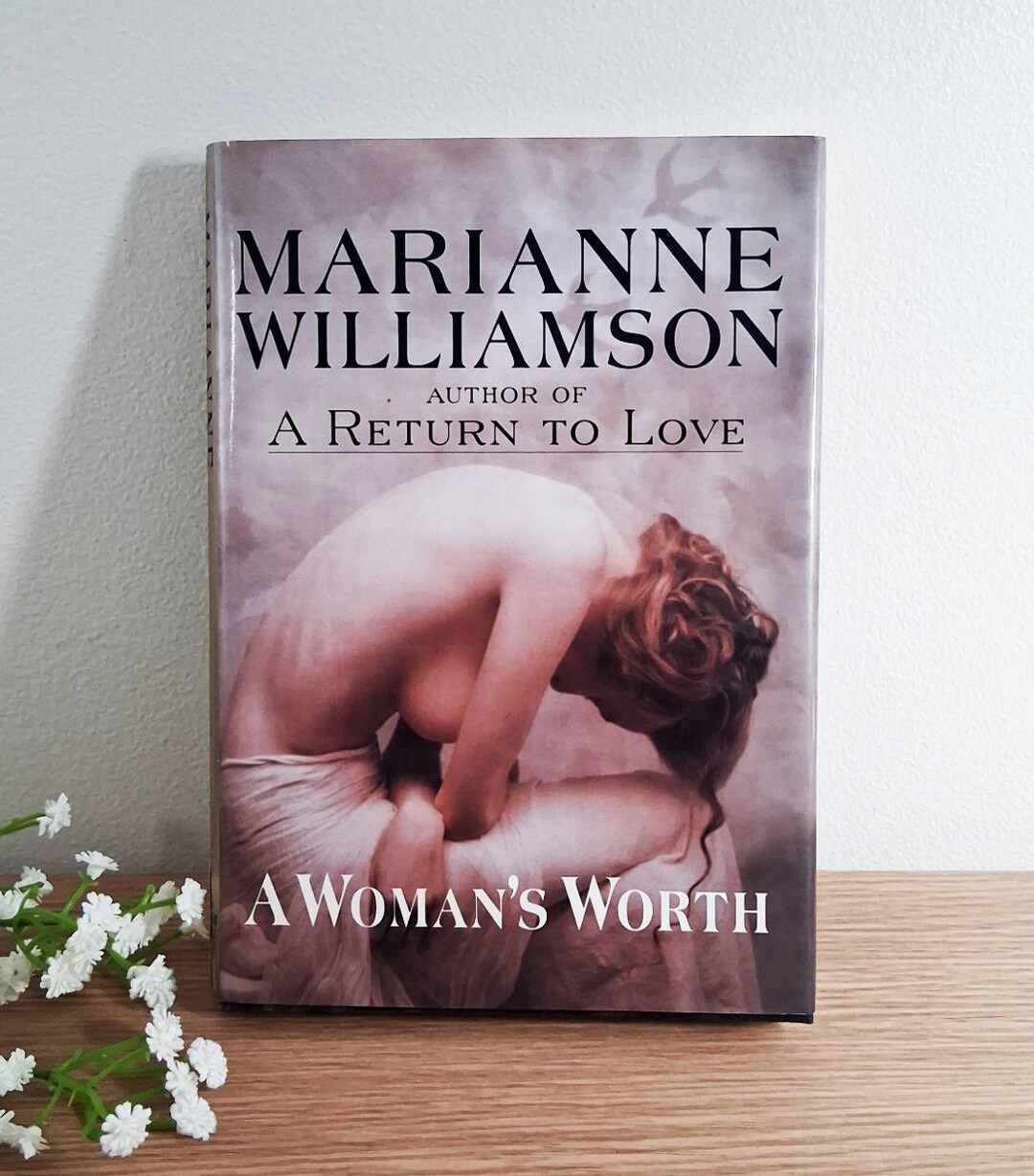
Marianne Williamson’s A Woman’s Worth serves as a spiritual and psychological guide designed to help women reclaim their inherent value, move past patriarchal conditioning, and step into empowered leadership. Rather than focusing on external achievements or social status, the book argues that true worth originates from spiritual alignment, emotional authenticity, and the reclamation of the divine feminine.
Introduction to Marianne Williamson and A Woman's Worth
First published in the early 1990s during a pivotal era of shifting cultural conversations about gender, power, and identity, Marianne Williamson’s A Woman’s Worth has endured as a foundational text in contemporary self-help and spiritual literature. Williamson, widely recognized for her work with A Course in Miracles and her broader commentary on spiritual politics and personal growth, approaches feminism through a metaphysical lens. She posits that the subjugation of women throughout history is not merely a political or economic issue, but a spiritual one—a symptom of a society that has undervalued the intuitive, nurturing, and compassionate aspects of human nature.
For readers approaching the text today, the primary objective is to understand how personal transformation intersects with collective liberation. The book challenges the internal scripts many women carry regarding body image, relationships, professional ambition, and self-sacrifice. By examining these themes, readers can systematically deconstruct societal pressures and build a self-concept rooted in intrinsic value rather than external validation.
The Core Philosophy: Intrinsic Worth Versus Conditional Value
At the heart of A Woman’s Worth is a fundamental distinction between conditional value—what a woman does, earns, or looks like—and intrinsic worth, which is her birthright as a living soul. Modern culture frequently teaches women to measure their success through the twin lenses of aesthetic appeal and productivity. Williamson argues that this paradigm creates an endless treadmill of anxiety and inadequacy.
The Myth of External Validation
When a woman ties her self-esteem to external metrics, she becomes vulnerable to manipulation and burnout. Williamson explores how societal conditioning trains women to seek approval by playing specific roles: the caretaker, the compliant worker, or the idealized romantic partner.
- The Caretaker Trap: Over-functioning in relationships at the expense of one's own well-being.
- The Perfectionism Illusion: Striving for flawless execution in professional and domestic spheres to mask deep-seated feelings of inadequacy.
- The Aesthetic Burden: Internalizing cultural standards of beauty as a primary currency of social acceptance.
By shifting the locus of control from the outside world to the internal spirit, the book encourages women to recognize that their value cannot be added to or subtracted from by external achievements. This philosophical shift forms the prerequisite for all subsequent personal growth discussed in the text.
Reclaiming the Divine Feminine
A major pillar of Williamson's argument involves the rehabilitation and integration of the divine feminine into modern life. This concept does not imply superiority over men, but rather the restoration of balance in a world heavily tilted toward aggressive competition, material accumulation, and hyper-rationality.
Characteristics of the Divine Feminine
The divine feminine represents qualities that have historically been marginalized or dismissed as weak in patriarchal frameworks:
- Intuition: Trusting inner wisdom over purely analytical or data-driven conclusions.
- Nurturance: Fostering growth in oneself and others through compassion rather than control.
- Vulnerability: Embracing emotional honesty as a source of strength rather than a liability.
- Collaboration: Valuing community, shared success, and interdependence over zero-sum competition.
Williamson asserts that both men and women possess these traits, but women have a unique stewardship over them. When women suppress these qualities to fit into corporate or social structures built on male-dominated models of power, they experience a profound sense of spiritual alienation.
Key Themes Explored in the Book
To fully grasp the utility of A Woman's Worth, it is helpful to examine how its core philosophies manifest across different areas of life, including relationships, professional ambition, motherhood, and aging.
| Life Domain | Conventional Sociological Pressure | Williamson's Spiritual Perspective |
|---|---|---|
| Relationships | Seeking completion through a partner; tolerating dysfunction to avoid being single. | Relationships serve as spiritual mirrors; true partnership requires two whole, self-actualized individuals. |
| Career & Ambition | Adopting aggressive, cutthroat tactics; working twice as hard to prove competence. | True power stems from authenticity and purpose; leadership should be healing rather than dominating. |
| Motherhood & Care | Self-sacrifice as the ultimate measure of devotion; martyrdom disguised as virtue. | Healthy boundaries and self-care are essential; a mother teaches by embodying self-respect. |
| Aging | Fear of obsolescence as physical youth and conventional beauty fade. | Aging represents an ascent into crone wisdom, depth, and earned spiritual authority. |
Relationships and Romance
Williamson addresses the common trap of looking for a partner to "save" or complete oneself. She argues that romantic relationships often fail because individuals enter them from a place of deficit, expecting another person to supply the self-worth they lack. True intimacy, according to the text, requires two sovereign individuals who come together to share their wholeness rather than merge their emptiness.
Work, Money, and Power
In the realm of career, A Woman’s Worth challenges the notion that women must mimic traditional corporate ruthlessness to succeed. Williamson encourages women to bring their unique ethical and intuitive sensibilities into the workplace. Furthermore, she tackles the psychological blocks many women have around money, reframing financial abundance not as a symbol of greed, but as a neutral resource that can be used to support creative expression, independence, and philanthropy.
Practical Application: Steps Toward Personal Empowerment
Reading A Woman's Worth is primarily an intellectual exercise unless paired with intentional lifestyle and mindset shifts. Readers looking to apply the book's principles can follow a structured progression:
- Audit Internal Dialogue: Notice moments of self-criticism, particularly regarding physical appearance, aging, or perceived professional failures. Replace self-judgment with objective observation.
- Establish Firm Boundaries: Identify areas in personal and professional life where over-accommodation leads to resentment. Practice saying no without over-explaining or apologizing.
- Cultivate a Spiritual Practice: Engage in daily reflection, meditation, or prayer to anchor self-worth in internal stillness rather than external praise.
- Redefine Success: Write down personal values independent of societal expectations. Align daily habits with those internal values rather than external status symbols.
- Build Supportive Communities: Surround oneself with peers who champion authentic expression and emotional growth rather than competitive comparison.
Common Misinterpretations and Criticisms
Like much of the New Age and self-help literature from the late 20th century, A Woman's Worth has faced critique from various academic and cultural perspectives. Understanding these criticisms helps provide a balanced view of the text.
- Essentialism: Critics occasionally argue that assigning specific traits like intuition and nurturing to the "feminine" reinforces rigid gender binaries. Proponents respond that Williamson uses these terms archetypally to describe universal human energies that require rebalancing, rather than prescribing strict biological roles.
- Individualism vs. Systemic Change: Some social commentators note that spiritual self-help can sometimes minimize the harsh reality of systemic economic and political barriers. While personal empowerment is vital, it cannot fully replace structural legal protections, equal pay legislation, and social safety nets. Readers are best served by viewing the book as a psychological tool rather than a comprehensive sociopolitical blueprint.
Frequently Asked Questions
Is A Woman's Worth exclusively for women?
While written directly to women and focused on female empowerment, the underlying spiritual principles apply universally. Men reading the book can gain valuable insight into the dynamics of the divine feminine, emotional maturity, and how to support healthy, egalitarian partnerships.
How does this book relate to A Course in Miracles?
Marianne Williamson is a renowned teacher of A Course in Miracles, and that spiritual framework heavily influences A Woman’s Worth. The book translates the Course's core tenets—shifting from fear-based thinking to love-based perception—specifically into the context of gender, self-worth, and social roles.
Is the book outdated given that it was published in the 1990s?
While cultural contexts and technological landscapes have shifted dramatically since the 1990s, the psychological and spiritual hurdles of self-doubt, societal pressure, and relationship dynamics remain remarkably consistent. The core thesis—that a woman's worth is intrinsic and unshakeable—transcends generational shifts.
What is the best way to study or read this book?
A Woman's Worth is best read reflectively rather than rapidly. Many readers find success by journaling through the chapter prompts, meditating on the philosophical points, and discussing the material in reading circles or book clubs to process the emotional realizations that arise.
Conclusion and Next Actions
Marianne Williamson’s A Woman’s Worth offers a timeless reminder that external achievements, societal approval, and physical appearance do not dictate human value. For those seeking to break free from cycles of perfectionism, people-pleasing, and burnout, the book provides a clear roadmap toward spiritual sovereignty. To take action today, select one area of your life where you routinely compromise your boundaries for the sake of approval, and practice asserting your intrinsic value through a single, uncompromising boundary shift.