A white noise machine is an electronic device designed to generate ambient sounds that mask disruptive background noises, promoting deeper sleep, relaxation, and improved concentration. By producing a constant, uniform sound profile across all audible frequencies, these machines help stabilize the auditory environment and prevent sudden noises from triggering micro-awakenings.
Achieving restorative sleep and maintaining deep focus in modern environments often requires managing the acoustic landscape. Sudden sounds—such as passing traffic, barking dogs, creaking floors, or a partner's snoring—frequently disrupt sleep cycles and break cognitive concentration, even if they do not cause a full awakening. A dedicated sound machine offers an evidence-based approach to acoustic management, transforming chaotic environmental noise into a steady, neutral backdrop. Understanding how these acoustic tools function, what technical features to look for, and how to operate them safely ensures you select the right device for your specific environment and health needs.
Understanding White Noise and Acoustic Masking
To understand how a white noise machine works, it is helpful to examine the physics of sound and how the human brain processes auditory stimuli during sleep. White noise is often misunderstood as any soothing sound, but in acoustics, it has a precise definition. Analogous to white light, which contains all visible frequencies of light combined in equal intensity, true white noise contains all audible frequencies—typically ranging from 20 Hz to 20,000 Hz—delivered at an equal energy level per hertz.
When playing through a speaker, white noise sounds sharp, resembling a television tuned to an unused station or a rushing shower. This uniform frequency distribution gives it exceptional masking capabilities.
Acoustic masking relies on the psychoacoustic principle that a continuous, steady sound raises your auditory threshold. When a white noise machine runs in a room, it narrows the gap between the ambient baseline sound and unexpected peak noises, such as a slamming door or a car horn. Because the brain measures sound relative to the background baseline, a sudden peak sound is far less jarring when the baseline is elevated by steady white noise. Consequently, the auditory cortex registers less environmental fluctuation, allowing the nervous system to remain in deep and rapid eye movement (REM) sleep stages rather than shifting toward lighter sleep.
Beyond White Noise: Pink, Brown, and Fan Sounds
While the market refers broadly to "white noise machines," many modern devices actually produce multiple color-coded noise profiles and environmental soundscapes. Knowing the acoustic differences helps you select the profile that suits your ears and sleep patterns:
- White Noise: Contains equal energy across all frequencies. It has a high-pitched, hissing quality that excels at masking high-frequency disturbances like sirens, whistles, and sharp voices.
- Pink Noise: Emphasizes lower frequencies, giving it a softer, deeper sound profile resembling steady rainfall, rustling leaves, or wind through trees. Energy decreases by 3 decibels per octave as frequency increases. Many users find pink noise more natural and relaxing than white noise.
- Brown (or Red) Noise: Heavily weighted toward very low frequencies, sounding like a distant rumble, heavy thunder, or a powerful waterfall. Energy decreases by 6 decibels per octave. It is frequently used by individuals sensitive to high-pitched sounds or those seeking deep relaxation.
- Mechanical Fan Sounds: Generated either by an internal physical fan (true mechanical white noise) or digital recordings of electric fans. These blend white and pink noise characteristics, offering a familiar, steady whir.
Key Types of White Noise Machines
White noise machines generally fall into two distinct technological categories: electromechanical devices and digital solid-state devices. Each approach has distinct operational characteristics, advantages, and limitations.
Electromechanical Sound Machines
Electromechanical machines create sound using a physical motor and fan enclosed inside an acoustic housing. Instead of playing a digital audio file through a speaker, air flows through internal vents, creating authentic, organic white noise.
The most prominent example in this category is the Marpac Dohm (now officially branded as the Yogasleep Dohm), which has remained a standard in clinical and residential settings for decades. Because they generate sound through physical airflow rather than digital loops, electromechanical machines produce no audio repetition. Tone and volume are adjusted manually by twisting the outer cap or housing to open or close air intake ports, altering the pitch and airflow intensity.
Digital Solid-State Sound Machines
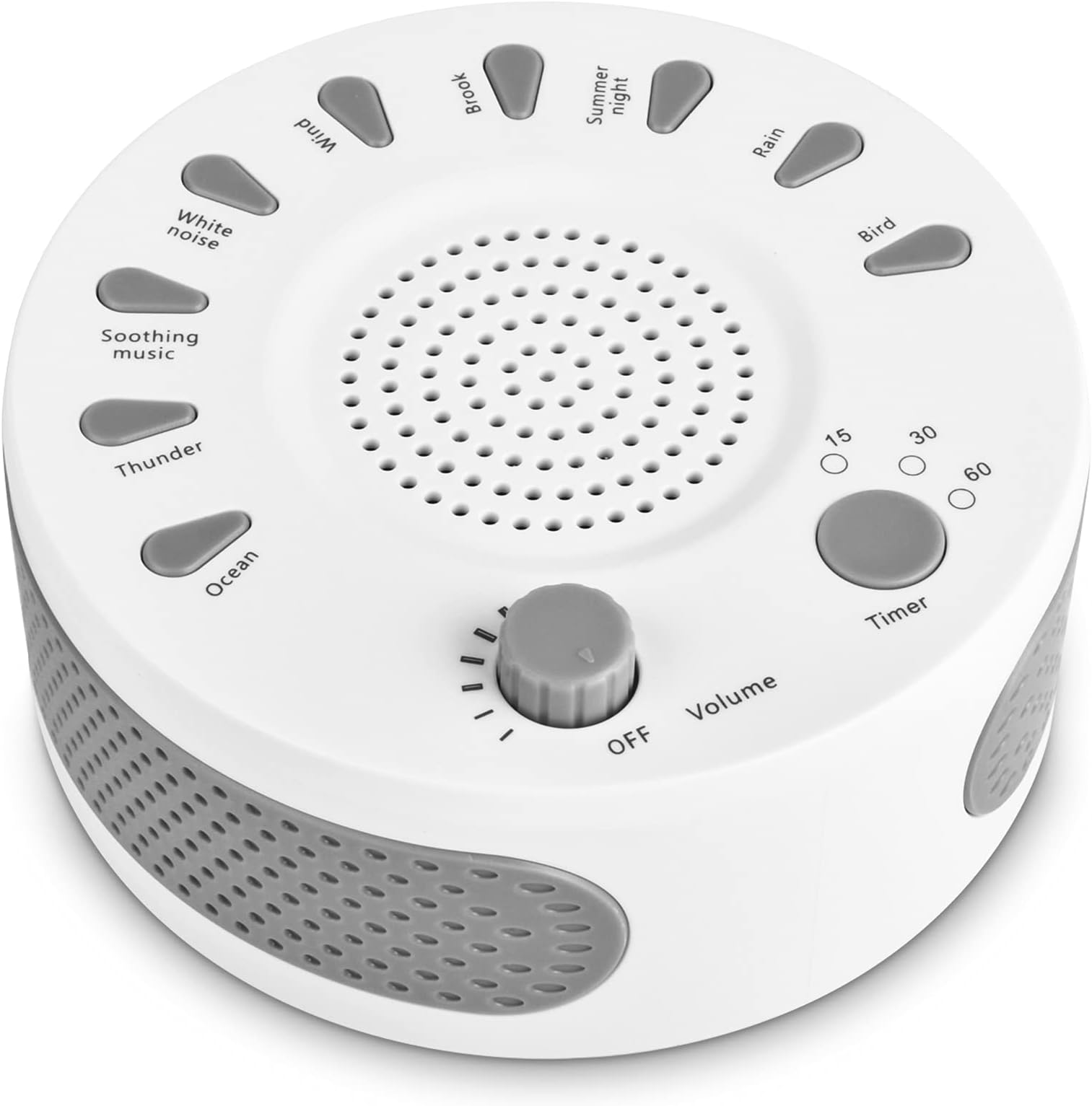
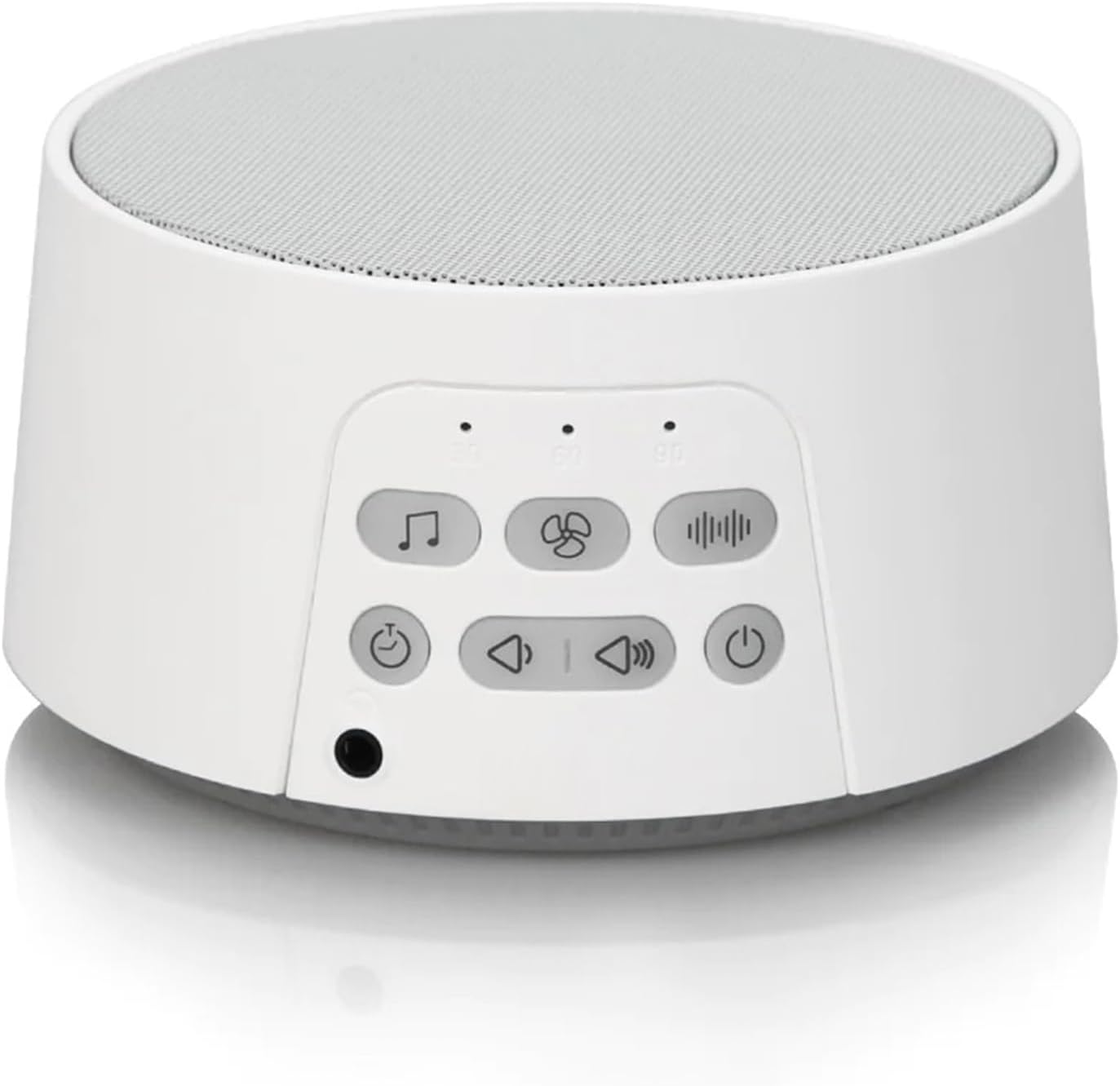
Digital machines use internal microprocessors and digital signal processors (DSPs) to play pre-recorded audio files through a built-in speaker. These devices offer vastly greater versatility compared to mechanical models.
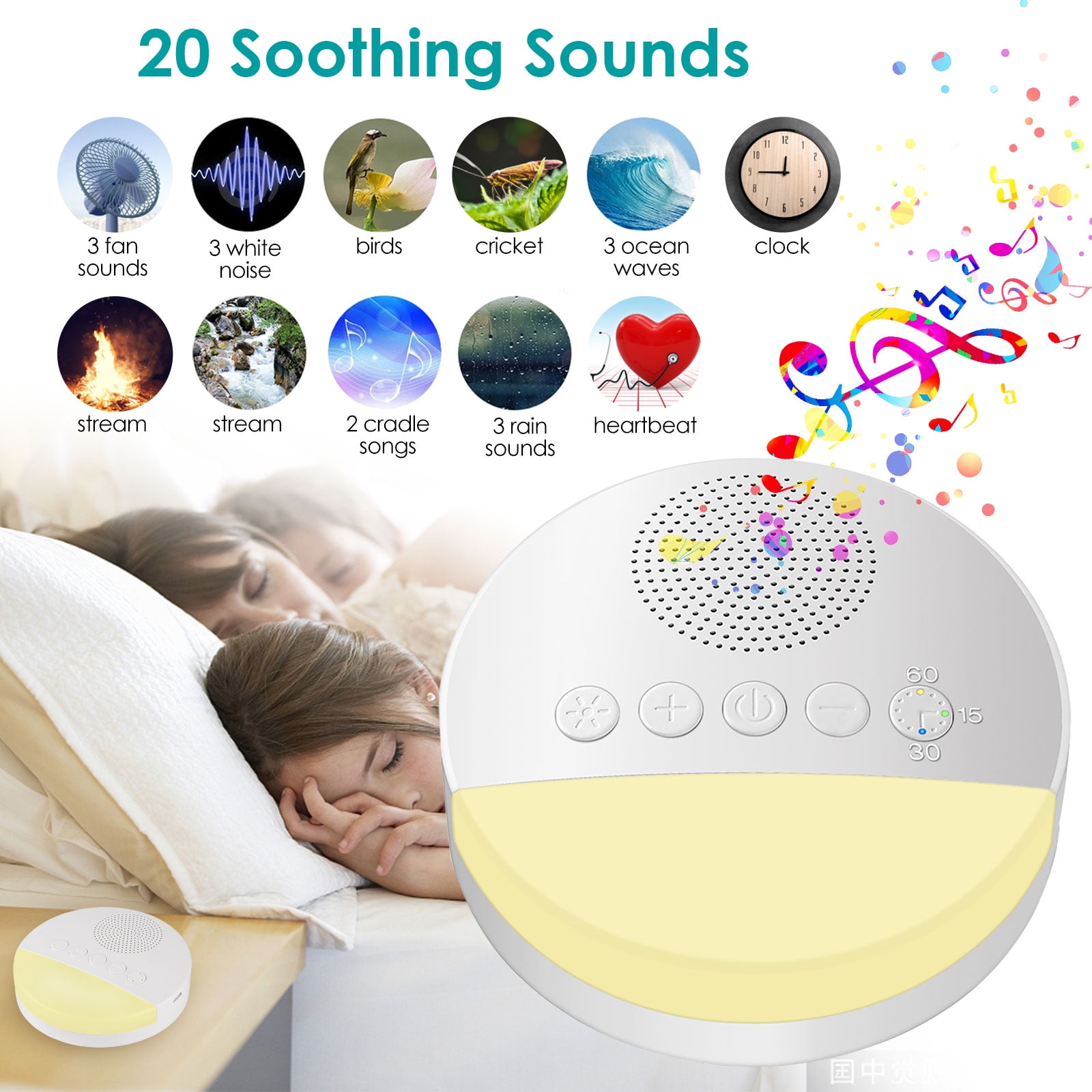
A single digital unit can store dozens of tracks, ranging from white, pink, and brown noise to natural environments like ocean waves, thunderstorms, campfires, and stream water. Many modern digital models also include Bluetooth connectivity, app integration, programmable timers, and graduated wake-up lights. However, lower-quality digital units may suffer from noticeable audio looping, where a short audio file repeats every few seconds, which can disturb sensitive sleepers once the repetition pattern is recognized.
| Feature / Attribute | Electromechanical Machines | Digital Solid-State Machines |
|---|---|---|
| Sound Source | Physical motor and internal fan | Digital audio files and speaker |
| Sound Variety | Limited to adjustable fan pitch/tone | Wide variety (noise colors, nature, fan tracks) |
| Audio Looping | None (continuous organic sound) | Possible in low-end units; seamless in quality units |
| Extra Features | Basic power switches, manual tone caps | Timers, night lights, app controls, Bluetooth |
| Durability | High (fewer electronic components to fail) | Moderate to High (depends on build quality) |
| Portability | Generally heavier and requires AC power | Often compact, lightweight, USB or battery-powered |
Health Benefits and Scientific Context
The integration of sound masking into sleep hygiene routines is supported by research into environmental medicine and sleep science. Chronic exposure to nighttime noise—even at levels too low to cause full awakening—triggers autonomic nervous system responses, elevating heart rate, blood pressure, and stress hormone production, such as cortisol.
A systematic review published in Sleep Medicine Reviews examined the effects of environmental noise on sleep and noted that continuous acoustic masking significantly reduces sleep fragmentation. By smoothing out environmental peaks, sound machines help maintain sleep continuity.
Beyond nighttime rest, white noise machines are widely used in professional and clinical settings for cognitive focus and privacy. In open-plan offices and medical clinics, sound masking systems—often referred to as speech privacy systems—raise the ambient sound level just enough to make intelligible speech unintelligible at a distance. For individuals with Attention-Deficit/Hyperactivity Disorder (ADHD) or sensory processing differences, controlled background noise can reduce distractibility by providing uniform auditory stimulation, preventing the brain from searching for input in quiet environments.
How to Choose the Right White Noise Machine
Selecting an appropriate sound machine requires evaluating your primary use case, environment, and personal preferences. Follow these steps to identify the most suitable device:
- Identify the Target Environment: Determine whether the device will be used in a quiet bedroom, a noisy urban apartment facing street traffic, a shared office, or while traveling. Urban environments with sirens and heavy bass require devices capable of higher maximum volume levels.
- Determine Sound Preferences: Test whether you prefer the pure hiss of mechanical white noise or the softer, bass-heavy quality of pink or brown noise. If you are unsure, choose a digital machine with multiple sound profiles.
- Evaluate Power and Portability: If you travel frequently, look for lightweight, compact units featuring USB-C charging or internal rechargeable batteries. For permanent bedroom use, a plug-in bedside unit with physical controls is often more convenient.
- Check Volume Range and Safety Limits: Ensure the machine can produce enough volume to mask external sounds without requiring distortion. For infant nurseries, verify that the device can maintain safe decibel output levels.
- Assess Additional Features: Decide if you need specific auxiliary functions, such as an automatic shut-off timer, non-looping audio tracks, dimmable night lights, or headphone jacks for personal listening.
Safe Usage and Volume Guidelines
While sound machines offer significant benefits, improper use—particularly regarding volume and proximity—can pose auditory risks, especially for infants and young children.
The American Academy of Pediatrics (AAP) and hearing health organizations emphasize that continuous sound exposure can damage delicate inner-ear hair cells if volume limits are ignored. When using a white noise machine in a nursery or bedroom, follow these safety parameters:
- Distance Placement: Place the sound machine as far away from the sleeper's ears as possible. It should be positioned near the source of incoming noise—such as a window or doorway—rather than directly beside the crib or pillow.
- Decibel Limits: Keep the output volume below 50 to 60 decibels (dB) as measured at the sleeper's ear level. This is roughly equivalent to the sound level of a quiet suburban neighborhood or a humming refrigerator. Free smartphone decibel-meter applications can help verify output levels during initial setup.
- Avoid Maximum Volume Settings: Never operate a sound machine at its maximum volume setting for extended periods, as output levels on some devices can exceed 85 dB, approaching the threshold associated with noise-induced hearing loss over time.
- Continuous vs. Timed Play: Consider whether continuous overnight playback is necessary or if a timer set for 60 to 90 minutes is sufficient to bridge the transition into deep sleep.
Common Mistakes and Troubleshooting
Navigating the setup and daily use of a sound machine can involve a few common pitfalls. Recognizing these issues helps ensure optimal performance:
- Incorrect Placement: Placing the machine directly next to the bed can lead to excessive local volume while failing to block sound entering from a distant window. Always position the unit between the noise source and the listener.
- Relying on Smartphone Apps: While phone apps offering white noise are convenient for travel, notifications, low speaker fidelity, and electromagnetic exposure near the head can disrupt sleep. Dedicated standalone units generally provide superior acoustic quality and reliability.
- Ignoring Speaker Quality: Cheap digital machines often feature tinny, low-end speakers that lack the frequency response needed to produce rich brown or pink noise. Look for units with larger speaker grilles and balanced audio output.
- Overlooking Power Failures: If you rely on a sound machine to mask jarring morning noises, ensure your unit has battery backup or automatic power-resume features in case of brief overnight power outages.
Frequently Asked Questions
Can adults become psychologically dependent on white noise machines for sleep?
While using a sound machine nightly can form a strong behavioral association with sleep—acting as a powerful psychological cue that signals the brain to wind down—it does not cause physical dependence or alter auditory physiology. Many people comfortably travel without their machines or sleep in quiet environments when necessary, though their sleep latency may increase slightly without the familiar acoustic backdrop.
Are mechanical white noise machines better than digital ones?
Neither type is universally superior; each serves different preferences. Mechanical machines like the Dohm provide organic, unlooped sound that many sleepers find more natural. Digital machines offer greater variety, volume control, and portability, making them ideal for users who prefer nature sounds or need to experiment with different noise colors.
What is the safest volume level for an infant white noise machine?
Experts recommend keeping the volume below 50 decibels when measured at the crib. The machine should also be placed at least seven feet away from the infant's head. Excessive volume over prolonged periods can negatively impact infant hearing development.
How do I stop audio looping from disrupting my sleep on a digital machine?
If your digital machine features noticeable audio looping—where a distinct pattern or click repeats every few seconds—switch to a true mechanical fan setting, a white noise track generated by a continuous algorithm, or select a different sound profile on the device that lacks abrupt transitions.
Can a white noise machine completely block out loud snoring or construction noise?
A white noise machine raises the ambient baseline to mask medium-to-low disruptive sounds, but it cannot defy the laws of physics. Extremely loud, low-frequency vibrations—such as heavy construction jackhammers or severe snoring originating in the same bed—may still penetrate the acoustic mask. In such cases, pairing the sound machine with high-grade earplugs yields the best results.
Conclusion and Next Actions
Investing in a white noise machine is a practical step toward improving sleep hygiene, enhancing cognitive focus, and protecting your rest from unpredictable environmental noise. To get started, assess your specific acoustic environment, identify whether you prefer the organic hum of a mechanical fan or the versatility of a digital sound profile, and set up your device at a safe distance and moderate volume. By selecting a reliable machine and integrating it thoughtfully into your nightly routine, you can create a stable, restorative auditory sanctuary that supports long-term health and well-being.